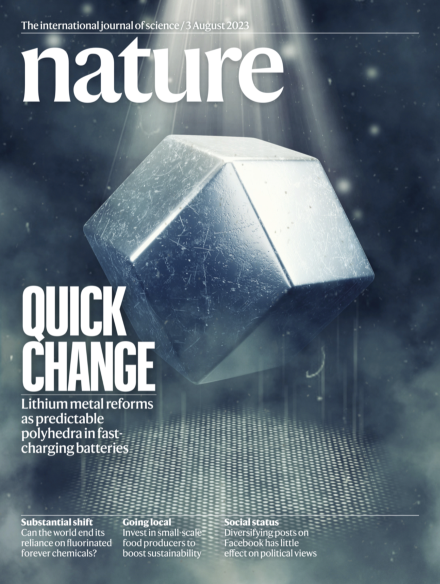
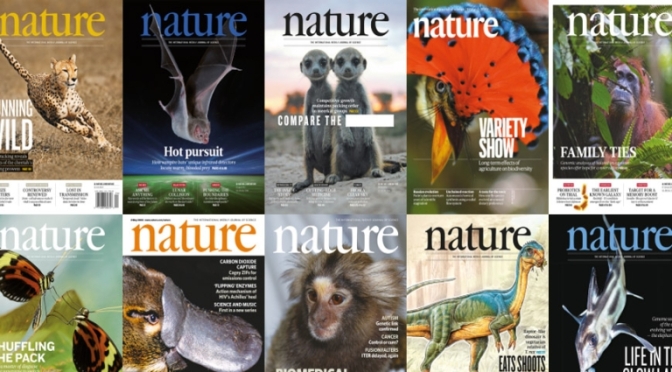
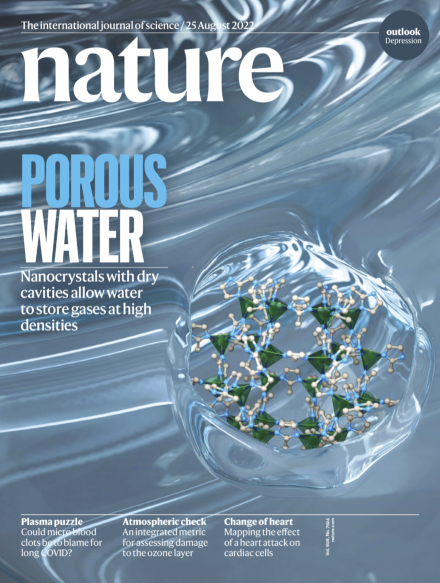
nature Magazine – August 3, 2023 issue: Lithium-metal batteries promise to charge rapidly and to hold more energy than batteries based on lithium ions. Recharging these batteries requires lithium metal to be reformed at the anode, but this process is affected by the battery’s electrolyte and current collector, which causes the shape of the lithium deposits to vary unpredictably, impairing the battery’s performance.
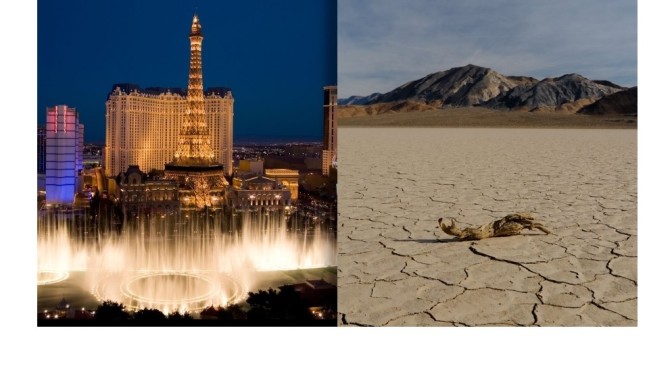
Bloomberg Originals (March 1, 2023) – In Nevada, Kal Penn investigates the lasting impacts of the Colorado River Compact, the 1922 agreement that doles out water rights to seven states. The system, over-optimistic from the start, is on the verge of collapse as water levels in key reservoirs approach dead pool-status. But in nearby Las Vegas, Kal explores strategies that have led that city to become one of the most successful in the US when it comes to water conservation.
0:15 This island nation has moved to the metaverse – Rising seas are due to swamp Tuvalu by the end of the century. So the Pacific archipelago of 12,000 people has taken a remarkable step, declaring itself the world’s ‘first digital nation’.
1:39 Crosswords battle memory loss – Researchers studied 107 elderly people with mild cognitive impairment. 4 times a week, they spent half an hour either doing a crossword or completing tasks on a popular brain-training computer platform. Then they were reassessed after 12 and 66 weeks. Crossword players scored better on cognitive decline and daily functioning tests.
2:50 UK is rolling out ‘buzz’ stops for bees – The UK is planting bee-friendly native flowers on the roofs of roadside bus shelters, creating a parallel transport network for bugs. Management company Clear Channel aims to convert 1,000 shelters overall with native plants such as pansies and thyme.
4:05 Entrepreneur running 200 marathons for water – Guli is an Australian entrepreneur and environmental activist. She plans to complete Run Blue in time for the UN Conference on Water in March 2023 and to inspire as many people as possible along the way. Guli’s mission has taken her to the front lines of the global water crisis.
_____________________________________________
The World Economic Forum is the International Organization for Public-Private Cooperation. The Forum engages the foremost political, business, cultural and other leaders of society to shape global, regional and industry agendas. We believe that progress happens by bringing together people from all walks of life who have the drive and the influence to make positive change.
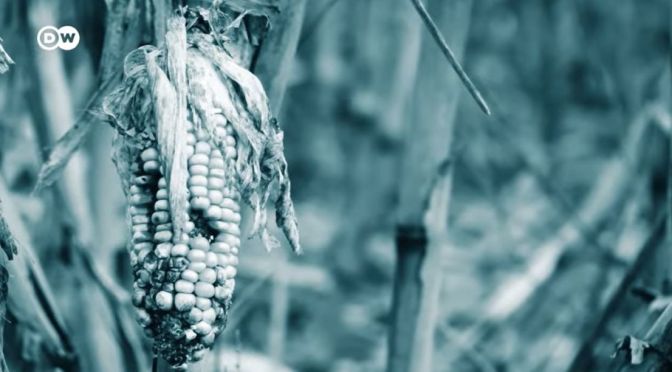
The western U.S. is experience a megadrought so severe, it is the driest two decades in at least 1,200 years. And no sector has felt the impact more than agriculture, which takes up about 70% of the world’s freshwater. With water resources becoming more scarce, several companies are working to improve irrigation efficiency and help sustain food production in a future where extreme climate may be more common.
Chapters: Ch. 1: 2:08 The West’s drought Ch. 2 4:48 Water in agriculture Ch. 3 8:02 Smarter irrigation Ch. 4 11:08 Indoor farming Ch. 5 13:11 Future technologies
Climate change is causing rising temperatures, extreme weather events and more and more drought. And, in this changing reality, everyone needs more water. Humans are competing with the natural world for water. What does this mean for biodiversity? Fewer and fewer countries still have an abundance of water. The climate crisis, overpopulation and overexploitation are the root of this global problem. And, in a warming world, everyone is using more water: people, agriculture and industry. In Germany, streams and ponds are disappearing, forests and soils are drying out. What does this mean for biodiversity? And how do people cope with drought in countries that have even less water — for example, in the USA or Mexico? What happens when our water dries up?
“Tier Drops,” by Lisa Owens Viani. Regulations and apportioning that were set up 100 years ago are under pressure as the Colorado River shrinks. As climate change accelerates and record-breaking drought worsens, cities, tribes, and industries must prepare for a future with less water. (Online August 10)
It’s past time to get real about the Southwest’s hardest-working river.
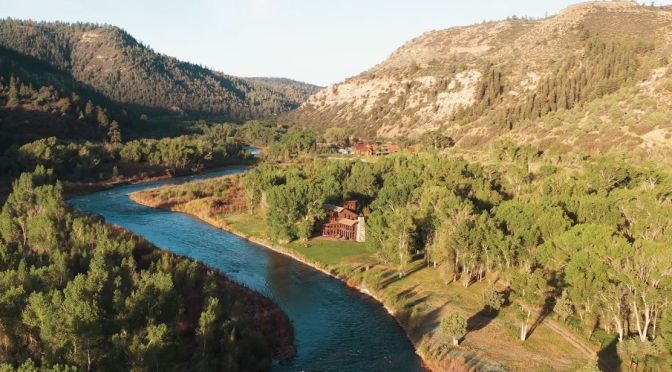
About 40 million people rely on the Colorado River as it flows from Wyoming to Mexico. But overuse and climate change have contributed to its reservoirs drying up at such a rapid rate that the probability of disastrous disruptions to the deliveries of water and hydroelectric power across the Southwest have become increasingly likely. Now the seven states that depend on the river must negotiate major cuts in water use by mid-August or have them imposed by the federal government.
Those cuts are merely the beginning as the region struggles to adapt to an increasingly arid West. The rules for operating the river’s shrinking reservoirs expire in 2026, and those seven states must forge a new agreement on water use for farmers, businesses and cities.
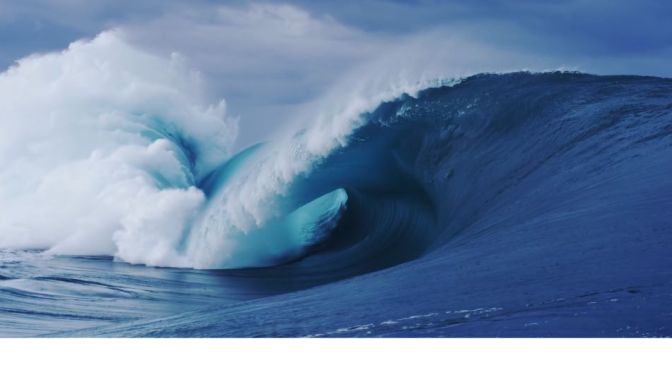
A short film about my affinity for the ocean, its mystery and power. No project challenges me more creatively and physically; making these films is the absolute honor of a lifetime.
Filmed in: Tahiti, Indonesia, Hawaii, Australia, Barbados, Maldives, Philippines and California
Only 0.3 percent of the Earth’s total water supply is suitable for human consumption. Ominously, this precious resource is beginning to shrink. Natural water reservoirs are drying up due to climate change.
Glaciologist Daniel Farinotti surveys melting glaciers in the Swiss Alps. If glaciers continue to melt at the current rate, he says, there will be no ice left by the end of the century. The disappearance of glacial meltwater would have fatal consequences. From the heights of the Swiss Alpine glaciers, the documentary travels down to the seafloor, off the coast of Malta. Here, the crew of the German expedition ship “Sonne” wants to track down mysterious freshwater deposits in the Mediterranean.
Next up is Peru where, in a bid to counteract the threat of water shortages, work is underway on projects that use ancient Incan methods.
News, Views and Reviews For The Intellectually Curious










 Boomers Daily