The Globalist (February 22, 2024):Broadcast live from the Polish capital to assess the state of the fast-changing nation. We discuss the role that Poland has played in the diplomatic arena, take a look at Warsaw’s green ambitions with architect Marlena Happach and talk about the future of the media industry with voices from Polityka Insight and ‘Gazeta Wyborcza’.
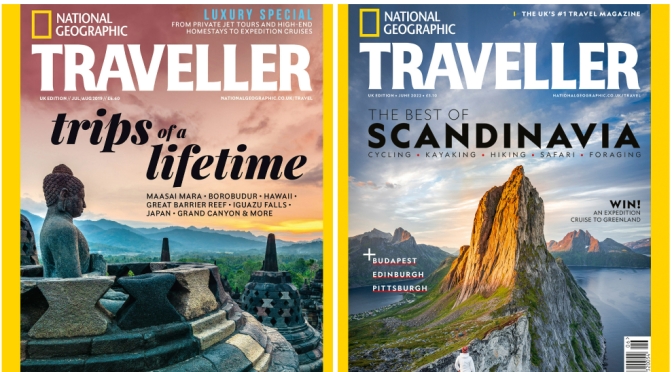
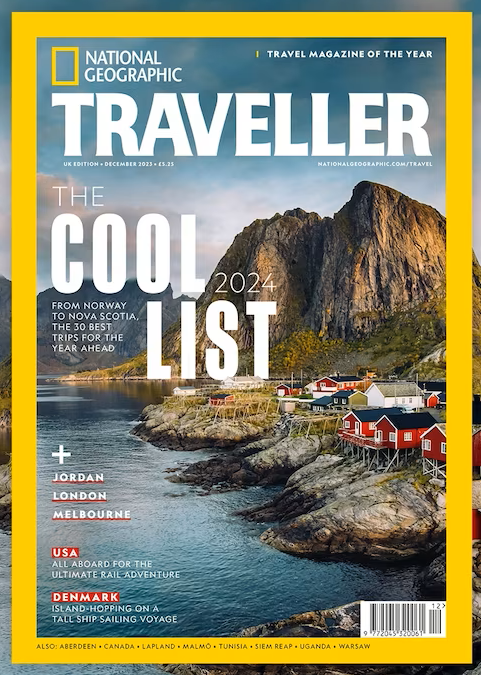
National Geographic Traveller Magazine (December 2023): The latest issue features the 30 best destinations for 2024, Northern Lights in Manitoba, sailing Denmark’s South Funen Archipelago on a tall ship and a long-distance rail trip in the US….
Also inside this issue:
Uganda: The wildlife of Queen Elizabeth National Park. Melbourne: In Victoria’s state capital, local innovators are breathing new life into forgotten spaces. Amman: Culture, cuisine and craft in Jordan’s kaleidoscopic, mountain-fringed capital. Tunisia: From laid-back coastal towns and diving spots to mountain trails in the county’s northern reaches. Warsaw: Traditional Polish flavours have found a new home in fine-dining establishments. Central London: Hotels to escape the crowds at, from budget boutiques to spruced-up luxury boltholes.
Plus, saddling up inGeorgia’s Tusheti region; the salt workers of India’s Habra city; Barcelona’s La Sagrada Família nears completion; Europe’s new UNESCO World Heritage Sites; the flavours of Sierra Leone;a pedal-powered tour of Malmö; design-led stays in Siem Reap; a Christmas break in Lapland; beach views and seafood in Aberdeen; a staycation in Arnside and Silverdale; great illustrated travel books and photography collections; and overnight essentials.
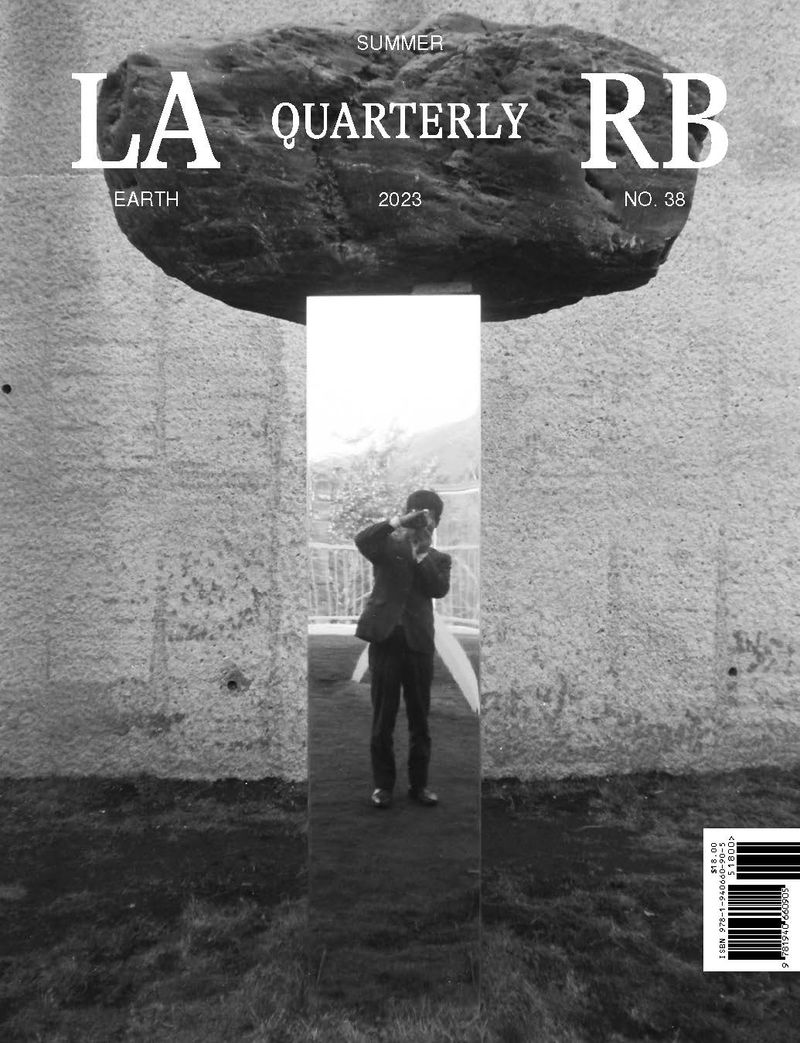
LA Review of Books (Summer 2023) – In this elemental issue of LARB Quarterly, no. 38: Earth, we found new ways of looking at the planet. Writers were free to take up the theme casually or catastrophically, studying the earth beneath their fingernails or the planet from hundreds of thousands of miles away. We imagined being sealed outside, dreaming of coming home.
ON AN UNUSUALLY rainy evening in Los Angeles this March, at the Thomas Mann House in Pacific Palisades, two investigative reporters from Germany gave a talk about a financial scandal known as “cum-ex.” Against the backdrop of a mid-century modern terrace, its polished cement looking dull and gray in the storm, the pair flashed through a series of slides about international tax embezzlement.
A relatively small drip of funds from the German cultural ministry sometimes supports talks like these in the name of Mann’s legacy. When the capital of German literary life was exiled to Los Angeles around the Second World War, the author built a home that now still hosts salons in the name of democratic cultural exchange.
THE YEAR WAS 1971, the place Łódź. Journalist Hanna Krall was interviewing a pioneering heart surgeon named Jan Moll. The good doctor, apparently unhappy with the outcome of previous interviews, told Krall that everything journalists ever wrote about medicine was nonsense. So, if she wanted to avoid doing the same, he strongly suggested she have her article vetted by a certain cardiologist, a Dr. Edelman, who, said Moll, would correct her mistakes. Krall agreed and arranged a meeting. She sat down with Marek Edelman in the Grand Hotel café, where it took 15 minutes for him to read through her article.
Poland, country of central Europe. Poland is located at a geographic crossroads that links the forested lands of northwestern Europe to the sea lanes of the Atlantic Ocean and the fertile plains of the Eurasian frontier.
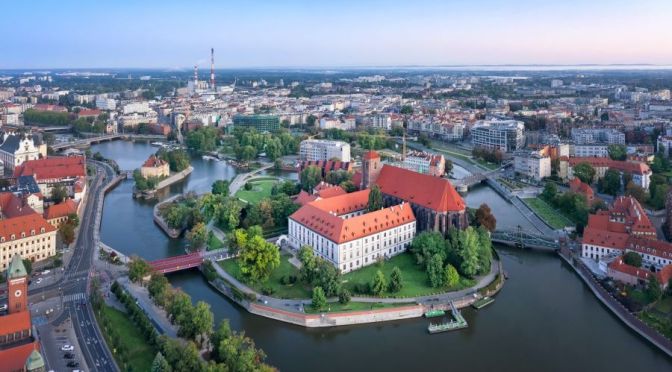
Video timeline: 0:00 intro 0:15 Green field in Sułoszowa 0:23 Wooden house cover by the ice 0:34 Tatra mountains 0:40 Odra river 0:45 Krakow Traffic 0:50 Warsaw at night 1:29 Castle ruins 1:33 Rocky mountain 1:43 Field in Sułoszowa 1:51 Stare miasto 2:02 Castle ruins 2:13 Krzyżtopór Castle 2:23 Turbines 2:30 Warsaw at night 2:44 Castle ruins 2:58 Pieskowa skala 3:06 Wawel castle 2:14 Green mountain 3:18 Old castle 3:28 warsaw time-lapse 3:33 Culture and Science 3:44 Nowy castle 3:53 Krakow 4:08 Poland warsaw 4:34 Odra river 4:51 Night warsaw 4:55 Tatra mountain 5:04 Zakopane 5:15 Turbine 5:26 Kazimierz Dolny 5:36 Old castle 5:46 Clock Tower 5:56 Wawel royal castle 6:06 Renaissance castle 6:17 Stare miasto 6:27 Stare miasto 6:43 Capital of poland 6:55 Modern downtown 7:05 Clock Tower 7:17 Krakow 7:27 Krakow 7:37 Aerial View 7:47 Skyscrapers 7:58 Clock Tower 8:07 Turbine 8:19 Nowy wisnicz 8:29 Castle 8:40 Wroclaw 8:52 Poland at night 9:13 Royal castle 9:32 Clock Tower 9:52 Skyscraper 10:04 Clock Tower
Now bounded by seven nations, Poland has waxed and waned over the centuries, buffeted by the forces of regional history. In the early Middle Ages, Poland’s small principalities and townships were subjugated by successive waves of invaders, from Germans and Balts to Mongols.
In the mid-1500s, united Poland was the largest state in Europe and perhaps the continent’s most powerful nation. Yet two and a half centuries later, during the Partitions of Poland (1772–1918), it disappeared, parceled out among the contending empires of Russia, Prussia, and Austria.
Monocle’s editorial director Tyler Brûlé and panellists Rob Cox and Benno Zogg cover the latest developments on the Russian invasion of Ukraine, with our friends and correspondents in Warsaw, Tokyo and Ukraine.
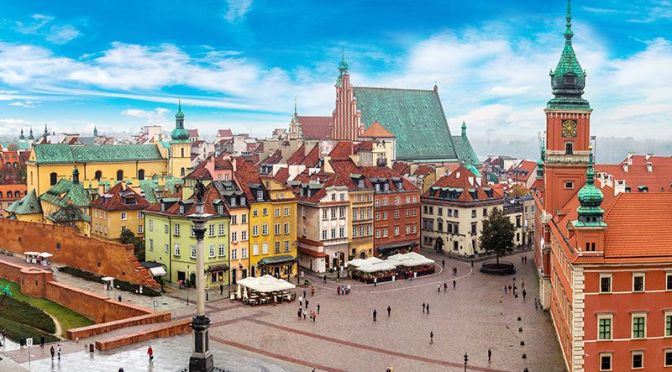
Warsaw, Polish Warszawa, city, capital of Poland. Located in the east-central part of the country, Warsaw is also the capital of Mazowieckiewojewództwo (province).
Warsaw is notable among Europe’s capital cities not for its size, its age, or its beauty but for its indestructibility. It is a phoenix that has risen repeatedly from the ashes of war. Having suffered fearful damage during the Swedish and Prussian occupation of 1655–56, it was again assaulted in 1794, when the Russian army massacred the population of the right-bank suburb of Praga. In 1944, after the Warsaw Uprising failed, by Adolf Hitler’s order the city was razed; the left-bank suburbs, controlled by the Germans, were emptied of their remaining population; and the buildings were systematically reduced to rubble by fire and dynamite. In 1945, however, the people of Warsaw, the Varsovians, returned, and the city resumed its role as the capital of Poland and the country’s centre of social, political, economic, scientific, and cultural life. Many of the historical streets, buildings, and churches have been restored exactly according to their original forms.
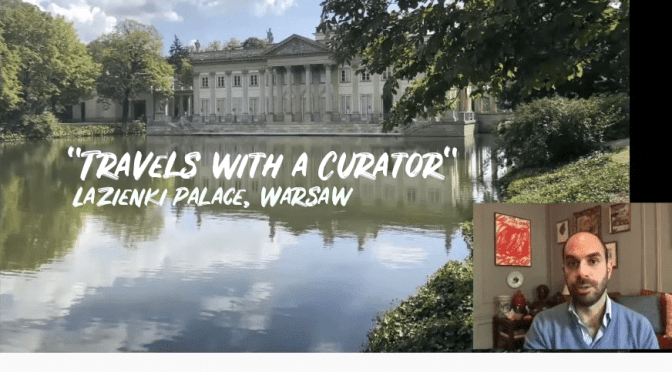
In this episode of “Travels with a Curator,” we travel to Warsaw, Poland, with Xavier F. Salomon, Peter Jay Sharp Chief Curator. Xavier enchants us with the romantic Łazienki Park and Palace, also known as the Palace on the Isle. The idyllic gardens and ornately decorated interior spaces are similar in many ways to our own Frick mansion. One of the Frick’s Rembrandt paintings, “The Polish Rider,” once hung in the royal apartments on the second floor.
News, Views and Reviews For The Intellectually Curious


 N
N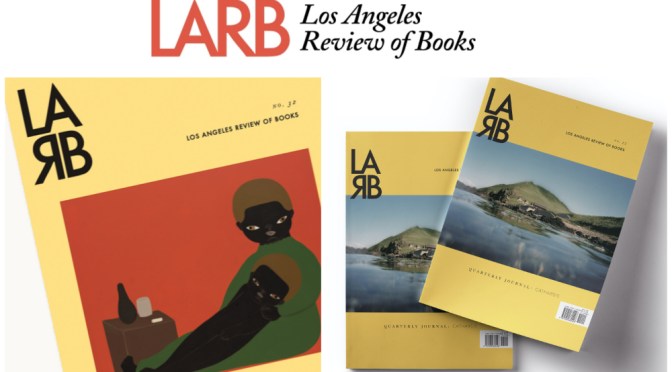
/https%3A%2F%2Fdev.lareviewofbooks.org%2Fwp-content%2Fuploads%2F2023%2F07%2FQJ_LARB.jpg)
/https%3A%2F%2Fdev.lareviewofbooks.org%2Fwp-content%2Fuploads%2F2023%2F07%2FGhetto-Fights.jpg)
 Boomers Daily