Tag Archives: Videos

World Economic Forum: Top Stories Of The Week

World Economic Forum – November 18, 2022 stories:

  1. 0:15 Global Population Reaches 8 Billion – That’s 8 times more humans than existed in 1800. Even so, the world’s population is growing at its slowest rate since 1950 due to a declining global fertility rate. Today there are an average of 2.3 births per woman. In 1950 it was 5. The world’s population is projected to peak at 10.4 billion by 2080.
  2. 1:49 The Economic Case for Climate Adaption – Climate adaptation means preparing our ecological, social and economic systems so they can cope with the future impacts of climate change. Heatwaves, storms, wildfires: the costs of climate change are already mounting but so far only 20% of climate finance has gone towards adaptation.
  3. 3:44 French Start Up Blends Wind and Solar Energy – Unéole’s energy system combines a photovoltaic rooftop panel with 2 compact wind turbines, generating 40% more energy than an ordinary rooftop panel. Solar panels work best in strong sunlight but Unéole’s units generate power when it’s overcast or during winter and can turn through the night to ensure a steady flow of power. The turbines are silent, so they don’t disturb building occupants and they’re built from mostly recycled aluminium and steel.
  4. 4:54 Lab Grown Blood Used in World First – UK scientists have transfused lab-grown blood into humans for the first time. It could revolutionize treatment for people with rare blood types, especially those who need regular transfusions. Two people were injected with 1-2 teaspoons of the synthetic blood to see how how their bodies respond. So far, so good – the trial participants are fit and healthy with no reported side effects.


360° Views: Lena Pillars National Park, Siberia

Lena Pillars is the name given to a natural rock formation along the banks of the Lena River in far eastern Siberia. The pillars are 150–300 metres high, and were formed in some of the Cambrian period sea-basins. The highest density of pillars is reached between the villages of Petrovskoye and Tit-Ary.

Yakutia (Russian: Яку́тия, yah-KOO-tee-yuh), also known as the Republic of Sakha, is located in the Russian Far East, and is notable for being the world’s largest subnational governing body by area. Yakutia covers an area of more than 3 million km², representing about 18 percent of the Russian Federation, and making it roughly the size of India, despite having a population smaller than that of Rhode Island. The republic’s capital is Yakutsk.

Yakutia borders Chukotka to the northeast, Magadan Oblast and Khabarovsk Krai to the southeast, Amur Oblast to the south, Zabaykalsky Krai and Irkutsk Oblast to the southwest, Evenkia to the west and Taymyria to the northwest. In the north it has a long coastline with the Arctic Ocean.

Architectural Tours: An 8′ Wide House In Toronto

This ultra-narrow house looks modern on the outside, but inside it’s a cozy and welcoming home with multiple levels designed around a meandering set of stairs that run up the center of the home. With lots of wood, exposed copper pipes, and small dimensions, the owner often describes the house as feeling like a boat or a treehouse.

While it might seem like the house was recently built as an in-fill house or accessory dwelling unit, there has actually been a narrow single-story structure on the property since at least 1880. It wasn’t until 1980 – a full century later – that the then-owner, an architect, applied to the committee of adjustments to build the house as it is today.

With such a long and narrow floorplan, an important feature of the house is the full glass walls and skylights at both ends of the house, which lets natural light flow into each room and prevents the house from feeling dark and confined.

Analysis: The Future Of Energy Policies In Europe

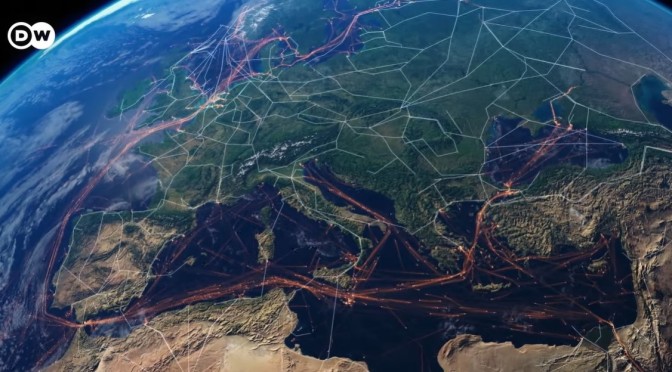
DW Documentary – Energy is life – these days, Europeans are experiencing that first-hand. For far too long, Europe has depended on coal, oil and gas imports from around the world. Not only have these fuels been driving the climate catastrophe, but they also serve as a dangerous bargaining chip for geopolitical interests.

Energy is essential — and it is a major problem. The war in Ukraine has shown just how dependent Europe is on fossil fuels. This has weakened Europe and given export countries – frequently governed by authoritarian rule – a geopolitical means of leverage. Now, war on the European continent has eclipsed concerns over the climate Crisis. The increased consumption of harmful fuels is creating economic and political problems.

Yet, against the odds, decarbonizing Europe remains a widespread priority, and alternative solutions are already available. In France, Denmark and Ukraine, civil initiatives are taking energy supplies into their own hands and investing in the joint production of their own solar energy. In some cases, privately produced solar energy has proven much cheaper than what national solar energy providers offer.

These initiatives show that decentralizing energy production could be the key to transforming our energy supply. Poland still depends heavily on coal, but is offering re-training programs for employees in the mining business to help them transition to green jobs. An estimated one million such green jobs are expected to be created in Europe by 2030. Green hydrogen, currently still in the development stages, could be a sustainable and profitable alternative for industries in the future.

Across the continent, workable alternatives are emerging. The current quick succession of political crises has now joined the ongoing climate crisis to show just how important it is to act now.

Walking Tours: Little Havana In Miami, Florida

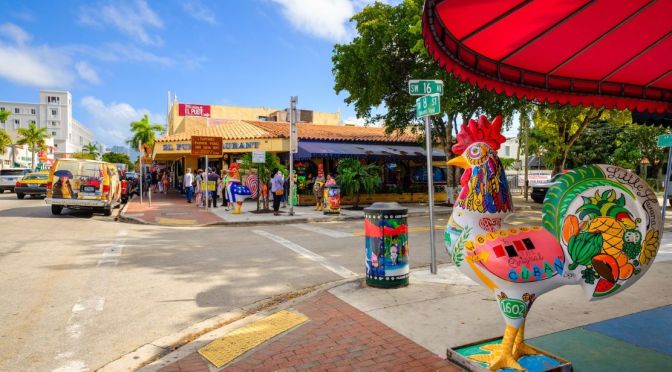
Little Havana is Miami’s vibrant Cuban heart, with Latin American art galleries and busy restaurants. Cafes with walk-up windows sell Cuban coffee to cigar-smoking patrons. On Calle Ocho (SW 8th Street), locals discuss politics over dominoes at Maximo Gomez Park, dubbed Domino Park by locals. The historic Tower Theater screens independent and revival films, while the area’s clubs host live Latin music.

Architecture In China: Cloudscape Of Haikou

DezeenIn the first instalment of Dezeen’s new Concrete Icons series produced in collaboration with Holcim, MAD Architects founder Ma Yansong explains how his firm’s sinuous concrete library in Haikou, China encourages visitors to use their imagination.

Yansong is the first participant in Concrete Icons, a new video series profiling the most iconic contemporary concrete buildings by the world’s leading architects. The video focusses on MAD’s Cloudscape of Haikou, a library with a flowing form cast in white concrete located in a waterside park in Haikou on the island of Hainan.

Completed in 2021, the 1,000-square-metre structure houses a library, cafe, restrooms, showers, a nursery room, and bike storage, and acts as a waystation for visitors to the park. Speaking to Dezeen in an exclusive video interview filmed at MAD’s offices in Beining, Yansong explained how the building is designed to put visitors in a contemplative or imaginative state of mind.

Read more on Dezeen: https://www.dezeen.com/?p=1866618

The Cloudscape of Haikou

MAD Architects, led by Ma Yansong, has announced the opening of the Cloudscape of Haikou is located on the southern tip of China. A unique urban public and cultural space for citizens and visitors to Haikou, this flowing, sculptural concrete form was named as one of the “most anticipated architecture projects of 2021” by The Times of London.

A prominent port city on the southern tip of China, Haikou was once an important stop on the Maritime Silk Road. With the establishment of the Hainan International Tourism Island and Hainan Free Trade Zone, Haikou’s influence has seen a gradual resurgence in modern times. Meanwhile, Haikou’s government is also enriching the city’s cultural importance, through enhancing the social attributes of the city’s public spaces, and strengthening the connection between the city, humanities, and architecture. The Cloudscape of Haikou is one such culmination of this effort.

The Cloudscape of Haikou is the first of sixteen coastal pavilions commissioned by the Haikou Tourism and Culture Investment Holding Group to rejuvenate the historic port city, with the aim of improving public space along the coastline. Known as “Haikou, Pavilions by the Seaside,” the initiative invited teams of internationally recognized architects, artists, and interdisciplinary professionals to create sixteen landmark public stations.

Artist’s View: Wild Horse Trail Scenic Byway, Idaho

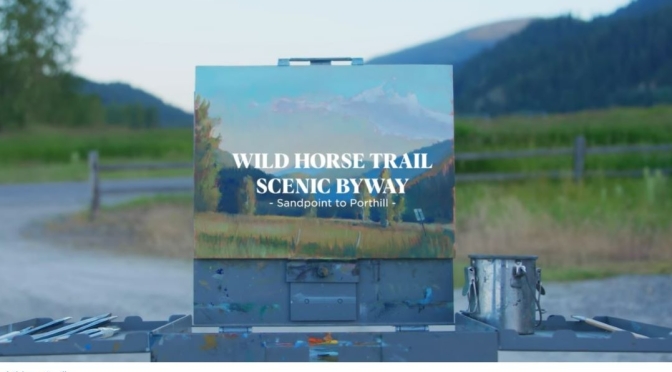
The Wild Horse Trail Scenic Byway—part of the International Selkirk Loop—begins in Sandpoint’s scenic downtown located on Lake Pend Oreille. The route follows the “Wild Horse Trail,” which was crucial for the Kootenai Tribe and settlers while this region of northern Idaho grew through the gold rush era. Visitors will travel from Sandpoint to the international border crossing in Porthill.

Micronesia Views: Marine Sanctuaries In Palau

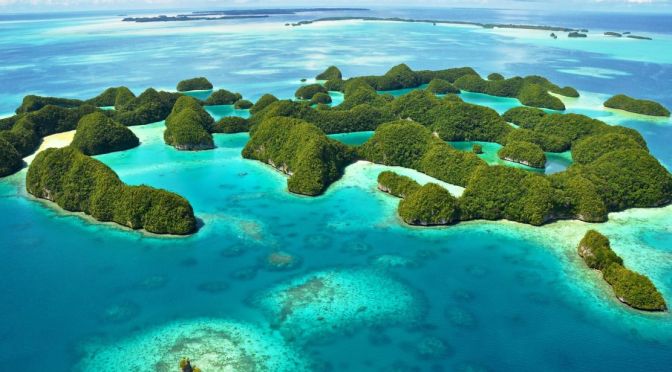
CBS Mornings – As small island developing states make their case for climate awareness at COP27 in Egypt, one member of the group is reconsidering a historic act of preservation it undertook two years ago. Lee Cowan reports.

Palau is an archipelago of over 500 islands, part of the Micronesia region in the western Pacific Ocean. Koror Island is home to the former capital, also named Koror, and is the islands’ commercial center. The larger Babeldaob has the present capital, Ngerulmud, plus mountains and sandy beaches on its east coast. In its north, ancient basalt monoliths known as Badrulchau lie in grassy fields surrounded by palm trees.

Engineering: Why Mexico Has So Few Tall Buildings

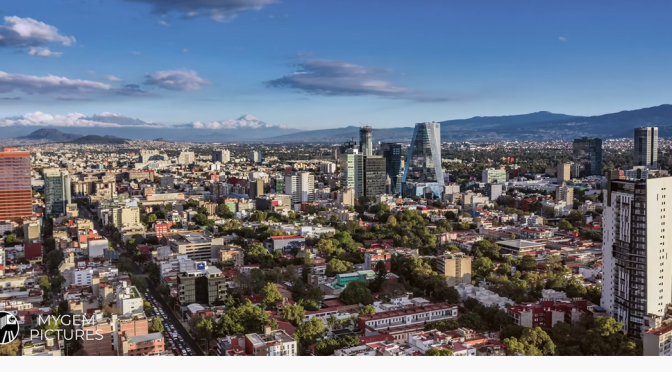
The B1M – TAKE a look at Mexico’s cities and you might spot some similarities.

You’ll see it’s a country that clearly knows a thing or two about urban sprawl, with hardly a skyscraper in sight. But look closely and you’ll find that skyscrapers do exist, just not really in any great numbers.

That’s because it’s one of the toughest places on Earth to build tall and engineers must grapple with the extremes of the elements, unforgiving ground conditions, congestion and the absence of some key resources.

Now though, after decades of building outwards instead of upwards, skyscrapers in Mexico are seriously on the rise and construction crews are managing to meet some immense challenges.