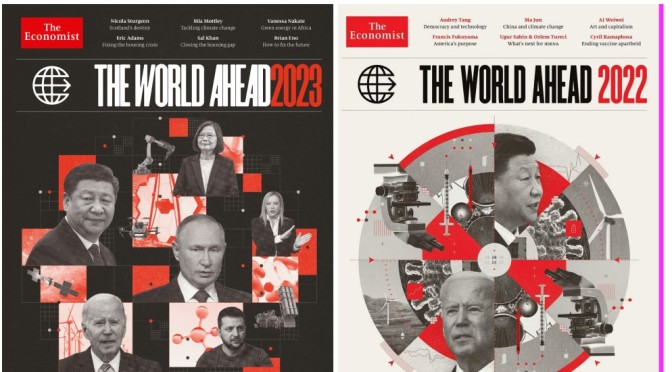

Video timeline: 00:00 – The World Ahead 2023 00:35 – India’s population potential 04:30 – Psychedelic medicines 08:06 – Japan’s markets mayhem? 12:45 – Repairing the world 15:50 – The coronation’s colonial concerns

Video timeline: 00:00 – The World Ahead 2023 00:35 – India’s population potential 04:30 – Psychedelic medicines 08:06 – Japan’s markets mayhem? 12:45 – Repairing the world 15:50 – The coronation’s colonial concerns

For the heroism of its people, and for standing up to a bully
Some years bring disorder, others a resolution. This one asked questions
He has had a crash course in the trade-offs in protecting free expression

Ukraine’s chiefs, in an unprecedented series of briefings, tell The Economist about the critical months that lie ahead
It must treat hospitals as a precious resource and start stockpiling drugs
Even when they say they want more prosperity, they act as if they don’t
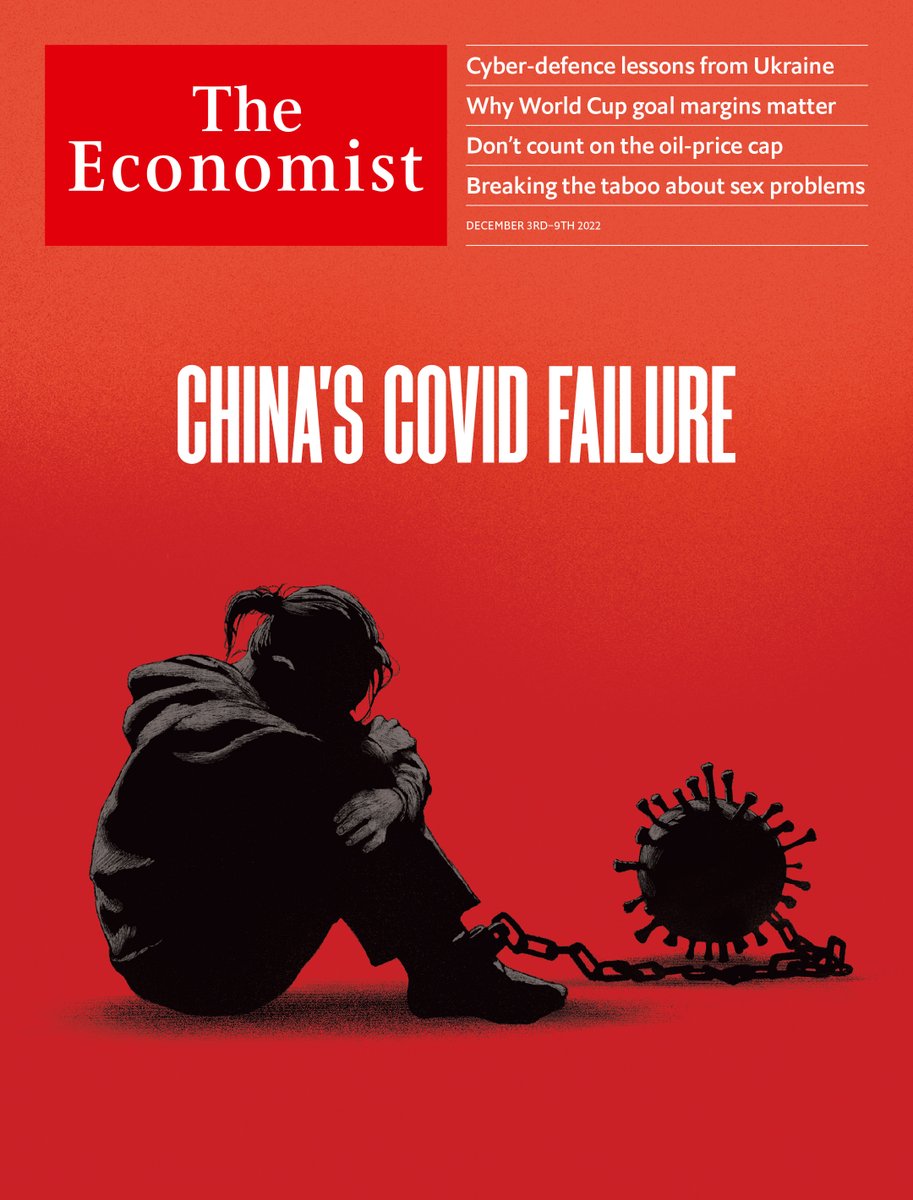
Caught between raging disease and unpopular and costly lockdowns, he has no good fix
Why the West’s proposed price cap on Russian oil is no magic weapon
Why trustbusters should let Microsoft buy Activision Blizzard

This will weaken it and threaten its global position
Hollywood is suffering from the brutal economics of streaming
Europe should let them do their jobs
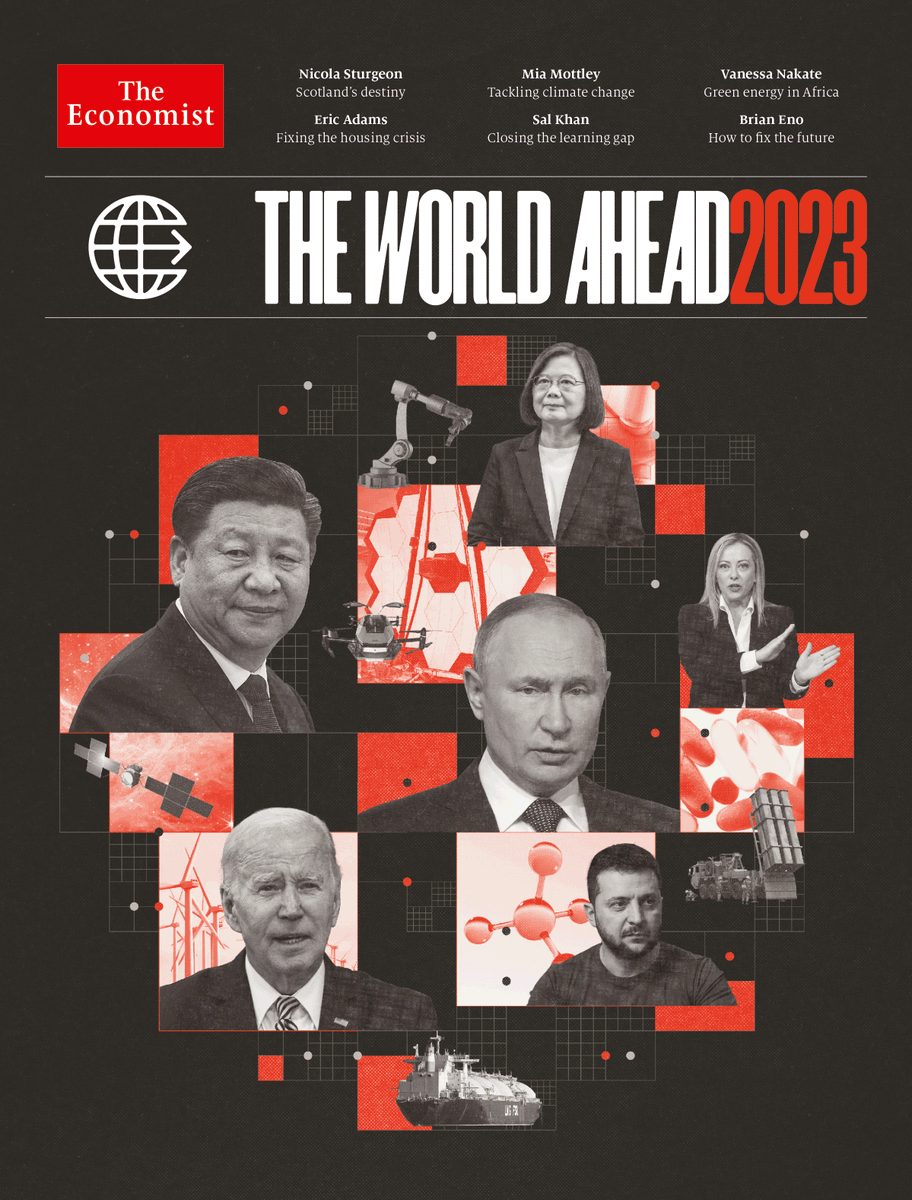
A letter from Tom Standage, editor of “The World Ahead 2023”
1. All eyes on Ukraine. Energy prices, inflation, interest rates, economic growth, food shortages—all depend on how the conflict plays out in the coming months. Rapid progress by Ukraine could threaten Vladimir Putin, but a grinding stalemate seems the most likely outcome. Russia will try to string out the conflict in the hope that energy shortages, and political shifts in America, will undermine Western support for Ukraine.
2. Recessions loom. Major economies will go into recession as central banks raise interest rates to stifle inflation, an after-effect of the pandemic since inflamed by high energy prices. America’s recession should be relatively mild; Europe’s will be more brutal. The pain will be global as the strong dollar hurts poor countries already hit by soaring food prices.
3. Climate silver lining. As countries rush to secure their energy supplies, they are turning back to dirty fossil fuels. But in the medium term the war will accelerate the switch to renewables as a safer alternative to hydrocarbons supplied by autocrats. As well as wind and solar, nuclear and hydrogen will benefit too.
4. Peak China? Some time in April China’s population will be overtaken by India’s, at around 1.43bn. With China’s population in decline, and its economy facing headwinds, expect much discussion of whether China has peaked. Slower growth means its economy may never overtake America’s in size.
5. Divided America. Although Republicans did worse than expected in the midterm elections, social and cultural divides on abortion, guns and other hot-button issues continue to widen after a string of contentious Supreme Court rulings. Donald Trump’s formal entry into the 2024 presidential race will pour fuel on the fire.
6. Flashpoints to watch. The intense focus on the war in Ukraine heightens the risk of conflict elsewhere. With Russia distracted, conflicts are breaking out in its backyard. China may decide that there will never be a better time to make a move on Taiwan. India-China tensions could flare in the Himalayas. And might Turkey try to nab a Greek island in the Aegean?
7. Shifting alliances. Amid geopolitical shifts, alliances are responding. nato, revitalised by the war in Ukraine, will welcome two new members. Will Saudi Arabia join the Abraham accords, an emerging bloc? Other groupings of growing importance include the Quad and aukus (two American-led clubs intended to deal with China’s rise) and i2u2—not a rock band, but a sustainability forum linking India, Israel, the United Arab Emirates and the United States.
8. Revenge tourism. Take that, covid! As travellers engage in post-lockdown “revenge” tourism, traveller spending will almost regain its 2019 level of $1.4trn, but only because inflation has pushed up prices. The actual number of international tourist trips, at 1.6bn, will still be below the pre-pandemic level of 1.8bn in 2019. Business travel will remain weak as firms cut costs.
9. Metaverse reality check. Will the idea of working and playing in virtual worlds catch on beyond video games? 2023 will provide some answers as Apple launches its first headset and Meta decides whether to change its strategy as its share price languishes. Meanwhile, a less complicated and more immediately useful shift may be the rise of “passkeys” to replace passwords.
10. New year, new jargon. Never heard of a passkey? Fear not! Turn to our special section, “Understand This”, which rounds up the vital vocabulary that will be useful to know in 2023. nimbys are out and yimbys are in; cryptocurrencies are uncool and post-quantum cryptography is hot; but can you define a frozen conflict, or synfuel? We’ve got you covered.

Despite the former president’s efforts, America and its democracy look stronger after the midterms
How a stable and successful country could emerge from the trauma of Russia’s invasion
Refusing to speak is what children do when they are angry
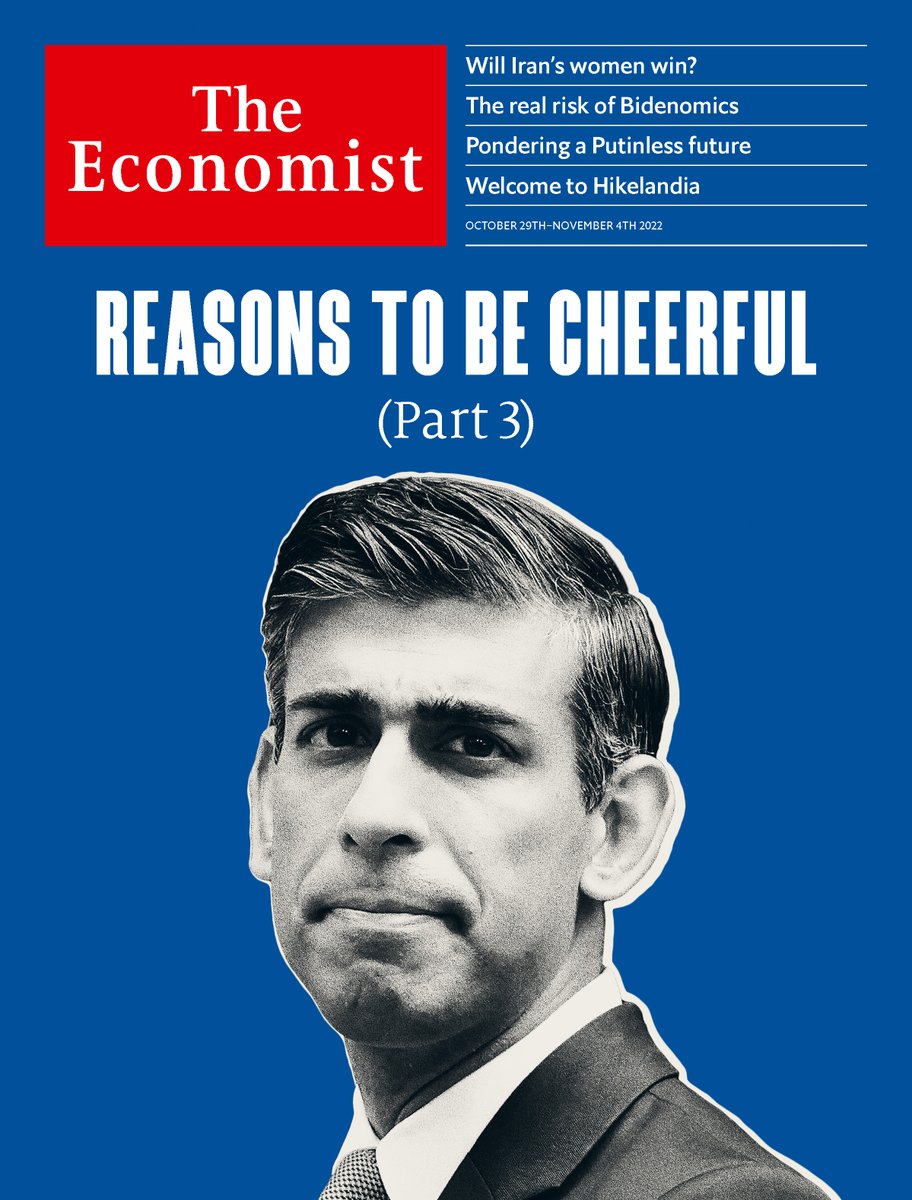
Reasons to be cheerful are scant
Their uprising could be the beginning of the end of Iran’s theocracy
The country’s clean-energy push shows a way to escape the coal addiction
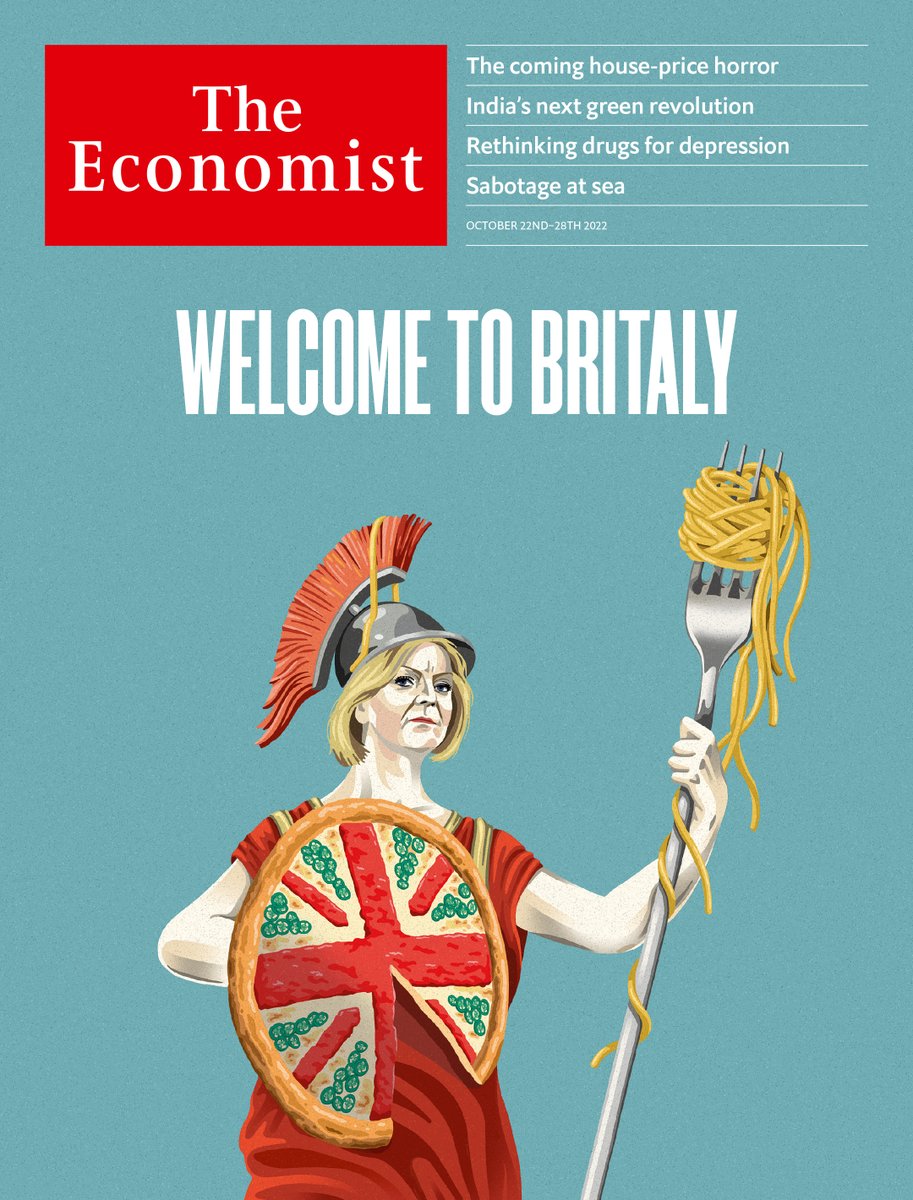 Welcome to Britaly
A country of political instability, low growth and subordination to the bond markets
In 2012 liz truss and Kwasi Kwarteng, two of the authors of a pamphlet called “Britannia Unchained”, used Italy as a warning. Bloated public services, low growth, poor productivity: the problems of Italy and other southern European countries were also present in Britain. Ten years later, in their botched attempt to forge a different path, Ms Truss and Mr Kwarteng have helped make the comparison inescapable. Britain is still blighted by disappointing growth and regional inequality. But it is also hobbled by chronic political instability and under the thumb of the bond markets. Welcome to Britaly.
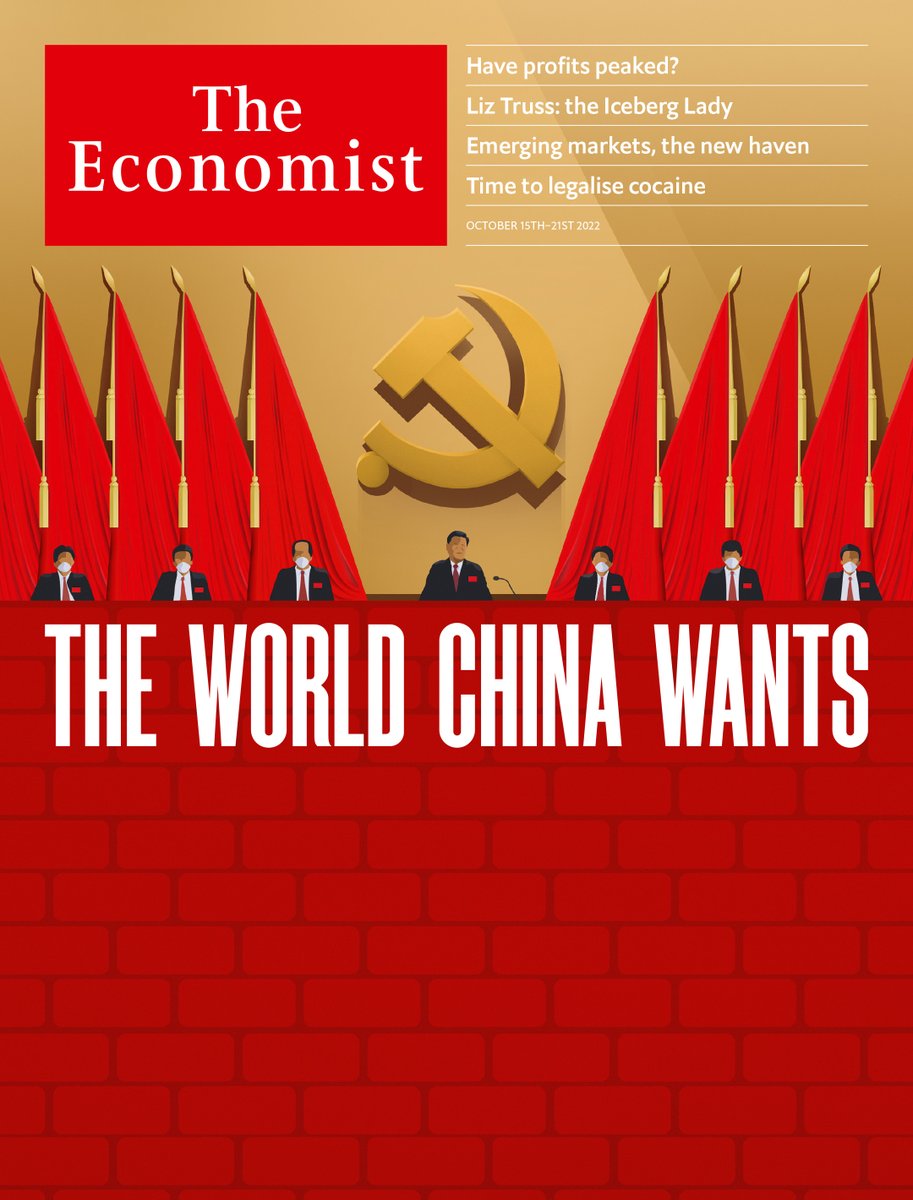
Its five-yearly congress will further tighten one man’s grip
It will be an orderly affair. From October 16th the grandees of China’s Communist Party will gather in the Great Hall of the People in Beijing for their five-yearly congress. Not a teacup will be out of place; not a whisper of protest will be audible. The Communist Party has always been obsessed with control. But under President Xi Jinping that obsession has deepened. After three decades of opening and reform under previous leaders, China has in many ways become more closed and autocratic under Mr Xi. Surveillance has broadened. Censorship has stiffened. Party cells flex their muscles in private firms. Preserving the party’s grip on power trumps any other consideration.
 Boomers Daily