
It was the retreat and final address of the painter Pierre-Auguste Renoir, who moved there in 1907 in an attempt to improve his arthritis, and remained until his death in 1919.

It was the retreat and final address of the painter Pierre-Auguste Renoir, who moved there in 1907 in an attempt to improve his arthritis, and remained until his death in 1919.

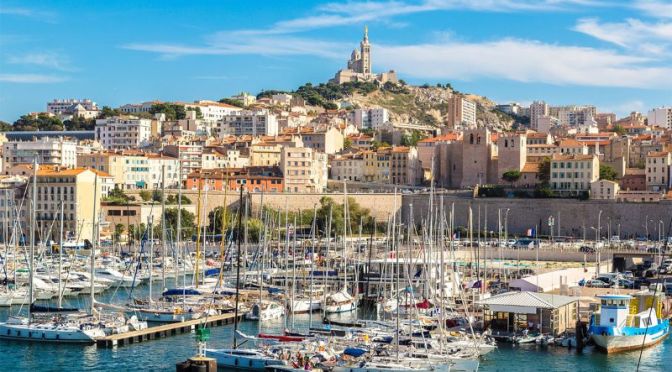
The southern port city has been at the crossroads of trade and immigration since it was first founded in 600 BC. All this has made Marseille into a Mediterranean melting pot with a diverse cultural and gastronomic heritage.
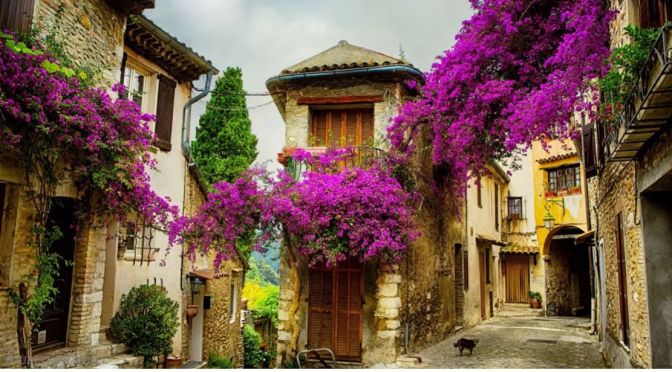
Bormes-les-Mimosas (February 2023) is a small village in the Var clinging to the side of a hill, a sort of flowery balcony over an intense blue Mediterranean. Lower down, Le Lavandou and its beaches, the fort of Brégançon not far from the open sea then the sunny coasts of the Côte d’Azur.
This French commune is located on the edge of the Mediterranean and in the southern part of the Moorish massif. Like any locality in the region, the climate is Mediterranean with high heat in July. The tourist attractions of this city are many. The most important of these is the old castle which is located on a hill. Then comes St. Francis Square where you can see a statue of St. Francis de Paul, a famous monk who lived there in the fifteenth century.
Filmed and edited by
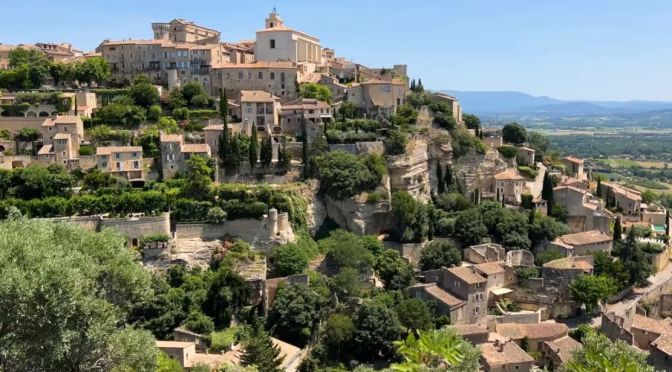
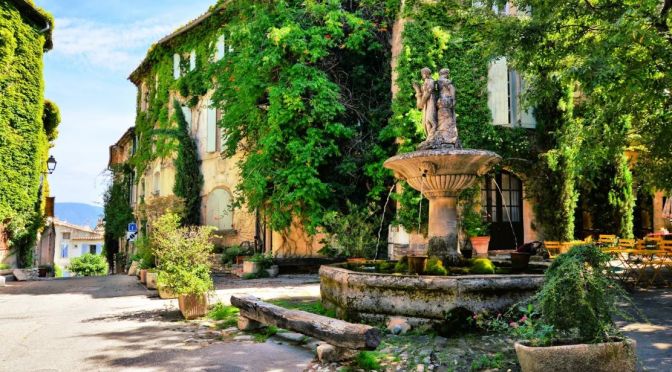
Saignon has the most distinctive outline of any Luberon village, with its rock squared off by nature as if to look from afar like an impregnable castle. It acts as a signpost high above the town of Apt, hence perhaps the name Saignon, which comes from signum, Latin for ‘sign’.

Saignon was like a look-out for danger riding along the valley towards Apt, and the church bells were the alarm. Because of this important role this was a privileged village and no fewer than three castles sprung up within its confines, built by three different lords, which when you look at the size of Saignon is truly remarkable. The wealth of the village 800 years ago can be seen in the architecture that still stands, and it is a lovely village to stroll around, with its winding narrow streets and fountains.
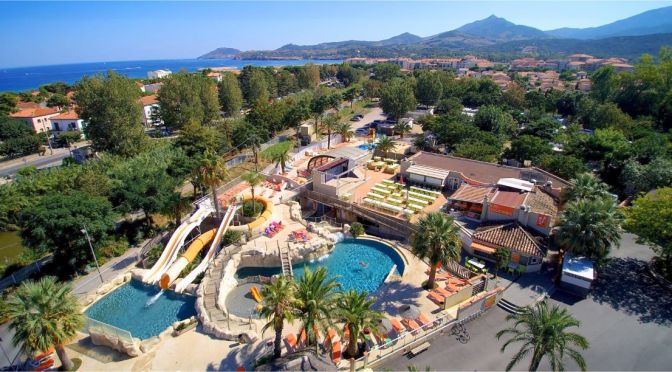
One of the most popular holiday destinations for French people is the campsite. Argelès-sur-Mer, in the eastern Pyrenees, is the town with the largest amount of camping accommodation in Europe. In the summer, this Western corner of the Mediterranean sees its population increase tenfold. We meet two brothers who run a campsite in Argelès.
Argelès-sur-Mer is a town on France’s Mediterranean coast. It’s known for the long Argelès Beach with its seafront promenade. In the Catalan-style old town, 14th-century Notre-Dame del Prat Church has views from its bell tower. Valmy Park to the south includes trails, a 19th-century castle and the Aigles de Valmy bird zoo. To the north, Mas Larrieu Natural Reserve is home to herons, gulls and bee-eaters.
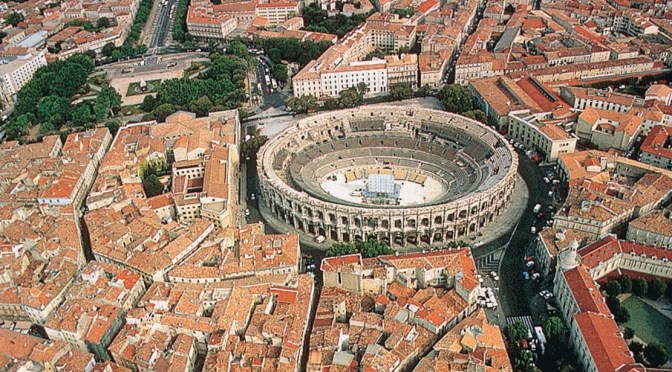
In the southern French city of #Nîmes, the passion for #AncientRome is more alive than ever. For the past decade, the city has been holding the Great Roman Games show every spring. Legionaries, centurions and gladiators invade the city and bring its incredible Roman monuments back to life: in particular the arena, where the Great Games are organised. Thousands of people, young and old alike, turn out to be transported back to the Rome of #JuliusCaesar.
Nîmes, a city in the Occitanie region of southern France, was an important outpost of the Roman Empire. It’s known for well-preserved Roman monuments such as the Arena of Nîmes, a double-tiered circa-70 A.D. amphitheater still in use for concerts and bullfights. Both the Pont du Gard tri-level aqueduct and the Maison Carrée white limestone Roman temple are around 2,000 years old.
Like a medieval duel, but on the water: Contestants use lances to try to knock each other out of their boats. Since 1666, water-jousting events have been held yearly in the port city of Sète, southern France.
After a two-year break on account of the coronavirus pandemic, the traditional fisherman’s jousting event has returned. It’s considered the most important event of its kind – the the sport’s world championships. Each year, thousands of spectators and fans flock to the city to take part in the spectacle. The competition rules haven’t changed since 1666!
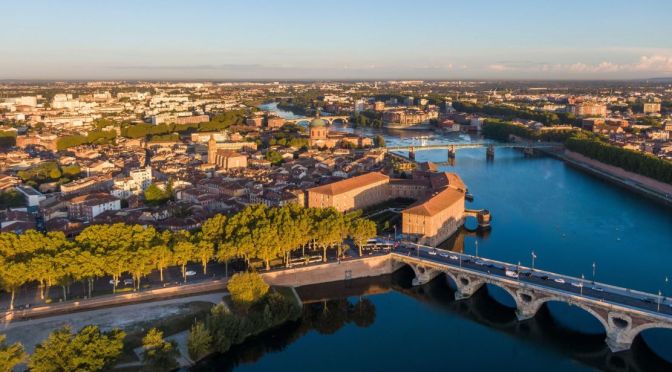
Toulouse, capital of France’s southern Occitanie region, is bisected by the Garonne River and sits near the Spanish border. It’s known as La Ville Rose (‘The Pink City’) due to the terra-cotta bricks used in many of its buildings. Its 17th-century Canal du Midi links the Garonne to the Mediterranean Sea, and can be traveled by boat, bike or on foot.
Montpellier is a city in southern France, 10km inland from the coast of the Mediterranean Sea. The town’s stately Gothic Cathédrale Saint-Pierre, distinguished by conical towers, dates to 1364. The city’s Antigone district is a chic, modern development inspired by neoclassical motifs. Paintings from French and European Old Masters hang at the Musée Fabre.


 Boomers Daily