

 About one-third of people with epilepsy are treatment resistant. Up until now, epilepsy treatments have focused on taming seizures rather than the source of the disease and for good reason—so many roads lead to epilepsy: traumatic brain injury, extreme fever and infection, and genetic disorders, to name a few. Staff Writer Jennifer Couzin-Frankel talks with host Sarah Crespi about researchers that are turning back the pages on epilepsy, trying to get to the beginning of the story where new treatments might work.
And Sarah also talks with Torsten Neurbert at the Technical University of Denmark’s National Space Institute in Kongens Lyngby about capturing high-altitude “transient luminous events” from the International Space Station (ISS). These lightning-induced bursts of light, color, and occasionally gamma rays were first reported in the 1990s but had only been recorded from the ground or aircraft. With new measurements from the ISS come new insights into the anatomy of lightning.
Website: https://www.sciencemag.org/podcast/hunting-new-epilepsy-drugs-and-capturing-lightning-space

 On 13 December, Amazon Prime will air the fourth season of The Expanse, a hardboiled space drama renowned for its working-class characters and real-world space physics. Showrunner Naren Shankar is part of the reason the science checks out. The veteran writer and producer for programs such as Star Trek: The Next Generation, Farscape, and the police procedural CSI: Crime Scene Investigation, has a doctorate in applied physics and electrical engineering.
 After their life as research subjects, what happens to lab monkeys? Some are euthanized to complete the research, others switch to new research projects, and some retire from lab life. Should they retire in place—in the same lab under the care of the same custodians—or should they be sent to retirement home–like sanctuaries? Online News Editor David Grimm joins host Sarah Crespi to discuss recently penned legislation that
 They found that these physically active mice had fewer inflammatory cells (leukocytes) than sedentary mice, an effect they traced to diminished activity of hematopoietic stem and progenitor cells (HSPCs). The lower activity of HSPCs was due at least in part to exercise-induced reduction in the levels of leptin, a hormone produced by fat tissue that regulates cells within the hematopoietic bone marrow niche.
 tes of Health’s largest loan repayment program was conceived to help scientists pay off school debts without relying on industry funding. But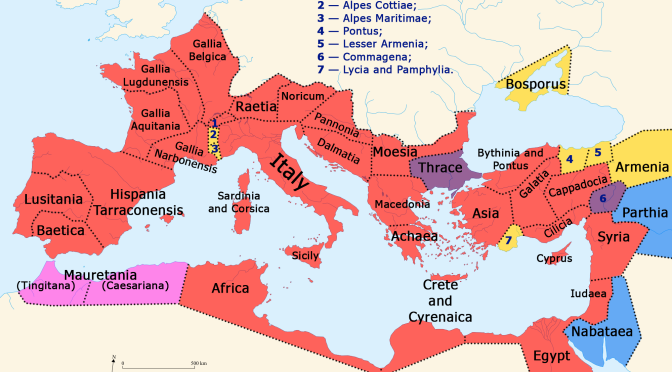
 There was a massive shift in Roman residents’ ancestry, the researchers found, but that ancestry came primarily from the Eastern Mediterranean and Near East, possibly because of denser populations there relative to the Roman Empire’s western reaches in Europe and Africa.
 Boomers Daily