Tag Archives: Previews

Finance Preview: Barron’s Magazine – July 24, 2023

Image

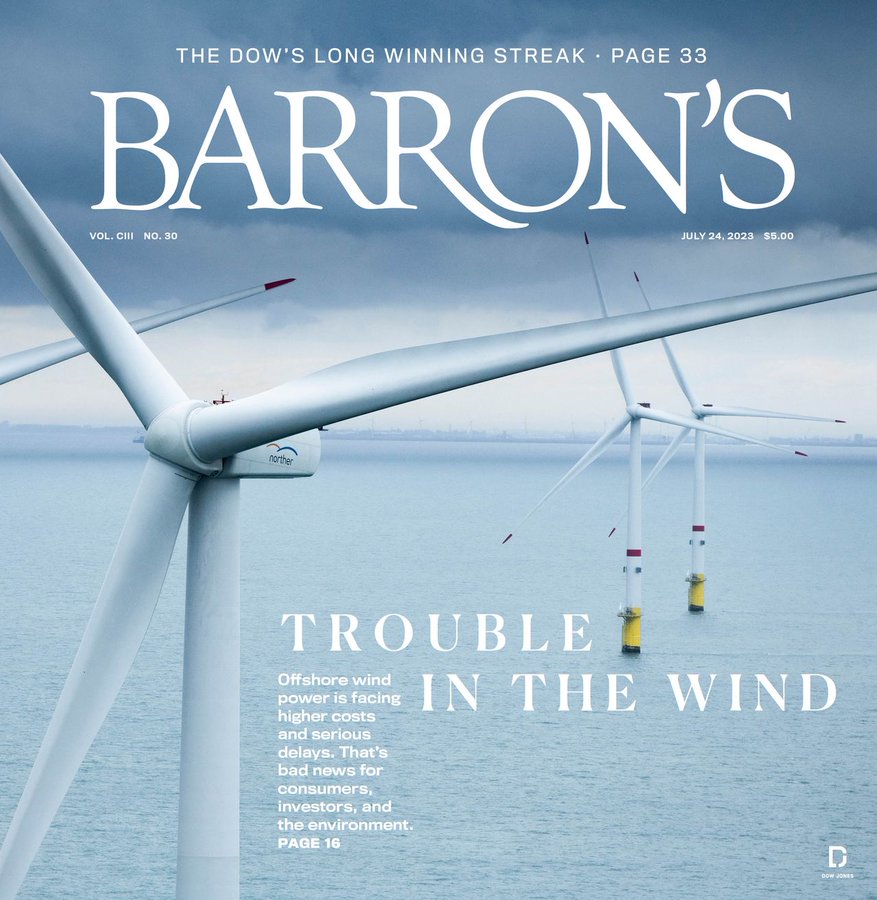
BARRON’S MAGAZINE – JULY 24, 2023 ISSUE

America’s Bet on Wind Power Is Running Into a Big Problem

America's Bet on Wind Power Is Running Into a Big Problem

Higher costs and serious delays are plaguing offshore wind projects. Consumers, investors, and the environment will pay the price.

High Rates Make Annuities Hot Investments. The 100 Best.

High Rates Make Annuities Hot Investments. The 100 Best.

Barron’s annual guide to the 100 best annuities will help you pick the right one for your needs.Long read

This Insurance Broker’s Stock Is Anything but Boring

This Insurance Broker’s Stock Is Anything but Boring

Shares of Arthur J. Gallagher have trounced the market since it went public in 1984. Expect the gains to continue.4 min

The New York Times Book Review — July 23, 2023

Image

THE NEW YORK TIMES BOOK REVIEW – JULY 23, 2023:

Colson Whitehead on ‘Crook Manifesto’ and Harlem in the ’70s

The Pulitzer-winning novelist discusses the sequel to his 2021 crime story “Harlem Shuffle.”

Roald Dahl Museum Calls Author’s Racism ‘Undeniable and Indelible’

A museum in England devoted to the best-selling children’s author, who died in 1990, condemned his antisemitic views.

Preview: London Review Of Books — July 27, 2023

Image

London Review of Books (LRB) – July 27, 2023 issue:

The Sullivanians: Sex, Psychotherapy and the Wild Life of an American Commune by Alexander Stille

James Lasdun

Poem: ‘A False Awakening’

John Burnside

Attack Warning Red! How Britain Prepared for Nuclear War by Julie McDowall

Florence Sutcliffe-Braithwaite

G-Man: J. Edgar Hoover and the Making of the American Century by Beverly Gage

Deborah Friedell

Short Cuts: Radiant Ambiguity

James Butler

Research Preview: Science Magazine – July 21, 2023

Image

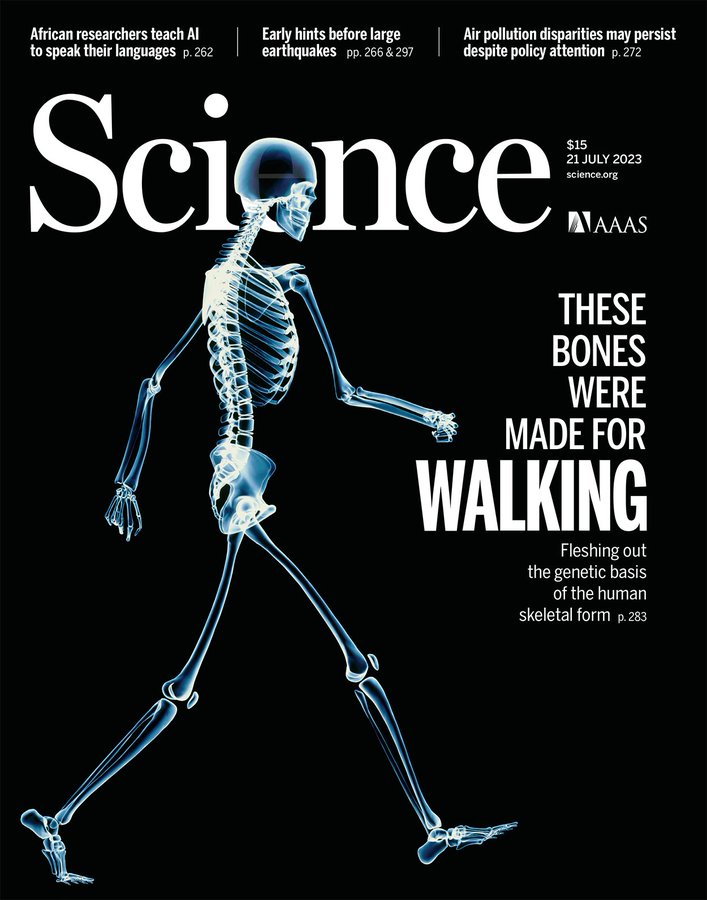
Science Magazine – July 21, 2023 issue: The cover depicts an x-ray of a human skeleton walking. Researchers extracted 23 skeletal proportions from 30,000 individuals using deep learning. Coupled with genetic and biobank data, more than 100 genetic variants associated with these proportions were identified. These analyses shed light on the evolution of the skeletal form, which facilitates bipedalism, and reveal connections to musculoskeletal disorders.

Hollywood movie aside, just how good a physicist was Oppenheimer?

A-bomb architect “was no Einstein,” historian says, but he did Nobel-level work on black holes

Deglaciation of northwestern Greenland during Marine Isotope Stage 11

Previews: The Economist Magazine – July 22, 2023

Image

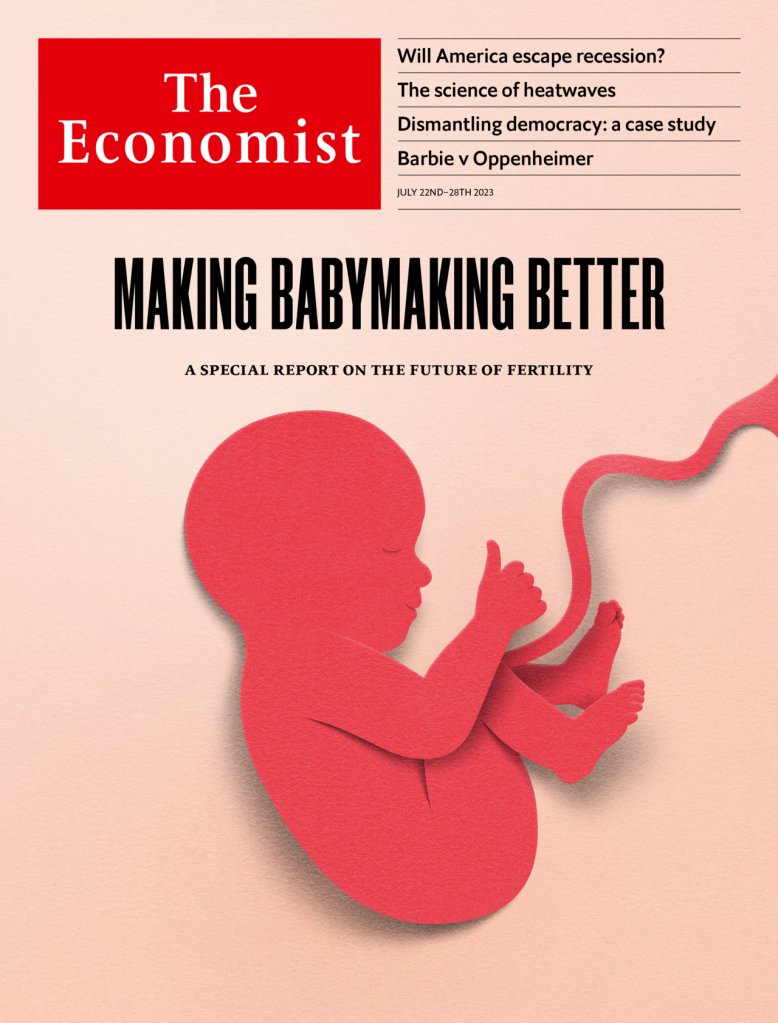
The Economist Magazine- July 22, 2023 issue: Making babymaking better – A special report on the future of fertility; How Cities can respond to Extreme Heat; The World Economy is still in danger, and more…

IVF is failing most women. But new research holds out hope

Fertility is still poorly understood

A smiling fetus with it's thumb up

After louise brown was born in Manchester in July 1978, her parents’ neighbours were surprised to see that the world’s first “test-tube baby” was “normal”: two eyes, ten fingers, ten toes. In the 45 years since, in vitro fertilisation has become the main treatment for infertility around the world. At least 12m people have been conceived in glassware. An ivf baby takes its first gulp of air roughly every 45 seconds. ivf babies are just as healthy and unremarkable as any others. Yet to their parents, most of whom struggle with infertility for months or years, they are nothing short of miraculous.

How cities can respond to extreme heat

Officials from Beijing to Phoenix are grappling with unbearable temperatures

A man pours water on his head to cool off amid searing heat in Phoenix, Arizona.

The best thing that has happened in Phoenix, Arizona, since the beginning of July is that the electricity grid has kept functioning.

This has meant that during a record-breaking run of daily maximum temperatures above 43°C (110°F), still in progress as The Economist went to press, the houses, indoor workplaces and publicly accessible “cooling stations” in the city have been air-conditioned. There have been deaths from heat stroke and there will be more; there has been a lot of suffering; and there will have been real economic losses. But if Arizona’s grid had gone out, according to an academic quoted in “The Heat Will Kill You First”, a new book, America would have seen “the Hurricane Katrina of extreme heat”.

Research Preview: Nature Magazine – July 20, 2023

Volume 619 Issue 7970

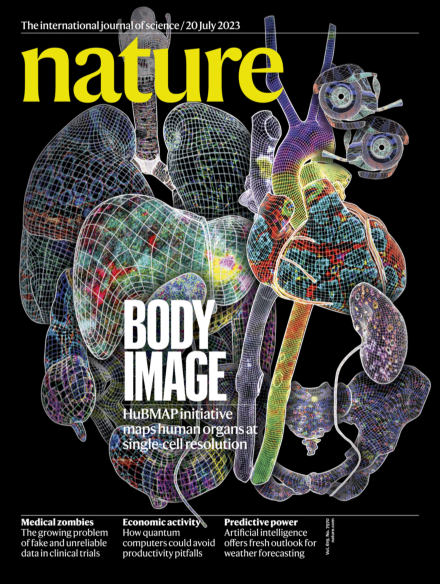
nature Magazine -July 20, 2023 issue: Launched in 2018, the Human Biomolecular Atlas Program (HuBMAP) aims to map how cell types are arranged in the human body. The initiative is both developing and then deploying the necessary technology to create maps of organs at single-cell resolution.

This quiet lake could mark the start of a new Anthropocene epoch

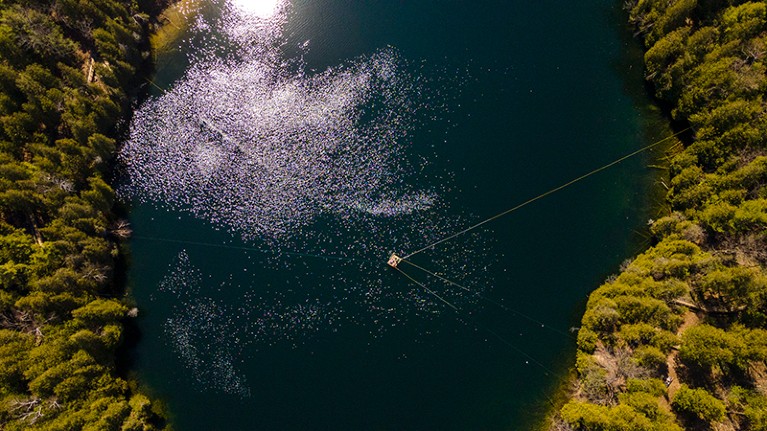
An aerial view of Crawford Lake.

The dawn of a new geological epoch is recorded in the contaminated sediment at the bottom of Crawford Lake in Canada.

The official marker for the start of a new Anthropocene epoch should be a small Canadian lake whose sediments capture chemical traces of the fallout from nuclear bombs and other forms of environmental degradation. That’s a proposal out today from researchers who have spent 14 years debating when and how humanity began altering the planet.

How to introduce quantum computers without slowing economic growth

To smooth the path of the quantum revolution, researchers and governments must predict and prepare for the traps ahead.

Arts/Books: Times Literary Supplement – July 21, 2023

Image

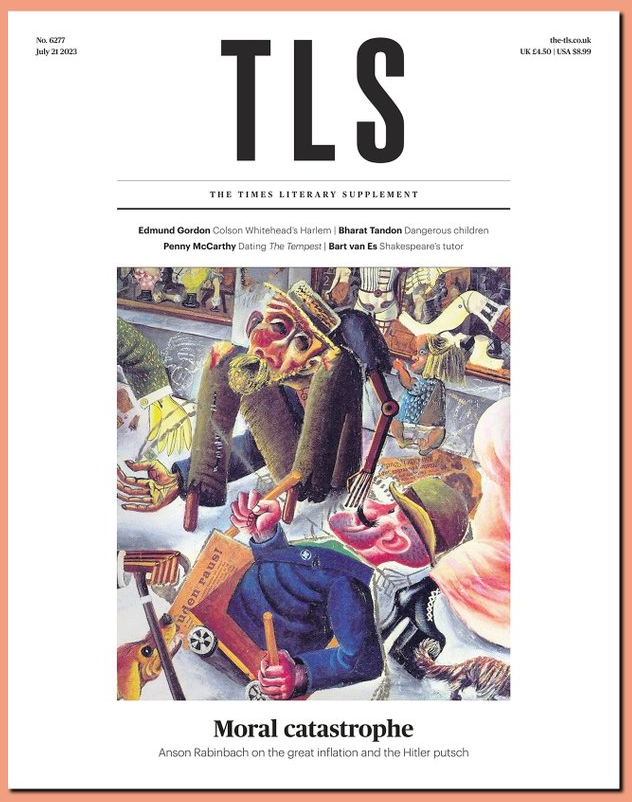
Times Literary Supplement (July 21, 2023) – Moral catastrophe – The great inflation in Germany in 1923 and the Hitler putsch; Pioneer’s in Women’s Sport; Colson Whitehead’s Harlem; Dangerous children; Dating The Tempest and Shakespreare’s tutor….

Politics: The Guardian Weekly – July 21, 2023

Image

The Guardian Weekly (July 21, 2023) Hollywood on strike; extreme heat is here. Plus the Women’s World Cup kicks off.

When the result of the Hollywood actors’ strike ballot was announced last Thursday, the big-name stars of Oppenheimer left the film’s London premiere.

This show of solidarity by Matt Damon, Emily Blunt, Cillian Murphy and Florence Pugh was a demonstration of the far-reaching effects of creatives taking to the picket lines. For our big story, arts reporter  Vanessa Thorpe looks at what the historic joint walkout by writers and actors means for all of us as movie-goers and TV viewers as well as the stars, lesser-known actors and technicians struggling to make a living.

And we look at what lies behind the dispute with our film editors  Catherine Shoard and Andrew Pulver while Los Angeles reporter Lois Beckett hears from actors finding it ever harder to make a living in the age of streaming and the use of AI in the entertainment industry.

Technology Quarterly – The Economist (July 2023)

Image

TECHNOLOGY QUARTERLY (JULY 22ND 2023) The most personal technology. Demand for, and expectations of, in vitro fertilisation are growing. The technology is struggling to keep up, write Catherine Brahic and Sacha Nauta.

In vitro fertilisation is struggling to keep up with demand

Developing the technology to change that is proving a difficult task

With the possible exception of Adam and Eve, all human beings born before 1978 were conceived inside a woman’s body. Today the world contains at least 12m people who started off in laboratory glassware. On average, four more are born every three minutes. That is a worldwide rate of roughly one newborn in 175.

IVF remains largely a numbers game

And plenty of clinics are taking advantage: the second of seven articles on the technology of fertility

Most healthy young couples seeking to get pregnant will try for a few months before they are successful. Those who are not will try for months more, or years, before concluding they need help and stepping into the waiting room of an ivf clinic. They often arrive in a state of acute emotional vulnerability, clutching at the hope that doctors will help.