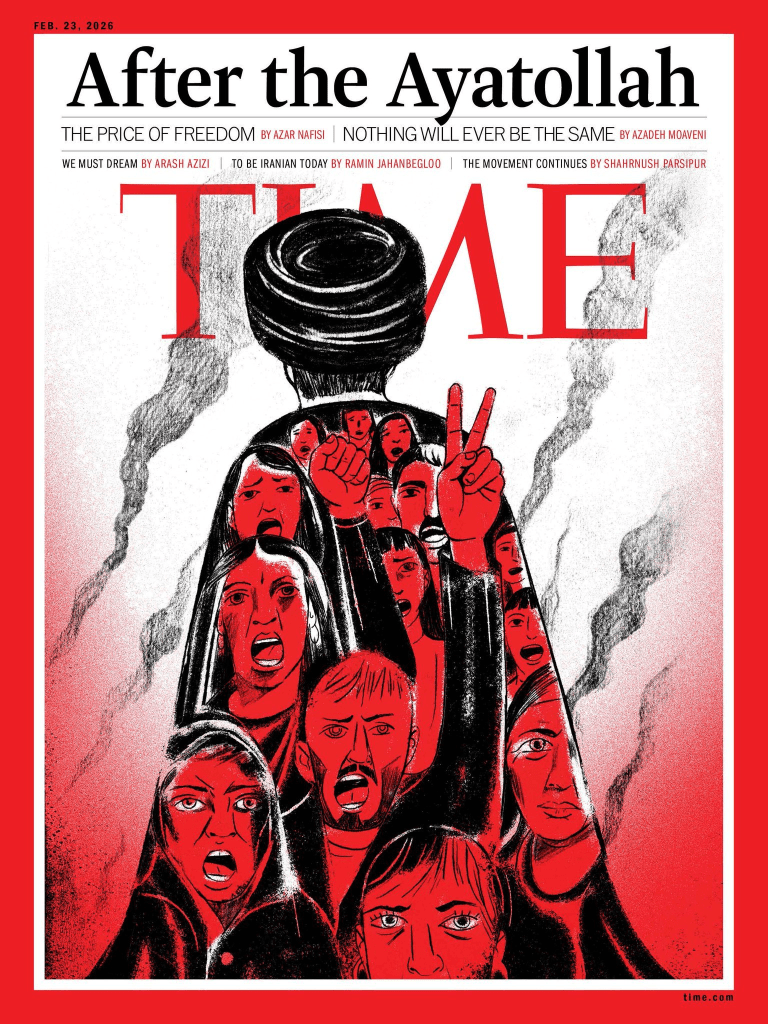
After the Islamic Republic regime unleashed lethal force to quell nationwide protests against its rule, five leading Iranian writers reflect on how the country arrived at this pivotal moment—and where it might go from here.
The Islamic Republic’s Founding Myth
he Islamic Republic’s already lengthy catalogue of fears has ballooned of late: alongside the possibility of being overthrown by its own citizens, it is haunted by the prospect of a full accounting of the massacres it has carried out; by the tenuous loyalty of its army, and its empty coffers; and by the shadow of Israeli spies and Islamic State militants. What terrifies Iran’s theocrats the most, the fear that eclipses all their fears, is the ability of the people at largeto clearly see the essential realities of the present regime.
Iranian Progress Cannot Be Stopped
Today, the Islamic Republic of Iran resembles a half-lifeless body collapsed on the ground, yet still possessing powerful arms. With the support of the Islamic Revolutionary Guard Corps and other military forces, it has attacked the people of Iran and, through widespread killings, has delivered a brutal blow to the popular uprising. Yet this is only a temporary success. The republic is already dead morally, economically, and socially.
Here’s a question I often bat around with graduate students in my International Political Economy seminar: In book 12 of the Odyssey, how do the shipmates know which Ulysses to trust?
You know the story. Ulysses and his crew have been on Circe’s island for a year. They’re finally about to depart when the goddess takes Ulysses aside and warns him of the dangers that await them. The first of these is the “piercing songs” of the Sirens. “So listen,” she says, “I will give you good instructions; another god will make sure you remember.”
Circe tells Ulysses to put wax in his sailors’ ears but that he can listen to the Sirens if he wants to — as long as his shipmates bind him “hand and foot” to the mast: “So bound, you can enjoy the Sirens’ song. But if you beg your men to set you free, they have to tie you down with firmer knots.”
As their ship approaches the Sirens’ sharp rocks, the wind dies down, they pull the sails, and they begin to row. As predicted, Ulysses yells out to his men to set him free. He is still their captain. But instead of obeying his orders, Eurylochus and Perimedes stand up and “tie him down with firmer knots.” How, I ask my students, do they know to trust the first Ulysses over the second? How is it that as readers, we never question their choice?
Albert Kahn has been called “the father of industrial architecture” and “the architect of Detroit.” His firm was certainly prolific: it was responsible for the Ford Motor Company of Canada factory in Toronto, near a laneway that bears his name, and the General Motors assembly plant in Regina, along with nearly 900 buildings in Motor City alone. Kahn’s oeuvre encompassed offices, grand homes for his industrialist clients, and libraries and fraternity houses at the University of Michigan, in Ann Arbor, not to mention a post office, a synagogue, and multiple hospitals and skyscrapers. Many of Kahn’s buildings reflect a pastiche of styles that might be considered a precursor of a postmodern eclectic. Yet this prolific architect is relatively unknown today, especially outside of Michigan.
Albert Kahn Inc.: Architecture, Labor, and Industry, 1905–1961 by Claire Zimmerman
The mood on the Sea Adventurer’s bridge was grim. “She’s only making eight knots,” said our expedition leader. “We need to hit at least fourteen to keep to our itinerary.” We were four days into a two-week sailing and anchored off Ilulissat, near a UNESCO World Heritage site nestled into the crenellated western coast of Greenland.
Earlier that day, I had found myself at the helm of a Zodiac, manoeuvring the rubberized craft through thick fog, near-freezing water, and growlers. The ten high-paying passengers under my care likely had no idea that this was my first trip with the tour operator or my first time north of the Arctic Circle.
“What we have is a fundamental change in the age structure of society,” says John Rowe, professor of health policy and aging at Columbia University’s Aging Center, referring to the way we’re aging—and also the way we’re creating young people, with birth rates plummeting in most countries. Globally, fertility levels have dropped below the so-called population replacement rate of just over two births per woman.
It is a sea change—and one that raises big questions about how we both individually and collectively navigate what, in a sense, is our new old age. How, for example, should we spend our extra time? Should employment still be confined to a finite number of years, or instead ebb and flow throughout an entire lifetime? And where, in a world of acute housing shortages, will everyone live?
Imagine sitting near the apex of power in an empire and then being shown the door. You might want to write a tell-all book about it. If so, however, you would be advised to proceed with caution. Now, imagine what would barely be conceivable today: that you undertook to write your exposé while you were still in office. You would need all the finesse of a tightrope walker.
This essay is adapted from remarks delivered at the Claremont Review of Books 25th anniversary gala, held at the Metropolitan Club in New York City on November 6, 2025.
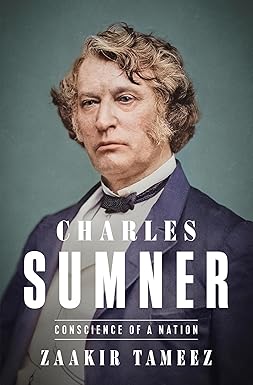
In the early hours of March 11, 1874, word spread around Washington that Charles Sumner was on the brink of death. The 63-year-old senator from Massachusetts had suffered a massive heart attack the previous evening. By 9 a.m., a crowd of several hundred had gathered in front of his home on Lafayette Square. “Colored men and women mingled with white in knots about his home,” wrote TheNew-York Tribune. Government workers, merchants, shopmen, waiters, and even “old colored women with baskets and bundles on their arms” stood together. Many were crying and begging to be let inside. They were stopped by one of Sumner’s friends and two policemen standing guard at the front door.
In this prodigiously researched epic, Torigian details the life of Xi Zhongxun—the father of China’s current leader, Xi Jinping—to explain the history of the Chinese Communist Party. Along the way, readers gain a sense of how the younger Xi became the man he is today.
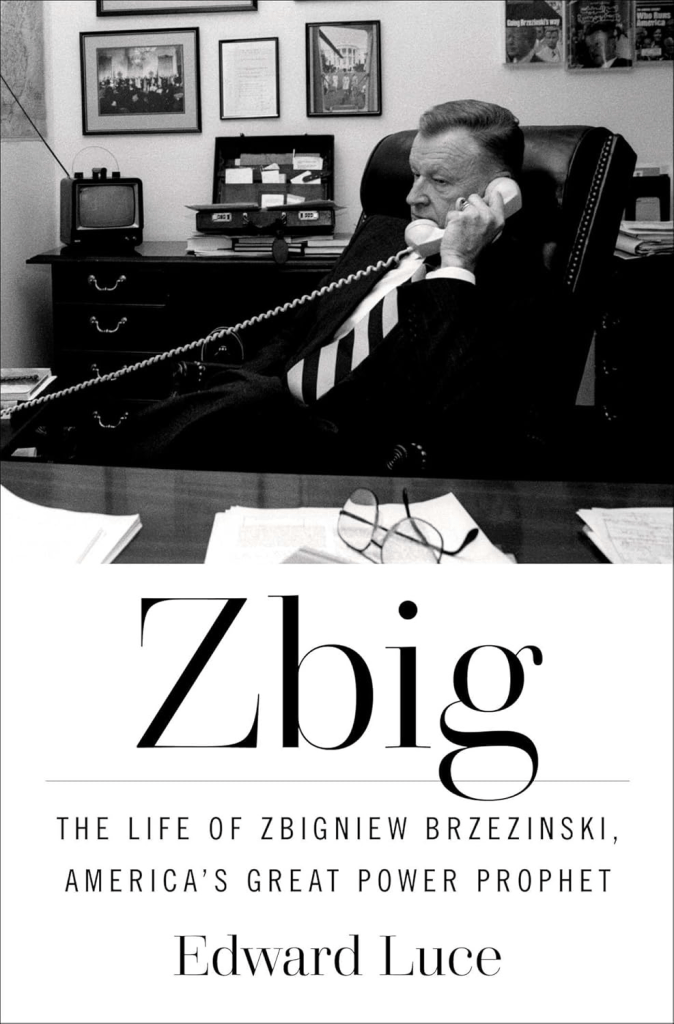
Luce, a gifted storyteller, chronicles the personal life and intellectual journey of former National Security Adviser Zbigniew Brzezinski, who played a significant but underappreciated role in opening the United States to China, bringing the Cold War to an end, and shaping the world that came after. In writing this gem of a book, Luce has rendered a genuine service to history.
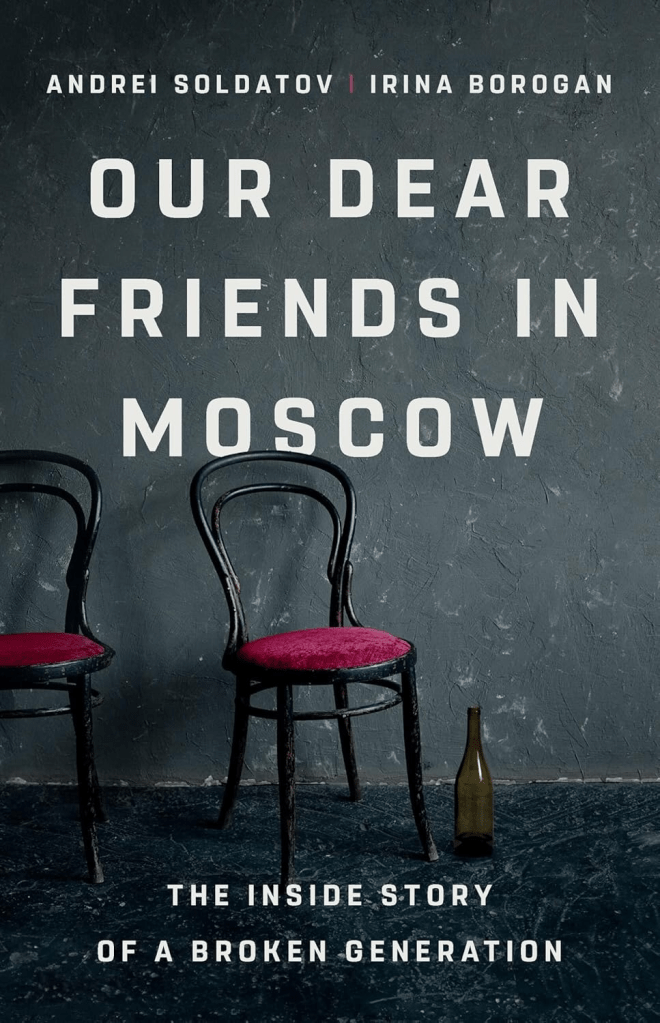
Soldatov and Borogon, two Russian journalists, tell the story of their one-time group of friends and colleagues—young Russians who, over the course of the Putin years, steadily drift toward nationalist and illiberal ideas and end up as supporters of Russia’s war in Ukraine.
In this masterful study, Varouxakis tracks the meanings of “the West” from the late eighteenth century to the present—and argues that the modern notion of the term emerged in the 1830s as a way to distinguish western Europe from Russia. Today, for beleaguered countries such as Ukraine, “the West” is still a powerful idea.
In the latest edition of our “Voices” section, we ask five experts – from scientists to philosophers – how to protect space for the benefit of all of humanity.
“When people hear the term ‘space technology’, they tend to picture rocket launches, or maybe missions to the Moon … Other types of space activity with strong social impact tend to get less attention”
The satellite war
We speak to security expert Mark Hilborne about space warfare – and how it could be the deciding factor in the conflict between Russia and Ukraine.
“The public doesn’t understand how much we rely on space as a domain of warfare”
Sexism in space
When Nasa prepared a message to aliens with the Pioneer probes in the 1970s, sexism skewed how they represented humankind. Within the next decade, we may have another chance to send a message deep into space – and this time, we must do better, writes Jess Thomson.
“Only five objects we have crafted here on Earth are now drifting towards infinity, and four of them tell a lie about half of humankind”
American alien
The new Superman movie offers the vision of a kinder, more tolerant United States – saved by an immigrant, in this case a literal alien. But should we really pin our hopes on a superhero?
“Trump has even shared photoshopped images of himself as Superman. The idea that superheroes can save us all, if we just let them break all the rules, is one that the Maga followers find congenial”
News, Views and Reviews For The Intellectually Curious





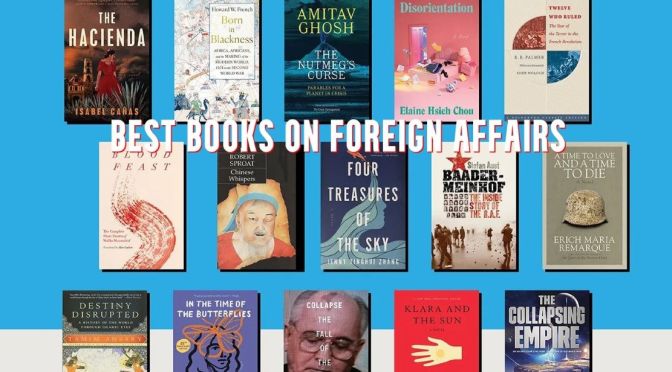
 Foreign Affairs Magazine: The very best of the hundreds of books on international politics, economics, and history that were featured in the magazine this year, selected by Foreign Affairs’ editors and book reviewers.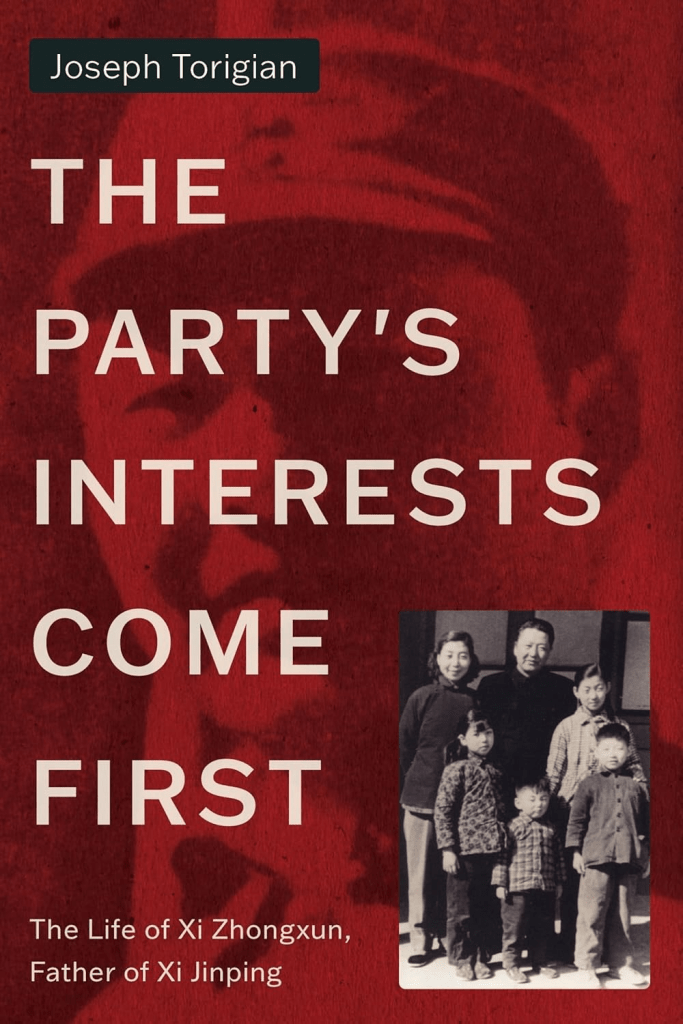







 Boomers Daily