Tag Archives: Pollution

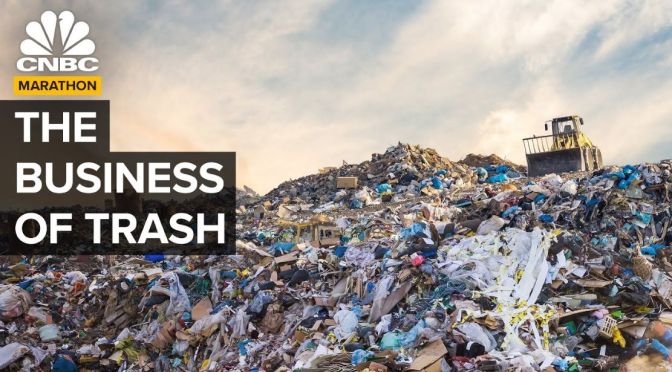
Analysis: The Business Of Waste Management (CNBC)


CNBC (January 8, 2024) CNBC Marathon explores the economics of waste management and how the United States is solving its trash problem. In 2019, the North American waste management market reached $208 billion.

Chapters: 00:00 Introduction 00:48 How Trash Makes Money In The U.S. (Published July 2021) 15:59 How Amazon, American Airlines And Subaru Burn Waste To Make Energy (Published May 2022) 32:24 How To Clean Up The World’s Most Polluted Rivers (Published August 2022) 46:16 Where Do EV Batteries Go When They Die? (Published March 2023)

Thanks to advancements in modern chemistry and support from municipal governments, landfills have seen astonishing financial success in recent years. Burning waste to make energy is a $10 billion industry in the U.S., and the fastest growing part of the business is waste from big companies like Amazon, Subaru, Quest Diagnostics and American Airlines.

They’re part of a growing corporate movement toward “zero landfill” as pressure mounts to reach sustainability requirements. It’s estimated that every year, millions of tons of plastic enter the ocean through rivers, and as global waste generation increases, the problem is poised to worsen.

But a host of companies from Baltimore, Maryland to Bengaluru, India are working on the issue, developing novel methods to capture trash from rivers before it reaches the ocean. Dozens of electric vehicles are scheduled to debut in the next few years and over 300 million electric vehicles are expected to be on the world’s roads by 2030.

The lifetime for an EV battery is estimated to be 12 to 15 years in moderate climates, but that doesn’t mean the batteries end up in landfills when they die.

World Economic Forum: Top Stories- August 5, 2023

World Economic Forum (August 5, 2023) – This week’s top stories of the week include:

0:15 Half of Gen Z & Millenials live paycheck to paycheck – A new survey asked young people their biggest concerns. The cost-of-living crisis came out top. Many say they’ve been forced to take on side jobs to make ends meet or postpone big life decisions such as buying a house. And the extra stress is taking its toll. 46% of Gen Zs and 39% of millennials feel anxious at work all or most of the time and levels of burnout are on the rise. Their second biggest concern is unemployment.

1:51 This start-up recycles household batteries – The Better Battery Company sells batteries in special packaging. Its batteries are white at the positive end and blue at the negative. Inside the box, the batteries are arranged in rows with the white end upturned. When each battery runs out, you put it back in the box the other way up so it’s easy to see which are used and which are new. When the box is filled with spent batteries, you return it using a free postage label and the Better Battery Company sends them off to be recycled.

3:01 AI translates K pop hits into 6 languages – K-pop stars have recorded songs in Japanese and English before but a simultaneous 6-language release is a global first. Right now, the pronunciation correction process takes ‘weeks or months’, according to HYBE. But one day, AI could translate songs in real-time. This isn’t the only way AI is changing the music industry. Streaming platforms use AI to analyse users’ listening habits to pick the perfect playlist AIs are even composing their own music or being employed as collaborators.

4:48 New airline tires can cut pollution – Airless tyres could cut pollution and make punctures a thing of the past. Made of shape memory alloy, these tyres are puncture-proof, sustainable, and easier to recycle.

_____________________________________________

The World Economic Forum is the International Organization for Public-Private Cooperation. The Forum engages the foremost political, business, cultural and other leaders of society to shape global, regional and industry agendas. We believe that progress happens by bringing together people from all walks of life who have the drive and the influence to make positive change.

Research Preview: Science Magazine – August 4, 2023

Image

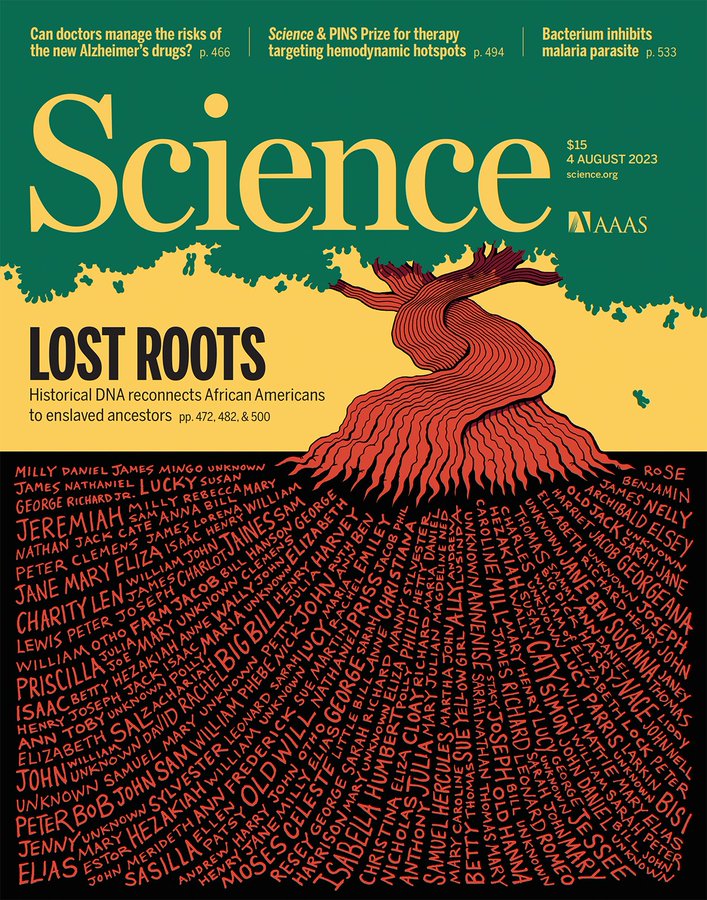
Science Magazine – August 4, 2023 issue: DNA was sequenced from 27 African Americans buried at Catoctin Furnace, Maryland, where enslaved people labored between 1774 and 1850. The tree trunk forms a double helix comprising 27 segments representing each sequenced individual.

‘We’re changing the clouds.’ An unforeseen test of geoengineering is fueling record ocean warmth

Pollution cuts have diminished “ship track” clouds, adding to global warming

Tropical trees deter similar neighbors

Tropical forests host an unusually high diversity of tree species. Strong interactions between individuals are hypothesized to create these patterns. A tree is more likely to survive when surrounded by different tree species with different resource needs, diseases, and herbivores. Kalyuzhny et al. found patterns consistent with this mechanism in a long-term forest plot in Panama. Adult trees in this site are more distant from members of their own species than from other species and more distant than would be expected by chance or by the limits of seed dispersal. This study shows that distances between conspecifics are maintained in adult trees, helping to explain the high diversity of tropical forests.

Ecosystems: Plastic Waste Spoils Galapagos Islands

The Galapagos Islands are home to some of the most unspoiled nature in the world. But even here plastic waste is a problem, and biodiversity is under threat. Marine biologists and conservationists are campaigning for the expansion of protected zones. The fauna and flora of the Galapagos Islands in the Pacific Ocean is a treasure trove for marine biologists.

They still know very little about many of the fish, rays and sea turtles that can be found here. But these days, their work is focused primarily on conservation, because many of these species are endangered due to threats such as overfishing and boat strikes. Efforts to protect local wildlife include attaching tracking devices to juvenile hammerhead sharks to determine their migration routes, which can then be designated as protected areas.

Other research teams are focused on the problem of plastic waste in the Pacific – identifying where it comes from and exploring its impact on marine life. Meanwhile, local fishermen are under pressure: Large fishing fleets from China and elsewhere ply the waters near the Galapagos Islands, severely depleting fish stocks. As a result, local fishing boats are forced to move into designated conservation zones. If the delicate marine environment surrounding the Galapagos Islands is to survive, fishing needs to become more sustainable.

Bali Views: How A 90-Year-Old Man Fights Pollution

Each year, just about 30,000 metric tonnes of plastic pollution enter Indonesia’s waters. How does one man plan to clean it up?

In Indonesia, the ocean plays a critical role in people’s livelihood; from their food to their careers. But that important life source is under threat from overwhelming amounts of plastic. Unfortunately, this pollution is fueled from one of Indonesia’s most popular tourist destinations, Bali.

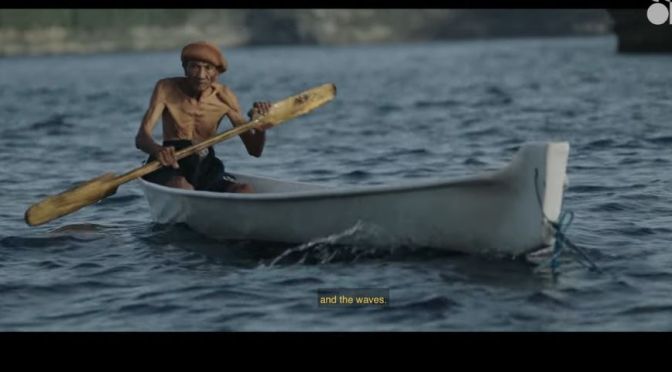
This, combined with plastic from the rest of the world, washes up on beaches, gets hooked by local fishermen, and damages marine ecosystems. This film follows Wayan, a 90-year-old Balinese fisherman using all his resources and knowledge to tackle this growing problem, one net of trash at a time. This is Voice Above Water, a production from Turning Tides Films.

Zero Waste: Trash Turned Into Cash (The Economist)

The world is facing a growing waste problem, with 2bn tonnes produced last year alone. Is it possible to clean up this mess by turning trash into cash? 00:00 – The world has a huge waste problem.

Video timeline: 00:45 – Upcycling to reduce waste 02:46 – Building offices from recycled products 03:46 – The problem with traditional recycling 04:59 – Waste reduction relies on a circular economy 05:38 – Taiwan’s waste management success 08:20 – The problem with incineration 09:55 – Is the future zero waste? 10:43 – Consumption attitudes are changing Read our special report on waste here https://econ.st/3JrlD6y

Climate Change: Flooding Rivers Ravage Bangladesh

Bangladesh is struggling just to stay afloat. Literally: By 2050, it’s estimated that climate issues will displace one in seven of the country’s inhabitants.

This film takes the viewer on a journey through Bangladesh, exploring why overflowing rivers flood three-quarters of the country every year. We see how flooding threatens the country’s food security, how soil erosion thrusts thousands into homelessness, and how climate refugees are forced to flee their homes in a desperate act of survival.

Along the way, we meet communities adapting to rising sea climate change by growing food on water. This is a strategy which could prove very useful in the near future, as rising sea levels threaten to inundate 11% of the country’s land in the next 30 years.

This documentary brings us to the front lines of the battle against catastrophic climate change in Bangladesh. It also tells the stories of activists who are bringing the dangers posed by man-made threats to light.

Morning News: UK Prime Minister Boris Johnson, Delhi’s Pollution, Movies

Can UK prime minister Boris Johnson survive accusations of corruption and sleaze? Also in the programme: India’s fight against deadly pollution in Delhi and the week’s film-industry news.

Conservation: ‘Tides Of Trash’ In The Maldives

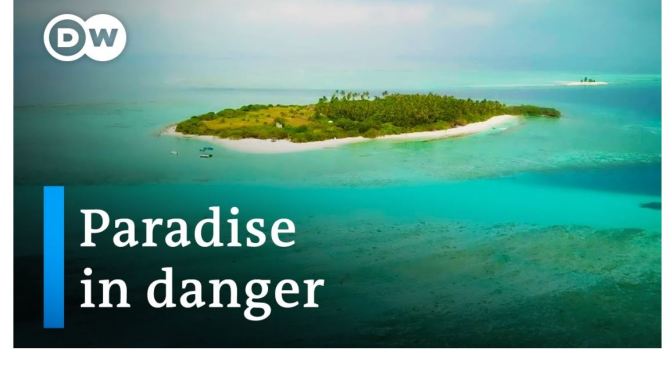
Thilafushi, an island of floating rubbish island in the Maldives, grows by a square meter a day. But diving instructor Shaahina Ali is trying to slow that growth by recycling and using floating barriers to hold back the rising seas.

For decades, the Maldives simply dumped the trash the tourists and the island country’s 400 thousand residents generated. Yet Shaahina Ali says that has to stop. Almost every day, the diving instructor and her allies go from island to island in the Indian Ocean. Working with an environmental organization, they have obtained trash compactors that make plastic waste transportable, allowing it to be shipped abroad for recycling. Ali also advocates avoiding disposable plastic. She gives lectures, advises hotel managers and even bends the ear of the Maldives’ president himself.

When she has time, Shaahina Ali goes scuba diving. Beneath the waves she sees environmental degradation – dying corals and fish caught up in plastic waste. She says, “We can’t afford to address just one problem. We’ve got to take care of everything at once because everything is connected to the sea.” But the island paradise is not only threatened by rubbish. Climate change is also causing the sea levels to rise, and the Maldives are at risk of sinking beneath the water.

That’s why conservationists are using floating barriers made of recycled plastic to help prevent flooding. In addition to the environmental group “Parley for the Oceans,” Ali has also won politicians to her cause. Last year saw a democratic change of government in the Maldives. “The new government no longer views environmentalists as annoying troublemakers. They see us as partners instead,” Ali says. But those trying to save the island are in a race against time. “If we don’t succeed,” says Shaahina Ali, “far more than a vacation paradise will be lost. We will lose our homeland.”

Profile: ‘Ocean Cleanup’ – Ridding The World’s Oceans Of Plastic (Video)

The Ocean Cleanup, a non-profit organization, is developing advanced technologies to rid the world’s oceans of plastic.

Every year, millions of tons of plastic enter the oceans primarily from rivers. The plastic afloat across the oceans – legacy plastic – isn’t going away by itself. Therefore, solving ocean plastic pollution requires a combination of stemming the inflow and cleaning up what has already accumulated.

FOUNDED 2013

Dutch inventor Boyan Slat founded The Ocean Cleanup at the age of 18 in his hometown of Delft, the Netherlands.

NON-PROFIT FOUNDATION

We are a registered charity as a ‘Stichting’ in the Netherlands, and a 501(c)(3) in the US.

HQ ROTTERDAM

The Ocean Cleanup’s team consists of more than 90 engineers, researchers, scientists and computational modelers working daily to rid the world’s oceans of plastic.

Website