
A selection of three essential articles read aloud from the latest issue of The Economist. This week, how rotten is Russia’s army? France’s re-elected president prepares for a tough second term (10:30) and a struggle over artistic freedom suggests a better way out of the culture wars (15:25).
Tag Archives: Politics
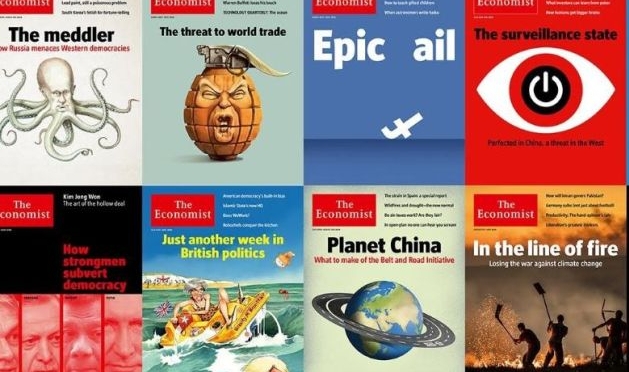
Previews: The Economist Magazine – April 30, 2022
So far, the invasion of Ukraine has been a disaster for Russia’s armed forces. About 15,000 troops have been killed in two months of fighting, according to Britain’s government. At least 1,600 armoured vehicles have been destroyed, along with dozens of aircraft and the flagship of the Black Sea fleet.
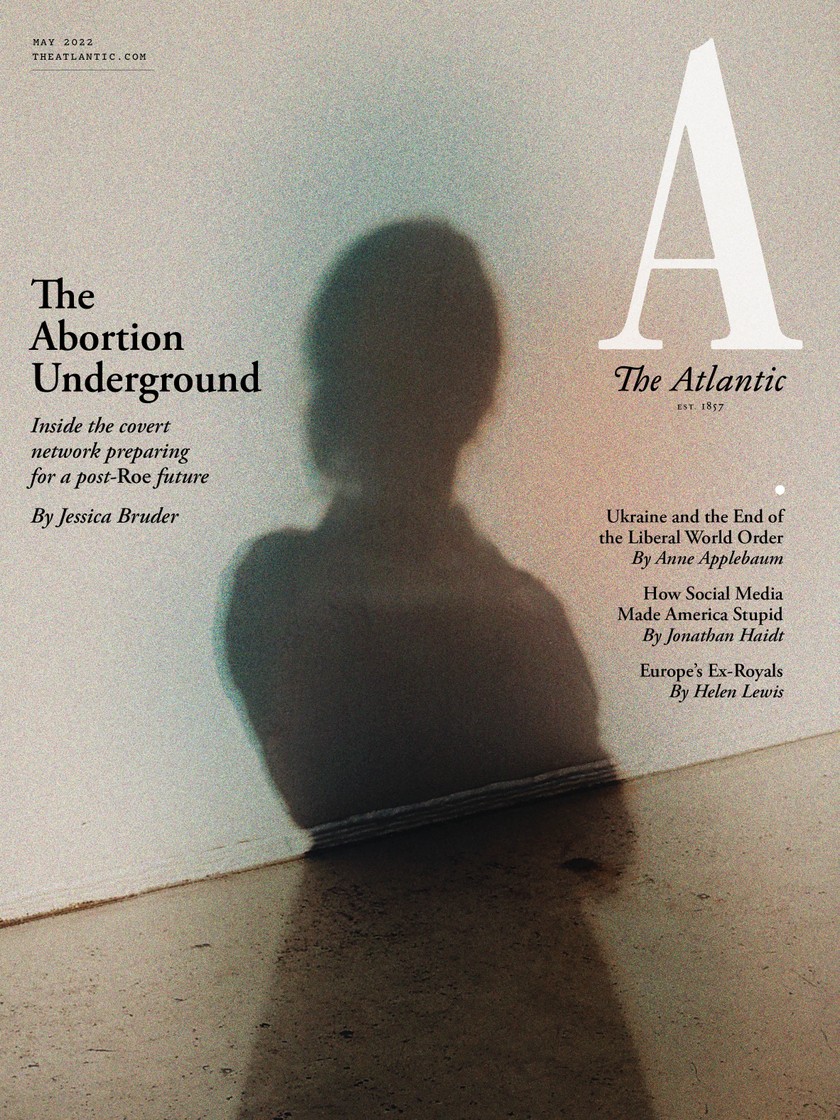
Previews: The Atlantic Magazine – May 2022

Morning News: Sri Lanka Debt Crisis, Pakistan’s PM, Australian Blue Plaques
The latest on Russia’s all-out assault on east Ukraine. Plus: Sri Lanka’s debt crisis, Pakistan’s new prime minister and Australia’s new blue plaque scheme.

Previews: The New Yorker Magazine – April 25, 2022

Christoph Niemann’s “Virtual Reality”
On the cover of the Innovation & Technology Issue, Christoph Niemann captures the eternal tug of war between the lure of the outside and the joys of technology. Even for a prehistoric cave dweller, the tablet could prove potently absorbing. The dilemma has only grown as the number and variety of technological gadgets has proliferated. We recently talked to the artist about the place of digital tools and good old-fashioned paper and pencil in his creative process.
Morning News: Ukraine Refugees In Poland & New York, Russians In Turkey
The war in Ukraine has created the greatest flux of refugees in Europe since the second world war.
We visit Poland, where the response has been remarkably smooth, and a New York neighbourhood that is no stranger to émigrés from the region. And we consider the displaced who are largely overlooked: why are so many Russians exiling themselves in Turkey?
Previews: The Economist Magazine – April 16, 2022
Political Views: Emmanuel Macron’s Future, Russian War Crimes, Headset Wars
A selection of three essential articles read aloud from the latest issue of The Economist. This week, why Emmanuel Macron’s fate matters beyond France, war crimes in Ukraine (11:05) and we explore the new headset wars between tech firms (16:05).

Previews: The New Yorker Magazine – April 18, 2022
April 18, 2022 – The street corner on this week’s cover, with towering luxury condos rising among modest family homes, evokes a neighborhood in transition—a scene that is being repeated across New York City’s outer boroughs. We talked to the artist Nicole Rifkin, who lived in Brooklyn’s Crown Heights before rising rents pushed her out, about a sense of belonging and observing the small details of the place where you live.
World Economic Forum: Top Stories – April 8, 2022
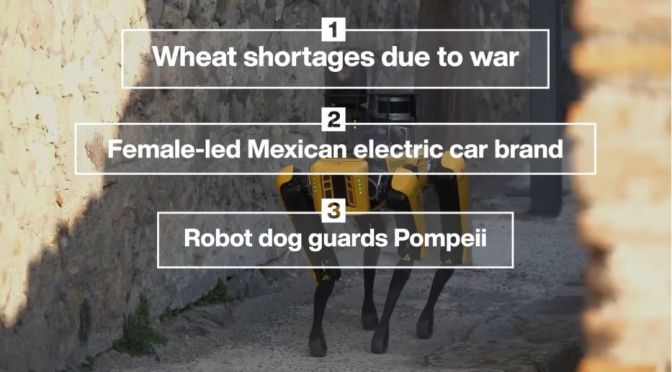
This week The World Economic Forum are highlighting 4 top stories – wheat shortages due to war, a female-led Mexican electric car brand, a robot dog guards Pompeii, and a plane fuelled by cooking oil.
Video timeline: 00:00 – Intro 00:15 – Wheat shortages due to war 02:17 – Female-led Mexican electric car brand 03:34 – Robot dog guards Pompeii 05:00 –
Plane fueled by cooking oil The World Economic Forum is the International Organization for Public-Private Cooperation. The Forum engages the foremost political, business, cultural and other leaders of society to shape global, regional and industry agendas. We believe that progress happens by bringing together people from all walks of life who have the drive and the influence to make positive change.
 Boomers Daily