
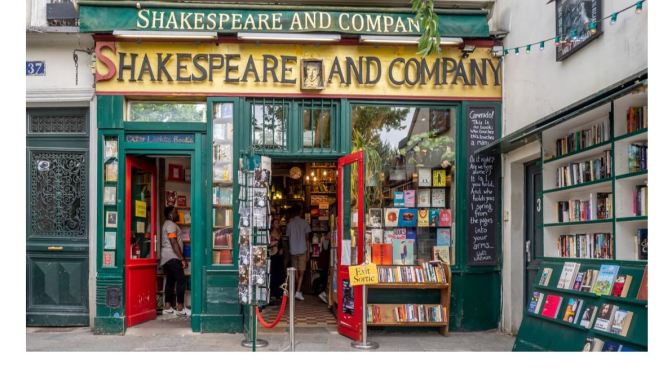
✍️NEW EPISODE✍️
— Shakespeare&Company (@Shakespeare_Co) November 25, 2021
This week on the #podcast Adam welcomes poets @doctorbarnett & @LukeKennard whose extraordinary formal experiments deliver two of the most accessible, moving and profound "collections" of the year. Search in your pod app or click here:https://t.co/foZE5bWLwq pic.twitter.com/uawCyWYval
Tag Archives: Poets
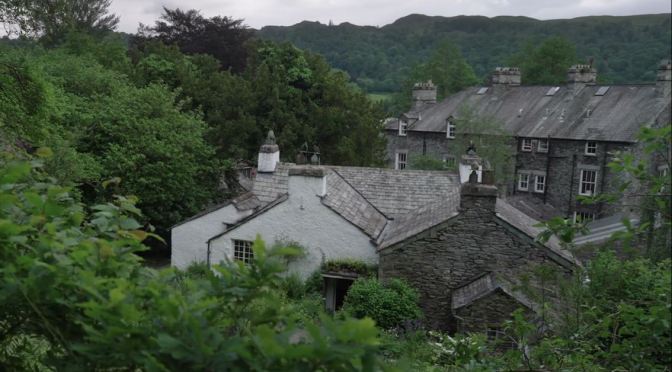
Poetic Views: Museum at Wordsworth Grasmere
The Museum at Wordsworth Grasmere, the second phase of work at the former Lake District home of the great English Romantic poet William Wordsworth and his sister Dorothy, has opened to the public, with all gallery, exhibition design and interpretative overviews by Nissen Richards Studio.
The first phase of work by Nissen Richards Studio encompassed the conservation and reinterpretation of Dove Cottage itself, where William and Dorothy once lived, plus the new identity for Wordsworth Grasmere and the scheme’s signage and wayfinding.
The new visitor journey, designed by Nissen Richards Studio in close collaboration with the Wordsworth Grasmere team, includes a series of threshold moments, such as a totem sign and the setting of words into the walkways, featuring fragments of poems going off in two directions, so that visitors see them clearly on arrival and departure.
The Museum includes a shop and ticketing area, before visitors enter a new, double-height orientation space, where quotations by Wordsworth are set within a dramatic, full-height light wall. Visitors then make their way to a former stable space that houses an immersive introductory film, before stepping over the threshold into Dove Cottage. Visitors return to The Museum via Dove Cottage’s Garden-Orchard, entering an expanded first floor space, loosely arranged into four new galleries. Galleries One and Four are set to one side and Galleries Two and Three to the other, whilst a pause space in between offers views onto the gardens and surrounding landscape.
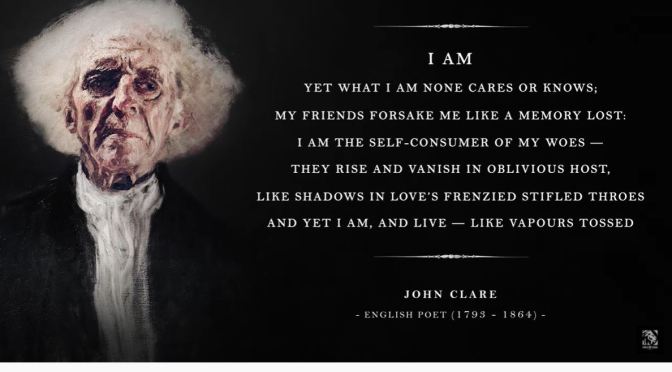
Poetry Readings: “I Am!” – By John Clare (1793 – 1864)
Read by John Davies
John Clare was an English poet who lived most of his life in abject poverty. His life was marred by bouts of mania and depression, and for the final 23 years of his life, Clare was locked in an insane asylum. It was here he began to write poetry; ‘I Am’ was Clare’s final elegy before his passing.
I Am!
BY JOHN CLARE
I am—yet what I am none cares or knows;
My friends forsake me like a memory lost:
I am the self-consumer of my woes—
They rise and vanish in oblivious host,
Like shadows in love’s frenzied stifled throes
And yet I am, and live—like vapours tossed
Into the nothingness of scorn and noise,
Into the living sea of waking dreams,
Where there is neither sense of life or joys,
But the vast shipwreck of my life’s esteems;
Even the dearest that I loved the best
Are strange—nay, rather, stranger than the rest.
I long for scenes where man hath never trod
A place where woman never smiled or wept
There to abide with my Creator, God,
And sleep as I in childhood sweetly slept,
Untroubling and untroubled where I lie
The grass below—above the vaulted sky.
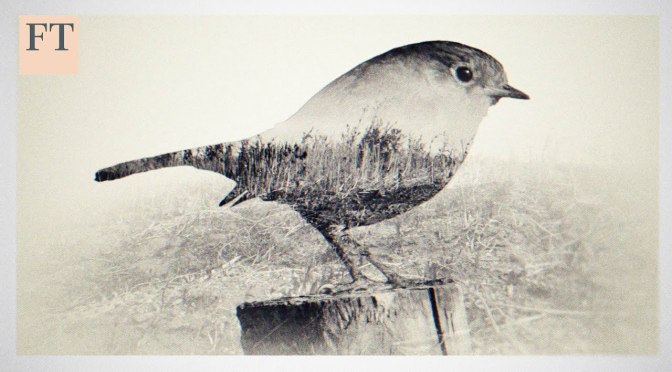
Poetry: ‘To John’ Keats By Inua Ellams (Video)
FT Weekend Festival 2021 commissioned Inua Ellams to write a response to Keats’s classic work ‘To Autumn’ marking his 200th anniversary. The animated poem ‘To John’ exposes the impact of humans on nature over those 200 years.
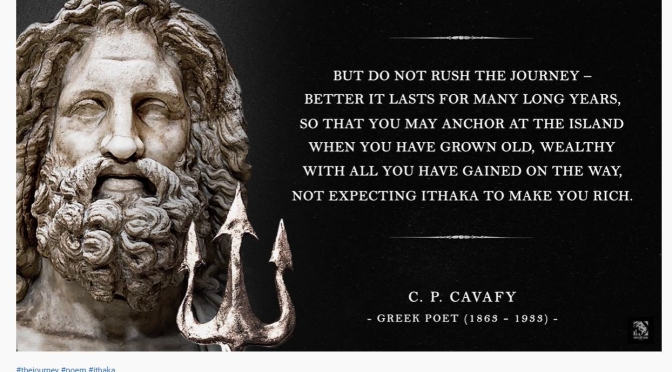
Greatest Poetry: ‘Ithaka’ By C.P. Cavafy (1863-1933)
Constantine Peter Cavafy was an Egyptiot Greek poet, journalist and civil servant. His consciously individual style earned him a place among the most important figures not only in Greek poetry, but in Western poetry as well. Cavafy wrote 155 poems, while dozens more remained incomplete or in sketch form.
Ithaka
BY C. P. CAVAFYTRANSLATED BY EDMUND KEELEY
As you set out for Ithaka
hope your road is a long one,
full of adventure, full of discovery.
Laistrygonians, Cyclops,
angry Poseidon—don’t be afraid of them:
you’ll never find things like that on your way
as long as you keep your thoughts raised high,
as long as a rare excitement
stirs your spirit and your body.
Laistrygonians, Cyclops,
wild Poseidon—you won’t encounter them
unless you bring them along inside your soul,
unless your soul sets them up in front of you.
Hope your road is a long one.
May there be many summer mornings when,
with what pleasure, what joy,
you enter harbors you’re seeing for the first time;
may you stop at Phoenician trading stations
to buy fine things,
mother of pearl and coral, amber and ebony,
sensual perfume of every kind—
as many sensual perfumes as you can;
and may you visit many Egyptian cities
to learn and go on learning from their scholars.
Keep Ithaka always in your mind.
Arriving there is what you’re destined for.
But don’t hurry the journey at all.
Better if it lasts for years,
so you’re old by the time you reach the island,
wealthy with all you’ve gained on the way,
not expecting Ithaka to make you rich.
Ithaka gave you the marvelous journey.
Without her you wouldn’t have set out.
She has nothing left to give you now.
And if you find her poor, Ithaka won’t have fooled you.
Wise as you will have become, so full of experience,
you’ll have understood by then what these Ithakas mean.
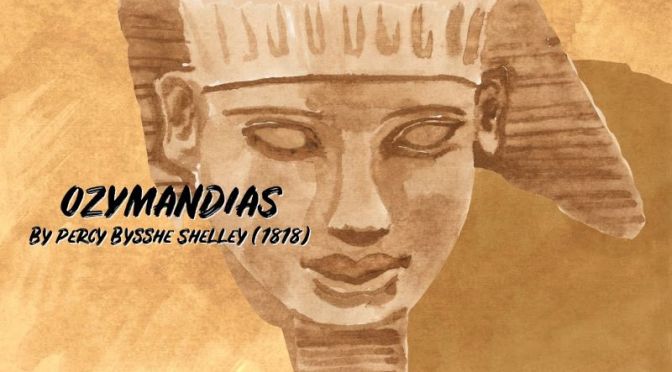
Animated Short Films: ‘Ozymandias’ – A Poem By Percy Bysshe Shelley
Directed and animated by Alvaro Lamarche-Toloza
“OZYMANDIAS” is the animated 3D adaptation of a poem written by English poet Percy Bysshe Shelley in December 1817. It was created with a series of wash paintings animated with the Unreal Engine and EbSynth to test an experimental 3D animation pipeline.
Additional info:
Using EbSynth, a texture synthesis / transfer tool created by Secret Weapon, we applied wash paintings to 3D scenes created in real-time with the Unreal Engine. The result is a unique look and a promising experimental pipeline which dramatically speeds up the production of 3D animation stylized with traditional 2D art.
About the poem:
Written in 1817 by Percy Shelley, “Ozymandias” refers to pharaoh Ramesses II and was perhaps inspired by the acquisition of a large Ramesses statue by the British Museum the same year. References to this poem have often appeared in pop culture, though Shelley himself might not have considered it to be one of his major works.
It was first published in the 11 January 1818 issue of The Examiner of London.
Credits:
Directed and animated by Alvaro Lamarche-Toloza
Wash paintings by Estelle Chauvard
Voice by Bryan Cranston, taken from the Breaking Bad Teaser Trailer
“Menkaure colossal statue base” model by Zhejiang University
“Ramses II” model by Taoetsia
“Horse Skeleton” model by Diego Luján García
‘OZYMANDIAS’ By Percy Bysshe Shelley
I met a traveller from an antique land,
Who said—“Two vast and trunkless legs of stone
Stand in the desert. . . . Near them, on the sand,
Half sunk a shattered visage lies, whose frown,
And wrinkled lip, and sneer of cold command,
Tell that its sculptor well those passions read
Which yet survive, stamped on these lifeless things,
The hand that mocked them, and the heart that fed;
And on the pedestal, these words appear:
My name is Ozymandias, King of Kings;
Look on my Works, ye Mighty, and despair!
Nothing beside remains. Round the decay
Of that colossal Wreck, boundless and bare
The lone and level sands stretch far away.”

Arts & Literature: A Close Reading Of Poet Robert Frost (LRB Podcast)
 In the latest episode in their series of Close Readings, Seamus Perry and Mark Ford look at the life and work of Robert Frost, the great American poet of fences and dark woods.
(August 4, 2020)
They discuss Frost’s difficult early life as an occasional poultry farmer and teacher, his arrival in England in 1912 amid the flowering of Georgian poetry, and his emergence as the first 20th-century professional poet, whose version of the American wilderness myth, full of mischief and foreboding, took him to packed concert halls and a presidential inauguration.
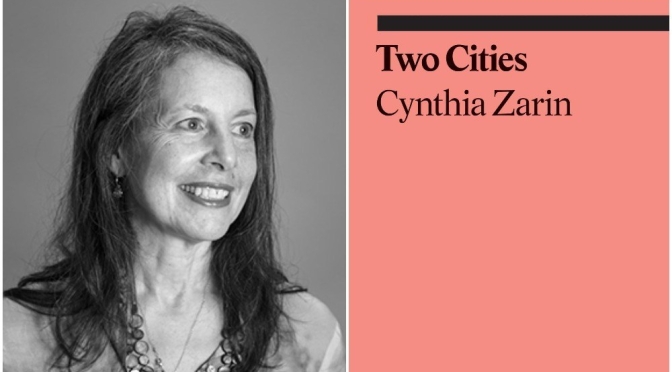
Interviews: American Poet & Writer Cynthia Zarin On Her New Book “Two Cities”
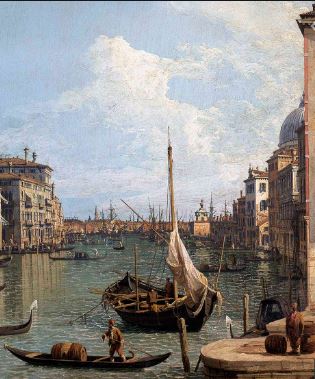 A conversation with the acclaimed poet and New Yorker writer Cynthia Zarin that transports us to two of her favorite cities, Venice and Rome, in a celebration of Italy as the country begins to loosen the longest coronavirus-related lockdown in Europe. The episode features evocative readings from her forthcoming book,Two Cities, which captures the meditative yet constantly surprising nature of travel from a deeply personal point of view.

From acclaimed poet and New Yorker writer Cynthia Zarin comes a deeply personal meditation on two cities, Venice and Rome—each a work of art, both a monument to the past—and on how love and loss shape places and spaces.
Here we encounter a writer deeply engaged with narrative in situ—a traveler moving through beloved streets, sometimes accompanied, sometimes solo. With her, we see, anew, the Venice Biennale, the Lagoon, and San Michele, the island of the dead; the Piazza di Spagna, the Tiber, the view from the Gianicolo; the pigeons at San Marco and the parrots in the Doria Pamphili. As a poet first and foremost, Zarin’s attention to the smallest details, the loveliest gesture, brings Venice and Rome vividly to life for the reader.
The sixteenth book in the expanding, renowned ekphrasis series, Two Cities creates space for these two historic cities to become characters themselves, their relationship to the writer as real as any love affair.
ekphrasis
Dedicated to publishing rare, out-of-print, and newly commissioned texts as accessible paperback volumes the ekphrasis series is part of David Zwirner Books’s ongoing effort to publish new and surprising pieces of writing on visual culture.
Cynthia Zarin
Cynthia Zarin is the author of five books of poetry, most recently, Orbit (2017), as well as five books for children and a collection of essays, An Enlarged Heart: A Personal History (2013). Her honors and awards include a Guggenheim Fellowship for Literature, the Ingram Merrill Award, and the Los Angeles Times Book Prize for Poetry. A longtime contributor to The New Yorker, Zarin teaches at Yale University.
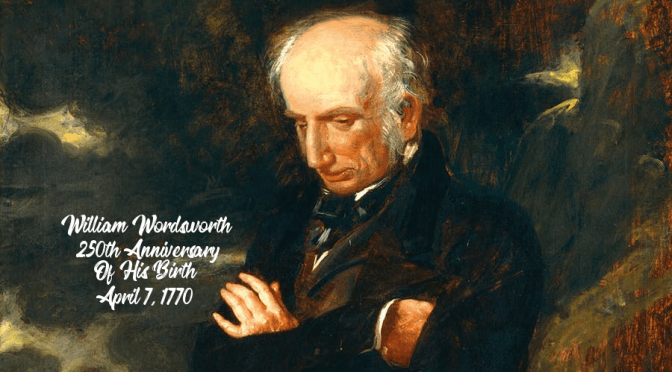
Today: 250th Anniversary Of William Wordsworth’s Birth – “That Inward Eye”
From an Apollo Magazine article (April 7. 2020):
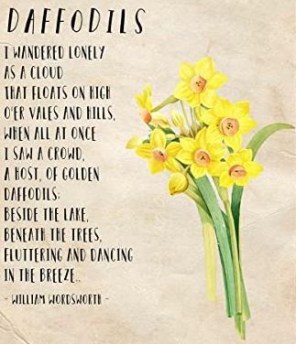
‘They flash upon that inward eye
Which is the bliss of solitude’
.
 ‘We are fond of tracing the resemblance between Poetry and Painting,’ wrote William Wordsworth (1770–1850) in the famous ‘Preface’ to Lyrical Ballads (1800), ‘and, accordingly, we call them Sisters.’ To speak of the ‘sister arts’ was indeed a critical platitude of the age, though as it happens Wordsworth’s attitude towards painting wasn’t normally very sisterly.
 When, in 1840 or so, a well-meaning houseguest called Margaret Gillies made a drawing of the 70-year old Mrs Wordsworth, everyone agreed that it was an excellent likeness; but her kind act was rewarded with a testy and somewhat ungracious sonnet from the sitter’s husband. He preferred to visualise Mary in her salad days: ‘’tis a fruitless task to paint for me, / Who, yielding not to changes Time has made, / By the habitual light of memory see / Eyes unbedimmed, see bloom that cannot fade, / And smiles that from their birth-place ne’er shall flee / Into the land where ghosts and phantoms be’.
.
All she possesses, as a painter, is the outward eye: ‘that inward eye’ is the poet’s hallmark, as of course Miss Gillies would have known from Wordsworth’s most famous poem, the one about the daffodils – ‘They flash upon that inward eye / Which is the bliss of solitude’. By chance we know (because Wordsworth left it on record, saying they were the best thing in the poem) that those two lines were actually contributed by Mary, so the uxoriousness of the thing is double: not only does she evade the merely visual but she also possesses the innate genius to be able to name the imaginative power that so transcends it.
.
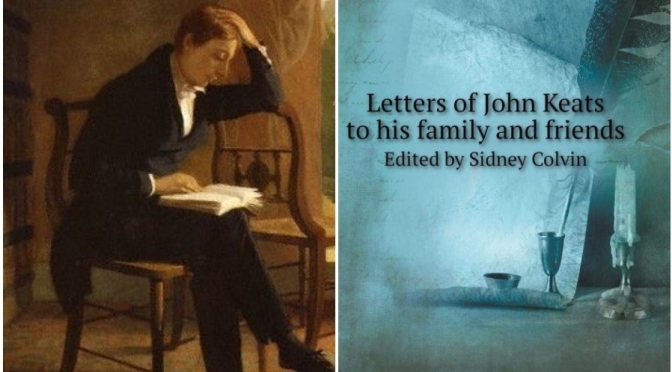
Literature: A Reading Of “Letters Of John Keats To His Family And Friends” – “Inside His Brilliant Mind”
Letters of John Keats to His Family and Friends by John KEATS (1795 – 1821) and Sidney COLVIN (1845 – 1927)
Read by: Nemo and Eva Davis
Chapters: 00:00:00 – 00 – Preface 00:21:11 – 01 – Letter 1 – to Charles Cowden Clarke 00:22:21 – 02 – Letter 2 – to Benjamin Robert Haydon 00:24:06 – 03 – Letter 3 – to Benjamin Robert Haydon 00:25:00 – 04 – Letter 4 – to Charles Cowden Clarke 00:26:57 – 05 – Letter 5 – to John Hamilton Reynolds 00:28:25 – 06 – Letter 6 – to John Hamilton Reynolds 00:29:52 – 07 – Letter 7 – to George and Thomas Keats 00:34:17 – 08 – Letter 8 – to John Hamilton Reynolds 00:42:14 – 09 – Letter 9 – to Leigh Hunt 00:50:13 – 10 – Letter 10 – to Benjamin Robert Haydon 01:00:31 – 11 – Letter 11 – to Messrs. Taylor and Hessey 01:03:50 – 12 – Letter 12 – to Messrs. Taylor and Hessey 01:06:07 – 13 – Letter 13 – to Mariane and Jane Reynolds 01:10:34 – 14 – Letter 14 – to Fanny Keats 01:18:27 – 15 – Letter 15 – to Jane Reynolds 01:26:44 – 16 – Letter 16 – to John Hamilton Reynolds 01:34:49 – 17 – Letter 17 – to Benjamin Robert Haydon 01:37:39 – 18 – Letter 18 – to Benjamin Bailey 01:43:58 – 19 – Letter 19 – to Benjamin Bailey 01:51:33 – 20 – Letter 20 – to Benjamin Bailey 01:54:19 – 21 – Letter 21 – to Charles Wentworth Dilke 01:55:20 – 22 – Letter 22 – to Benjamin Bailey 02:05:23 – 23 – Letter 23 – to John Hamilton Reynolds 02:11:23 – 24 – Letter 24 – to George and Thomas Keats 02:16:25 – 25 – Letter 25 – to George and Thomas Keats 02:26:06 – 26 – Letter 26 – to Benjamin Robert Haydon 02:28:19 – 27 – Letter 27 – to John Taylor 02:29:30 – 28 – Letter 28 – to George and Thomas Keats 02:35:45 – 29 – Letter 29 – to John Taylor 02:37:09 – 30 – Letter 30 – to George and Thomas Keats 02:45:42 – 31 – Letter 31 – to Benjamin Bailey 02:53:40 – 32 – Letter 32 – to John Taylor 02:55:38 – 33 – Letter 33 – to John Hamilton Reynolds 03:00:19 – 34 – Letter 34 – to John Hamilton Reynolds 03:09:32 – 35 – Letter 35 – to John Taylor 03:10:23 – 36 – Letter 36 – to George and Thomas Keats 03:14:06 – 37 – Letter 37 – to John Hamilton Reynolds 03:20:52 – 38 – Letter 38 – to George and Thomas Keats 03:25:16 – 39 – Letter 39 – to John Taylor 03:28:39 – 40 – Letter 40 – to Messrs. Taylor and Hessey 03:29:39 – 41 – Letter 41 – to Benjamin Bailey 03:39:27 – 42 – Letter 42 – to John Hamilton Reynolds 03:46:04 – 43 – Letter 43 – to Benjamin Robert Haydon 03:51:10 – 44 – Letter 44 – to Messrs. Taylor and Hessey 03:52:54 – 45 – Letter 45 – to James Rice 03:58:59 – 46 – Letter 46 – to John Hamilton Reynolds 04:06:50 – 47 – Letter 47 – to Benjamin Robert Haydon 04:12:07 – 48 – Letter 48 – to John Hamilton Reynolds 04:17:53 – 49 – Letter 49 – to John Hamilton Reynolds 04:20:39 – 50 – Letter 50 – to John Taylor 04:24:29 – 51 – Letter 51 – to John Hamilton Reynolds 04:29:41 – 52 – Letter 52 – to John Hamilton Reynolds 04:46:49 – 53 – Letter 53 – to Benjamin Bailey 04:52:06 – 54 – Letter 54 – to Benjamin Bailey 04:57:26 – 55 – Letter 55 – to John Taylor 04:59:14 – 56 – Letter 56 – to Thomas Keats 05:08:57 – 57 – Letter 57 – to Fanny Keats 05:18:23 – 58 – Letter 58 – to Thomas Keats 05:28:49 – 59 – Letter 59 – to Thomas Keats 05:39:49 – 60 – Letter 60 – to John Hamilton Reynolds 05:48:19 – 61 – Letter 61 – to Thomas Keats 06:01:55 – 62 – Letter 62 – to Benjamin Bailey 06:16:12 – 63 – Letter 63 – to Thomas Keats 06:30:05 – 64 – Letter 64 – to Thomas Keats 06:43:57 – 65 – Letter 65 – to Mrs. Wylie 06:50:42 – 66 – Letter 66 – to Fanny Keats 06:53:45 – 67 – Letter 67 – to Fanny Keats 06:55:12 – 68 – Letter 68 – to Jane Reynolds 06:56:23 – 69 – Letter 69 – to Charles Wentworth Dilke
These are the letters of John Keats, as written to family, close friends and others during his brief, eventful years as an artist. (However, the editor chose to exclude love letters to Fanny Brawne, respecting their private nature.) The celebrated Keats letters were written between 1816-1820, and include those colorful entries penned during his 44-day tour with Charles Brown as they rambled through England, Ireland and Scotland. Also included are the famous, lengthy ‘journal letters,’ written to his brother George and sister-in-law in America. Not only a poetic genius, Keats shines in epistolary form. His letters brim with the emotion, wit and intelligence he routinely shared with intimates. – Summary by NemoR
 Boomers Daily