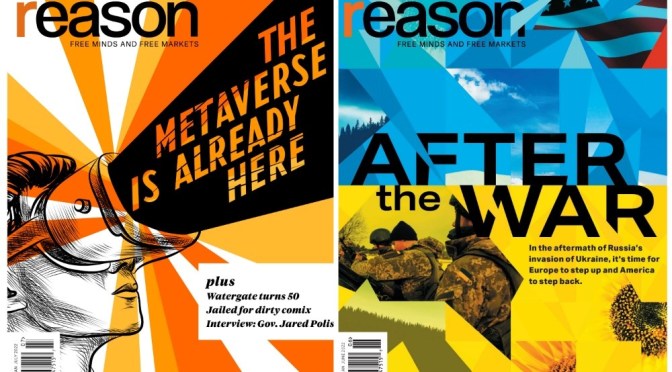
From trade to migration to personal freedom, the conservatives of the global New Right hold a philosophy incompatible with individualism. Stephen Davies
The Pentagon’s rush to rearm its Mideast forces makes it less ready to confront potential adversaries like Russia and China, administration and congressional officials say.
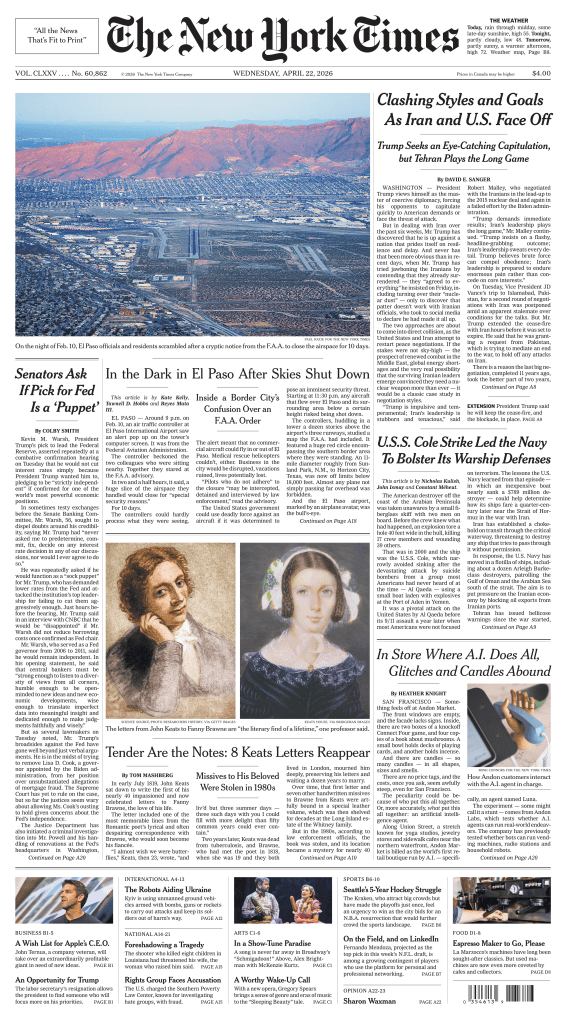
Defense Secretary Pete Hegseth said that U.S. forces had stopped 34 vessels since President Trump imposed the order. Iran has made lifting it a condition of resuming talks to end the war.
Hamas said it was not participating in the municipal elections in Deir al-Balah, set for this weekend. Residents said it was a long-awaited opportunity to address the city’s problems
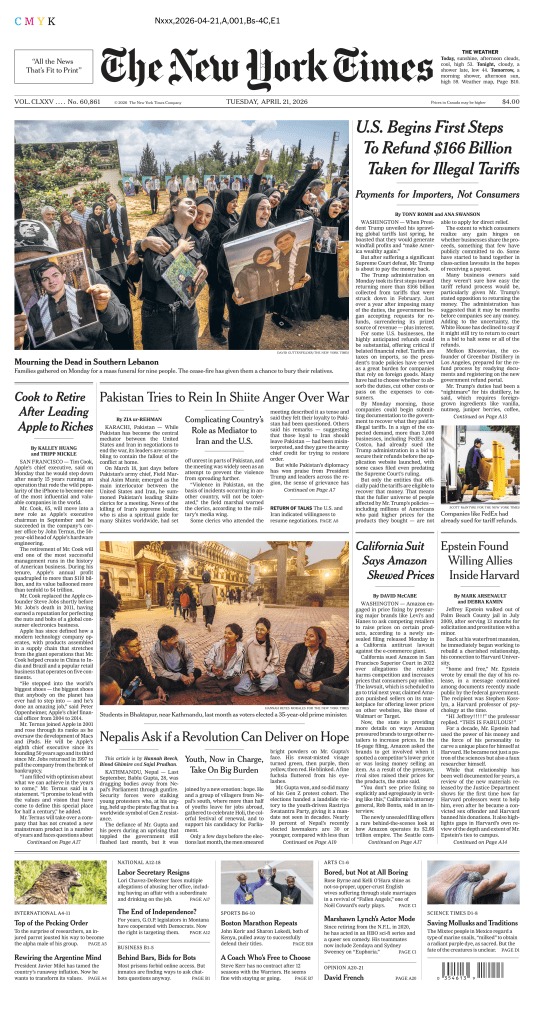
Many families felt the sting of the president’s now-illegal tariffs, but companies have said little about whether they will share the $166 billion return.
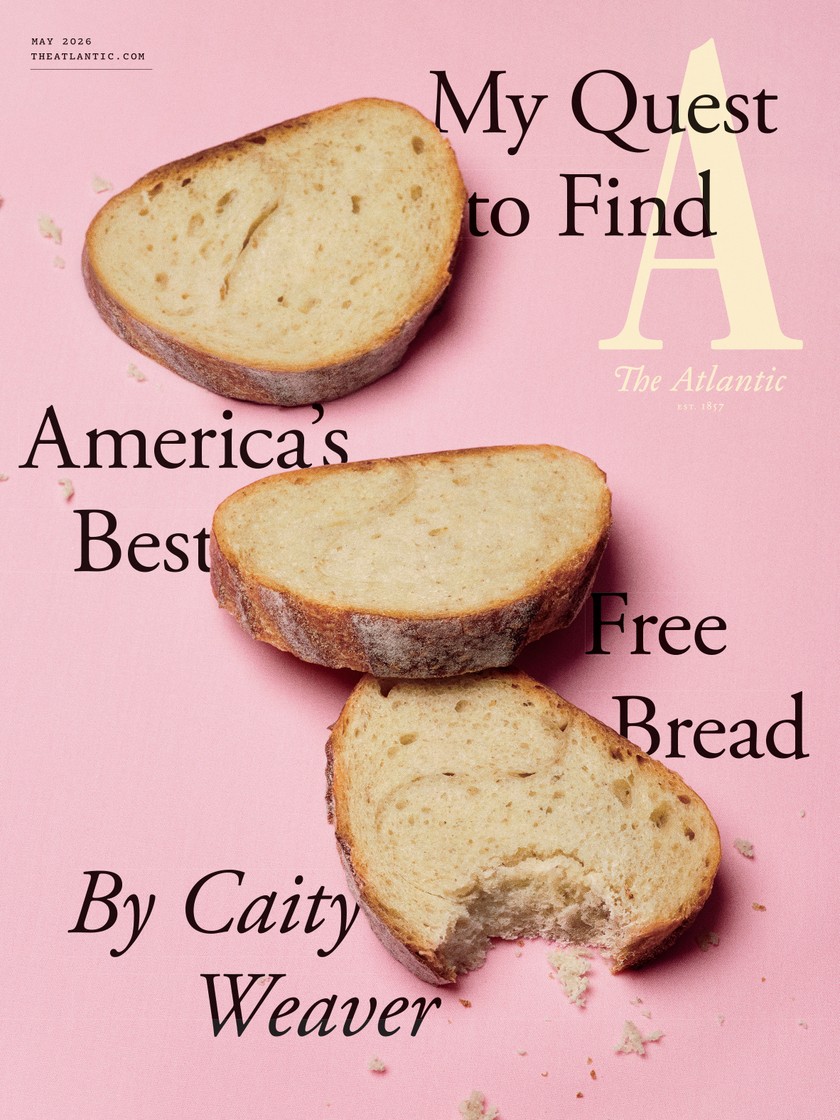
THE ATLANTIC MAGAZINE: The latest issue features America’s best free bread, the cartel Olympics, a billionaire’s private retreat, and why reactionaries are taking over the world. Plus the U.S. gerontocracy, masterpieces of the New Deal, John Mark Comer, Black comedy, the eighth deadly sin, and more.
A Mexican athlete said he was kidnapped and forced to compete for his life in a tournament of gangs. But was he actually playing a different game? McKay Coppins
John Phelan is leaving the Pentagon after months of tension with Pete Hegseth and other leaders. The tumult comes as the Navy has been engaged in war with Iran.
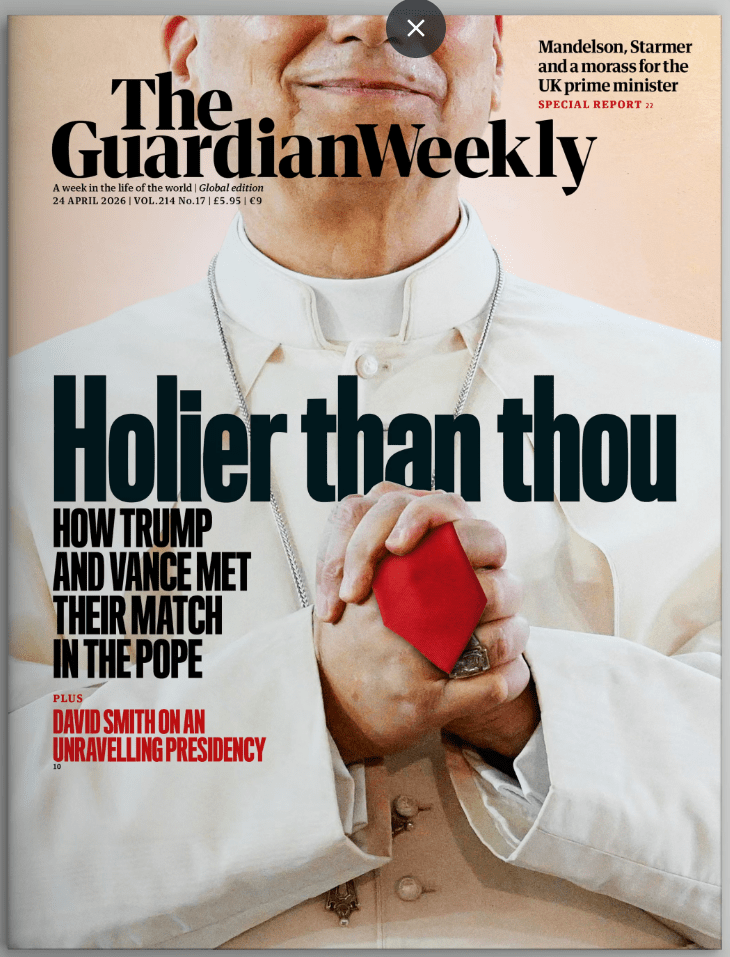
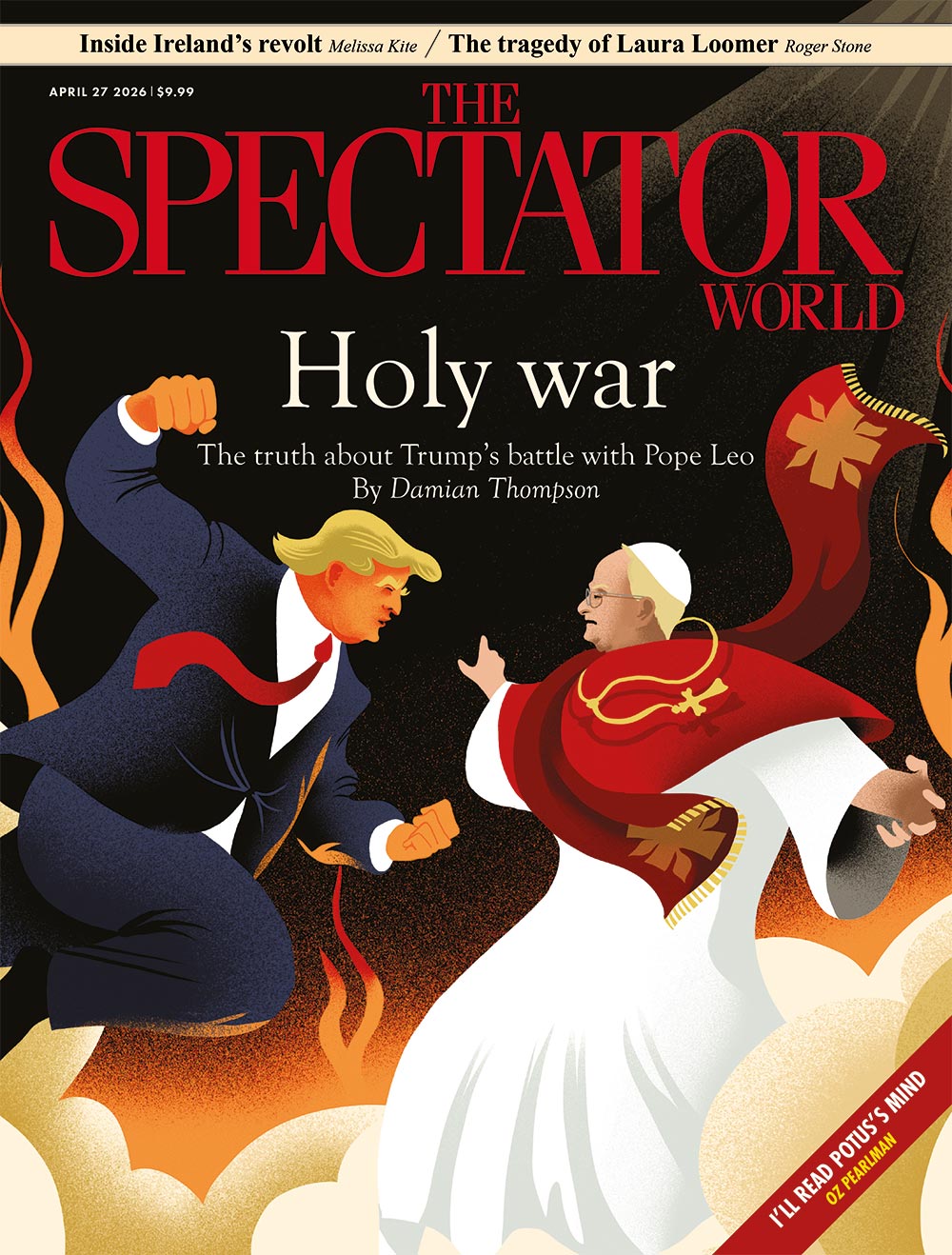
The Trump administration’s efforts to validate their incoherent war on Iran with some sort of Christian moral authority have led to a few, shall we say, interesting moments recently.
After bizarrely berating Pope Leo XIV as “WEAK on Crime, and terrible for Foreign Policy”, Donald Trump posted (and later deleted) a meme of himself as a Christ-like figure healing the sick. The self-styled “secretary of war” Pete Hegseth then confused what he evidently thought was a biblical passage with a bastardised version of a speech from the Quentin Tarantino movie Pulp Fiction.
Perhaps most damagingly of all, the vice-president, JD Vance, took Leo’s carefully considered thoughts on the concept of the “just war” as an opportunity to lecture the pope on theology.
Spotlight | Starmer and the scandal of Mandelson’s vetting The British prime minister came under huge pressure to resign this week over what he knew about Peter Mandelson’s appointment as UK ambassador to the US, even though he had failed Foreign Office security vetting. Pippa Crerar, Jessica Elgot, Paul Lewis and Kiran Stacey spearhead our coverage
Science | The magic of mushrooms Fungi play a key role in ecosystems and storing carbon, so African scientists are championing the preservation of “funga” as much as flora and fauna, writes Whitney Bauck
Feature | When older relatives lurch to the far right It starts with a “back in my day” nostalgic meme – then suddenly your elders are sharing AI-generated “boomerslop” and repeating conspiracy theories … Simon Usborne speaks to families dealing with rightwing political rifts
Opinion | Our governments are woefully underprepared for the AI revolution Every wave of new tech has come with a doomsday scenario. But governments just aren’t planning a human response on the scale required, warns Larry Elliott
Culture | How the female gaze caught the attention of film, TV and fiction From passionate romantasy novels to premium television dramas, culture is bringing the agency, desires and interior lives of women to the fore. It’s proving good for business, but is this a permanent revolution, asks Deborah Linton
Iran said it had attacked and seized two cargo ships near the Strait of Hormuz, state media reported. Both sides were seeking to exert control in the waterway.
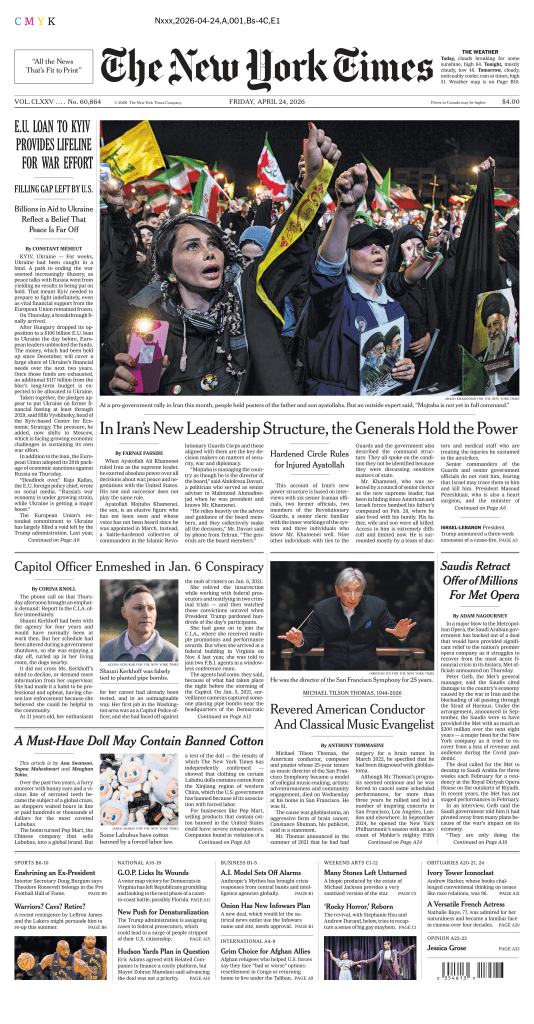
After months of impasse because of objections from Hungary’s prime minister, Viktor Orban, E.U. ambassadors took a critical step toward disbursing the money.
Donald Trump’s latest clash with the Catholic Church stunned even the most hardened veterans of culture-war X. According to the President of the United States, the Chicago-born Pope Leo XIV, the conspicuously holy spiritual leader of 1.3 billion people, is “WEAK on crime and terrible on foreign policy.” He also claimed that, “If I wasn’t in the White House, Leo wouldn’t be in the Vatican.”
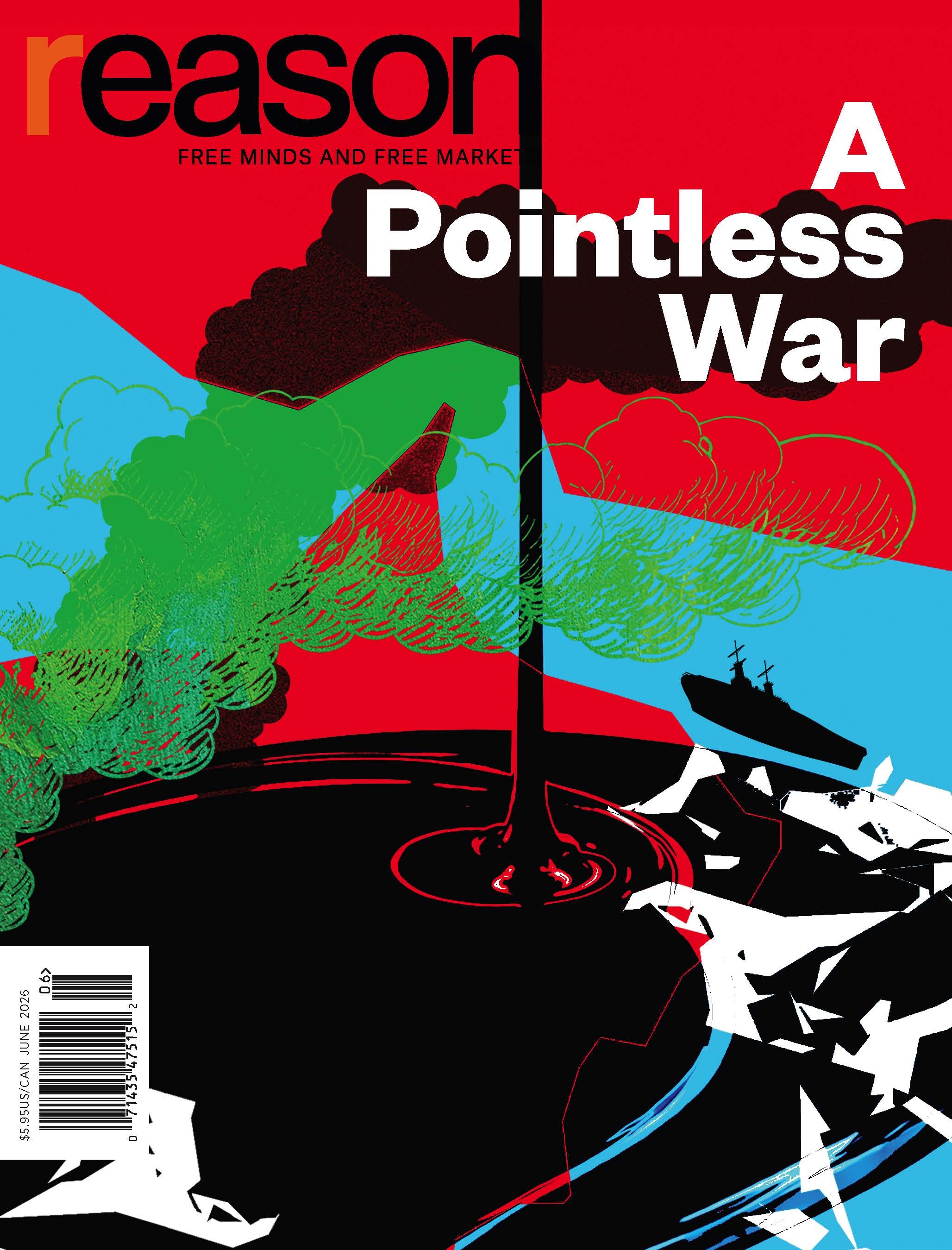
Geostrategists used to fret over the “Eastern Question” or the Maginot Line or the Missile Gap. Today there is no doubt that the overriding geostrategic question of our day is whether the President of the United States is playing with a full deck. With the US-Israeli war on Iran failing, and depleting much of both
Vice President JD Vance was set to return to Pakistan for peace talks, U.S. officials said, though Iran has not confirmed that its negotiators will attend.
The Navy destroyers enforcing a blockade of Iranian ports carry weapons fielded after a U.S. warship was attacked and nearly sunk more than 25 years ago.
Prime Minister Sanae Takaichi reversed limits on arms exports as Japan faces rising threats from China and unpredictability from its main ally, the United States.
News, Views and Reviews For The Intellectually Curious




 Boomers Daily