Something has gone wrong with work. On this, everyone seems to agree. Less clear is the precise nature of the problem, let alone who or what is to blame. For some time we’ve been told that we’re in the midst of a Great Resignation. Workers are quitting their jobs en masse, repudiating not just their bosses but ambition itself—even the very idea of work.
I had my first panic attack when I was fifteen, in the middle of January, while I was sitting in geometry class. Winter in Illinois, flesh comes off the bones—what did we need geometry for? We could look at the naked angles of the trees, the circles in the sky at night.
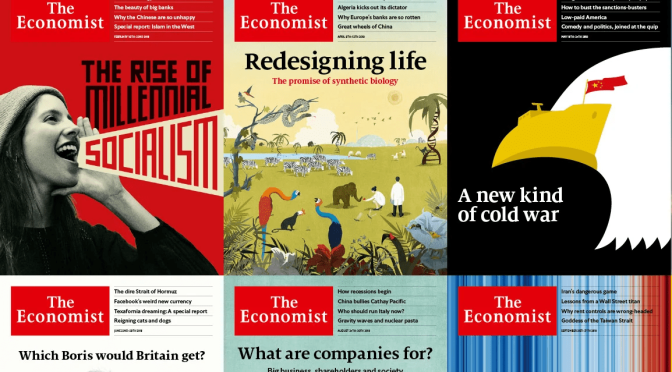
April 10, 2023: A selection of three essential articles read aloud from the latest issue of The Economist. This week, the case for hugging pylons, not trees. Also, the transatlantic divide on gender-medicine (10:30) and why do Democrats keep helping Donald Trump? (17:55)
Economic growth should help, not hinder, the fight against climate change
The sheer majesty of a five-megawatt wind turbine, its central support the height of a skyscraper, its airliner-wingspan rotors tilling the sky, is hard to deny.
April 3, 2023: A selection of three essential articles read aloud from the latest issue of The Economist. This week, the China-US contest is entering a new and more dangerous phase, how the tech giants are going all in on artificial intelligence (10:26) and why rice is fuelling climate change and diabetes (25:03).
March 27, 2023: A selection of three essential articles read aloud from the latest issue of The Economist. This week, we explore the world according to XI. Also, we look at the excruciating trade-off central bankers face (09:56) and why editing Roald Dahl for sensitivity was silly (17:28).
March 20, 2023: A selection of three essential articles read aloud from the latest issue of The Economist. This week, what’s wrong with the banks? Also, we ask whether Bibi will break Israel (10:39) and why men should get a good night’s sleep to ensure vaccines work properly (19:03).
Rising interest rates have left banks exposed. Time to fix the system—again
Only ten days ago you might have thought that the banks had been fixed after the nightmare of the financial crisis in 2007-09. Now it is clear that they still have the power to cause a heart-stopping scare. A ferocious run at Silicon Valley Bank on March 9th saw $42bn in deposits flee in a day. svb was just one of three American lenders to collapse in the space of a week. Regulators worked frantically over the weekend to devise a rescue. Even so, customers are asking once again if their money is safe.
When Israel’s best and brightest are up in arms it is time to worry
This should have been Israel’s moment. As it approaches its 75th birthday in April the risk of a conventional war with neighbouring Arab states, for decades an existential danger, is at its lowest since 1948. The last Palestinian intifada, or uprising against occupation, ended 18 years ago. Israel’s tech-powered economy is more successful and globally relevant than ever. Last year gdp per person hit $55,000, making it richer than the eu.
Vaccines get all the glory, but it is really the immune system that does the heavy lifting. Indeed, those with weak immune systems often benefit little from vaccines. Aware of this, researchers have long thought that people deprived of sleep also ought to benefit less from vaccines, as sleeping less is thought to reduce immune function. A new analysis reveals that this is clearly the case—though only in men.
How the climate catastrophists learned to stop worrying and love the calm
The first signs that the mood was brightening among the corps of reporters called to cover one of the gravest threats humanity has ever faced appeared in the summer of 2021. “Climate change is not a pass/fail course,” Sarah Kaplan wrote in the Washington Post on August 9.
When I was a kid, in the touch-tone era in the Midwest, I often dialed, for no real reason, the “time lady”—an actress named Jane Barbe, it turns out—who would announce, with prim authority “at the tone,” the correct time to the second. I was, in those days, a bit obsessed with time.
March 13, 2023: A selection of three essential articles read aloud from the latest issue of The Economist. This week, how to avoid war over Taiwan, the mystery of 250,000 dead Britons (9:50) and the small consolations of office irritations (18:20).
March 6, 2023: A selection of three essential articles read aloud from the latest issue of The Economist. This week, how to cure obesity, Ron DeSantis’s foreign policy doctrine (10:53) and why hype can help and hinder entrepreneurs (17:00).