
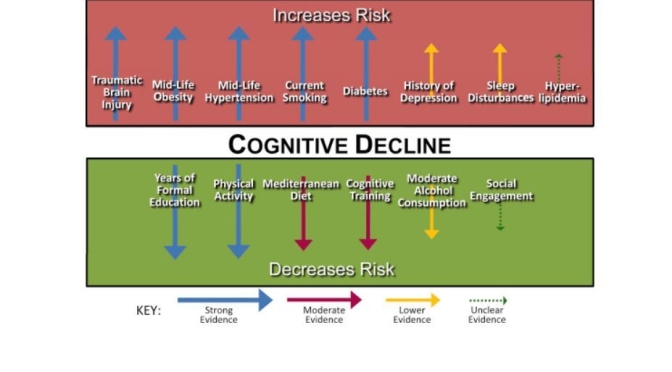
From a MedPage Today online article (April 2, 2020):
 This relationship between higher glucose levels and poorer cognitive functioning extended beyond just CASI z-score, as well, Cukierman-Yaffe noted. Higher HbA1c levels were also tied to significantly poorer performance in other psychological tests, including the clock making test of executive functioning, test of discriminative ability, and for the test of verbal fluency.
Poorer glycemic control was tied to cognitive decline following a lacunar stroke in a prospective cohort study.
Among 942 individuals with type 2 diabetes who had a lacunar stroke, every 1% higher HbA1c was tied to a 0.06 drop in cognitive function at baseline measured by Cognitive Assessment Screening Instrument (CASI) z-score (95% CI -0.101 to -0.018), reported Tali Cukierman-Yaffe, MD, MSc, of Sheba Medical Center and the Sackler School of Medicine of Tel Aviv University in Israel.
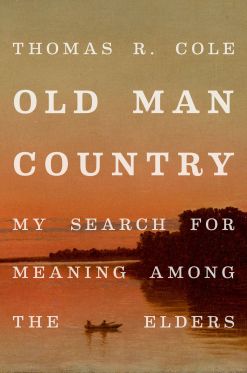 The book follows the journey of a writer in search of wisdom, as he encounters twelve distinguished American men over 80 — including Paul Volcker, the former head of the Federal Reserve, and Denton Cooley, the world’s most famous heart surgeon. In these and other intimate conversations, the book explores and honors the particular way that each man faces four challenges of living a good old age: Am I still a man? Do I still matter? What is the meaning of my life? Am I loved?
 It started with a phone call. In a week, a scammer would take Nina Belis’s life savings. WSJ’s Sarah Krouse explains why robocalls persist: Because sometimes they work.
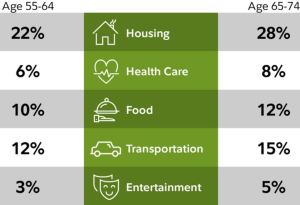 • Required distributions. Most people know that, after reaching age 70½, they must begin withdrawing funds from tax-deferred accounts (like IRAs). What they fail to understand are the ripple effects from these payouts. Required minimum distributions can, first, push you into a higher tax bracket and, second, translate into increased Medicare Part B premiums (which are tied to annual income).
 Age change should be allowed when the following three conditions are met. First, the person is at risk of being discriminated against because of age. Second, the person’s body and mind are in better shape than would be expected based on the person’s chronological age (that is, the person is biologically younger than he is chronologically). Third, the person does not feel that his legal age is befitting.
 It’s a familiar tune to engineer Ken Smith, director of the mobility division of the Stanford Center on Longevity. He says one of the biggest mistakes designers make is to assume that around the age of 60 people lose interest in aesthetics and design. This can have dire consequences for products meant to help people with their health. No one wants to stick a golf-ball-size hearing aid the color of chewed gum in their ear, any more than they want to wear a T-shirt that reads “SENIOR CITIZEN.”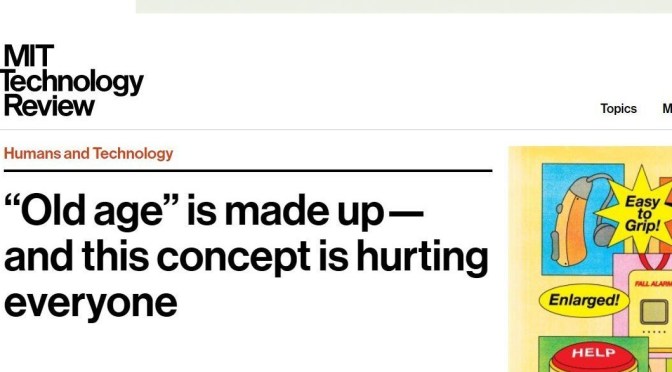
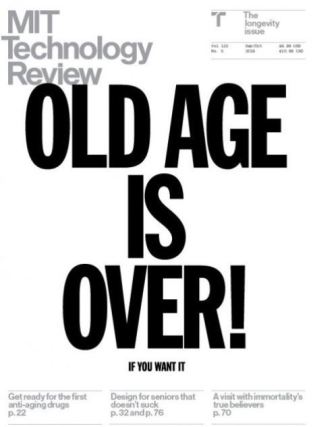 Technologists, particularly those who make consumer products, will have a strong influence over how we’ll live tomorrow. By treating older adults not as an ancillary market but as a core constituency, the tech sector can do much of the work required to redefine old age. But tech workplaces also skew infamously young. Asking young designers to merely step into the shoes of older consumers (and we at the MIT AgeLab have literally developed a physiological aging simulation suit for that purpose) is a good start, but it is not enough to give them true insight into the desires of older consumers. Luckily there’s a simpler route: hire older workers.
 Boomers Daily