
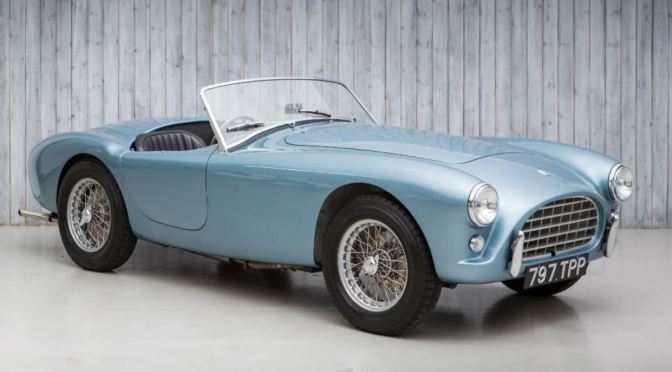
From Wikipedia:
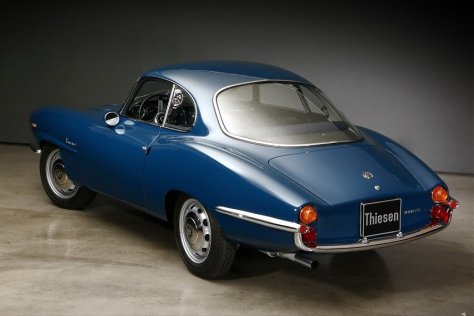
 In 1961 a new 2.6-litre (2,553 cc (155.8 cu in)) straight-six ‘Ruddspeed’ option was available, adapted by Ken Rudd from the unit used in the Ford Zephyr. It used three Weber or SU carburettors and either a ‘Mays’ or an iron cast head. This setup boosted the car’s performance further, with some versions tuned to 170 bhp (127 kW), providing a top speed of 130 mph (209 km/h) and 0–60 mph (0–100 km/h) in 8.1 seconds. However, it was not long before Carroll Shelby drew AC’s attention to the Cobra, so only 37 of the 2.6 models were made. These Ford engined models had a smaller grille which was carried over to the Cobra.
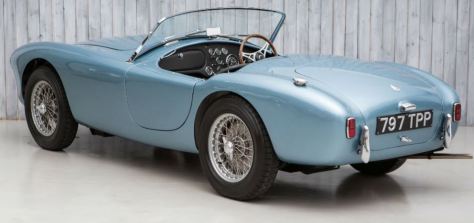
AC came back to the market after the Second World War with the 2-Litre range of cars in 1947, but it was with the Ace sports car of 1953 that the company really made its reputation in the post war years. Casting around for a replacement for the ageing 2-Litre, AC took up a design by John Tojeiro that used a light ladder type tubular frame, all independent transverse leaf spring suspension, and an open two seater alloy body made using English wheeling machines, possibly inspired by the Ferrari Barchetta of the day.
Photos from Classic Driver website: https://www.classicdriver.com/en/car/ac/ace/1961/703263?utm_medium=email&utm_campaign=Classic%20Driver%20Daily%203342019&utm_content=Classic%20Driver%20Daily%203342019+CID_08b403976196024a8806d6851989b77c&utm_source=newsletter



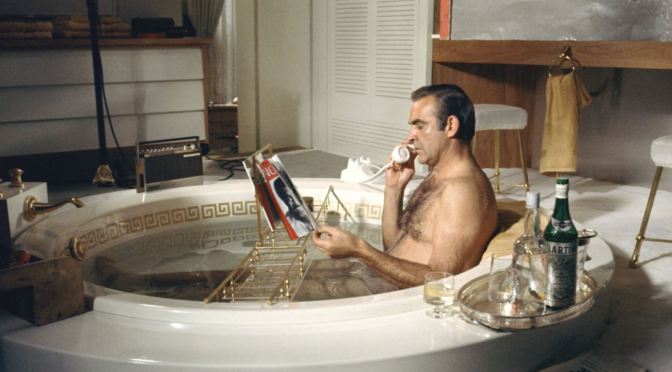
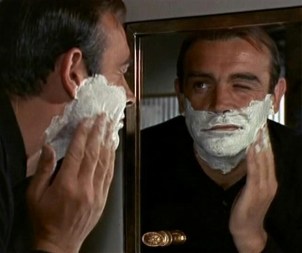 “He went into the bathroom and had an ice-cold shower and washed his hair with Pinaud Elixir, that prince among shampoos, to get the dust of the roads out of it…”
 The van is new from the ground up, sitting on a new modular platform and featuring a 60kWh lithium ion powertrain said to endow it with a “power-to-weight efficiency that fully maximises the range of the vehicle”. It can fast charge to 80% in 30 minutes.



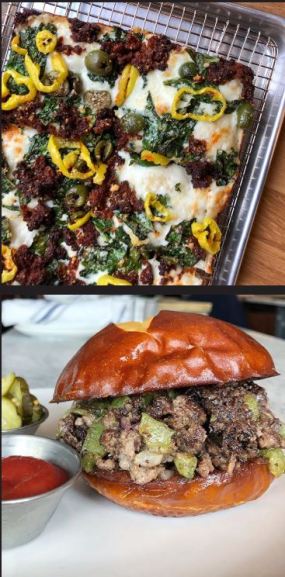 Most pizza places, Detroit-style places, the dough is sitting in a portioned-out container and it gets pressed into the pan. We let it rise in the pan. I knew from the beginning, that’s what’s going to separate our pizza. … It’s built in that we need larger walk-ins to have those extra pans. It’s just part of the plan.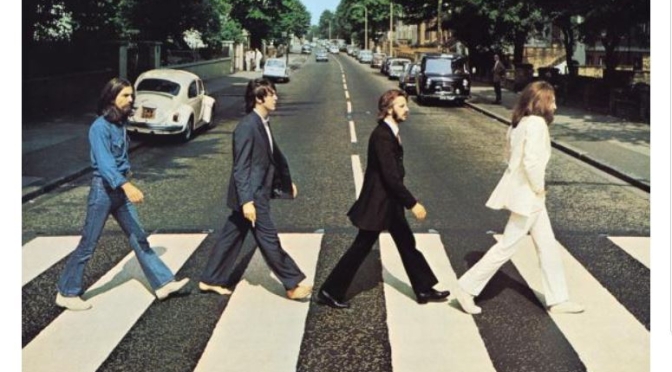
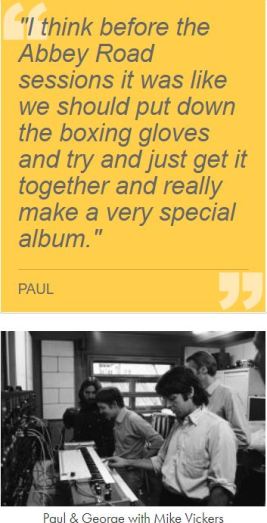 “Abbey Road” was the Beatles’ last word—the final recordings by the most popular and influential artists of the nineteen-sixties. Now, on the occasion of its fiftieth anniversary, “Abbey Road” has been expertly remixed by Giles Martin, George Martin’s son and protégé, and reissued in a super-deluxe edition that comes with an archive of studio outtakes and a hundred-page book of essays and liner notes that chronicle how the recordings were made. “The Beatles are good even though everybody already knows that they’re good,” the classical composer Ned Rorem observed in 1968, alluding to how the band’s immense popularity confounded the usual notions of discriminating taste. If anyone needs to be reminded of this, this new edition of “Abbey Road” should do the trick.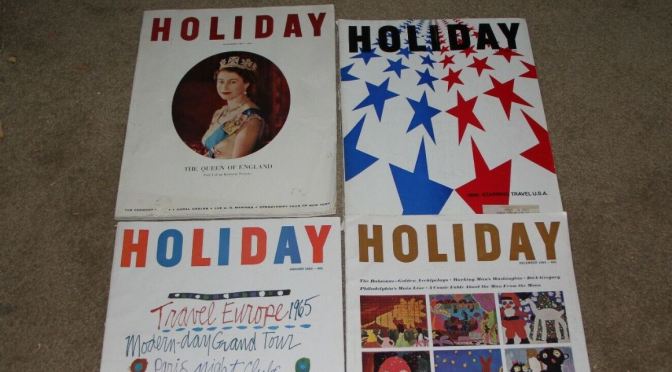
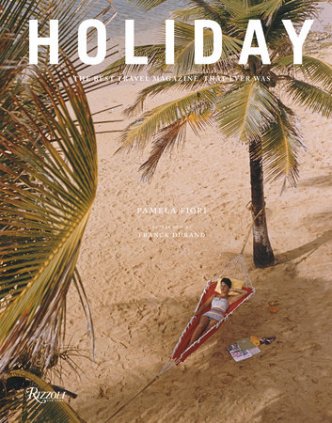 The first book on magazine sensation Holiday, which between 1946 and 1977 was one of the most exciting publications in the world. Renowned for its bold layouts, literary credibility, and ambitious choice of photographers and artists, Holiday portrayed the romance of travel like no other periodical.
 Boomers Daily