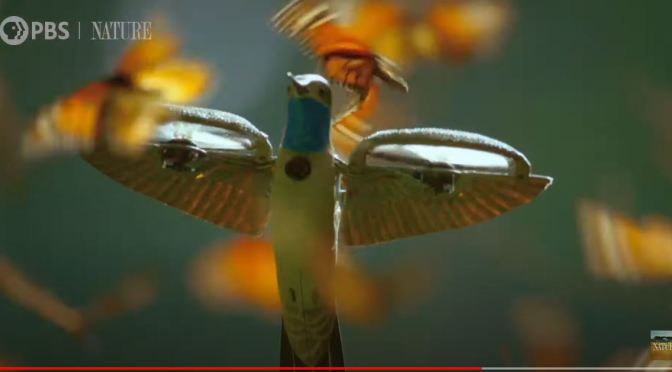
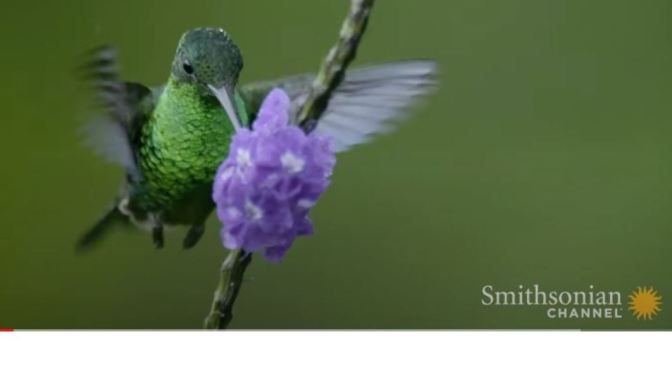
In the mountains of Mexico, a spy hummingbird ventures into the heart of a breathtaking monarch butterfly swarm.

In the mountains of Mexico, a spy hummingbird ventures into the heart of a breathtaking monarch butterfly swarm.
No bird is more skilled at in-flight feeding than a hummingbird, thanks to their ability to hover in the air. But if it’s rainy, these fantastic flyers have to be extremely careful not to get hurt.
From the Series: Into the Wild Colombia: A Hummingbird’s Quest http://bit.ly/2Pvi9Fh
 Benjamin Thompson, Noah Baker, and Amy Maxmen discuss Trump withholding funds from the WHO, and how COVID-19 kills. We also hear about controlling misinformation while communicating risk.
In this episode:
01:15 Understanding bottlenecks
After listening to last week’s episode of Coronapod, researchers in the USA were inspired to start collecting data about the challenges facing labs carrying out testing. After more than 4,000 responses to their online survey, we discuss their goals.
03:08 A hole in the WHO’s funding
US President Donald Trump has announced plans to withhold funding for the WHO, pending a review of the organization’s handling of the pandemic. We discuss the decision and ask what it means for the global response to COVID-19.
News: Nature‘s rolling coronavirus news blog
05:55 Responding to the immune system
We investigate the role of the immune system in the death of COVID-19 patients and what this could mean for treatments. Could some therapeutics actually be undermining the body’s ability to fight the virus?
News: How does COVID-19 kill? Uncertainty is hampering doctors’ ability to choose treatments
13:54 One good thing this week
Our hosts pick out things that have made them smile in the last 7 days, including seasonal memories from Sierra Leone, a trip to the supermarket, and the 99-year old war veteran who has raised millions for charity.
BBC News: Coronavirus: Capt Tom Moore’s NHS fundraiser hits £17m
18:33 Communicating complex data
Clearly communicating risks and evidence is key for governments and other organisations if they are to best inform the public during the pandemic. But what is the best way to do it? We hear the methods that communications experts and behavioural scientists recommend to keep the public informed, and keep misinformation at bay.
Travel to the Northern Hemisphere, where the spy creatures learn how animals move, feed and fight. “Spy in the Wild 2 – Episode 2: The North“ premieres Wednesday, May 6, at 8/7c.
The spy creatures infiltrate a hippo pod, a gorilla sanctuary and the world of pygmy elephants. “Spy in the Wild 2 – Episode 1: The Tropics“ premieres Wednesday, April 29, at 8/7c.
Neil deGrasse Tyson details how and why Bees communicate through math and coordinates.
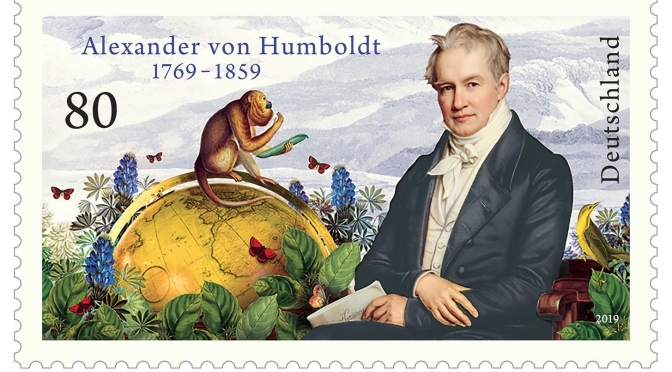
 Alexander von Humboldt might not be a name you know, but you can bet you know his ideas. Back when the United States were a wee collection of colonies huddled on the eastern seaboard, colonists found the wilderness surrounding them scary.
 It took a zealous Prussian explorer with a thing for barometers to show the colonists what they couldn’t see: a global ecosystem, and their own place in nature. In this 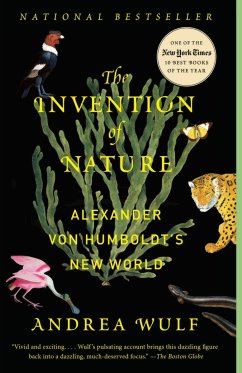 episode, we learn how Humboldt—through science and art—inspired a key part of America’s national identity.
More fascinating Humboldt facts:
If you’re interested in learning more about the life and times of Alexander von Humboldt, I’d recommend reading Andrea Wulf’s book The Invention of Nature: Alexander von Humboldt’s New World.
Outdoor reel showcasing some of my favorite moments in motion from the last few years including timelapse photography, aerial cinematography, wildlife videography and more.
Filmed and Edited by: Henry Jackson
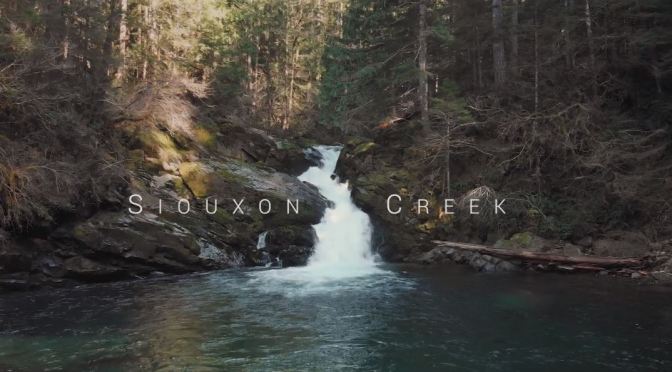
Simply capturing the ambiance and feeling of a beautiful location in the Pacific Northwest tucked in the southern forests of Washington. Turquoise rivers and amazing waterfalls housed within one of the most peaceful forests you’ll ever encounter. A location deserving of visual documentation.
Although this gently rolling creekside ramble is one continuous trail, an adventure in three parts awaits. The first few miles are a quiet walk through a classic fern-dotted, mossy forest. In the second section, hikers find Siouxon Creek and fellow waterfall seekers, and the final miles offer more solitude and small narrow canyons with more waterfalls to enjoy.
The trail to Siouxon Falls, Chinook Falls, and at least three other waterfalls along the way, starts from a subtle trail sign three miles before reaching the main Siouxon Trailhead on FR 5071. Look for a plain trail marker on the left side just after a pull-out on the right after a hairpin right turn. Once you step into the trees, you’ll see the Siouxon Trail No. 130 sign pointing the way to Huffman Peak turnoff (1 mile away) and the main Siouxon trailhead in 3 miles.
From a The Economist online article (March 23, 2020):
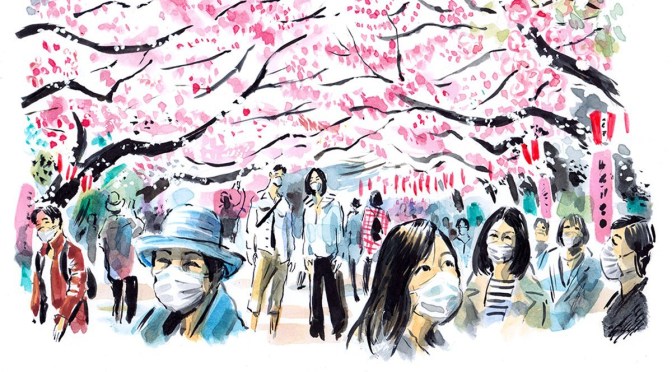
In this year of coronavirus contagion, however, the prospect of cheek-by-jowl hanami parties has alarmed the authorities. Tokyo’s government has urged people to steer clear of gatherings “that involve food and drink” to slow the spread of infection. To little effect.
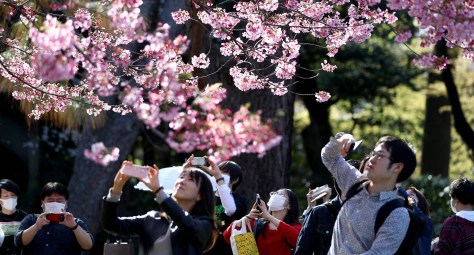
 EVERY MARCH and April trees along the banks of the Meguro river in Tokyo fleetingly erupt with fat pink and white cherry blossoms, heralding the arrival of spring. For a few glorious weeks, millions of people across the city flee the drudgery of the office and factory to spend an hour or two in places like this, eating and drinking under falling sakura petals. It is a ritual with ancient roots, with a chapter devoted to it in “The Tale of Genji”, a tenth-century work that is perhaps the world’s first novel.
This video shows you exactly why you NEED to see the cherry blossoms at Tom McCall Waterfront Park in Portland, Oregon. Peak bloom varies from year to year but tends to occur around the first day of spring.
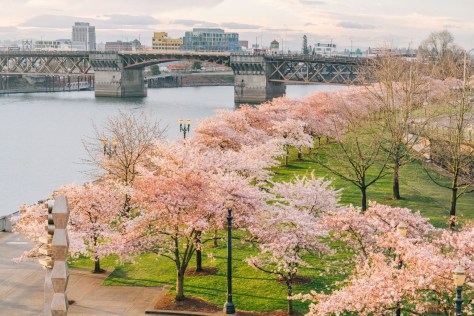
For more helpful information about the best places to see cherry blossoms in Portland (with real-time photo updates!), make sure to read embracesomeplace.com/cherry-blossoms-portland/



 Boomers Daily