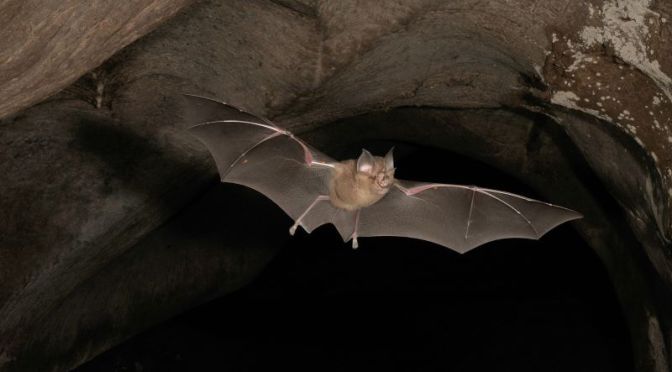
When it comes to viruses jumping from animals to humans, bats hold a unique place in the transmission chain. Christopher Golden and James Longman investigate an abandoned mine for signs of poaching or viruses impacting the bat population.
Tag Archives: Nature
Wilderness Video: ‘Tahoe National Forest’ In Northern California
“Sunday Morning” takes us to Tahoe National Forest, northwest of Lake Tahoe, in California. Videographer: Derek Reich.
Tahoe National Forest is a United States National Forest located in California, northwest of Lake Tahoe. It includes the 8,587-foot peak of Sierra Buttes, near Sierra City, which has views of Mount Lassen and Mount Shasta. It is located in parts of six counties: Sierra, Placer, Nevada, Yuba, Plumas and El Dorado.
Science Podcasts: Birds & Sensory Pollution, Covid-19 Vaccine And Tiny Bats

Researchers try to unpick the complex relationship between sensory pollutants and bird reproduction, and how to combat organized crime in fisheries.
In this episode:
00:46 Sensory pollution and bird reproduction
Light- and noise-pollution have been shown to affect the behaviour of birds. However, it’s been difficult to work out whether these behavioural changes have led to bird species thriving or declining. Now, researchers have assembled a massive dataset that can begin to give some answers. Research article: Senzaki et al.
10:17 Coronapod
Interim results from a phase III trial show compelling evidence that a coronavirus vaccine candidate can prevent COVID-19. However, amid the optimism there remain questions to be answered – we discuss these, and what the results might mean for other vaccines in development. News: What Pfizer’s landmark COVID vaccine results mean for the pandemic
23:29 Research Highlights
A tiny bat breaks a migration record, and researchers engineer a mouse’s sense of place. Research Highlight: The record-setting flight of a bat that weighs less than a toothbrush; Research Article: Robinson et al.
25:39 Organised crime in fisheries
When you think of fishing, organised crime probably isn’t the first thing that springs to mind. However, billions of dollars every year from the fishing industry are lost to criminal enterprises. We discuss some of the impacts and what can be done about it. Research Article: Witbooi et al.
32:13 Briefing Chat
We discuss some highlights from the Nature Briefing. This time, a time-capsule discovered on the Irish coast provides a damning indictment of Arctic warming, and some human remains challenge the idea of ‘man-the-hunter’. The Guardian: Arctic time capsule from 2018 washes up in Ireland as polar ice melts; Science: Woman the hunter: Ancient Andean remains challenge old ideas of who speared big game
Nature & Photography: ‘Wonderful Little Things’ By Christian Fleischer
Filmed and Edited by: Christian Fleischer
When chaos, stress and distraction comes over us, it is good to calm down and focus on the wonderful little things that mother nature is blessing us with.
So I like to invite you to have a break, relax and enjoy some meditative moments of witnessing the little creatures, plants and mushrooms down at your feet, which normally remain invisible for most of us most of the time.
MUSIK: Scott Rakozy – A Mother`s Love | audiio.com
Science Podcasts: Radio Bursts In Milky Way, Covid-19 In Schools & Octopuses

Astronomers pin down the likely origins of mysterious fast radio bursts, Covid-19 in schools, octopuses taste with touch and the latest on what the US election means for science.
In this episode:
00:46 The origins of mysterious fast radio bursts
The detection of a brief but enormously-powerful radio burst originating from within the Milky Way could help researchers answer one of astronomy’s biggest mysteries.
Research article: Bochenek et al.; News: Astronomers spot first fast radio burst in the Milky Way
07:59 Coronapod
At the start of the pandemic, there were fears that schools could become hotspots for infections. We discuss the evidence suggesting that this is unlikely to be the case, and the rates of infection in children of different ages.
News: Why schools probably aren’t COVID hotspots
18:34 Research Highlights
Octopuses taste with touch, and a tool to watch dangerously-reactive metals grow.
Research Highlight: How octopuses taste with their arms — all eight of them; Research Highlight: How to make violently reactive metals and watch them grow
21:28 An update on the US election
Although the winner of this year’s US election is unclear, we discuss the current situation and what it might mean for science.
28:58 Briefing Chat
We discuss some highlights from the Nature Briefing. This time, ancient genomes reveal the migration of man’s best friend, and a new polio vaccine looks set to receive emergency approval.
News: Ancient dog DNA reveals 11,000 years of canine evolution; News: New polio vaccine poised to get emergency WHO approval
Wildlife Video: ’24 Hours On Earth’ – In One Image
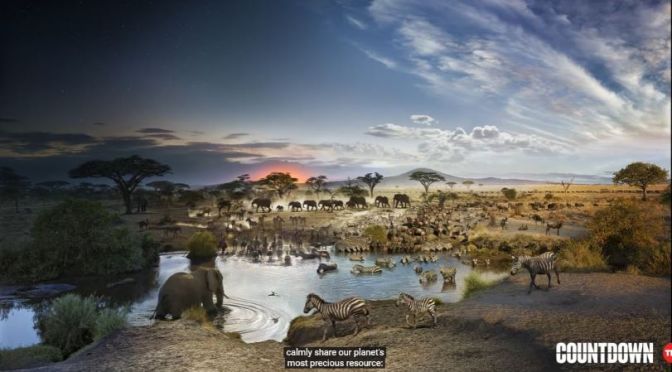
“Nature reveals itself to us in unique ways, if we stop and look at the world through a window of time,” says photographer Stephen Wilkes. Using a special photographic technique that reveals how a scene changes from day to night in a single image,
Wilkes exposes the Earth’s beautiful complexity and the impacts of climate change — from the disruption of flamingo migrations in Africa to the threat of melting ice — with unprecedented force. This performance was part of the Countdown Global Launch on 10.10.2020.
(Watch the full event here: https://youtu.be/5dVcn8NjbwY.)
Countdown is TED’s global initiative to accelerate solutions to the climate crisis. The goal: to build a better future by cutting greenhouse gas emissions in half by 2030, in the race to a zero-carbon world.
Future Of Ecotourism: ‘Cocoon Hotel & Resort’ – Tulum, Mexico (Video)
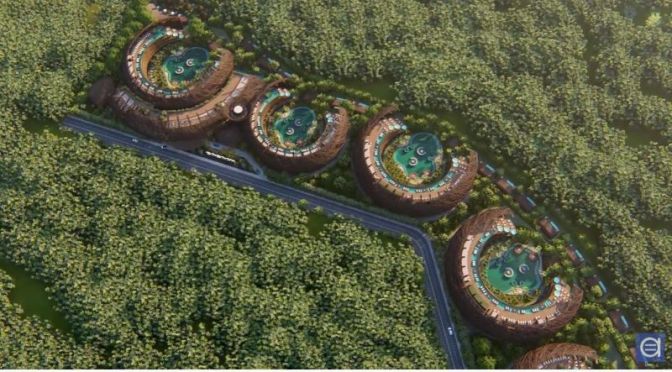
The “Cocoon Hotel & resort”, Tulum, Mexico– a new concept of eco-tourism, and a great opportunity of connection with Nature, Community, Ourselves, inspired by the sea and the exotic forest. The project consists of 46.181 m2 offering 3 residential and 2 hotel buildings “COCOON” with 204 apartments and 167 rooms as well as 16 private villas.Every feature serves to give a unique experience and create a magical place for the guest, at the same time making him identify what is Mexico.
The complex offers luxury community spaces integrated into nature such as jungle gardens, magical outdoor living spaces-villas, multipurpose pavilion, indoor community spaces, leisure areas, restaurant, and a panoramic Nest with unrestricted and breath-taking views. All to achieve a wide vocabulary of visual elements to mutate into designing language, in materials and shapes, for a bio-mimicry architecture.
The idea was to create “Cenotes”- natural freshwater ponds, to which the Mayans gave a sacred use, thus allowing to experience the real Mayan´s rituals. The project makes an emphasis on sustainability concept respecting ecosystem and biodiversity, contributing to the usage of natural materials that minimizes the impact of building and generation of waste. The water collection concept is also respected and represents a recovery of rainwater for sewage treatment. The solar panels are implemented to achieve sustainable electricity.
Finally, the “dry” construction system is used, meaning no wet binders, shorter execution time, and increased safety and sustainability. Source by dna Barcelona.
A As Architecture – Discover Architecture http://aasarchitecture.com/
New Science Podcast: Lab-Grown Mini Brains, Herd Immunity & Bat Dinosaurs

The chances of mini brains becoming sentient, herd immunity, bat-like dinosaurs, and a UK government decision threatens gender diversity in academia.
In this episode:
00:59 The ethics of creating consciousness
Brain organoids, created by culturing stem cells in a petri dish, are a mainstay of neuroscience research. But as these mini-brains become more complex, is there the chance they could become conscious, and if so, how could we tell?
News Feature: Can lab-grown brains become conscious?
09:01 Coronapod
So called ‘herd immunity’ is claimed by some as a way to break the chain of infection and curtail the pandemic. However epidemiologists say that this course of action is ineffective and will lead to large numbers of infections and deaths.
News Explainer: The false promise of herd immunity for COVID-19
20:59 Research Highlights
Volcanic ash degrades ancient art in Pompeii, and the aerial ineptitude of two bat-like dinosaurs.
Research Highlight: The volcanic debris that buried Pompeii wreaks further destruction; Research Highlight: A dead end on the way to the sky
23:22 How cutting red-tape could harm gender diversity in UK academia
The Athena SWAN scheme, designed to boost gender-equality in UK academia, has proved effective, and has been exported to countries around the world. But now a decision by the UK government to cut bureaucracy could mean that institutions pay less heed to schemes like this and threaten future efforts to increase gender diversity in UK academia.
Editorial: Equality and diversity efforts do not ‘burden’ research — no matter what the UK government says
31:00 Briefing Chat
We discuss some highlights from the Nature Briefing. This time, oncologists discover a potential new human organ, and how re-examined fossils have given new insights into the size of baby tyrannosaurs.
Preservation: ‘Tree Of The Year 2020’ In England, Wales & Scotland (Video)
Scotland’s #TreeOfTheYear 2020 – The Survivor Tree, Carrifran Valley.
It was once a lone rowan clinging to a stream bank in Carrifran Valley, but today that survivor tree is lonely no more! It is surrounded by a little forest of its children, and lots of suckers are coming up from its base. This was some of the first natural regeneration the Borders Forest Trust achieved in the Carrifran Valley. In addition to its own children, the rowan tree now has over half a million other native Scottish trees for company. Where once it dominated the view, it will soon be hidden from sight. The rowan tree no longer stands alone and is a symbol of the 20-year journey to revive the wild heart of Southern Scotland.
Wales’ #TreeOfTheYear 2020 – The Chapter House Tree, Margam Park, Port Talbot.
Standing in the shadows of 17th century Margam Orangery and St Mary’s Church, this historic fern-leaved beech envelopes the remains of one of the first Cistercian abbeys in Wales. Its canopy has provided shelter to visitors for many years – from Victorian tea parties taking place under its sweeping boughs to a favourite summer picnic spot for present day visitors. The tree provides an atmospheric back drop and is loved by cinematographers – featuring in TV and Film productions from Dr Who and ‘Songs of Praise’ with Sir Bryn Terfel to the recent Netflix blockbuster series ‘Sex Education’.
England’s #TreeOfTheYear 2020 – The Happy Man Tree, Hackney, London. Currently earmarked for felling, the plight of this 150 year old Plane has awakened something in a community that couldn’t bear to see it go. The dressing of the tree, and the signs behind it, are testament to the strength of feeling among the local campaigning. As an urban tree, it makes an important contribution to combating air pollution and making grey city streets green. But the community sees it as more than just the sum of it’s parts – it’s part of the estate, part of their collective history.
Science Podcasts: Beetle’s Strong Exoskeleton Helps Engineers, Covid-19 Trials

The structure of a beetle’s super-strong exoskeleton could open up new engineering applications, and efforts to address diversity and equality imbalances in academia.
In this episode:
01:17 Insights into an armoured insect
The diabolical ironclad beetle has an exoskeleton so strong, it can survive being run over by a car. Researchers have identified how the structure of the exoskeleton provides this strength, and show that mimicking it may lead to improved aerospace components.
Research Article: Rivera et al.; News and Views: Diabolical ironclad beetles inspire tougher joints for engineering applications
10:42 Coronapod
This week, the UK government announced plans to run a ‘human challenge trial’, where healthy volunteers are deliberately infected with the SARS-CoV-2 virus. We talk about the process, the ethical and procedural hurdles, and whether such an approach will provide any useful data.
News: Dozens to be deliberately infected with coronavirus in UK ‘human challenge’ trials
22:46 Research Highlights
A method to assess the age of RNA, and how southern elephant seals helped to identify supercooled seawater.
Research article: Rodriques et al.; Research article: Haumann et al.
25:20 Efforts to address equity in science
Julie Posselt has been investigating the efforts of academic institutions to assess ingrained imbalances in diversity and equality. We talk to her about these efforts and her new book on the subject.
Book review: How to get more women and people of colour into graduate school — and keep them there
31:43 Briefing Chat
We discuss some highlights from the Nature Briefing. This time, back pay for female professors at Princeton, and a newly uncovered superpower for the tiny tardigrade.