Read by Shane Morris. – Chief Tecumseh was a great Native American warrior chief who was leader of a large tribal confederacy which opposed the United States during Tecumseh’s War. Although his efforts to unite Native Americans ended with his death in the War of 1812, he became an iconic folk hero in American, Indigenous, and Canadian history.
Tecumseh was a Shawnee chief, warrior, diplomat, and orator who promoted resistance to the expansion of the United States onto Native American lands. He traveled widely, forming a Native American confederacy and promoting tribal unity.
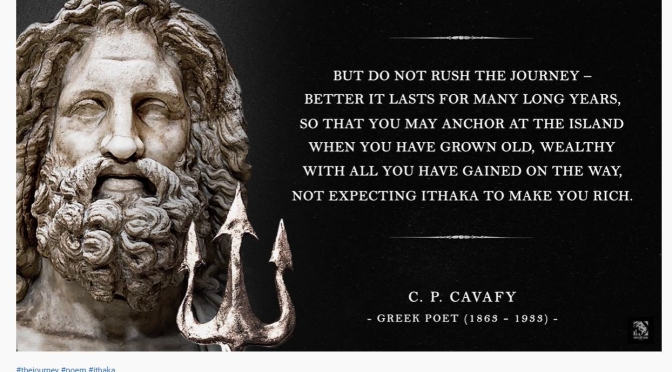
Constantine Peter Cavafy was an Egyptiot Greek poet, journalist and civil servant. His consciously individual style earned him a place among the most important figures not only in Greek poetry, but in Western poetry as well. Cavafy wrote 155 poems, while dozens more remained incomplete or in sketch form.
As you set out for Ithaka hope your road is a long one, full of adventure, full of discovery. Laistrygonians, Cyclops, angry Poseidon—don’t be afraid of them: you’ll never find things like that on your way as long as you keep your thoughts raised high, as long as a rare excitement stirs your spirit and your body. Laistrygonians, Cyclops, wild Poseidon—you won’t encounter them unless you bring them along inside your soul, unless your soul sets them up in front of you.
Hope your road is a long one. May there be many summer mornings when, with what pleasure, what joy, you enter harbors you’re seeing for the first time; may you stop at Phoenician trading stations to buy fine things, mother of pearl and coral, amber and ebony, sensual perfume of every kind— as many sensual perfumes as you can; and may you visit many Egyptian cities to learn and go on learning from their scholars.
Keep Ithaka always in your mind. Arriving there is what you’re destined for. But don’t hurry the journey at all. Better if it lasts for years, so you’re old by the time you reach the island, wealthy with all you’ve gained on the way, not expecting Ithaka to make you rich.
Ithaka gave you the marvelous journey. Without her you wouldn’t have set out. She has nothing left to give you now.
And if you find her poor, Ithaka won’t have fooled you. Wise as you will have become, so full of experience, you’ll have understood by then what these Ithakas mean.
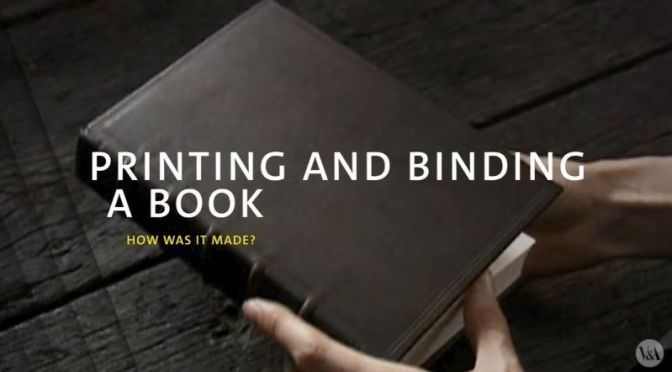
Discover the stages involved in creating a hand-printed and hand-bound book. This is an example of octavo size, meaning it’s made up of pages that were printed eight to a sheet of paper.
Video timeline: Process at the printers: Arranging metal letters: 00:09 Preparing type: 00:25 Applying ink to the type: 00:32 Pressing paper onto the inked type: 00:40 Process at the binders: Sheets folded and cut: 01:07 Folds hammered: 01:24 Sheets sewn onto bands: 01:28 Rounding the spine: 01:43 Attaching cover boards: 01:56 Clamping the book and trimming pages: 02:20 Endbands sewn: 02:29 Leather cover stuck on: 02:41 Decoration added with hot metal tools: 03:11
Get an inside look at Hemingway and discover why Ken Burns and Lynn Novick chose to explore the complex and iconic writer. Hemingway premieres April 5, 2021 on PBS.
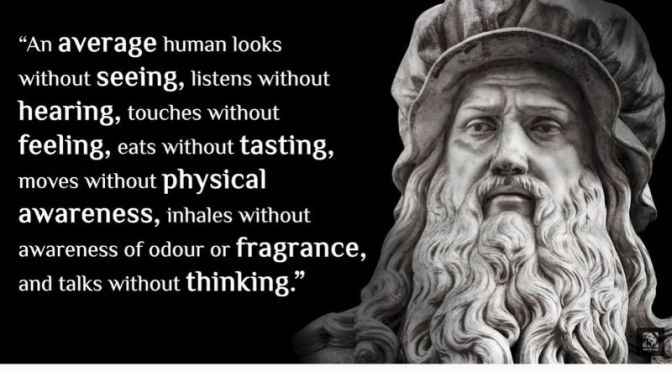
Leonardo da Vinci lived between 1452-1519. He was an Italian polymath of the High Renaissance who is widely considered one of the most diversely talented individuals ever to have lived. Performed by Chris Lines.
NPR’s Scott Simon reflects on the legacy of F. Scott Fitzgerald’s The Great Gatsby. The literary classic’s copyright expired on the first day of 2021.
The copyright on F. Scott Fitzgerald’s The Great Gatsby expired on the first stroke of 2021 and the book entered the public domain.
The classic 1925 novel of love foiled, ambitions foisted, class and betrayal sold fewer than 25,000 copies before Fitzgerald died. It has since sold nearly 30 million. I gave our daughter the copy I had in high school when she read it last year. The Great Gatsby has been turned into stage productions, an opera, five film versions, a Taylor Swift song and inspired innumerable prequels, spinoffs and variations.
In the public domain, Gatsby may now become even more familiar. Two new editions are about to come out and who knows what kind of projects — a Gatsby rom-com? Gatsby joins The Avengers? — might now get a green light, which recalls the imperishably eloquent last passage of the book: “Gatsby believed in the green light, the orgastic future that year by year recedes before us.”
Gatsby’s Jazz Age Long Island may not look like a microcosm of contemporary America. Neither does Don Quixote, The Scarlet Letter, Macbeth or Their Eyes Were Watching God. We want young readers to be able to see themselves in stories; but literature can also show us that people we don’t think are much like us at all turn out to have some of the same heart, blood and dreams. That can be the power of empathy in art.
This week, we’re putting the focus on Nobel Prize-winning French author Albert Camus. As 2020 saw France mark 60 years since his death in a car crash, Camus’s seminal work “The Plague” was unexpectedly thrust back into the spotlight by the Covid-19 pandemic.
From the UK to Japan, the 1947 novel established itself as a global sensation, topping sales charts and pushing publishers into a rushed reprint. But Camus’s prolific and multi-faceted career extends far beyond this viral hit. We tell you more about the author’s life, starting with his humble beginnings in French-ruled Algeria.
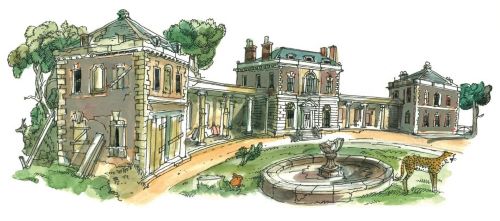
Dartmoor’s Baskerville Hall is one of the most famous country houses in English fiction. The arrival at its doors of Dr Watson, in the company of Sir Henry Baskerville, is a vivid piece of cinematic direction, artfully combining the Gothic horror tale with the more modern taste for detective thrillers.
Passing a ruined black-granite lodge, Watson and Baskerville go through the gates that are ‘a maze of fantastic tracery in wrought iron’ before reaching an avenue where ‘old trees shot their branches in a sombre tunnel’. The hall is a ‘heavy block’, with a projecting porch, its façade ‘draped in ivy’ within which the odd window or heraldic display can be seen.
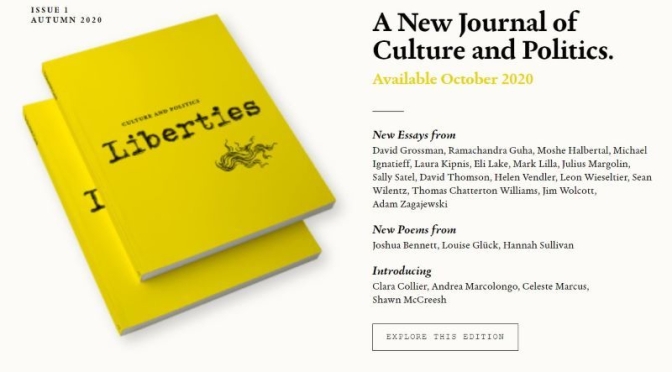
Each issue of Liberties, the Foundation’s decidedly analog quarterly publication, will feature a combination of essays from prominent writers and introduce new talent. Contributors already signed include leading voices from this country and abroad in the worlds of culture, business, entertainment, government, politics, and technology. Each edition of Liberties will also publish new poetry from both highly awarded and up-and-coming poets.
LISTEN TO INTERVIEW WITH PUBLISHER BILL REICHBLUM:
FROM “THE STACK” (MONOCLE 24 PODCAST)
To advance independent thinking and propel new ideas, well-known figures from the worlds of arts, business, government, higher education and philanthropy today announced the formation of the Liberties Journal Foundation. Based in Washington, D.C., the Foundation is a non-partisan, not-for-profit organization that seeks to inform today’s cultural and political leaders, deepen the understanding of citizens, and inspire the next generation to participate in the democratic process and public service. The Foundation’s first initiative is a new quarterly journal, Liberties – A Journal of Culture and Politics, slated for October 2020 debut.
Founding members of the Foundation include the well-known Washington attorney, philanthropist, and former diplomat, Alfred H. Moses; chairman and CEO of cross-border trade company Quberu, Peter Bass; and, respected arts, education, and business leader, Bill Reichblum.
A book for the coat pocket, Liberties’ diverse voices celebrate one commonality: freedom of inquiry and thought.
Liberties’ editorial team reflects the mission of the Journal pairing acclaimed literary critic Leon Wieseltier as editor with Celeste Marcus, a new talent, as managing editor. Bill Reichblum is the publisher. The book will be available as a soft-cover edition, by subscription or single copy, in bookstores and online.
“The Foundation exists to meet the thirst in our country for ideas and serious thinking at a time when the daily news dominates the media and overwhelms our lives,” says Moses. “The Foundation will provide an outlet for world-renowned writers on culture and politics to reach a readership that is looking for stimulation and inspiration at a time when our lives are increasingly assailed by ephemeral trivia.”
“We believe there is a genuine need to take time to listen, to actively absorb in-depth thinking of both those with accomplished experience and the inventive new generation at the beginning of their careers,” says Reichblum. “Their creativity, insights, and perceptions can individually and collectively inspire culture and impact politics.”
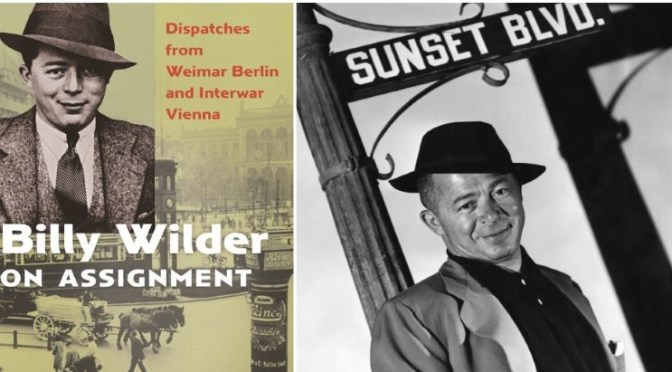
Billy Wilder on Assignment: Dispatches from Weimar Berlin and Interwar Vienna Billy Wilder
Edited by Noah Isenberg Introduction by Noah Isenberg Translated by Shelley Frisch
Acclaimed film director Billy Wilder’s early writings—brilliantly translated into English for the first time Before Billy Wilder became the screenwriter and director of iconic films like Sunset Boulevard and Some Like It Hot, he worked as a freelance reporter, first in Vienna and then in Weimar Berlin.
Billy Wilder on Assignment brings together more than fifty articles, translated into English for the first time, that Wilder (then known as “Billie”) published in magazines and newspapers between September 1925 and November 1930. From a humorous account of Wilder’s stint as a hired dancing companion in a posh Berlin hotel and his dispatches from the international film scene, to his astute profiles of writers, performers, and political figures, the collection offers fresh insights into the creative mind of one of Hollywood’s most revered writer-directors.
Wilder’s early writings—a heady mix of cultural essays, interviews, and reviews—contain the same sparkling wit and intelligence as his later Hollywood screenplays, while also casting light into the dark corners of Vienna and Berlin between the wars. Wilder covered everything: big-city sensations, jazz performances, film and theater openings, dance, photography, and all manner of mass entertainment. And he wrote about the most colorful figures of the day, including Charlie Chaplin, Cornelius Vanderbilt, the Prince of Wales, actor Adolphe Menjou, director Erich von Stroheim, and the Tiller Girls dance troupe.
Film historian Noah Isenberg’s introduction and commentary place Wilder’s pieces—brilliantly translated by Shelley Frisch—in historical and biographical context, and rare photos capture Wilder and his circle during these formative years.









 Boomers Daily