Tag Archives: Literary Arts

Literary Podcasts: “WHY THE DECAMERON IS GREAT QUARANTINE READING”

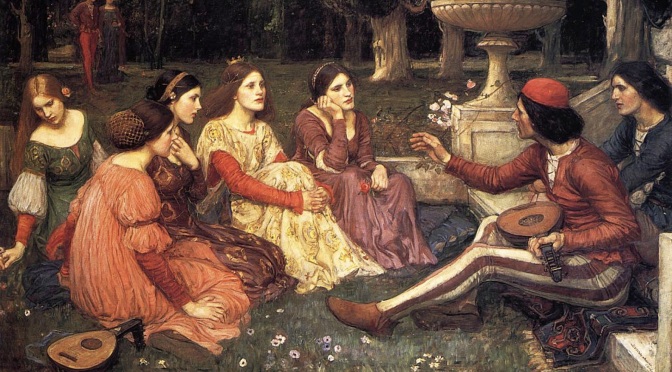
The latest episode of the Octavian Report – Rostrum coronavirus crisis podcast features Wayne Rebhorn. The latest episode of our coronavirus crisis podcast features Wayne Rebhorn of the University of Texas at Austin. Wayne is the author of an acclaimed translation of Giovanni Boccaccio’s Decameron, perhaps the paradigmatic work of pandemic literature. 

The Decameron is set among a group of witty, earthy social isolators who have fled the plague ravaging Florence. We spoke with Wayne about Boccaccio and his most famous work, the conditions that helped birth it, and what we can learn from them in our current situation.

Website

Octavian Report Rostrum Podcasts

Literary Tribute: Rachel Carson “Dreams Of The Sea” (The New Yorker)

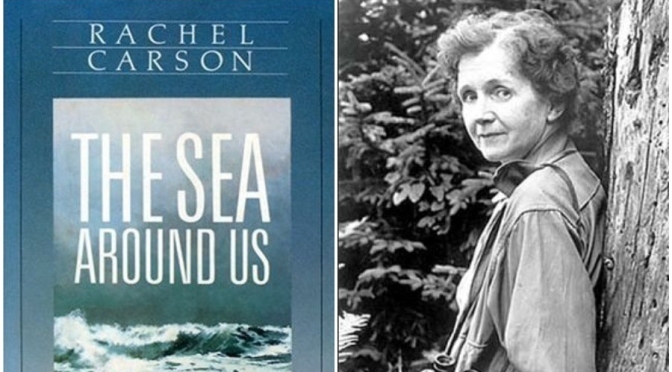
The New Yorker Radio Hour logoBefore she published “Silent Spring,” one of the most influential books of the last century, Rachel Carson was a young aspiring poet and then a graduate student in marine biology. Although she couldn’t swim and disliked boats, Carson fell in love with the ocean. Her early books—including “The Sea Around Us,” “The Edge of the Sea” and “Under the Sea Wind”—were like no other nature writing of their time, 

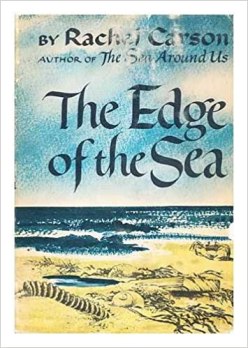
The Edge of the Sea Rachel CarsonJill Lepore says: Carson made you feel you were right there with her, gazing into the depths of a tide pool or lying in a cave lined with sea sponges. Lepore notes that Carson was wondering about a warming trend in the ocean as early as the 1940s, and was planning to explore it after the publication of “Silent Spring.” If she had not died early, of cancer, could Carson have brought climate change to national attention well before it was too late?

Excerpts from Carson’s work were read by Charlayne Woodard, and used with permission of Carson’s estate.

Rachel Louise Carson (May 27, 1907 – April 14, 1964) was an American marine biologist, author, and conservationist whose book Silent Spring and other writings are credited with advancing the global environmental movement.

Carson began her career as an aquatic biologist in the U.S. Bureau of Fisheries, and became a full-time nature writer in the 1950s. Her widely praised 1951 bestseller The Sea Around Us won her a U.S. National Book Award, recognition as a gifted writer, and financial security. Her next book, The Edge of the Sea, and the reissued version of her first book, Under the Sea Wind, were also bestsellers. This sea trilogy explores the whole of ocean life from the shores to the depths.

Late in the 1950s, Carson turned her attention to conservation, especially some problems that she believed were caused by synthetic pesticides. The result was the book Silent Spring (1962), which brought environmental concerns to an unprecedented share of the American people. Although Silent Spring was met with fierce opposition by chemical companies, it spurred a reversal in national pesticide policy, which led to a nationwide ban on DDT and other pesticides. It also inspired a grassroots environmental movement that led to the creation of the U.S. Environmental Protection Agency. Carson was posthumously awarded the Presidential Medal of Freedom by President Jimmy Carter.

Bio from Wikipedia

New Literary Podcasts: Author James Shapiro On “Shakespeare And Plagues”

Octavian Report Rostrum PodcastsOctavian Report “Rostrum” spoke with him about a major theme in Shakespeare’s work and life: disease. Specifically, pandemic plagues, which ravaged London repeatedly throughout Shakespeare’s career, shuttering the theaters, and which appear (obliquely and otherwise) in some of his greatest plays.

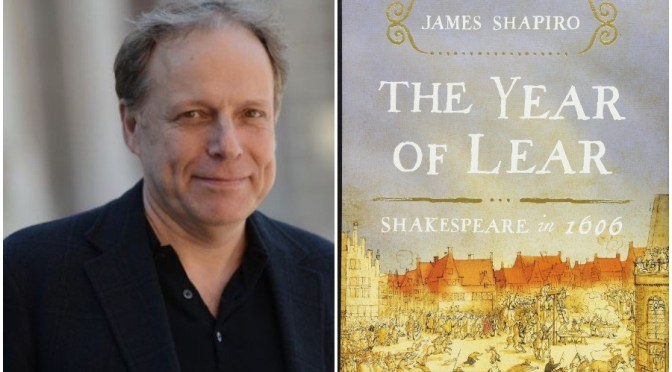
The latest episode of the Rostrum’s coronavirus series features James Shapiro, the Larry Miller professor of English and comparative literature at Columbia University, and a leading expert on Shakespeare. Shapiro has published widely on this subject, most recently Shakespeare in a Divided America. He is also an advisor to the Royal Shakespeare Company and to the Public Theater.

Website

James S. Shapiro (born 1955) is Professor of English and Comparative Literature at Columbia University who specialises in Shakespeare and the Early Modern period. Shapiro has served on the faculty at Columbia University since 1985, teaching Shakespeare and other topics, and he has published widely on Shakespeare and Elizabethan culture.


Travel & Quarantines: Author Frances Mayes Writes Of Poet John Keats In Naples, Italy In 1820 (NYT)

From the New York Times (March 26, 2020):

I have seen Naples from his vantage of a ship anchored offshore — one of the most sublime locations in the world, that sweep of coast stacked with apricot, carmine, azure and rose villas; the blue, blue U of the harbor; the emphatic Vesuvius anchoring the view. 

Frances Mayes
Frances Mayes

In October of 1820, typhus raged in Naples. With his artist friend, Joseph Severn, the British poet John Keats rocked in the city’s harbor for 10 days, not nearly the quaranta giorni — 40 days — that give us our word quarantine.

Before this journey, Keats always felt intense melancholy. In “On Seeing the Elgin Marbles for the First Time,” he wrote “… mortality / Weighs heavily on me like unwilling sleep.” (And in the smooth pentameter of “Ode to a Nightingale”: “I have been half in love with easeful death.”) Not a holiday, this voyage out of England was a desperate trip to the sunny climate of Italy. His cough had grown steadily worse. Since the morning he’d seen a splotch of blood on his pillow, he knew he had little chance of surviving the consumption that had invaded his lungs. His last-ditch: Go to Rome. Meanwhile, exile at sea.

Read full article

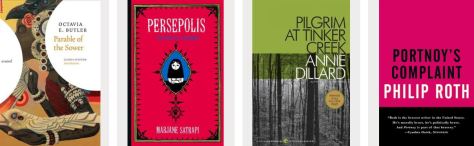
Reading: New York Public Library Celebrates 125 Years With “125 Books List”

New York Public Library logoThe New York Public Library is marking its 125th birthday this year—in part with this list of their favorite books written for adults from the past 125 years, which they hope will “inspire a lifelong love of reading.” 

New York Public Library Celebrates 125 Years with 125 Favorite Books List

New York Public Library Celebrates 125 Years with 125 Favorite Books List

See the full list here

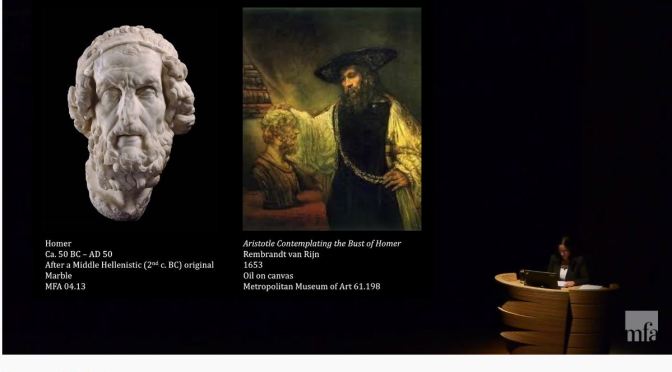
History & Literature: “Homer and the Epics”

The bard and the visual artists he inspired.

Phoebe C. Segal, Mary Bryce Comstock Curator of Greek and Roman Art

Homer is the legendary author of the Iliad and the Odyssey, two epic poems that are the central works of ancient Greek literature. The Iliad is set during the Trojan War, the ten-year siege of the city of Troy by a coalition of Greek kingdoms. It focuses on a quarrel between King Agamemnon and the warrior Achilles lasting a few weeks during the last year of the war. The Odyssey focuses on the ten-year journey home of Odysseus, king of Ithaca, after the fall of Troy. Many accounts of Homer’s life circulated in classical antiquity, the most widespread being that he was a blind bard from Ionia, a region of central coastal Anatolia in present-day Turkey. Modern scholars consider these accounts legendary.

From Wikipedia

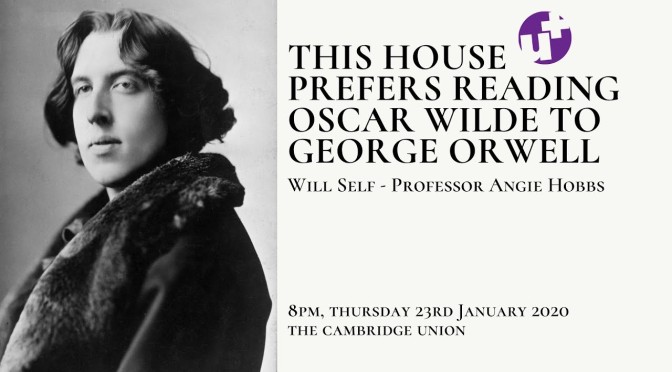
Literary Debates: “This House Prefers Reading Oscar Wilde To George Orwell” (Cambridge)

The Cambridge Union logoABOUT THE MOTION: This House Prefers Reading Oscar Wilde to George Orwell Do we prefer satire or comedy? Do we take refuge in the serious or the frivolous? Do we understand the importance of being earnest or would we rather be in room 101? These two authors demonstrate well two powerful traditions in British literature, the comic and the satirical. They both of course share in each other’s art. Some would argue that during our present global crises we should look to Orwell more than ever, others would reach for the escapism of Oscar Wilde. In a new enterprise for the Cambridge Union, we are beginning our cultural debates – and this is our first. At least for a while.

ABOUT OUR SPEAKER (Closing for the Proposition) Will Self is the author of 25 books, some of which have been translated into 25 languages. His Dorian: An Imitation is an adaptation of Oscar Wilde’s The Picture of Dorian Gray set during the AIDS crisis. He holds the Chair in Contemporary Thought at Brunel University, and lives in South London.

ABOUT OUR SPEAKER (Closing for the Abstention) Professor Angie Hobbs graduated in Classics and then a Ph.D. in Ancient Philosophy at the University of Cambridge. After a Research Fellowship at Christ’s College, she moved to the Philosophy Department at the University of Warwick. She was a judge of the Man Booker International Prize 2019 and is on the World Economic Forum Global Future Council 2018-9 for Values, Ethics and Innovation

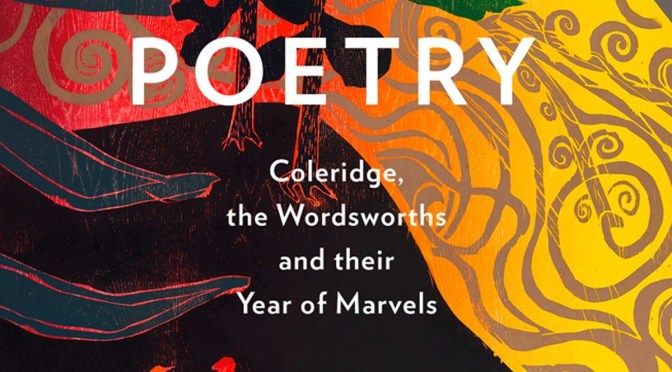
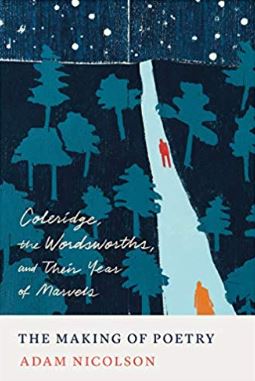
New Books: “The Making Of Poetry – Coleridge, The Wordsworths And Their Year Of Marvels”

The Making of Poetry Coleridge, The Wordsworth and Their Year of Marvels Adam Nicolson 2020 US ReleaseIn The Making of Poetry, Adam Nicolson embeds himself in the reality of this unique moment, exploring the idea that these poems came from this particular place and time, and that only by experiencing the physical circumstances of the year, in all weathers and all seasons, at night and at dawn, in sunlit reverie and moonlit walks, can the genesis of the poetry start to be understood.

June 1797 to September 1798 is the most famous year in English poetry. Out of it came Samuel Taylor Coleridge’s The Rime of the Ancient Mariner and “Kubla Khan,” as well as his unmatched hymns to friendship and fatherhood, and William Wordsworth’s revolutionary songs in Lyrical Ballads along with “Tintern Abbey,” Wordsworth’s paean to the unity of soul and cosmos, love and understanding.

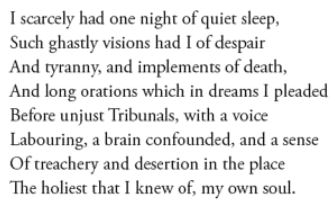
Excerpt from The Prelude by Wordsworth and Coleridge

The poetry Wordsworth and Coleridge made was not from settled conclusions but from the adventure on which they embarked, thinking of poetry as a challenge to all received ideas, stripping away the dead matter, looking to shed consciousness and so change the world. What emerges is a portrait of these great figures seen not as literary monuments but as young men, troubled, ambitious, dreaming of a vision of wholeness, knowing they had greatness in them but still in urgent search of the paths toward it.

The artist Tom Hammick accompanied Nicolson for much of the year, making woodcuts from the fallen timber in the park at Alfoxden where the Wordsworths lived. Interspersed throughout the book, his images bridge the centuries, depicting lives at the source of our modern sensibility: a psychic landscape of doubt and possibility, full of beauty and thick with desire for a kind of connectedness that seems permanently at hand and yet always out of reach.

Purchase Book

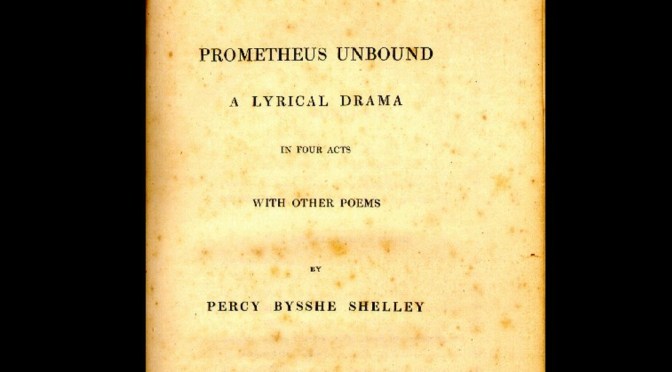
Literature: “Prometheus Unbound” By Percy Bysshe Shelley First Published 200 Years Ago In 1820

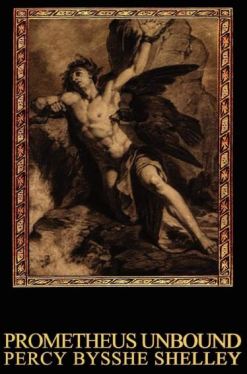
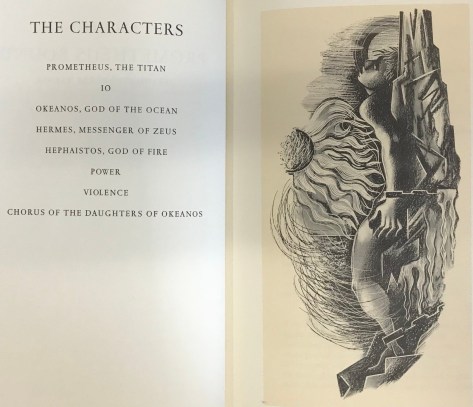
Prometheus Unbound Percy Bysshe Shelley 1820Prometheus Unbound is a four-act lyrical drama by Percy Bysshe Shelley, first published in 1820. It is concerned with the torments of the Greek mythological figure Prometheus, who defies the gods and gives fire to humanity, for which he is subjected to eternal punishment and suffering at the hands of Zeus. It is inspired by the classical Prometheia, a trilogy of plays attributed to Aeschylus. Shelley’s play concerns Prometheus’ release from captivity, but unlike Aeschylus’ version, there is no reconciliation between Prometheus and Jupiter (Zeus). Instead, Jupiter is abandoned by his supportive elements and falls from power, which allows Prometheus to be released.

Excerpt:

As you speak, your words
Fill, pause by pause, my own forgotten sleep
With shapes. Methought among these lawns together
We wandered, underneath the young gray dawn,
And multitudes of dense white fleecy clouds
Were wandering in thick flocks along the mountains
Shepherded by the slow, unwilling wind;
prometheus-unbound-percy-bysshe-shelley.jpg

Political – Prometheus, then, is also Shelley’s answer to the mistakes of the French Revolution and its cycle of replacing one tyrant with another. Shelley wished to show how a revolution could be conceived which would avoid doing just that, and in the end of this play, there is no power in charge at all; it is an anarchist’s paradise.

Shelley finishes his “Preface” to the play with an evocation of his intentions as a poet:

My purpose has hitherto been simply to familiarize the highly refined imagination of the more select classes of poetical readers with beautiful idealisms of moral excellence; aware that, until the mind can love, and admire, and trust, and hope, and endure, reasoned principles of moral conduct are seeds cast upon the highway of life which the unconscious passenger tramples into dust, although they would bear the harvest of his happiness.

From Wikipedia

Lyrical Essays: “Return To Tipasa” By Albert Camus (Poetry Channel Podcast)

Albert Camus’ lyrical essay… where he found In the midst of winter, there was, within himself, an invincible summer.

Excerpt from “Return To Tipasa” by Alber Camus

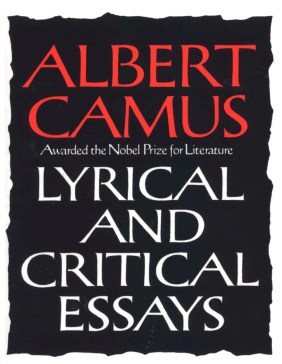
Albert Camus Lyrical and Critical Essays Return To Tipasa bookYou have navigated with raging soul far from the paternal home, passing beyond the sea’s double rocks, and you now inhabit a foreign land.

–Medea

For five days rain had been falling ceaselessly on Algiers and had finally wet the sea itself. From an apparently inexhaustible sky, constant downpours, viscous in their density, streamed down upon the gulf. Gray and soft as a huge sponge, the sea rose slowly in the ill-defined bay. But the surface of the water seemed almost motionless under the steady rain. Only now and then a barely perceptible swelling motion would raise above the sea’s surface a vague puff of smoke that would come to dock in the harbor, under an arc of wet boulevards. The city itself, all its white walls dripping, gave off a different steam that went out to meet the first steam. Whichever way you turned, you seemed to be breathing water, to be drinking the air.