
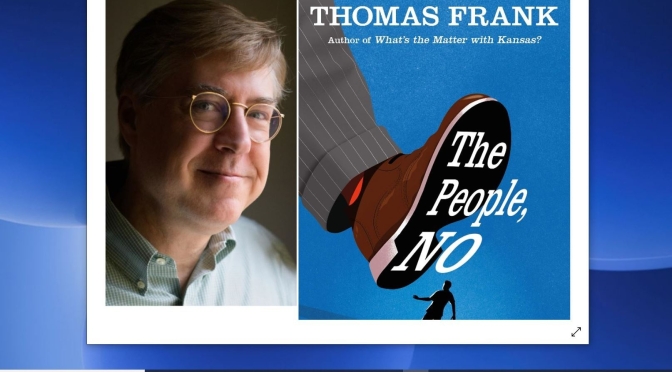
Lewis H. Lapham speaks with Thomas Frank, author of “The People, No”, an eye-opening account of populism, the most important―and misunderstood―movement of our time.
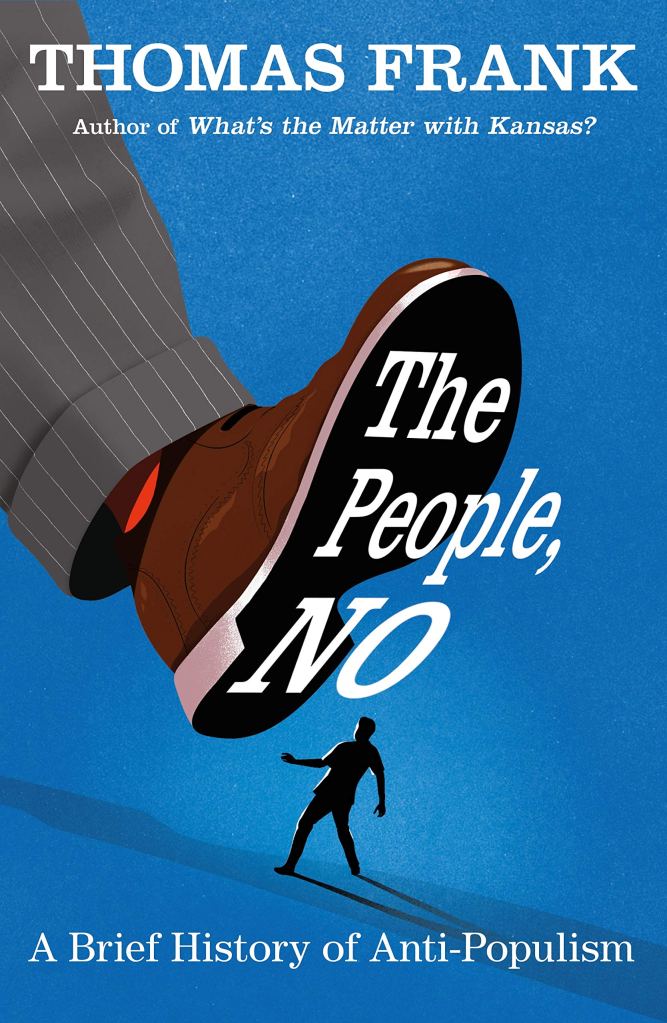
Rarely does a work of history contain startling implications for the present, but in The People, No Thomas Frank pulls off that explosive effect by showing us that everything we think we know about populism is wrong. Today “populism” is seen as a frightening thing, a term pundits use to describe the racist philosophy of Donald Trump and European extremists. But this is a mistake.
The real story of populism is an account of enlightenment and liberation; it is the story of American democracy itself, of its ever-widening promise of a decent life for all. Taking us from the tumultuous 1890s, when the radical left-wing Populist Party―the biggest mass movement in American history―fought Gilded Age plutocrats to the reformers’ great triumphs under Franklin Roosevelt and Harry Truman, Frank reminds us how much we owe to the populist ethos. Frank also shows that elitist groups have reliably detested populism, lashing out at working-class concerns. The anti-populist vituperations by the Washington centrists of today are only the latest expression.
Frank pummels the elites, revisits the movement’s provocative politics, and declares true populism to be the language of promise and optimism. The People, No is a ringing affirmation of a movement that, Frank shows us, is not the problem of our times, but the solution for what ails us.
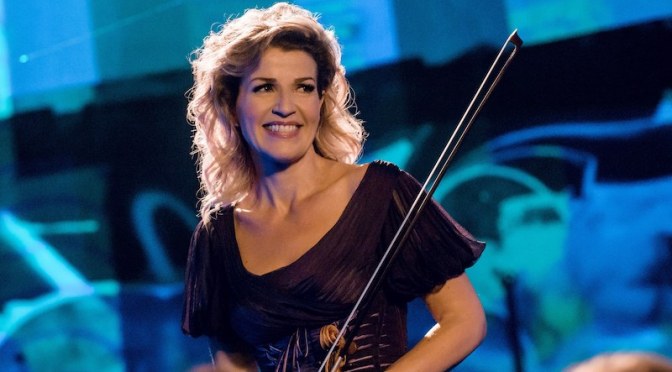
 Violinist Anne-Sophie Mutter is one of the world’s pre-eminent classical soloists. For 40 years the German performer has collaborated with distinguished composers and musicians, winning numerous awards. She talks to Monocle’s Robert Bound about Beethoven, her Stradivarius and sending biscuits to John Williams.
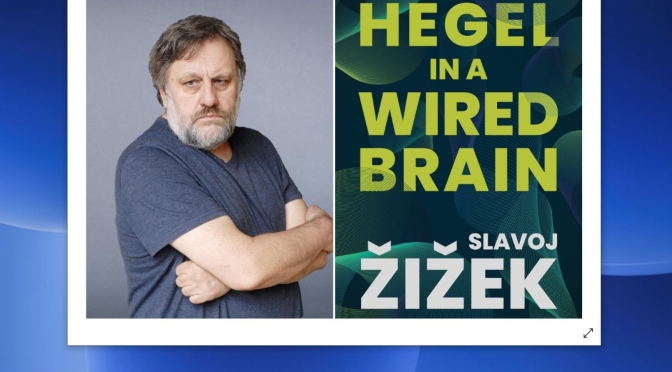
 Slavoj Žižek is a Slovenian philosopher and writer whose vast catalogue of work has earned him celebrity status across the globe. A radical leftist, his work encompasses everything from psychoanalysis and political theory to art and film criticism.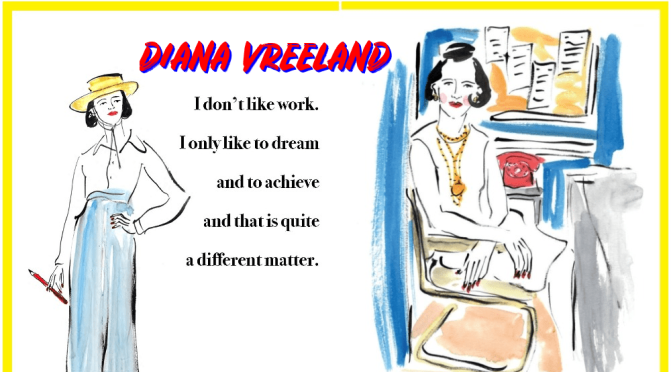
 Alexander Vreeland, grandson of fashion journalist Diana Vreeland, tells us about his new book, ‘Bon Mots: Words of Wisdom from the Empress of Fashion’.
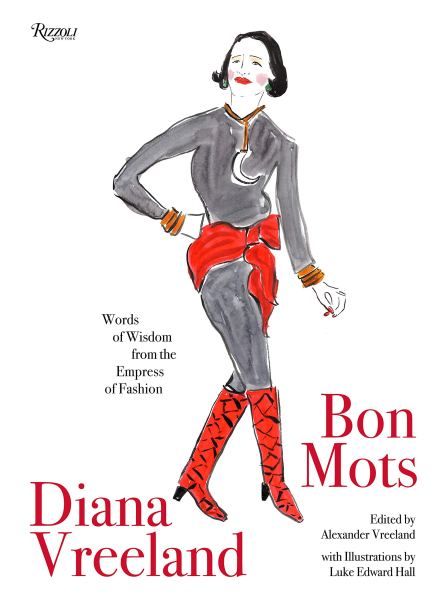 Diana Vreeland’s insightful edicts and evocative aphorisms remain her strongest legacy. She looked at life as a romantic and lived through dreams and imagination. Showing leadership, vision, and timeless wit, this book celebrates her visionary words that not only transformed the world of fashion, but also gave us sage advice to live by.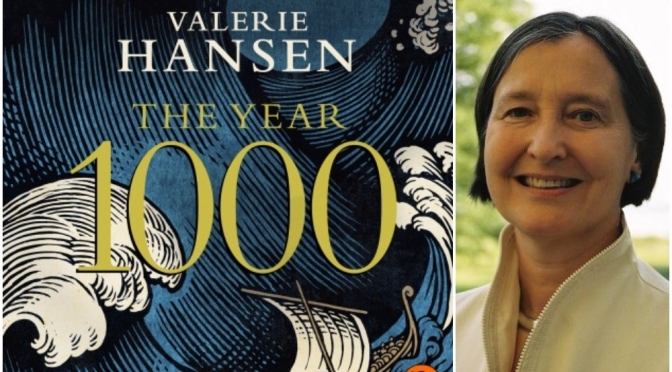
 Valerie Hansen explores these early economic and cultural exchanges and their long-term impact in her new book “The Year 1000: When Explorers Connected the World―and Globalization Began”, which originated as a college course co-taught with Mary Miller, director of the Getty Research Institute. In this episode, Hansen and Miller discuss the state of the world around the year 1000.
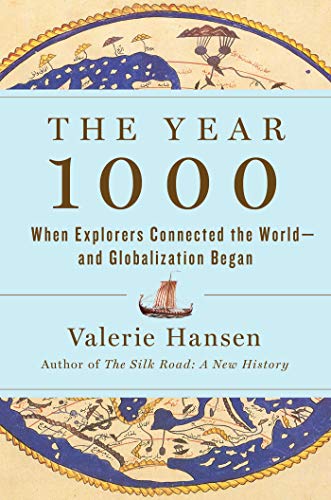 From celebrated Yale professor Valerie Hansen, a groundbreaking work of history showing that bold explorations and daring trade missions connected all of the world’s great societies for the first time at the end of the first millennium.
 Boomers Daily