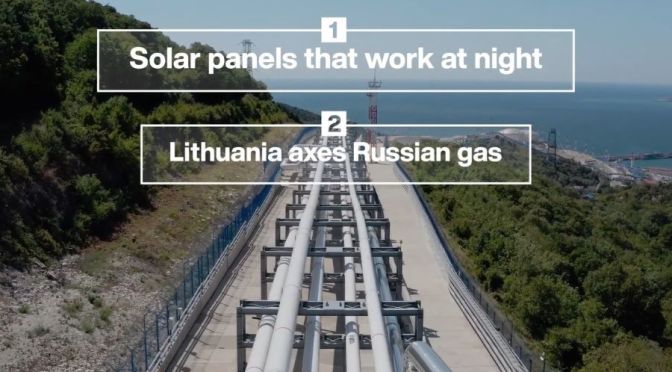
This week The World Economic Forum are highlighting 4 top stories – new solar panels that work at night, how Lithuania has cut Russian gas imports, first aid training in Ukraine, and how new e-chopsticks can add taste to your food.
Chapters: 00:15 Solar panels that work at night 01:45 Lithuania axes Russian gas 03:21 First aid training in Ukraine 05:46 E-Chopsticks add taste
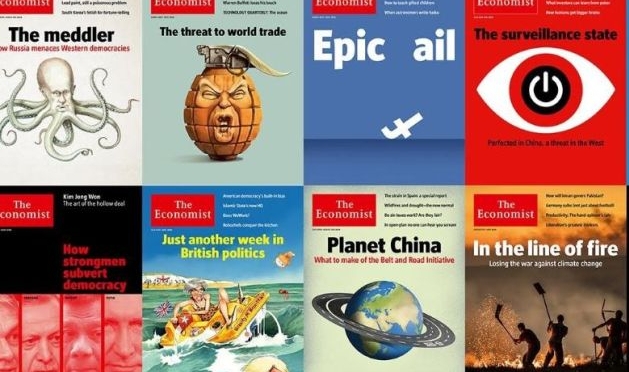
Central banks are supposed to inspire confidence in the economy by keeping inflation low and stable. In America, however, there has been a hair-raising loss of control. Our latest cover https://t.co/7mImcEP3wmpic.twitter.com/2c7JzMGg1i
Liberal centrists around the world should see Emmanuel Macron as a cautionary tale: one person alone cannot sustain the radical centre. Our cover explains why he still gets our vote, but with reservations https://t.co/AbrlQYRcOopic.twitter.com/8Uo8XaXPnY
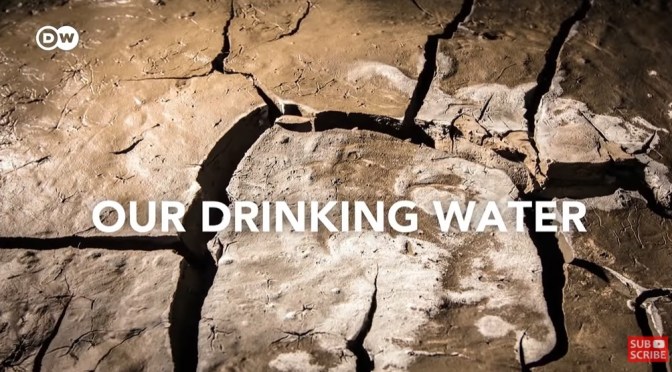
Only 0.3 percent of the Earth’s total water supply is suitable for human consumption. Ominously, this precious resource is beginning to shrink. Natural water reservoirs are drying up due to climate change.
Glaciologist Daniel Farinotti surveys melting glaciers in the Swiss Alps. If glaciers continue to melt at the current rate, he says, there will be no ice left by the end of the century. The disappearance of glacial meltwater would have fatal consequences. From the heights of the Swiss Alpine glaciers, the documentary travels down to the seafloor, off the coast of Malta. Here, the crew of the German expedition ship “Sonne” wants to track down mysterious freshwater deposits in the Mediterranean.
Next up is Peru where, in a bid to counteract the threat of water shortages, work is underway on projects that use ancient Incan methods.
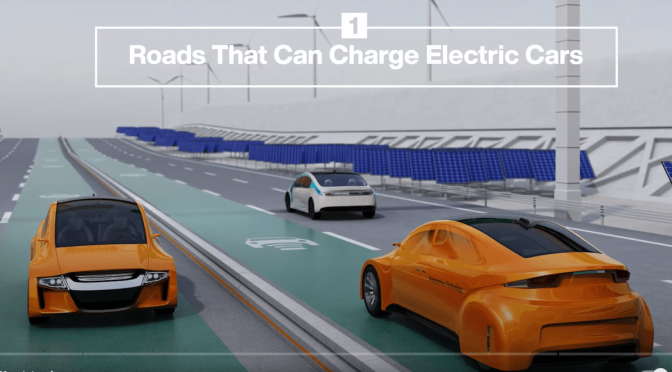
This week, the World Economic Forum is highlighting 4 key stories – roads that charge electric cars reducing the need for charging points, a false banana that could feed 100 million people, solar farms on superstore roofs and 3 reasons that economic growth will be slower in 2022.
Welcome to the era of the bossy state. Countries around the world want to bend companies to their will—but dangers loom as a result. Our cover this week https://t.co/Q7NI8Yp7pipic.twitter.com/4QDa1x5ACa
Americans fear that their democracy is under threat. Renewal will not happen for as long as Donald Trump remains the Republican leader. But the party can change. Our cover this week https://t.co/iLROqsBqnrpic.twitter.com/N3NHMHYai3
What will be the biggest stories of 2022? As the pandemic continues to wreak havoc across the globe, President Xi will cement his power as leader of China, tech giants will coax more of us into virtual worlds and the space race reaches new heights. The Economist is back with its annual look at the top stories of the year ahead. Film supported by @TeneoCEOAdvisory
Timeline: 00:00 The World Ahead 2022 00:40 China revels in democracy’s failings 04:11 Hybrid working becomes the new normal 07:48 The metaverse expands 11:26 An African fashion boom 14:12 The space race picks up
News, Views and Reviews For The Intellectually Curious

 Boomers Daily