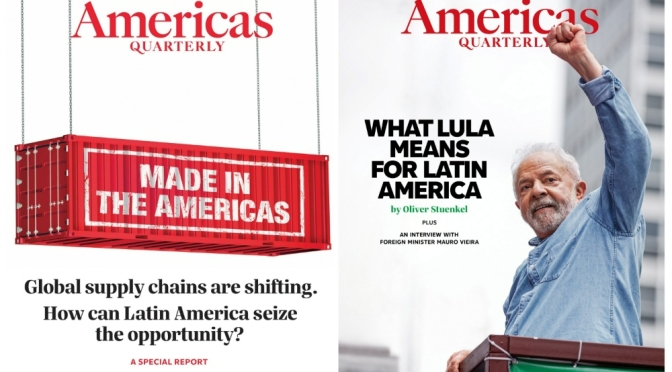
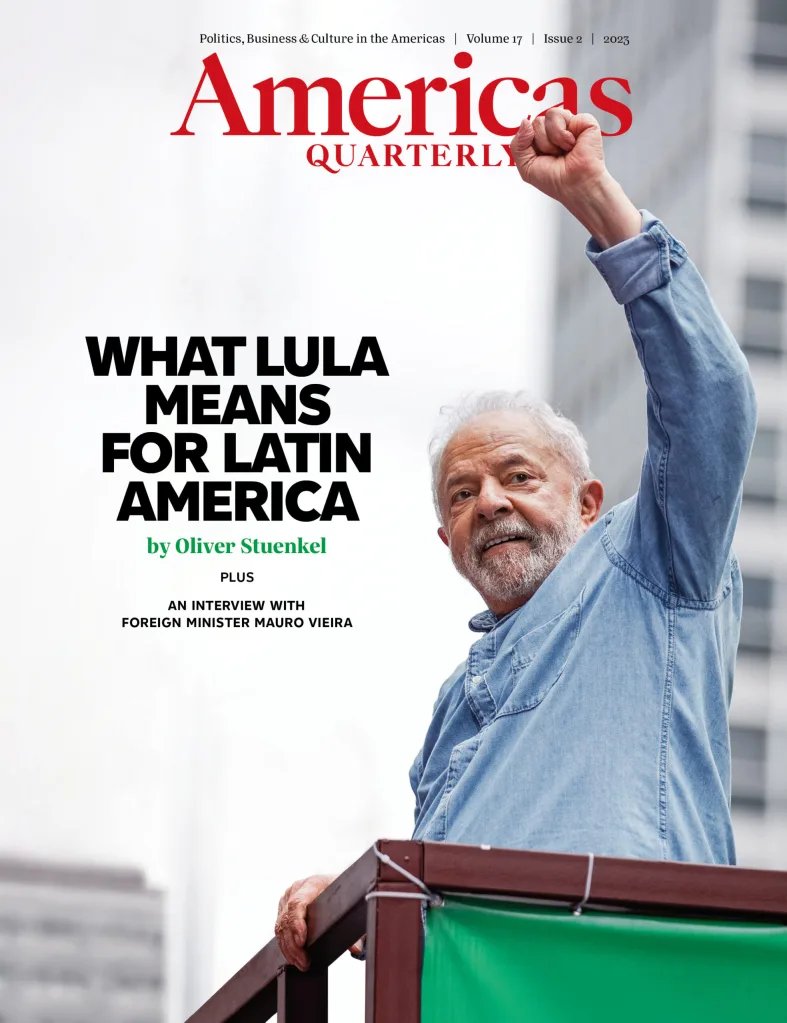
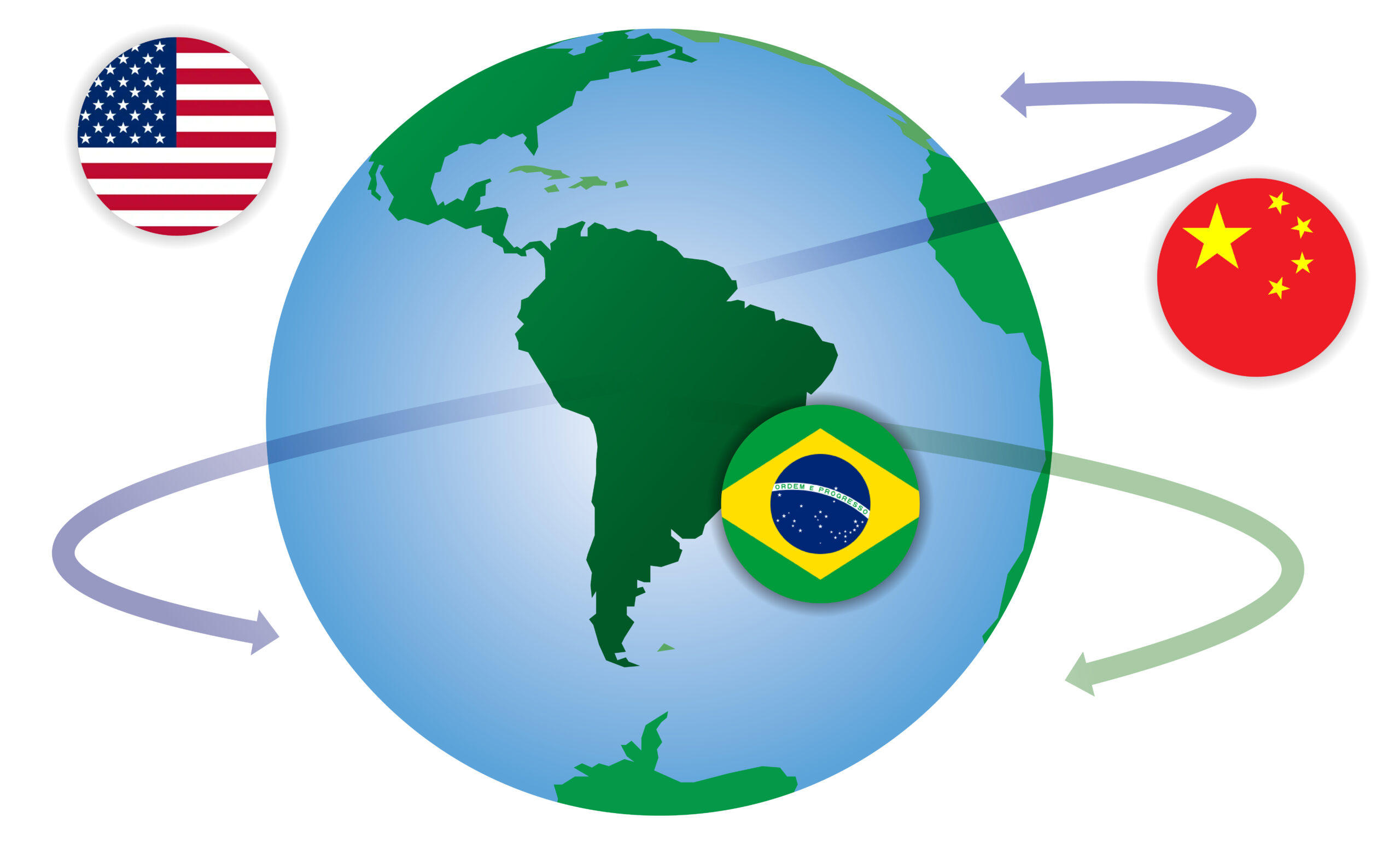
Americas Quarterly (Spring 2023) – Love him or not, the return of Luiz Inácio Lula da Silva is a watershed moment not just for Brazil, but Latin America as a whole. The 77-year-old is “the region’s only diplomatic heavy hitter and the most globally visible Latin American leader of his generation,” writes Oliver Stuenkel in this issue’s cover story.
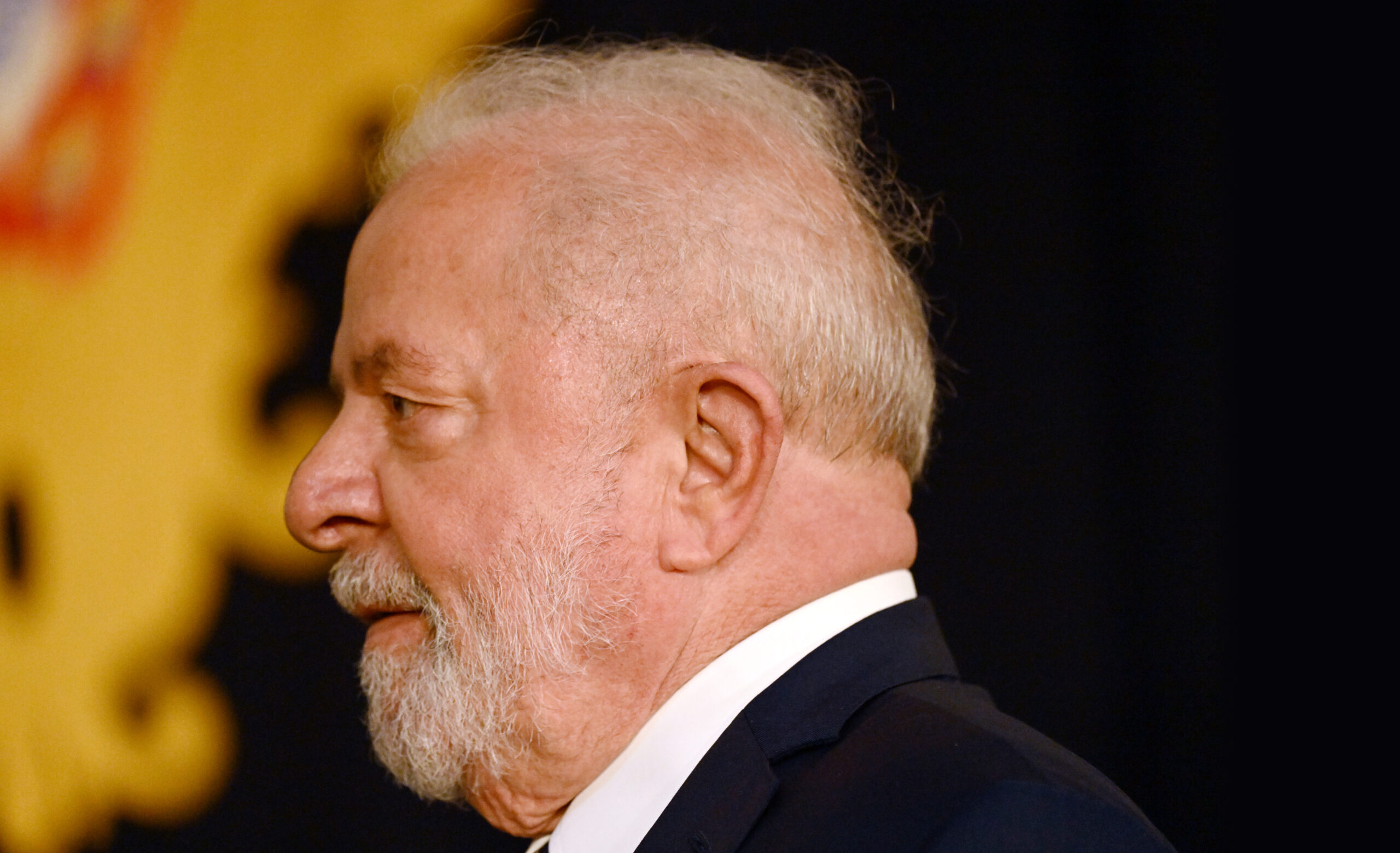
Brazil’s President Luiz Inácio Lula da Silva during a visit to Portugal in April.
A diplomatic heavy hitter is back at the helm of Latin America’s largest country—but the path to an influential international role is full of obstacles.
AQ tracks priorities in external relations, including positions on Venezuela and China, in eight countries.
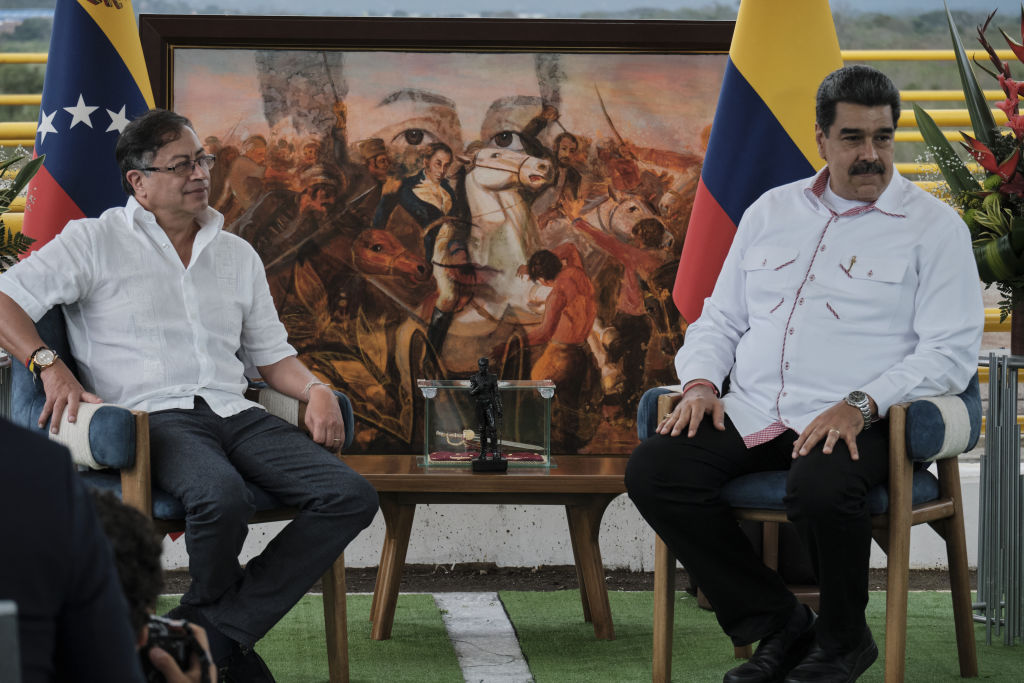
Amid growing tensions between the world’s largest superpowers, much of Latin America has taken an independent approach to foreign relations. Countries are increasingly following a path that Chilean scholars Carlos Fortin, Jorge Heine and Carlos Ominami titled the “active non-alignment option.” Regional integration is a top concern for some leaders, while others are seeking engagement far beyond the Western Hemisphere. Meanwhile, policy choices have to contend with domestic infrastructure challenges and a global concern with the impacts of climate change.
If countries were people, the relationship between China, America and Taiwan would be a love triangle like no other.
Taiwan is by some reckoning the most dangerous flashpoint between China and America. Though Taiwan is in most respects an independent country, China insists it is part of the People’s Republic and is not ruling out taking the island by force. If that were to happen it could ignite an all-out war between America and China. This film explains how this precarious situation came about and how might it play out.
The Paris Club, comprising 22 wealthy countries, provides a platform for governments facing financial difficulties to reduce and renegotiate their debt repayments. Formed in 1956, it has signed more than 400 agreements to date, worth more than half a trillion dollars to about 100 countries. As public debt soars in the wake of the pandemic, CNBC’s Timothyna Duncan breaks down how this exclusive club functions and the challenges it faces to stay relevant.
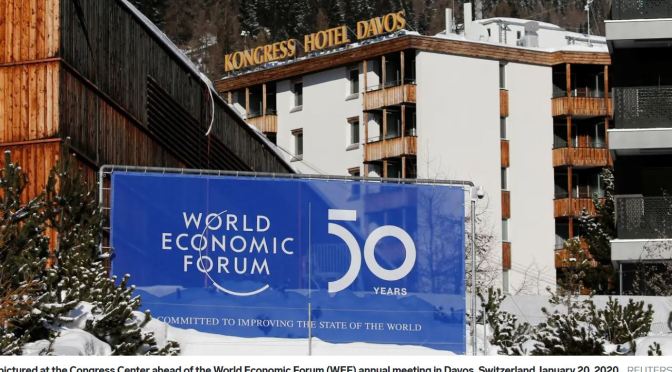
AT THE WORLD EC ONOMIC FORUM, which celebrates its 50th anniversary, The Economist’s editor-in-chief Zanny Minton Beddoes, Anne McElvoy and Patrick Foulis debate the future of the annual alpine gathering.
How did a young academic’s pet project come to be seen as the ultimate A-list bash for global CEOs, political leaders and celebrities alike? Anne McElvoy speaks to the CEO of Youtube, Susan Wojcicki, actress and activist Priyanka Chopra Jonas and Natalia Vodianova, a supermodel and philanthropist, about what they achieve at Davos and the mission behind the glamour. Is it a forum for effective decision-making—or just a week in the snow for the global elite? And finally, snow boots or stilettos?






 Boomers Daily