Tag Archives: Home Tours

Architecture: Water-Themed ‘Zig Zag House’ In Kensington, Australia

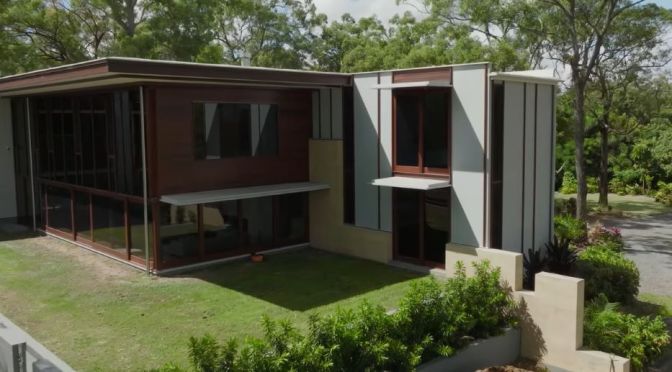
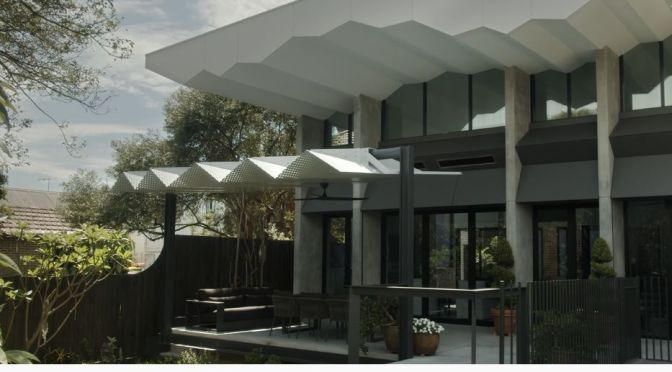
Designed by Stukel Architecture in collaboration with AJP Constructions, Zig Zag House makes waves as a contemporary house in an environment dominated by traditional cottages. Named after its distinctively dynamic architecture, the home is a sculptural response to its Kensington site.

Timeline: 00:00 – Introduction to the Contemporary House 00:49 – The Relationship between Architect and Builder 01:14 – The Client Brief 01:48 – The Unique Ceiling Form 02:52 – Building the Roof 03:24 – The Stairs 04:10 – Unique Use of Materials 05:17 – Concrete Finishes 06:13 – The Architects Favourite Part of the House

As a contemporary house, the architecture of the home reflects the movement of water, paying homage to the waterway that cuts through the landscape connecting Centennial Park and Botany Bay. Architecturally, the contemporary house is both impressive and bold. An overhang to the west orientation internally defines the home’s lounge, kitchen and dining spaces whilst a large blade column – inserted into the stairs – provides a solid focal point within a generous open space.

The interior design of Zig Zag House sees typical materials elevated through considered treatment. A seamless quality is inhered in the venetian plaster blade column, while a concrete wall is marked to elegantly resemble a particular grain of timber. The treatment of each material brings to the surface subtle aesthetic qualities, establishing the home as a contemporary house.

Located in the Sydney suburb of Kensington, Zig Zag House introduces 21st century architecture into the urban milieu. Visualised by Stukel Architecture and skilfully executed by AJP Constructions, Zig Zag House stands as a contemporary house that testifies to a successful design collaboration.
Tours: Caspers House On Paku Hill, New Zealand

A house of contrast, Caspers House is an interior designer’s own home. Crafted by Dessein Parke in collaboration with Glamuzina Architects, the residence represents the playful exploration of space and colour. The relationship between the home and its unique location may be the first indication that Caspers House is an interior designer’s own home.

Timeline: 00:00 – Introduction to an Interior Designer’s Own Home 00:51 – Orientation of the Home 01:31 – Interior Designer’s Own Home 02:04 – Unique Wall Colour 02:25 – Utilisinig Natural Light 02:45 – Split Level Design 03:31 – Features of the Home 04:21 – The Interior Designer’s Favourite Part of the Home 04:39 – The Architect’s Favourite Part of the Home 04:55 – Success of the Project

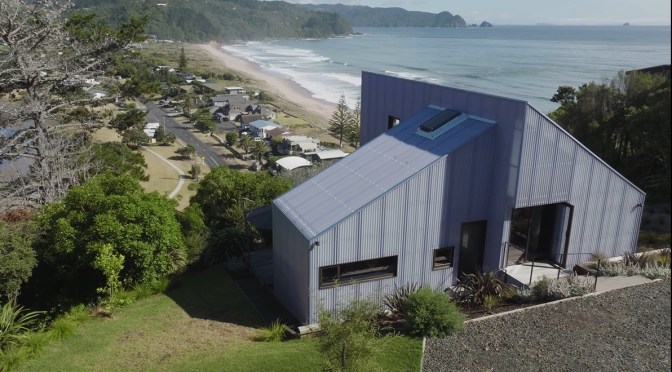
Settled on Paku Hill, an old volcano at the edge of Tairua, Caspers House relates to its setting through its boldly designed architecture. Comprised of subtle, corrugated fiberglass and sporting a triangular structure, the unconventional façade of the home references the special nature of the landscape. As an interior designer’s own home, Caspers House expresses an adventurous design approach, distinguishing it from typical New Zealand dwellings and paying homage to its unusual volcano location.

In contrast to the stark white interiors of other homes, the design of Caspers House champions a dark, muted palette that calms the senses. Testifying to its status as an interior designer’s own home, Caspars House maximises the spatial opportunities afforded by its unique architecture. Open-plan elements are contrasted with split levels, establishing the spatial flow of the home and allowing for moments of privacy within communally inhabited spaces.

The ideal match for its volcano setting, Caspers House is imbued with a sense of character. Intelligently designed and thoroughly executed, the residence exemplifies an interior designer’s own home.

Home Tour: A Single-Story ‘Reimagined’ In Australia

Evelyn is an Australian inspired house designed with a family-first philosophy. Crafted by Myers Ellyett Architects, the single-level home stands as the respectful reimagination of a 1911 cottage.

Timeline: 00:00 – Introduction to the Australian Inspired House 00:51 – Entering the House 01:30 – Responding to the Environment 02:05 – Creating an Inner-City Retreat 02:44 – Joinery and Lighting in the House 03:37 – Features of the House 04:20 – The Arch Motif 04:54 – Making the Backyard the Centrepiece 05:56 – Designing for Lifestyle

Situated in the Brisbane suburb of Paddington, Evelyn offers a tranquil retreat from the hectic nature of inner-city living. Originally a 1911 cottage, the Australian inspired house pays homage to its history with features such as timber materiality and additional gable roofs, which nod towards design methods of the past. As an Australian inspired house, Evelyn engages with the surrounding natural environment.

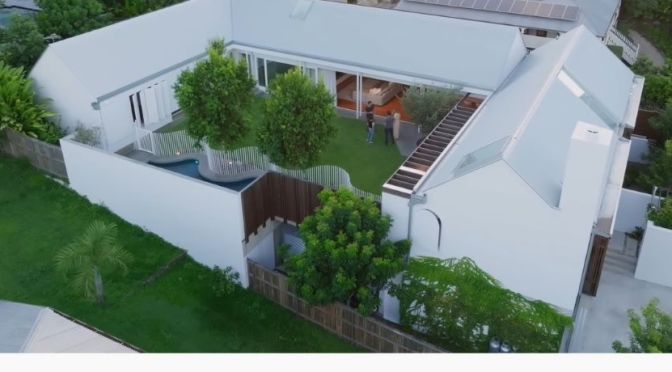
Glassless shutters catch the breeze as it brushes the side of the house whilst sliding panels in the bedrooms open the home to the external greenery. A house tour of the property reveals the home to be organised around a central lawn where children can play, speaking to the importance of family life as stipulated in the design brief. Raising the standard of a successful Australian inspired house, the interior design of Evelyn also draws upon the colours of the outdoors.

Green terrazzo is used in the bathrooms, wrapping the spaces to create the impression of being immersed in the garden. Throughout the house, simple materials and colours are employed to establish a sense of serenity. Designed to reflect the clients’ lifestyle, Myers Ellyett Architect creates an Australian inspired house that has family life and relaxation at its core. In both interior design and architecture, Evelyn stays true to the vision of family life that was initially shared by both architects and clients.

Townhome Tours: Azura Aspendale, Australia (4K)

Developed by Lowe Living in collaboration with Chamberlain Architects and GOLDEN, Azura Aspendale showcases the very best of beachside living. A house tour of an exemplar modern apartment proves the property to be a well-considered complex, seeing each resident have direct access to the nearby ocean.

Chapters: 00:00 – Introduction to the Modern Apartment 00:43 – Meeting the Brief 01:45 – Beach Access 02:07 – Designing for the Landscape 03:00 – Sustainable Design Features 03:45 – Apartment Living Features 04:24 – Indoor-Outdoor Living 04:55 – Executing a Strong Idea 05:19 – What the Architect is Most Proud Of

Sitting on a slither of land between the beach and the railway in Aspendale, the modern apartment is one of 19 within the complex, which is complemented by eight townhouses. Behind the apartment is a designed landscape that uses walkways to directly connect residents to the beachfront, with the walkways leading to a purposeful cut in the front of the building.

Presenting as a singular form, the external architecture of Azura Aspendale picks up on the vast horizon that the modern apartment faces. The rectilinear structure of the building succeeds in light of its modest presence; as opposed to visually dominating the natural landscape, the development presents as architecturally timeless and in harmony with its context.

The interior design of Azura Aspendale follows from the surrounding landscape. Natural materials such as chalky limestone and textured granite subtly refer to the outdoors whilst testifying to the significance of material longevity. Windows to the front and back of each modern apartment complete the airy, externally focused interior design.

Standing as a highly admirable collection of residences, Azura Aspendale is a gem in the Lowe Living property portfolio. From its materiality to its well-developed connection to the outdoors, each modern apartment provides an elegant means of experiencing beachside living.

Tours: The ‘J&J Residence’ – Modern, Energy Efficient In Chandler, Australia

Refined and energy-efficient, J&J Residence is a modern house crafted by Hogg & Lamb. Using rammed earth as its hero material, the architectural design practice creates an aesthetically pleasing home that works harder for the environment than it may first appear.

Timeline: 00:00 – Introduction to the Modern Home 00:31 – Entering the Home 01:20 – The Rammed Earth Wall 02:24 – Building a Sustainable Home 02:47 – Sustainable Design Features 03:18 – The Unexpected Quality of Rammed Earth 03:44 – Materials Used 04:23 – What the Architect is Most Proud Of

J&J Residence is located in the Brisbane suburb of Chandler – an evolving suburb with a growing number of large-scale residences. Externally, Hogg & Lamb breaks up the visual solidity of the modern house with sections of glazing across the home’s two floors – the resulting façade evokes the image of stone fingers rising from the eroded hillside. Entering the modern house, residents find that the low front doorway precedes an impressive double-height entry space.

By purposefully juxtaposing the scale of the doorway and entry space, Hogg & Lamb creates a sense of experiential release so that the internal architecture of the home can be appreciated with a sense of relaxation. The architecture and interior design of J&J Residence is largely influenced by the use of rammed earth walls.

Alongside travertine, spotted gum and Viridian EnergyTech grey glass, the textural material of rammed earth establishes a raw, natural and calming material palette. The material is also integral to the energy efficiency of the modern house, featuring high thermal mass that keeps the house warm in winter and cool in summer. J&J Residence represents a triumphant first project for Hogg & Lamb. A modern house of style and sustainability, the residence demonstrates the versatility of its material palette.

Tours: Fairweather House In Sydney, Australia (4K)

Stemming from an inside-out design approach, Fairweather House sees a 1940s Federation-era home reimagined with a modern kitchen. While extending the home, Pohio Adams Architects designs in careful consideration of its heritage and current use.

Video timeline: 00:00 – Introduction to the Home 00:56 – The Client Brief 01:18 – Reinvigorating the Original Home 02:28 – Outside-Inside Planning Approach 03:56 – The Glass Pavilion 04:29 – Landscape Architecture 05:04 – The Heart of the Home 05:35 – Materiality 06:13 – What the Architect is Most Proud Of

Set amongst the equally grand residences of Sydney’s Bellevue Hill, Fairweather House brings together the old and the new through a considered lens. Pohio Adams Architects elevates the interior design and architecture of the Federation-style home with refined, contemporary insertions such as a modern kitchen, creating a sense of stylistic coherence.

Architecturally, Pohio Adams Architects respects the heritage of the building whilst steering the design towards functionality and grandeur. The original front façade is retained, as well as three formal rooms towards the entrance of the property. Throughout the house, alterations are well-considered and benefit the home. The inserted modern kitchen accommodates the homeowners’ love of entertaining, whilst an added glass and steel pavilion offers an externally focused alternative to the original dark structure.

Pohio Adams Architects designs the modern kitchen to be the hero piece of the interior design. Over four metres long, the kitchen feeds into a sense of openness permeating Fairweather House, allowing residents and guests to circulate with ease around the marble island bench. Located in the rear pavilion, the modern kitchen proposes the ideal space for guests to gather, with seating provided for six people.

Focusing on the relationship between inside and out, Pohio Adams Architects crafts a compelling interiority that actively refers to the external landscape. Fairweather House exemplifies the inside-out methodology, with the boundary between the rear spaces and the garden successfully blurred.

New Zealand Home Tour: Mahuika – Waiheke Island

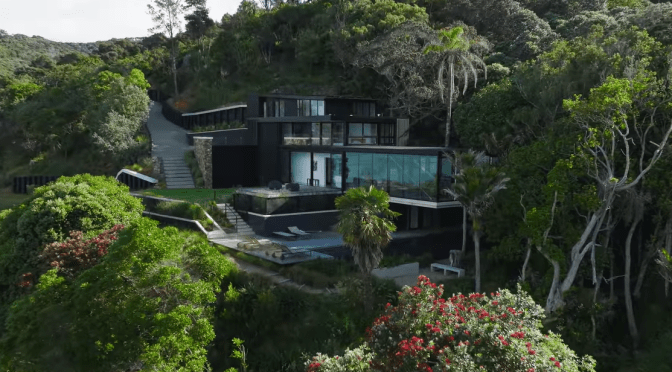
Blending into the black of the bush, Mahuika is a private island house that embraces the external environment. Faced with a challenging site, Daniel Marshall Architects (DMA) uses the unique building context to infuse Mahuika with a sense of legend and soul, crafting a secluded home with a fiery past.

Video Timeline: 00:00 – An Introduction to the Private Island House 00:32 – Mahuika – Fire and Renewal 01:09 – Utilising Natural Light 01:35 – Remote and Private 01:55 – The Pool 02:24 – The Kitchen Appliances 03:12 – Bathrooms and Bedrooms 03:55 – Challenges of the Build 04:18 – The Materials 04:43 – What the Architect is Most Proud Of

A private island house, Mahuika is located on Waiheke Island in the Hauraki Gulf of New Zealand. After a shocking incident that saw the project burnt just weeks before it was initially due to be completed, DMA named the home after the Māori Goddess of Fire. The timber-framed structure is designed so that the living room occupies the architectural cantilever, shading the pool below whilst bedrooms spread across different levels of the home.

In both surrounding context and brief, Mahuika presented DMA with obstacles to overcome. The changeable nature of the Auckland climate meant that the interior design and architecture of the private island house had to complement flitting natural light and striking external scenes. In addition, the design of the house had to be conducive to minimal visits to the shops during the week.

DMA convincingly responds to the difficulties proposed by the project, finding beauty within innovative solutions. The practice embraces the environment as part of the reality of living in a private island house, applying floor-to-ceiling glazing to the architecture of Mahuika in promotion of an authentic lifestyle.

In the kitchen, a generous whole foods storage system meets the requirements of the home whilst the sleek surface of Fisher & Paykel appliances reflects the view of the bush and sea. In Mahuika, the Auckland climate has the ideal subject. DMA designs the private island house to gracefully accept the ever-changing natural elements and vistas, welcoming them as defining features and reflecting them back out as parts of itself.

Architecture: Hopetoun In Melbourne, Australia

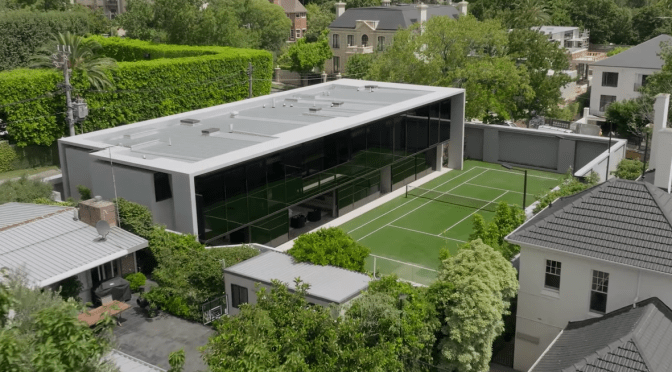
A solid concrete dwelling, The Hopetoun is a luxury super house, complete with a tennis court and sleek garage. Meticulously designed by FGR Architects, the new build combines architecture, lighting and textural detail to reveal internal spaces of surprising delicacy.

Video Timeline: 00:27 – Entering the Super House 01:21 – Minimalist Architecture 01:57 – Connection Between Spaces 02:19 – Positioning the House 02:59 – Lighting in the House 03:40 – Concrete Architecture 04:37 – Utilising Stone and Timber 04:54 – Breaking Tradition

Located in the leafy Melbourne suburb of Toorak, The Hopetoun is a super house designed to accommodate a large family. Situated on the corner of a road, the house is crafted to dramatically embrace the breadth of its site, presenting a broad and expansive façade to the street. A house tour of the property sheds light on the layout of the super house, carefully planned by the architect.

FGR Architects configures the home to maximise solar penetration via the northern aspect, fitting the sunlit side of the house with ample glazing and arranging the internal spaces to reflect the need for natural light. Whilst the southern orientation houses utilities and services, the northern counterpart is occupied by the most frequently habited rooms. A sculptural set of stairs forms the highlight of the interior design. FGR Architects uses lighting to express the structural prowess of the concrete super house, including the implemented overhangs within the architecture.

The delicate interaction between the undulating texture of the concrete walls and the warm wash of artificial light presents lighting almost as a material in itself, equal amongst the concrete, glass, stone and timber. Utilising the refined nature of concrete in relation to light, FGR Architects is able to create a sophisticated super house that possesses the robust material character to age elegantly through time. 00:00 – Introduction to the Super House

Architecture: Otsu House In Casuarina, Australia

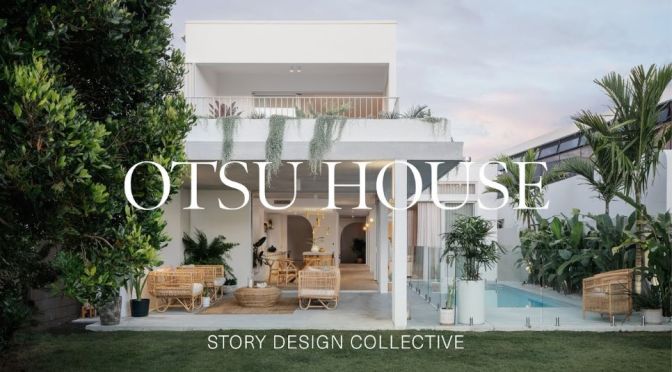
A modern-day dream home, Otsu House is a refreshing and timeless exploration of texture, material and light. The site’s proximity to the beach called for a pared back and neutral colour palette, filling the internal spaces with warmth and reflective character.

Video Timeline: 00:00 – Introduction to the House 00:29 – Design Influenced by the Environment 01:04 – Designing for Light and Airflow 01:25 – Concrete and Clay Finishes 02:57 – The Courtyard 03:15 – Neutral Colour Palette 03:40 – Landscaping and Pool Design 04:10 – Helical Staircase 04:53 – Ensuite Bathroom Features 05:18 – Concrete Kitchen Bench 05:36 – Successful Partnership

With easy access to the beach, it was important that the materials used within the structure were able to be self-maintained and endure the harsh Australian climate and beachside environment.

The dream home embraces open spaces, reminiscent of the nearby ocean. A continued theme of open space is felt throughout the house and is extended out towards the garden. The entryway is greeted with a void and an enticing sculptural staircase. Feeling as though it evolved out of the ground, the staircase draws the eye inward and up to the second level. The curve of the stairs reflects the textured clay render, Rockcote Japanese Otsumigaki, used throughout the interior and evokes a visual connection to ocean waves.

The Otsumigaki is both subtle and reflective, interacting with natural light and giving forth a lustre that is completely distinctive to the interior space. The raw nature of the Japanese clay and concrete used throughout the dream home acts as a significant connection to the beachfront. The textured material brings with it a warmth whilst also an endurance to the elements, specifically the salt from the ocean and the strength of the Australian sun.

Concrete is also used in the home’s ceiling, allowing for both thermal and noise barriers within the interior spaces. The material is also used in the kitchen bench and is in keeping with the natural, neutral colour palette present within the dream home. Otsu House also features a courtyard space, acting as both a lightwell and a visual connection for the downstairs rooms. The doors are able to be opened to allow a breeze to flow throughout the dream home, creating patterns with light and shadows. The linen curtains soften the raw concrete throughout and provide a delicate balance within the natural material palette.

France Views: Monet’s House & Garden In Giverny

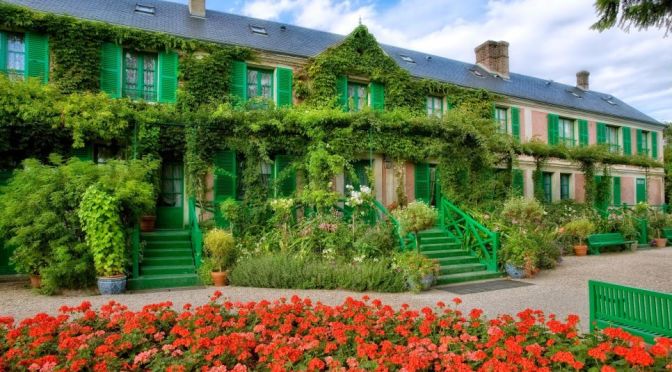
Giverny is a village in the region of Normandy in northern France. Impressionist painter Claude Monet lived and worked here from 1883 until his death in 1926. The artist’s former home and elaborate gardens, where he produced his famed water lily series, are now the Fondation Claude Monet museum. Nearby, the Musée des impressionnismes Giverny highlights the Impressionist art movement.