In this prodigiously researched epic, Torigian details the life of Xi Zhongxun—the father of China’s current leader, Xi Jinping—to explain the history of the Chinese Communist Party. Along the way, readers gain a sense of how the younger Xi became the man he is today.
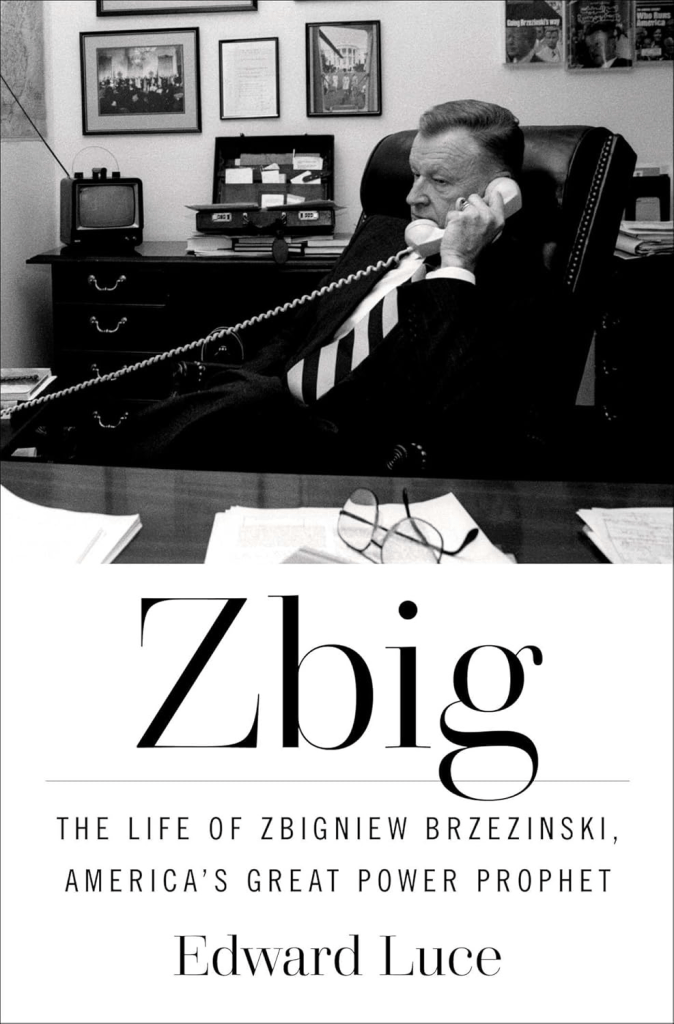
Luce, a gifted storyteller, chronicles the personal life and intellectual journey of former National Security Adviser Zbigniew Brzezinski, who played a significant but underappreciated role in opening the United States to China, bringing the Cold War to an end, and shaping the world that came after. In writing this gem of a book, Luce has rendered a genuine service to history.
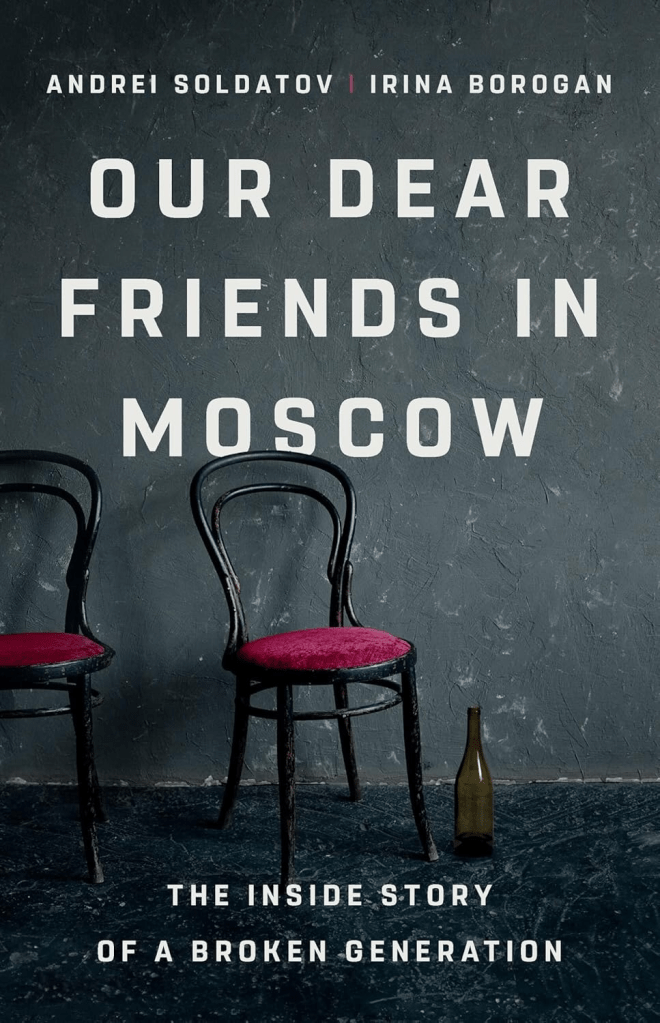
Soldatov and Borogon, two Russian journalists, tell the story of their one-time group of friends and colleagues—young Russians who, over the course of the Putin years, steadily drift toward nationalist and illiberal ideas and end up as supporters of Russia’s war in Ukraine.
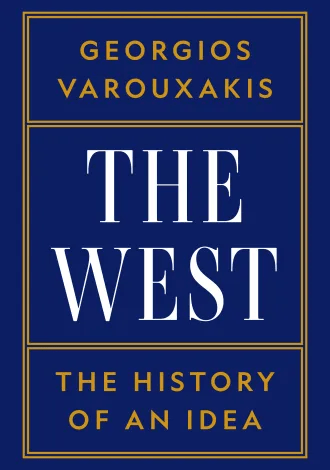
In this masterful study, Varouxakis tracks the meanings of “the West” from the late eighteenth century to the present—and argues that the modern notion of the term emerged in the 1830s as a way to distinguish western Europe from Russia. Today, for beleaguered countries such as Ukraine, “the West” is still a powerful idea.
Foreign Policy Magazine(December 8, 2023): The Best of Books 2024 on international politics, economics, and history that were featured in the magazine this year, selected by Foreign Affairs’ editors and book reviewers.
In a revelatory book, Farrell and Newman describe how the United States has turned its control over information networks into a hidden tool of economic domination—and warn of the risks of Washington’s weaponization of data power for ordinary people, as well as for the global financial system.read the review
In a major reconsideration of Cold War history, Radchenko examines the Soviet Union’s competing ambitions for revolution, security, and legitimacy—and how Soviet leadership, blinded by its own hubris and aggression, set the stage for the downfall of the USSR. read the review
Kahan argues that what unifies liberals across the centuries, including those involved in building and defending liberal democracy today, are their efforts to build societies free from the fear of arbitrary power. He sculpts a masterful and beautifully written history of liberalism’s long intellectual journey. read the review
In this sobering study, Levitsky and Ziblatt demonstrate how the United States’ enduring constitutional order—one forged in a pre-democratic age—increasingly thwarts the will of an expanding multicultural majority in favor of a shrinking rural white minority.read the review
Focused on the sophisticated and networked world of autocracy, dictatorship, and tyranny, Applebaum argues that what separates hardcore autocratic states, such as China and Russia, from softer illiberal and authoritarian regimes, such as those in Hungary, India, and Turkey, is the ruthlessness and reach of their dictatorial power and their deep hostility to the Western-led democratic world.read the review
Foreign Policy Magazine(December 31, 2023): The Best of Books 2024 – Here are 30 major nonfiction titles coming out this year on Foreign Policy’s radar, from economic manifestos to histories of forgotten eras to new assessments of great-power competition in the 21st century.New titles include:
From veteran Amazon reporter for The Wall Street Journal, The Everything War is the first untold, devastating exposé of Amazon’s endless strategic greed, from destroying Main Street to remaking corporate power, in pursuit of total domination, by any means necessary.
In 2017, Lina Khan published a paper that accused Amazon of being a monopoly, having grown so large, and embedded in so many industries, it was akin to a modern-day Standard Oil. Unlike Rockefeller’s empire, however, Bezos’s company had grown voraciously without much scrutiny.
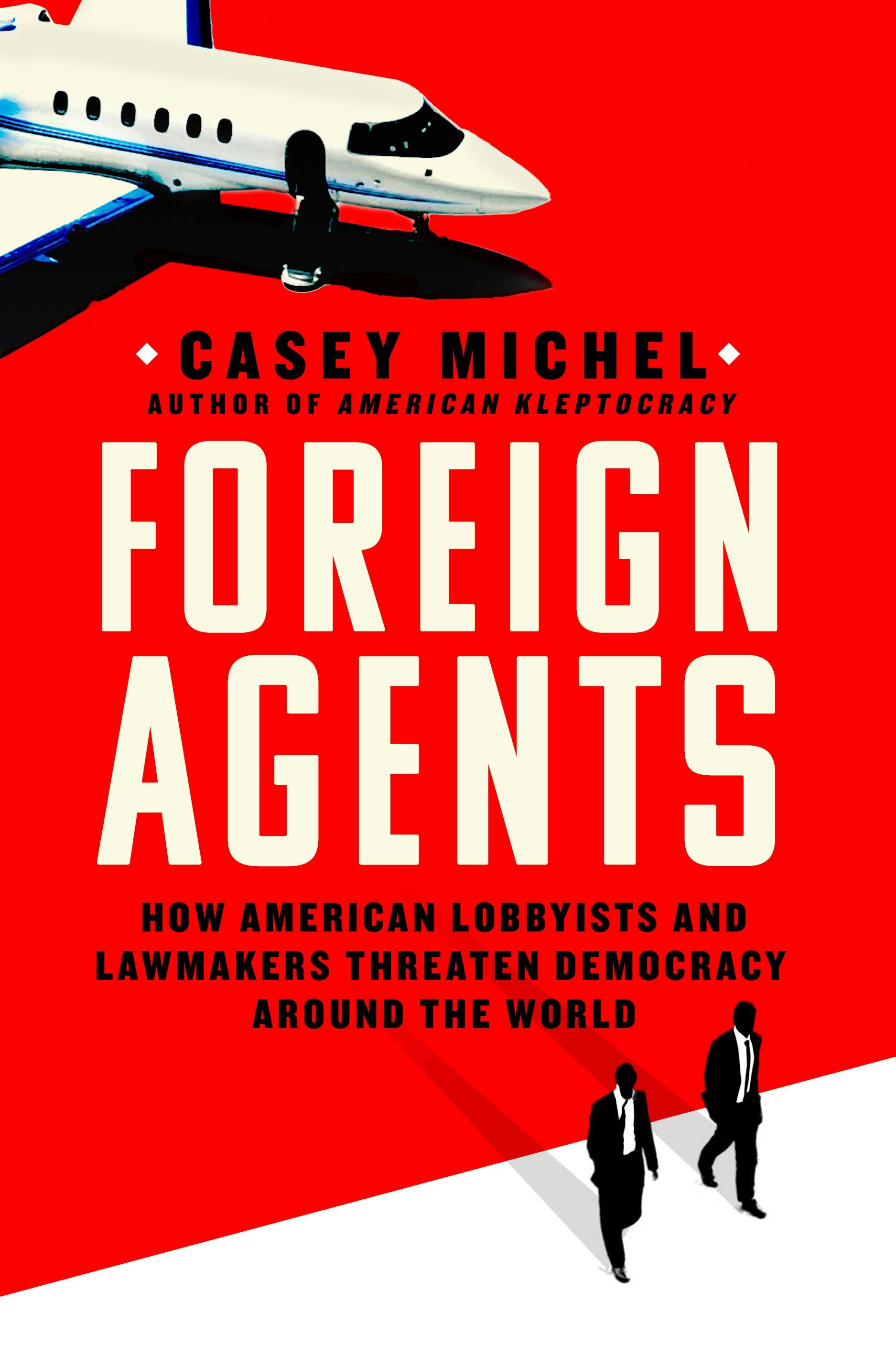
A stunning investigation and indictment of the elements in United States’ foreign lobbying industry and the threat they pose to democracy.
For years, one group of Americans has worked as foot-soldiers for the most authoritarian regimes around the planet. In the process, they’ve not only entrenched dictatorships and spread kleptocratic networks, but they’ve secretly guided U.S. policy without the rest of America even being aware. And now, journalist Casey Michel contends some of them have begun turning their sights on American democracy itself.
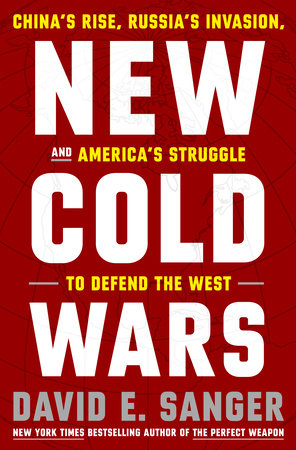
Three decades after the end of the Cold War, the United States finds itself in a volatile rivalry against the other two great nuclear powers–Xi Jinping’s China and Vladimir Putin’s Russia–in a world far more complex and dangerous than that of a half century ago
.New Cold Wars–the latest from Pulitzer Prize-winning journalist and bestselling author of The Perfect Weapon, David E. Sanger–is a fast-paced account of America’s plunge into simultaneous confrontations against two very different adversaries. For years, the United States was confident that the newly-democratic Russia and increasingly wealthy China could be lured into a Western-led order that promised prosperity and relative peace–so long as they agreed to Washington’s terms. By the time America emerged from the age of terrorism, it was clear that this had been a fantasy.
In a timely and thought-provoking book, Zahra delves into the tumultuous years between World War I and World War II to argue that it was resistance to globalism and globalization that ended up weakening Europe’s then-fragile democracies, eventually contributing to the continent’s slide into dictatorship. READ THE REVIEW
Bass’s magnificent book, an account of the post–World War II Tokyo war-crimes trial, encourages a deeper understanding of the Asian experience of war and occupation. His work also sheds light on an enduring debate about liberalism and international politics, showing how the trial played formative roles both in postwar Asian politics and in the making of the postwar global human rights regime. READ THE REVIEW
In a sophisticated and expansive account, Wolf, a veteran economics commentator, suggests that the root cause of today’s political and economic malaise lies in the breakdown of the relationship between capitalism and liberal democracy—and the failure of institutions to counter poverty and marginalization. READ THE REVIEW
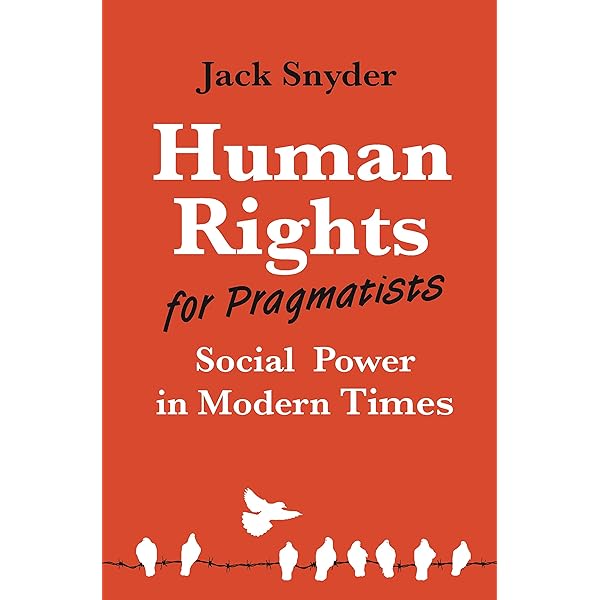
In this masterful work, Snyder offers a bold explanation for why, how, and when societies make progress in expanding political rights and freedoms, arguing that breakthroughs occur when human rights serve the interests of a country’s dominant political coalition .READ THE REVIEW
Trubowitz and Burgoon argue in this groundbreaking study that the current backlash against the Western-led liberal international order can be traced to the 1990s, when the United States and European governments encouraged globalization at the expense of social and economic protections at home. READ THE REVIEW
Moving beyond the standard account of the twentieth century as an epic struggle between democracy and autocracy, Maier examines how a wide range of actors tried to harness industrial modernity in the pursuit of power and material interests, weaving an alternative narrative about the explosive interplay of economic privilege and political grievance. READ THE REVIEW
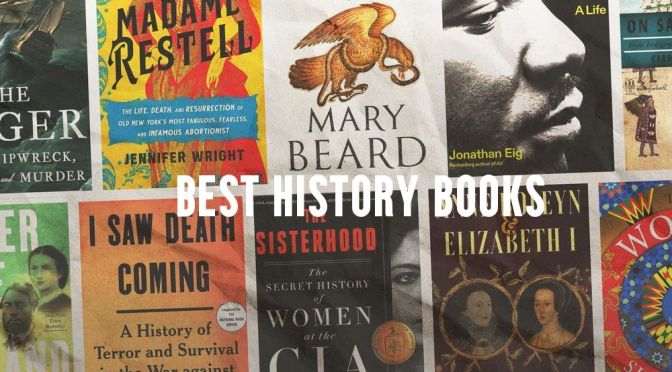
Smithsonian Magazine – From a biography of Martin Luther King Jr. to the story of a deadly shipwreck, these are some of Smithsonian magazine’s favorite history books of 2023.
The Wager: A Tale of Shipwreck, Mutiny and Murder by David Grann
David Grann’s newest page-turner, The Wager, has much in common with his 2017 book, Killers of the Flower Moon, which was recently adapted for the screen by Martin Scorsese. Both tell the tale of a once-infamous, now more obscure chapter in history, resurrected through meticulous research and a gift for immensely readable prose. Just as the Reign of Terror, a string of murders that struck the Osage Nation in the early 20th century, was more widespread than an FBI investigation suggested, the circumstances surrounding the 1741 wreck of the HMS Wager were more mysterious than survivors initially claimed.
A Royal Navy ship that set sail from England in 1740, its crew tasked with pursuing an enemy galleon during a war with Spain, the Wager ran aground off the coast of Patagonia in 1741.A few years after the shipwreck, two sets of sailors returned home, each with their own competing version of events—one a story of survival under horrific conditions and the other a harrowing account of mutiny, a crime then punishable by death.
To untangle this web of contradictions, Grann, a longtime staff writer at the New Yorker, “spent years combing through the archival debris: the washed-out logbooks, the moldering correspondence, the half-truthful journals, the surviving records from the troubling court-martial,” as he explains in an author’s note. Grann frames his tale as a mystery, though he leaves readers to draw conclusions for themselves; the result is a tour-de-force book that will leave readers satisfied while prompting them to consider larger questions of imperialism and the notion of truth itself.
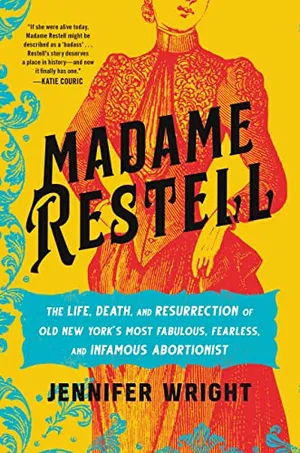
Madame Restell: The Life, Death and Resurrection of Old New York’s Most Fabulous, Fearless and Infamous Abortionist by Jennifer Wright
When the Supreme Court overturnedRoe v. Wade in June 2022, Jennifer Wright was putting the finishing touches on her latest book, Madame Restell, a biography of the woman she deems “a businesswoman, a scofflaw, an immigrant and an abortionist [who] made men really, really mad.” The timing of the decision wasn’t lost on Wright, a journalist and author of pop-culture history books. It “disabuses us of the notion that we’ve come as long a way in our treatment of women as we liked to imagine we did,” she says in a statement. “A lot of people have talked about how we went back 50 years with the Dobbs ruling. I would say we went back 150,” to the 1870s.
By that decade, Restell had been offering abortions for more than 30 years. Born Ann Trow in England in 1811, she immigrated to the U.S. with her husband and daughter in 1831, only to find herself a widowed single mother just two years later. By a stroke of luck, she formed a connection with a neighbor who taught her how to compound pills and likely showed her how to provide surgical abortions when the abortifacient drugs she gave patients failed. With the help of her brother and her second husband, Trow developed a new persona, Restell, and started advertising her “celebrated preventative powders for married ladies whose health prevents too rapid an increase of family.” This straightforward acknowledgement of the nature of Restell’s services—risky at a time when abortion was a criminal offense in New York—attracted both satisfied customers and powerful enemies, among them the anti-vice activist Anthony Comstock, who would eventually bring about the abortionist’s downfall.
This biography presents a searing portrait of an indomitable woman, examining the experiences that shaped Restell’s career choice and the challenges she overcame, including multiple arrests and a stint in prison. Wright juxtaposes her subject’s story with those of Restell’s patients and an overview of the broader conversationsurrounding abortion in the late 19th century.
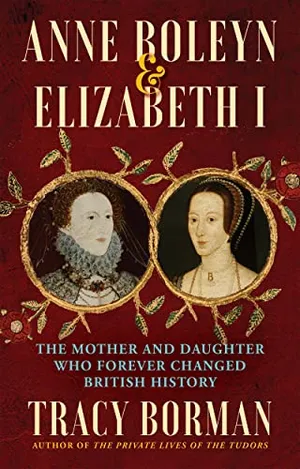
Anne Boleyn & Elizabeth I: The Mother and Daughter Who Forever Changed British History by Tracy Borman
Tracy Borman is a prolific chronicler of Tudor England, with each of her books offering a novel take on the world’s most-discussed dynasty. In recent years, she’s examined the male influences in Henry VIII’s life and the private lives of the Tudors, from their romps in the bedroom to their bathroom habits. Now, Borman—an author who serves as joint chief curator of England’s Historic Royal Palaces—has turned her attention to the relationship between Anne Boleyn and Elizabeth I, a mother and daughter who she says “changed the course of British history.”
Anne was Henry’s second wife, a strong-willed, worldly woman whose refusal to become the king’s mistress pushed him to break with Rome and launch the English Reformation. Her time on the throne was brief, ending with her execution in 1536, but she left behind a daughter, the future Elizabeth I. Popular lore suggests Elizabeth, who was just 2 years old when her mother was beheaded, rarely acknowledged Anne, whose existence was all but erased by Henry after her death. When Elizabeth took the throne in 1558, she didn’t actively attempt to restore Anne’s reputation by overturning the annulment of her marriage or moving her body from a chapel at the Tower of London.
“The obvious conclusion is that Elizabeth was at best indifferent toward, and at worst ashamed of, Anne,” writes Borman. “But the truth is both more complex and more fascinating. Exploring Elizabeth’s actions both before and after she became queen reveals so much more than her words.” Evidence laid out in the book points to Elizabeth’s enduring love for Anne, whose push for religious reform reached new heights during her daughter’s reign. Borman suggests Elizabeth fulfilled a request made by Anne on the scaffold: “If any person will meddle of my cause, I require them to judge the best.”
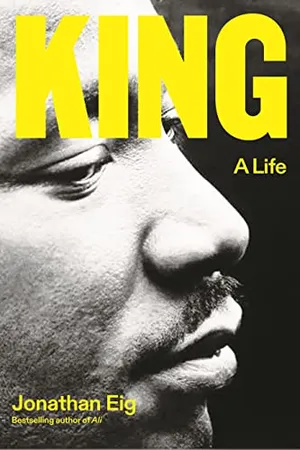
King: A Life by Jonathan Eig
In his biography of civil rights icon Martin Luther King Jr., Jonathan Eig follows the winning formula laid out in his 2017 book, Ali: A Life, using an impressively researched deep dive to present a more nuanced portrait. “In the process of canonizing King,” Eig writes, “we’ve defanged him, replacing his complicated politics and philosophy with catchphrases that suit one ideology or another.”
Eig argues that contemporary observers have “mistaken King’s nonviolence for passivity” and “failed to recall that [he] was one of the most brutally divisive figures in American history.” Though he’s lionized today, King was widely disliked at the time of his assassination in 1968, attracting the disapproval of Southern segregationists, the government, militant Black activists and white liberals alike. Some thought he’d gone too far in his calls for equality; others said he hadn’t gone far enough. By reframing King’s life in a more realistic light, Eig seeks to “recover the real man from the gray mist of hagiography,” showing his strengths, like the power of his speeches, and his weaknesses, from his numerous affairs to his penchant for committing plagiarism.
A magisterial addition to the literature on King, Eig’s book is a clear-eyed, sympathetic tribute to a man who reshaped America in just 13 years, bringing “the nation closer than it had ever been to reckoning with the reality of having treated people as property and secondary citizens,” as the author writes. Based on newly declassified FBI papers, more than 200 interviewsand a trove of previously unpublished archival materials, King: A Life is poised to replace David J. Garrow’s Pulitzer Prize-winning 1986 book, Bearing the Cross, as the standard biography of the activist. Garrow acknowledges as much in a review for the Spectator, praising Eig’s work as “the best-informed account of this deeply courageous, yet also deeply flawed, life.”
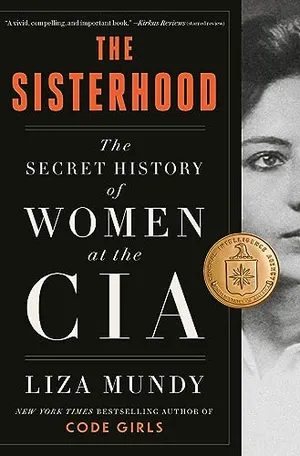
The Sisterhood: The Secret History of Women at the CIA by Liza Mundy
Liza Mundy’s newest is a worthy successor to her 2017 best seller, Code Girls, which explored the stories of the unheralded American women who served as code breakers during World War II. The Sisterhood offers a comprehensive exploration of a similarly understudied topic: women at the CIA. Though women have worked at the agency since its founding in 1947, Mundy, a journalist and former Washington Post staffer, argues that their contributions have long been overlooked, in part due to the secretive nature of the job but also because of sexism.
From Jeanne Vertefeuille, a typist-turned-investigator who exposed the most damaging mole in CIA history, to Heidi August, who witnessed the 1969 coup in Libya and the Cambodian Civil War firsthand, The Sisterhood shows how “women made contributions not despite their gender but because of it, using their sex to move around the world unremarked,” as Mundy writes in an author’s note. Beyond the women who worked at the CIA, the book profiles individuals on the periphery of the organization, like Shirley Sulick, the Black wife of a white agent, who enjoyed surveilling KGB operatives during trips to the store and making dead drops by pretending to pick up items that had fallen out of her purse.
Based on more than 100 interviews, published histories, academic articles, declassified documents and personal writings, The Sisterhood is a deeply researched, exhaustive read spanning seven decades of CIA history. “Women were behind numerous intelligence ‘wins’ that have never seen the light of day, and [they] made points, papers and predictions that more attention should have been paid to,” Mundy writes. At the same time, the journalist acknowledges the harm women have done as participants “in some of the agency’s darkest, most controversial chapters.”
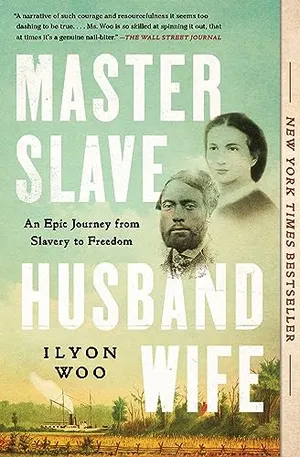
Master Slave Husband Wife: An Epic Journey From Slavery to Freedom by Ilyon Woo
The story of Ellen and William Craft, a couple who escaped slavery in 1848 by disguising themselves as an ailing white planter and his enslaved attendant, has received renewed attention in recent years, inspiring a short film, a children’s book and several academicstudies. But it’s Ilyon Woo’s biography of the Crafts, Master Slave Husband Wife, that’s poised to become the authoritative account of their journey to freedom.
Born to a white planter and an enslaved woman, Ellen fell in love with William, an enslaved cabinetmaker, while working in the Georgia home of her white half-sister. The couple hatched an escape plan, taking advantage of Ellen’s white-passing appearance to transform themselves into an unassuming duo: a master and his servant. Ellen dressed as a man, wore a sling on her arm to avoid being asked to write, applied poultices to her neck to indicate she had trouble speaking and wore hand-sewn clothing that spoke to her supposed high status. Traveling via train and steamship, the Crafts reached the free state of Pennsylvania on Christmas Day, after several close calls. They briefly found fame on the abolitionist speaking circuit, but following the passage of the Fugitive Slave Act of 1850, they fled to the United Kingdom. While living abroad, they wrote a book about their escape, though Woo points out that William downplayed Ellen’s role, claiming sole authorship of the text and referring to her only as his wife.
Master Slave Husband Wife is meticulously sourced, with “every description, quotation and line of dialogue” coming from historical materials, according to Woo. Yet the author’s prose is novelistic, immersing readers in the escape through descriptions of the “gentleman’s drawers” Ellen wore as part of her disguise and the tools of torture that awaited enslaved people at the Sugar House in Charleston, South Carolina, where the couple stopped on their way to Philadelphia. The dangerous voyage was “very cinematic,” Woo tells NPR. “Whenever I got stuck in trying to figure out how to tell this story, I sort of tried to picture: where would the camera move, and which camerapeople am I going to use in terms of the angles that I’ll get into the story?”
I Saw Death Coming: A History of Terror and Survival in the War Against Reconstruction by Kidada E. Williams
Reconstruction, the government-sanctioned push to reunite the nation in the aftermath of the Civil War, is often deemed a failure by historians. The federal government gave Southerners significant freedom to choose how they wanted to rebuild; rebellious states responded by passing laws that limited the rights of Black Americans and establishing white supremacist groups like the Ku Klux Klan. Given the systematic nature of this campaign against Black Americans, historian Kidada E. Williams believes that classifying Reconstruction as a failure is an oversimplification. “Black Reconstruction didn’t ‘fail,’ as so many are taught,” she writes in I Saw Death Coming. “White Southerners overthrew it, and the rest of the nation let them.”
Williams’ painstakingly researched book centers firsthand testimony from Black Americans, as recorded in transcripts from a congressional investigation into the KKK; affidavits provided to the Freedmen’s Bureau; interviews given to the Works Progress Administration in the 1930s; newspaper articles; and personal papers. Though these sources have long been available to historians, Williams approached them from a new perspective, focusing on “African Americans’ efforts to articulate what their families had gained with Reconstruction (what they had achieved with freedom and the expansion of democracy) and what they had lost and were losing to racist violence,” as she tells the Detroit Free Press.
I Saw Death Coming is a timely, incisive read at a time when white nationalism is on the rise, even as many Americans take steps to confront systemic racism in the U.S. Instead of attributing Reconstruction-era violence to “pockets of white resistance,” Williams suggests that “a kind of crypto-Confederacy emerged from the collective rage of a fallen white South that refused to cede an inch to those they had subjugated,” notes the Los Angeles Timesin a review. “White Southerners did not seek to completely exterminate all African Americans,” Williams argues, “but the successive violence they used, rejecting newly freed people’s right to any rights, was genocidal-like in nature.”
The World: A Family History of Humanity by Simon Sebag Montefiore
“The family,” writes Simon Sebag Montefiore in The World, “remains the essential unit of human existence.” From the Egyptian king Khufu and his mother to the “conquering family” of Genghis Khan, the Habsburg and Romanov dynasties, and the Roosevelts, Montefiore’s sweeping history traces the trajectory of the world through the relatives who ruled over it. Some of his subjects are household names, but many others are lesser known to many readers in the U.S., among them Jacques I of Haiti, the Mughal Emperor Babur and Chinese Empress Wu.
The historian’s sweeping exploration captures the complicated nature of family dynamics, particularly when politics is involved. He details acts of violence against relatives, including Ptolemy IV’s dismemberment of his son and Kim Jong-un’s likely murder of his brother; battles over succession rights among heirs; political marriages in which parents sent their daughters “to marry strangers in faraway lands where they then die[d] in childbirth”; and (comparatively rare) heartwarming moments between loved ones. The portrait that emerges is one of dysfunction, with the pitfalls of hereditary power, whether formalized or embodied by political dynasties like the Kennedys, readily apparent.
Packed with memorable anecdotes and lurid details, The Worldfocuses less on how family units have evolved over time than on the stories of families throughout history. This approach succeeds in large part because of the encyclopedic depth of Montefiore’s research evident throughout the book’s 23 chapters and 1,344 pages. “In every family drama, there are many acts,” the historian writes. “That is what Samuel Johnson meant when he said every kingdom is a family and every family a little kingdom.”
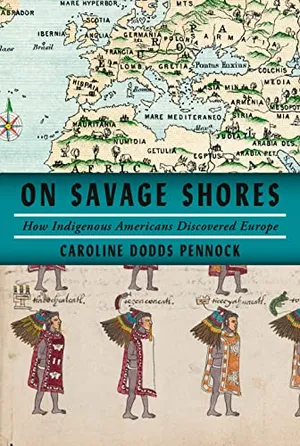
On Savage Shores: How Indigenous Americans Discovered Europe by Caroline Dodds Pennock
Books about the Age of Exploration tend to focus on the Europeans who journeyed to the Americas in the 15th and 16th centuries. Historian Caroline Dodds Pennock opted for a different approach, reversing focus to discuss the tens of thousands of Indigenous Americans who traveled to Europe between 1492, when Christopher Columbus supposedly “discovered” the New World, and 1607, when the colony of Jamestown was founded.
“These overlooked multitudes of Indigenous travelers—nobles, diplomats, servants, translators, families, entertainers, enslaved people—overturn our understandings of early modern exploration and empire,” writes Pennock in On Savage Shores. “And the vast network of global connections they inhabited … sowed the seeds of our cosmopolitan modern world more than a century before” the Mayflower landed in Massachusettsin 1620.
Pennock’s book draws on archival records to tell the stories of a diverse group of Indigenous people, including Martín Cortés, the mixed-race son of conquistador Hernán Cortés, who “lived the life of a young Spanish nobleman, essentially,” as Pennock told Smithsonianearlier this year; Guaibimpará (Catherine du Brasil), a Brazilian woman who settled in France with her husband, a shipwrecked Portuguese sailor, in 1528; and Diego de Torres y Moyachoque, a cacique, or tribal chief, who traveled to Spain on a diplomatic mission in 1575.
Many of Pennock’s subjects are anonymous, their names unrecorded in European sources that offer limited glimpses of their lives. But the historian deftly navigates these gaps in the archives, interrogating the colonialist bias of the records available to present a fuller portrait of cultural exchange at a pivotal moment in world history. As historian David Olusoga puts it in a review for the Guardian, On Savage Shores is a “work of historical recovery.”
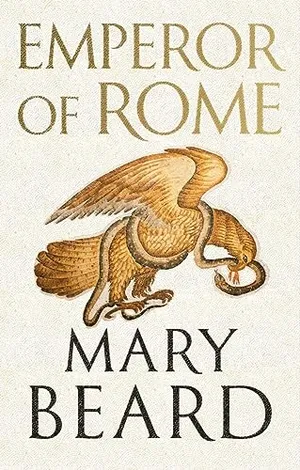
Emperor of Rome: Ruling the Ancient Roman World by Mary Beard
ClassicistMary Beard follows up her epic 2015 history of ancient Rome, SPQR, with a more intimate discussion of the empire’s rulers. As Beard writes in the book’s introduction, Emperor of Rome“explores the fact and fiction, … asking what [rulers] did, why they did it and why their stories have been told in the extravagant, sometimes lurid, ways that they have.” In addition to addressing “power, corruption and conspiracy,” the book asks what these individuals’ everyday lives were like, from what and where they ate to whom they slept with and how they traveled.
Beard begins her narrative with Elagabalus, a Syrian teenager who took the throne at age 14 and was murdered just four years later, in 222 C.E. The emperor is better known for his banquets than his achievements as a ruler: Ancient chronicles claim he forced guests to sit on whoopee cushions; served fake food crafted from wax or glass; and released tame animals in rooms occupied by hungover attendees, who died of fright upon waking up face to face with a lion, leopard or bear.
As entertaining as these anecdotes are, historians generally agree that they’re grossly exaggerated, concocted by those eager to win the favor of Elagabalus’ successor. Though these stories are unreliable, Beard argues that they open a window into “the anxieties that surrounded imperial rule,” chief among them “the terror of power without limits.” The scholar also uses archaeological evidence to examine the veracity of ancient accounts; as she points out, the limited nature of cooking facilities at Hadrian’s Tivoli villacontradicts the suggestion that feasts featuring peacock brains and flamingo tongues were regular occurrences there.Report this ad
The biggest question posed by Emperor of Rome is why some rulers are considered good and others bad. The answer, according to Beard, comes down to succession. Roman emperors didn’t simply pass on the throne to their eldest son, as generations of European rulers would later do. Instead, they designated a successor, who could be a relative but was often not. Whether this individual ultimately claimed the title—and what happened when emperors failed to name an heir—was an entirely different issue, and “the transition of power was almost always debated, fraught and sometimes killed for,” writes Beard. “Once the old ruler was dead, it was others who could turn, or refuse to turn, the implied promises of succession into reality.”
The emperors deemed successful, the classicist concludes, were the ones succeeded by their chosen successor, who was “almost bound to invest heavily in honoring the man who had put him there, and on whom his right to rule depended.”
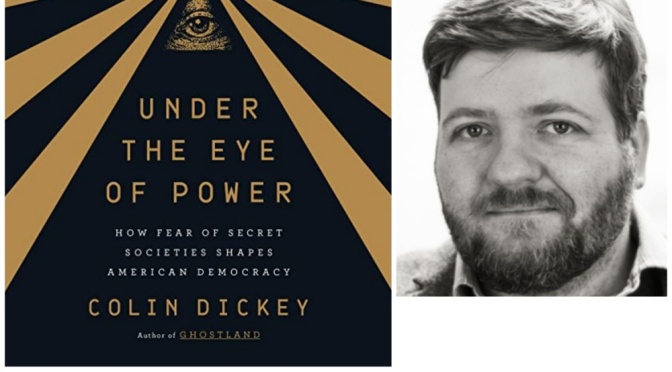
The American Scholar (July 14, 2023):In his new book, ‘Under the Eye of Power’, Colin Dickey asks, “What if paranoia, particularly a paranoia of secret, subversive societies, is not just peripheral to the functioning of democracy, but at its very heart?”
The litany of contemporary conspiracy theories runs long: Pizzagate, QAnon, chemtrails, “jet fuel can’t melt steel beams,” “birds aren’t real.”
Some of these are funny—the rumor that Avril Lavigne and/or Paul McCartney have been replaced by doppelgängers—and some have deadly consequences, like the mass murders motivated by replacement theory or the Chronicles of the Elders of Zion.
We might like to think this is a recent phenomenon, but the first American president to espouse a conspiracy theory was actually George Washington, a freemason who believed that the Illuminati caused the French Revolution.
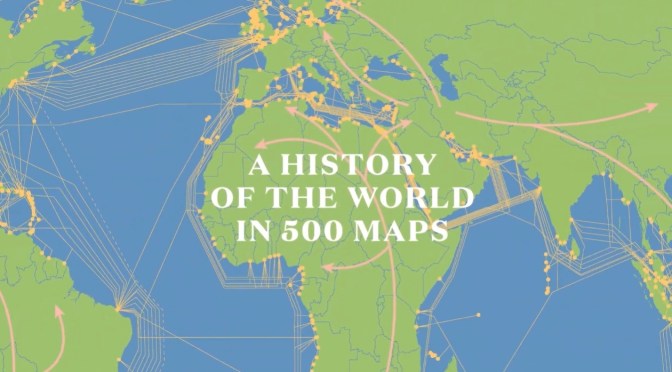
Thames & Hudson (July 11, 2023) – Organized chronologically, A History of the World in 500 Maps tells a clear, linear story, bringing together themes as diverse as religion, capitalism, warfare, geopolitics, popular culture and climate change.
Meticulously rendered maps chart the sequence of broad historical trends, from the dispersal of our species across the globe to the colonizing efforts of imperial European powers in the 18th century, as well as exploring moments of particular significance in rich detail.
• Visualizes 7 million years of human history. • Analyses cities and kingdoms as well as countries and continents. • Features major technical developments, from the invention of farming in the Fertile Crescent to the Industrial Revolution. • Charts the spread of major global religions, including Christianity and Islam. • Explores the increasing interconnectivity of our world through exploration and trade. • Investigates warfare and battles from across the ages, from Alexander the Great’s conquests to the D-Day offensive.
The American Scholar (June 9, 2023):The idea of “Western civilization” looms large in the popular imagination, but it’s no longer taken seriously in academia.
In her new book, The West: A New History in Fourteen Lives, historian Naoíse Mac Sweeney examines why the West won’t die and, in the process, dismantles ahistorical concepts like the “clash of civilizations” and the notion of a linear progression from Greek and Roman ideals to those of our present day—“from Plato to NATO.”
Through biographical portraits of figures both well-known and forgotten—Herodotus and Francis Bacon, Livilla and Phyllis Wheatley, Tullia d’Aragona and Abu Yusuf Yaqub ibn Ishaq al-Kindi—Mac Sweeney assembles a history that resembles less of a grand narrative than a spiderweb of influence. Successive empires (whether Ottoman, Holy Roman, British, or American) built up self-mythologies in the service of their expansionist, patriarchal, or, later, racist ideologies.
Mac Sweeney joins the podcast to talk about why the West has been such a dominant idea and on what values we might base a new vision of contemporary “western” identity.Go beyond the episode:Naoíse Mac Sweeney’s The West: A New History in Fourteen LivesWe have covered Greece and Rome in previous episodes, as well as Njinga of AngolaIn our Summer 2023 issue, Sarah Ruden considers how modern biographers distort VergilTune in every week to catch interviews with the liveliest voices from literature, the arts, sciences, history, and public affairs; reports on cutting-edge works in progress; long-form narratives; and compelling excerpts from new books.
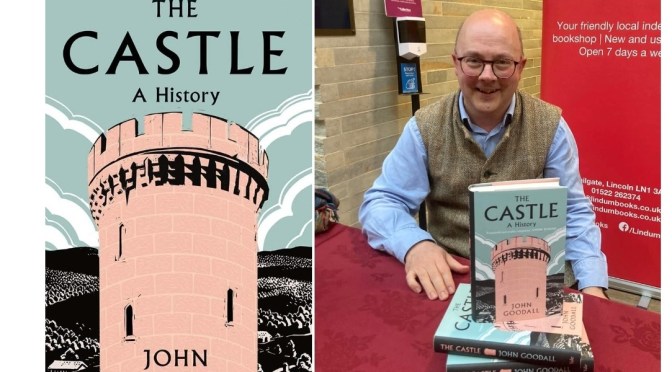
‘Break free from the assumption that castles are primarily medieval buildings designed for the purposes of war and defence, Goodall argues, and the door is opened to a more exciting and surprising understanding.’https://t.co/nVDU8awm3u
John Goodall’s The Castle: A history is the much slimmer companion to his magisterial The English Castle, (2011). Partly an attempt to bring the fruits of his research to a wider audience, Goodall’s new book uses extracts and quotations as the foundation of a historical account: each short chapter features an excerpt from a primary source that seeks to illustrate a particular moment. Rather than offering an architectural or conventional narrative history, Goodall explores the concept of the castle as it has been imagined, remade and contested over time. Important castles such as the Tower of London, Kenilworth and Windsor feature throughout.
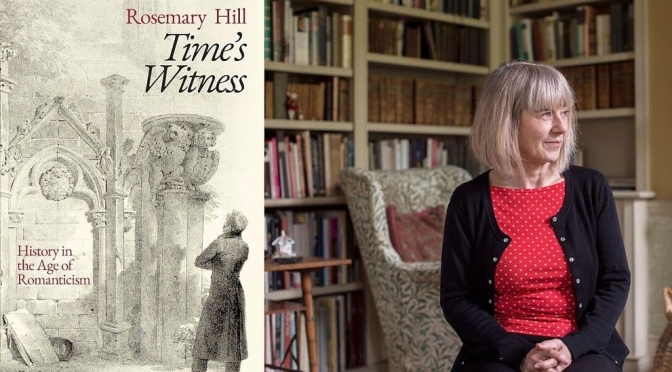
In the 1740s the Scots were invading England and the wearing of tartan was banned. By the 1850s, Queen Victoria had built her Gothic fantasy in Aberdeenshire and tartan was everywhere. What happened in between?
In the second episode of her series on Romantic history, Rosemary Hill talks to Colin Kidd about the myths and traditions of Scottish history created in the 19th century, and the central role of Walter Scott in forging his country’s identity.
In the first episode of a new four-part series looking at the way history was transformed in the Romantic period, Rosemary Hill is joined by Tom Stammers to consider how an argument over the ‘improvement’ of Salisbury Cathedral in 1789 launched a new attitude to the past and its artefacts. Those sentiments were echoed in revolutionary France, where antiquarians risked the guillotine to preserve the monuments of the Ancien Régime.
News, Views and Reviews For The Intellectually Curious

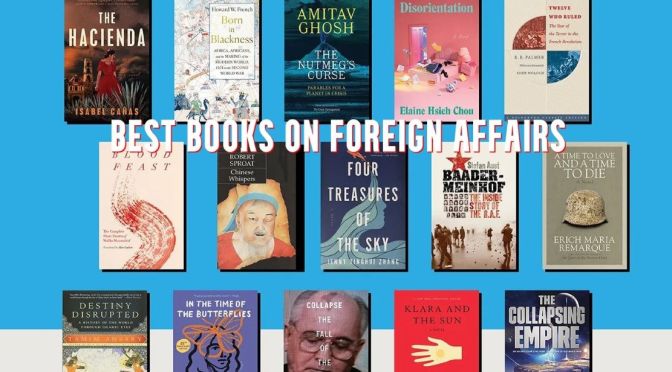
 Foreign Affairs Magazine: The very best of the hundreds of books on international politics, economics, and history that were featured in the magazine this year, selected by Foreign Affairs’ editors and book reviewers.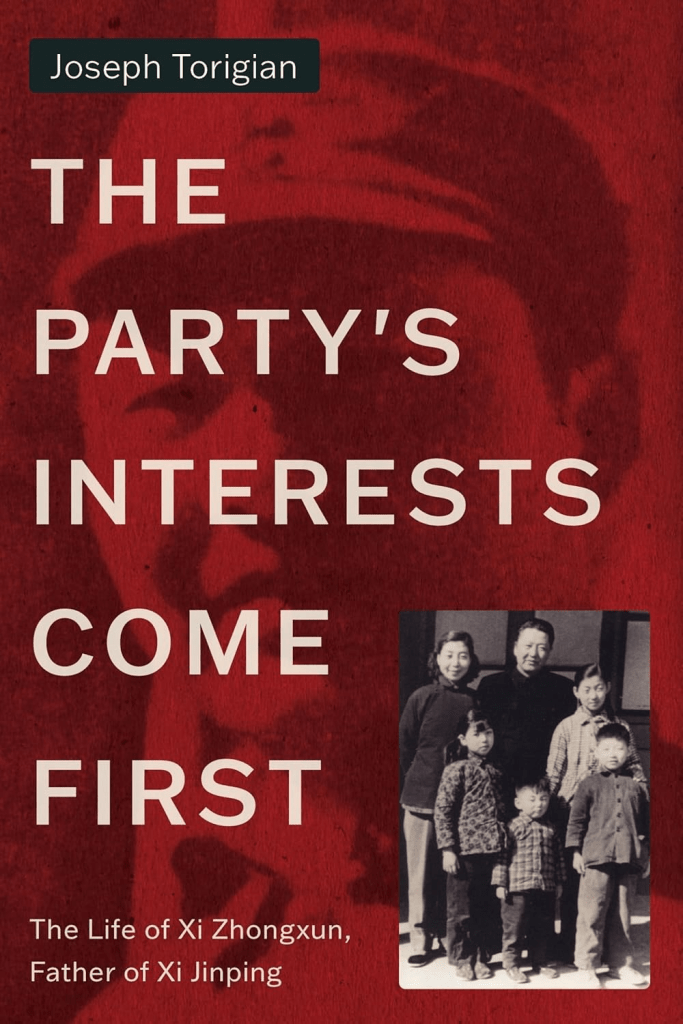










 Smithsonian Magazine – From a biography of Martin Luther King Jr. to the story of a deadly shipwreck, these are some of Smithsonian magazine’s favorite history books of 2023.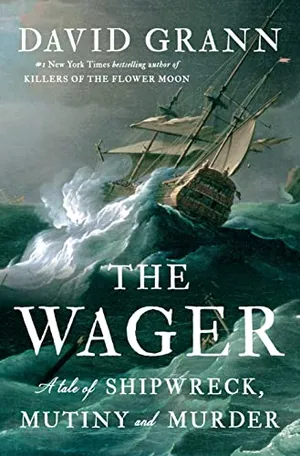

 Thames & Hudson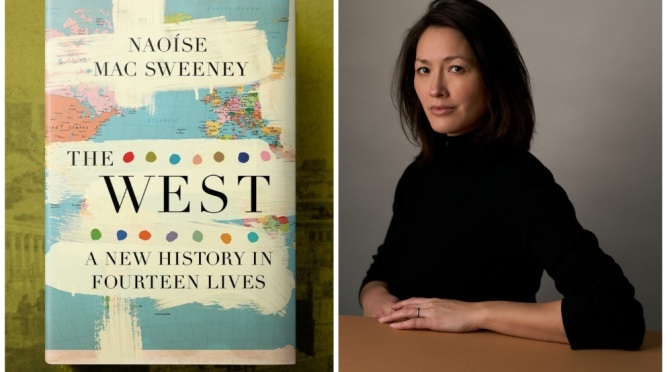

 Boomers Daily