From a ScienceDaily.com online release:
 Physical inactivity, smoking, high blood pressure, diabetes, and high cholesterol play a greater role than genetics in many young patients with heart disease, according to research presented today at ESC Congress 2019 together with the World Congress of Cardiology. The findings show that healthy behaviours should be a top priority for reducing heart disease even in those with a family history of early onset.
The study enrolled 1,075 patients under 50, of whom 555 had coronary artery disease (known as premature CAD). Specific conditions included stable angina, heart attack, and unstable angina. The average age was 45 and 87% were men. Risk factor levels and genetics in patients were compared to a control group of 520 healthy volunteers (average age 44, and 86% men). Patients and controls were recruited from the Genes in Madeira and Coronary Disease (GENEMACOR) database.
Five modifiable risk factors were assessed: physical inactivity, smoking, high blood pressure, diabetes, and high cholesterol. Nearly three-quarters (73%) of patients had at least three of these risk factors compared to 31% of controls. In both groups, the likelihood of developing CAD increased exponentially with each additional risk factor. The probability of CAD was 3, 7, and 24 times higher with 1, 2, and 3 or more risk factors, respectively.
To read more: https://www.sciencedaily.com/releases/2019/09/190902181602.htm


 “This is an entirely new approach with no current treatments able to change scar in this way,” says Associate Professor James Chong who led the research. “By improving cardiac function and scar formation following heart attack, treatment with rhPDGF-AB led to an overall increase in survival rate in our study.”
 Researchers matched 7,743 people with osteoarthritis with 23,229 healthy people who rarely or never took NSAIDs. People with osteoarthritis had a 42% higher risk of heart failure and a 17% higher risk of coronary artery disease compared with healthy people. After controlling for a range of factors that contribute to heart disease (including high body mass index, high blood pressure, and diabetes), they concluded that 41% of the increased risk of heart disease related to osteoarthritis was due to the use of NSAIDs.
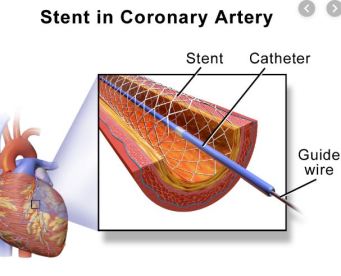 “For patients with severe but stable heart disease who don’t want to undergo these invasive procedures, these results are very reassuring,” said
 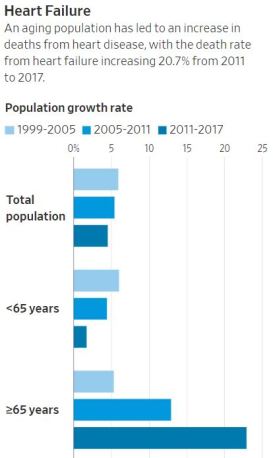 The findings help explain why a decadeslong decline in the death rate from cardiovascular disease has slowed substantially since 2011 and started rising in middle-aged people, helping
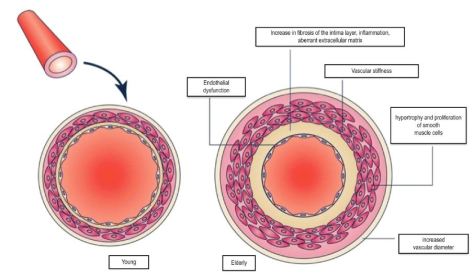
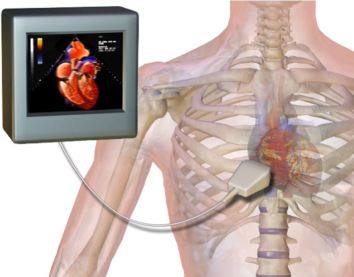 “As a result, today’s epidemic of physical inactivity in conjunction with highly processed, high-sodium diets contributes to thicker, stiffer hearts that compromise the heart’s ability to cope with endurance physical activity, and importantly this may start to occur prior to increases in resting blood pressure,” explains Shave.
 “We are extremely proud of what we have accomplished, from the ability to 3D bioprint human cardiac tissue last summer to a mini heart with full structure now. These milestones are a testament to the hard work of our team and the proprietary process we have developed that enables this type of scientific achievement,” said Birla in a press release. “We believe we are at the forefront of whole heart bioengineering, a field that has matured quickly over the last year, and well-positioned to continue our rapid scientific advancement.”
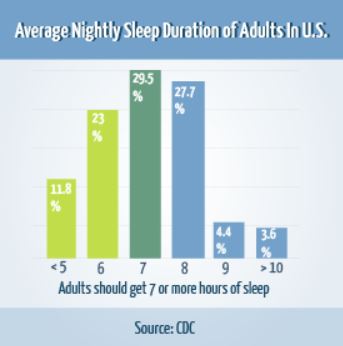 …these results indicate that sleep may play an important role in health disparities and may represent a modifiable risk factor (along with diet and physical activity) for cardiometabolic risk in general and cardiometabolic health disparities specifically.
 Boomers Daily