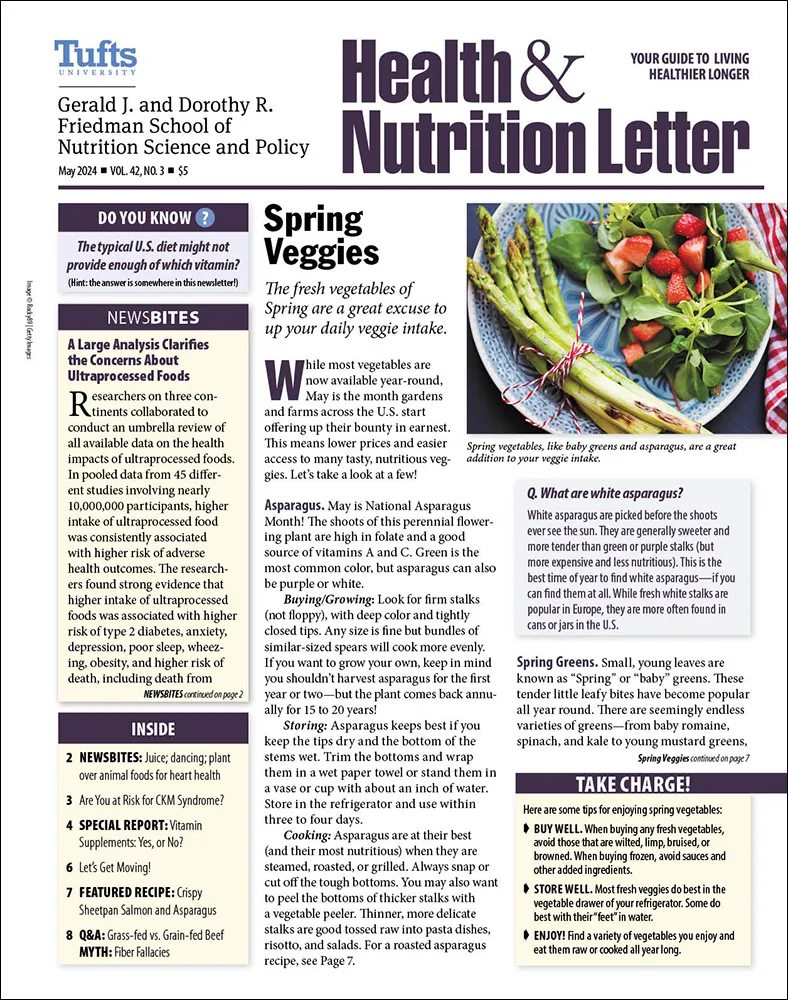

Tufts Health & Nutrition Letter (APRIL 30, 2024): The new issue features Vitamin Supplements – Yes, of No?; A large analysis clarifies the concerns about ultra-processed foods, and more….

Tufts Health & Nutrition Letter (APRIL 30, 2024): The new issue features Vitamin Supplements – Yes, of No?; A large analysis clarifies the concerns about ultra-processed foods, and more….
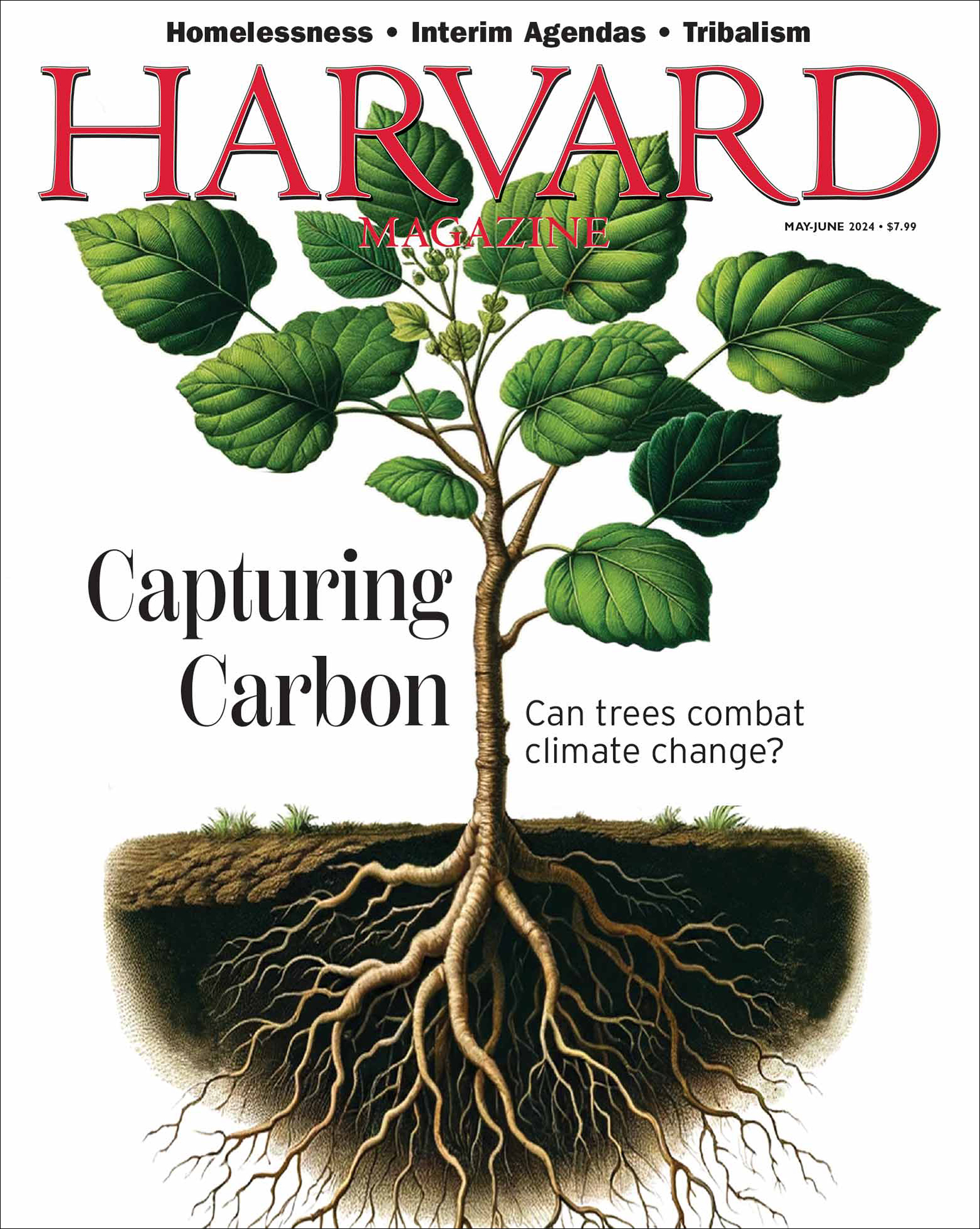

HARVARD MAGAZINE May/June2024 :
How long will the world’s forests impound carbon below ground?
by Jonathan Shaw
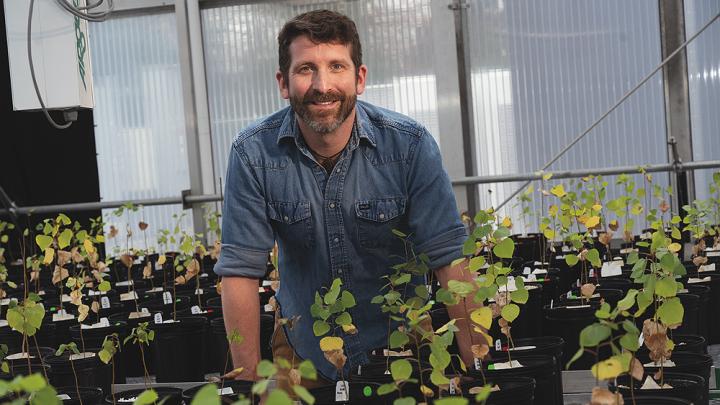
MARYVILLE, Tennessee, lies near the foothills of the Great Smoky Mountains, a range home to more tree species than exist in all of Europe. Benton Taylor grew up amidst this abundance, but as a boy, he barely noticed the plants. In the nearby national park, a family friend was raising—together with a menagerie of other mammals—a pair of bears orphaned as cubs. Taylor dreamed of studying these apex denizens of the forest, who forage at the top of the food chain. But as his education and understanding grew, his curiosity shifted to seed-dispersing animals, plants, and the soil and nutrients that sustain them: a trip down the trophic pyramid, driven by an appreciation of forests as ecological systems in which plants are primary producers. “Now I’ve half moved into the basement,” jokes the assistant professor of organismic and evolutionary biology, whose research encompasses the strategies plants use to obtain essential nutrients such as nitrogen, and how that, in turn, affects their ability to store another vital element with a global climate impact: carbon.
by Nina Pasquini
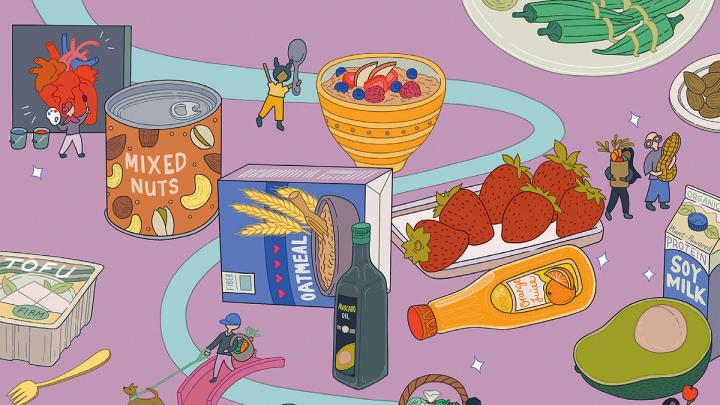
DIVERSIFYING one’s assets is useful not only in finance but also in diet, according to an October study from the Harvard T.H. Chan School of Public Health (HSPH). Though not many people have heard of the “portfolio diet”—consisting of plant-based foods proven to lower unhealthy cholesterol, such as nuts, oats, berries, and avocados—it is one of the easiest ways to improve long-term cardiovascular health. “The idea was that each of these foods lowers cholesterol quite minimally, but if you make a whole diet based on these different foods, you will see large reductions in [unhealthy] cholesterol,” said Andrea Glenn, an HSPH postdoctoral research fellow in nutrition and the lead author of the study. The more of these foods one eats, the higher the protection—but one need not include them all to reap the diet’s benefits, she said. “Like a business portfolio, you can choose the ones you want.”

Mina Cikara explores how political tribalism feeds the American bipartisan divide.
by Max J. Krupnick


AIs will make health care safer and better, reports Natasha Loder. It may even get cheaper too
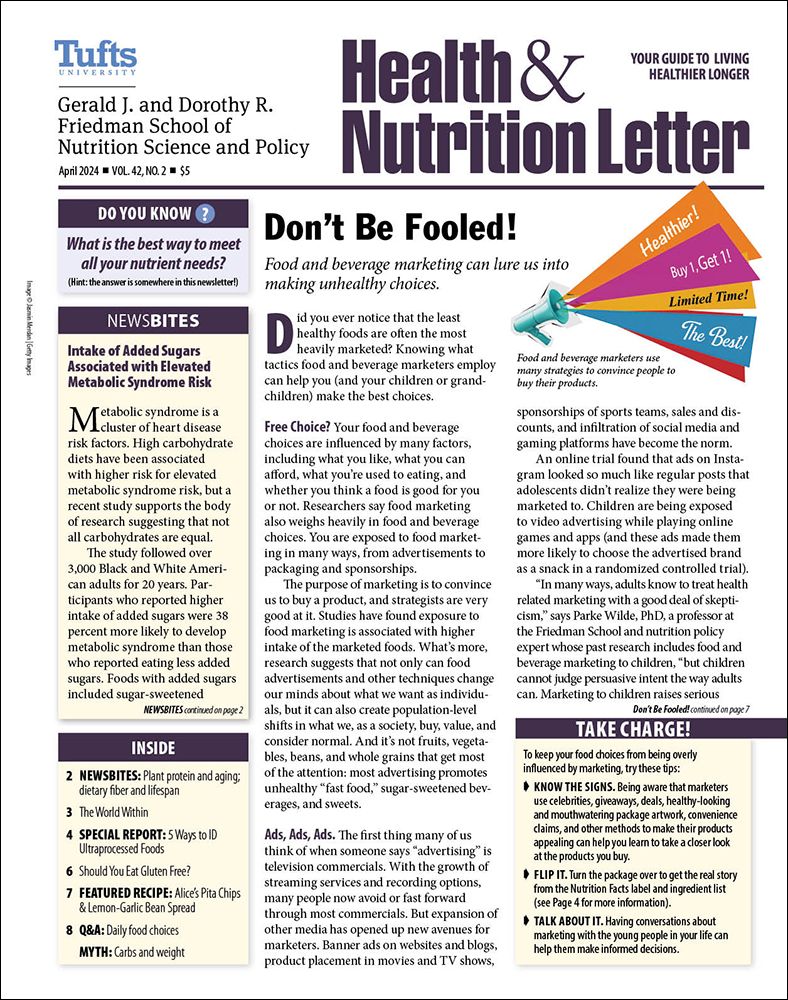
Tufts Health & Nutrition Letter (APRIL 2024): The new issue features 5 Ways to ID Ultraprocessed Foods; Should You Eat Gluten Free?; Q&A: Daily Food Choices and Myth: Carbs and Weight…



An evaluation of global dietary guidelines highlights the need for clearer warnings on what common foods fall under the ‘UPF’ banner. Some of them may surprise you. Today, Decomplicated examines what exactly defines ultra-processed foods, the impact they have on both society and the environment, and what can you do to minimize your consumption of them.
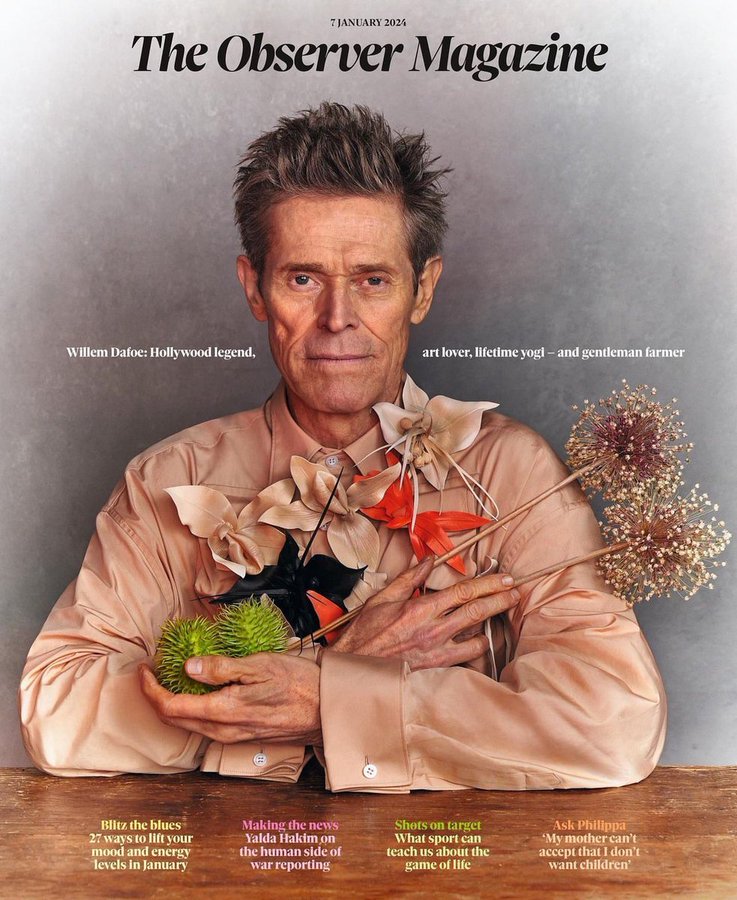

The Observer Magazine (January 6, 2024) – The latest issue features ‘Willem Dafoe’ – Hollywood legend, art lover, lifetime yogi and gentleman farmer; What sport can teach us about the game of life; Yalda Hakim on the human side of war reporting, and more…
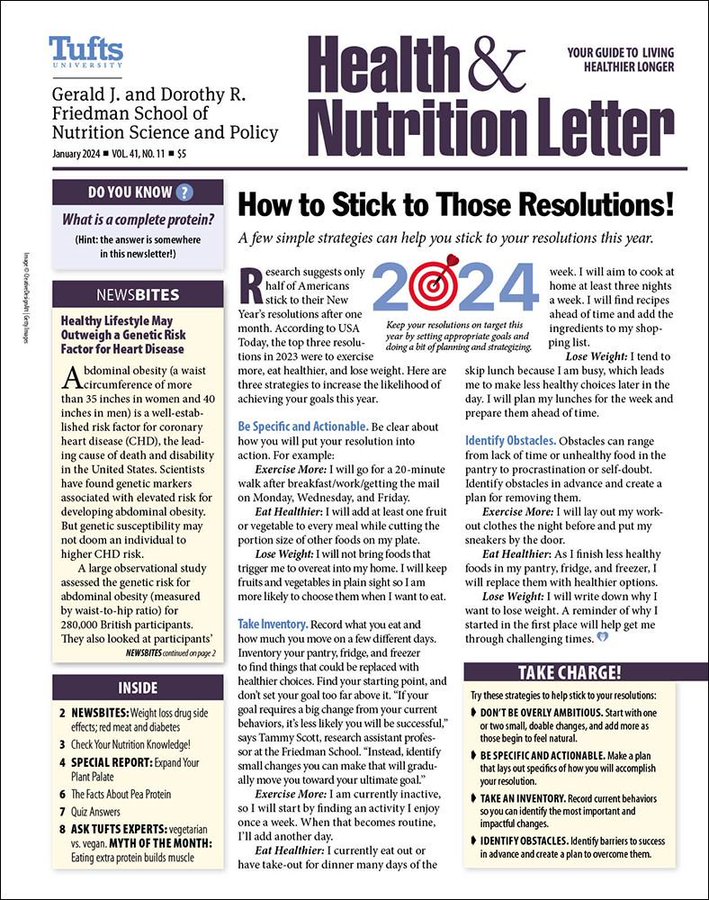
Tufts Health & Nutrition Letter (JANUARY 2024): The new issue features ‘Healthy Lifestyle May Outweigh a Genetic Risk Factor for Heart Disease; How to Stick to Those Resolutions!; Check Your Nutrition Knowledge; Special Report – Expand Your Plant Palate; The Facts About Pea Protein; and more…
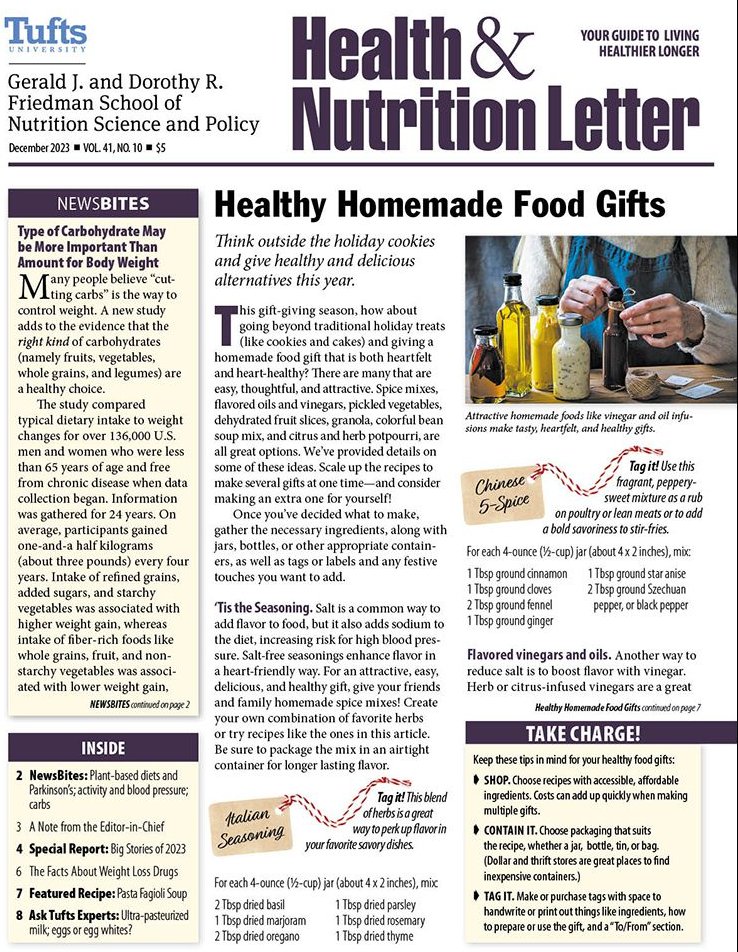
Tufts Health & Nutrition Letter (DECEMBER 2023): The new issue features Type of Carbohydrate May be More Important Than Amount for Body Weight; Beware of “Health-Washing” – Front package health claims can be misleading; Sweetened Beverages and Risk of Adverse Liver Outcomes…
Front-of-package health claims can be helpful—but they can also be misleading. Learn how to tell the difference.
Some health claims on packages or in advertising may be inappropriate or even misleading. This is sometimes referred to as “health-washing.”
Common Claims. Even FDA-approved claims (like organic, “non” or “free,” reduced, light, natural, and naturally raised) don’t guarantee the food or beverage is an overall healthy choice. Here are some red flags to look out for:

Director: Lisandro Perez-Rey; Director of Photography: Francis Bernal


 Boomers Daily