
Tag Archives: Greenland

News: Prigozhin Death Verified, US-China Trade Talks, Greenland Politics

The Globalist Podcast, Monday, August 28: A vibrant show from Monocle’s Zurich studio presented by Emma Nelson. We’ll discuss the latest from Ukraine, as well as China and the US’s latest trade talks.

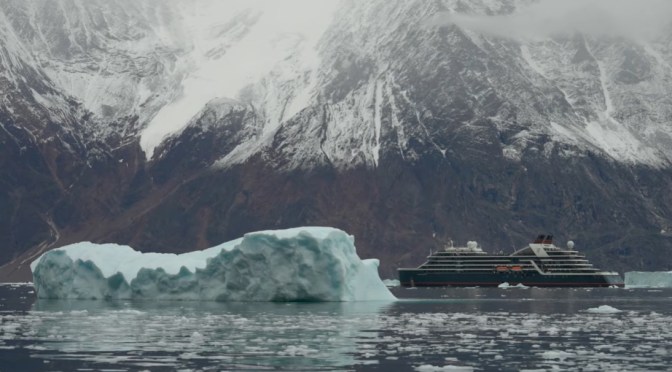
Also, journalist Bruno Kaufmann examines Greenland’s geopolitical significance, we talk technology and the latest from the travel industry.

Research Preview: Science Magazine – July 21, 2023

Image

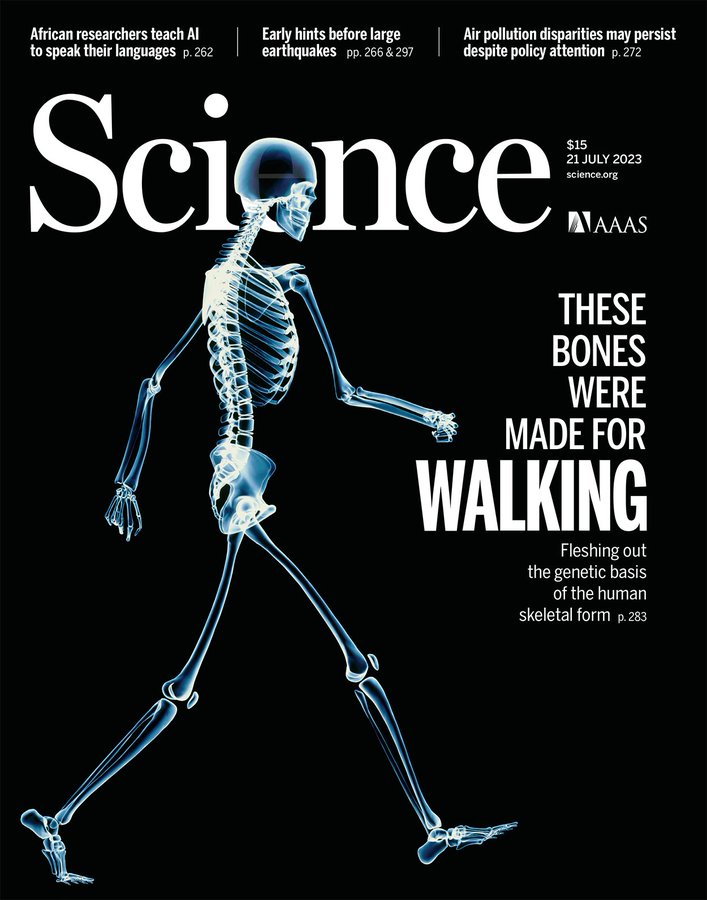
Science Magazine – July 21, 2023 issue: The cover depicts an x-ray of a human skeleton walking. Researchers extracted 23 skeletal proportions from 30,000 individuals using deep learning. Coupled with genetic and biobank data, more than 100 genetic variants associated with these proportions were identified. These analyses shed light on the evolution of the skeletal form, which facilitates bipedalism, and reveal connections to musculoskeletal disorders.

Hollywood movie aside, just how good a physicist was Oppenheimer?

A-bomb architect “was no Einstein,” historian says, but he did Nobel-level work on black holes

Deglaciation of northwestern Greenland during Marine Isotope Stage 11

‘Spectacular Landscapes’

8K VIDEOS HDR (March 18, 2023) – World’s Most Spectacular Landscapes in 8K UHD Video.

Video timeline: 00:0000:12 Intro 00:1300:47 Weisssee Lake, Austria 00:4801:06 Northern Lights, Sweden 01:0701:28 Pongour Falls, Vietnam 01:2901:55 Plitvice lakes, Croatia 01:5602:31 Antarctica 02:3203:00 Emosson Dam, Switzerland 03:0103:25 Iguazu Falls, Argentina/Brazil 03:2604:03 Lofoten Islands, Norway 04:0404:37 Patagonia, Chile 04:3805:06 Icebergs, Greenland 05:0705:46 Rainbow Mountain, Peru 05:4706:25 Yosemite, USA 06:2606:46 Raja Ampat islands, Indonesia 06:4707:07 Monument Valley, USA 07:0807:47 Etretat, France 07:4808:20 Vestrahorn Mountain, Iceland 08:2108:45 Karakoram Mountains, Pakistan 08:4609:20 Bora Bora, French Polynesia 09:2110:00 Ergaki Mountains, Russia 10:0110:20 Laguna de Canapa, Bolivia 10:2110:46 Transfagarasan Road, Romania 10:4711:15 Cumbre Vieja Volcano, Spain 11:1611:58 Eastern Sierra Mountains, USA 11:5912:28 Bariloche Lake District, Argentina 12:2913:08 Dolomites, Italy 13:0913:39 Grossglockner Road, Austria 13:4014:05 Aconcagua Mountain, Argentina 14:0614:59 Meteora, Greece 15:0015:20 Los Caracoles Road, Chile 15:2115:52 Grand Canyon, USA 15:5316:48 Faroe islands, Denmark 16:4917:49 Kamchatka, Russia 17:5018:09 Laguna del Inca, Chile 18:1018:40 Voidokilia Beach, Greece 18:4119:20 Llaima Volcano, Chile 19:2120:21 Tolbachik Volcano, Russia 20:2220:45 Hvannagil Estuary, Iceland 20:4621:18 Big Sur Coastline, USA 21:1921:44 Rago National Park, Norway 21:4522:12 Alpstein Mountain, Switzerland 22:1322:46 Outro

Science: 2 Million Year-Old DNA Unveils Ancient Greenland Landscape

Two million year-old DNA found in frozen soil has been sequenced, revealing a surprising picture of an ancient landscape. Extinct creatures including, unexpectedly, elephant-like mastadons turn out to be among the beasts roaming Greenland. Researcher Eske Willerslev explains how DNA found in the environment can be used to reconstruct the past as so-called ‘eDNA’ becomes a vital tool for palaeontologists.

Read the paper: https://www.nature.com/articles/s4158…

Science: 890 Million-Year-Old Sponge, Caffeinated Bees, Greenland Glaciers

Researchers debate whether an ancient fossil is the oldest animal yet discovered, and a new way to eavesdrop on glaciers.

In this episode:

01:04 Early sponge

This week in Nature, a researcher claims to have found a fossil sponge from 890-million-years-ago. If confirmed, this would be more than 300-million-years older than the earliest uncontested animal fossils but not all palaeontologists are convinced.

Research Article: Turner

10:13 Research Highlights

A caffeine buzz appears to improve bees’ memory, and reconstructing an Iron Age man’s final meal.

Research Highlight: A caffeine buzz gives bees flower power

Research Highlight: The guts of a ‘bog body’ reveal sacrificed man’s final meal

12:34 Eavesdropping on a glacier’s base

We hear about one researcher’s unorthodox attempt to listen in to the seismic-whisper at the foot of a Greenland glacier – a method that might reveal more about conditions under these enormous blocks of ice.

Research Article: Podolskiy et al.

Views: ‘Greenland’s Arctic Landscape’ (4K UHD Video)

Greenland is the world’s largest island, located between the Arctic and Atlantic oceans, east of the Canadian Arctic Archipelago. Like the Faroe Islands, it is an autonomous territory within the Kingdom of Denmark.

Arctic Journey: From Greenland To Alaska

Two film crews explore the spectacular wilderness of the Arctic. The people who live there face dramatic changes.

Part two takes viewers from East Greenland to Alaska. The region around the North Pole is one of the greatest and least-known wildernesses in the world – and it’s rapidly changing due to global warming. 350 people, most of them Inuit, live in Ittoqqortoormiit in Greenland. The nearest settlement is on neighboring Iceland. Almost 800 kilometers of Arctic Ocean separate the two islands. The film team accompanies an Inuit family through Scoresby Sound, a fjord system on the eastern coast of Greenland.

They travel hundreds of kilometers in small boats through pack ice, passing icebergs as high as skyscrapers. On the way they meet whalers who are hunting for narwhals in summer. In this Inuit culture, narwhal skin and polar bear goulash have ensured survival for thousands of years. Greenpeace and WWF activists want to stop whaling and polar bear hunting – but this poses a threat to the indigenous way of life on Greenland.

On the expedition through the world’s largest fjord system, the team learns about the consequences of global warming: melting permafrost and a rapid increase in greenhouse gases. The changes are worrying. Some say they have brought benefits to the far north — the ice breaks up earlier and so too does the hunting season. However, the risks outweigh this benefit. The knowledge and way of life that have been passed down from generation to generation may soon be unsustainable.

Travel Video: ‘Experience Ilulissat, Greenland’

Filmed and Edited by: Rob Whitworth

Experience Ilulissat, Greenland – Breathtakingly beautiful and unimaginable vast landscape. During the winter filming temperatures ranged between -25°C and -35°C (-13°F -31°F).

Ilulissat is a coastal town in western Greenland. It’s known for the Ilulissat Icefjord and for huge icebergs Disko Bay, shed by the Sermeq Kujalleq glacier. Trails run to the Sermermiut settlement for dramatic views over the ice. The Ilulissat Museum traces the area’s history and the life of local-born explorer Knud Rasmussen. The area is home to thousands of Greenland dogs, used for dogsledding.

Travel & Adventure: ‘Biking In Greenland’

Connected by a beautiful ring of light, traversing the fields of ice that form the majestic wilderness of Greenland is an experience like no other. Hard to reach, with an almost prehistoric terrain, and a climate that feels imagined for a novel—there is something both daring and challenging about the world’s largest island. But it poses a uniqueness, something strangely difficult to find in a world of global travel and instant messaging.

During the dim wintry months, these vast plains are stacked with three to five meters of snow. Not many people travel to these immense ice masses in January, even fewer to cycle across. But that is what Tobias Woggon and Philip Ruopp settled upon for their next adventure. In Nordic Cycle, Woggon explains that not many people who took their tour had experienced biking at minus 30 degrees. “I consulted our friend Max,” he explains, “who had been riding his bike in Lapland, Finland the year before and was already experienced with the necessary technology and knew how to handle the cold.”

Read more