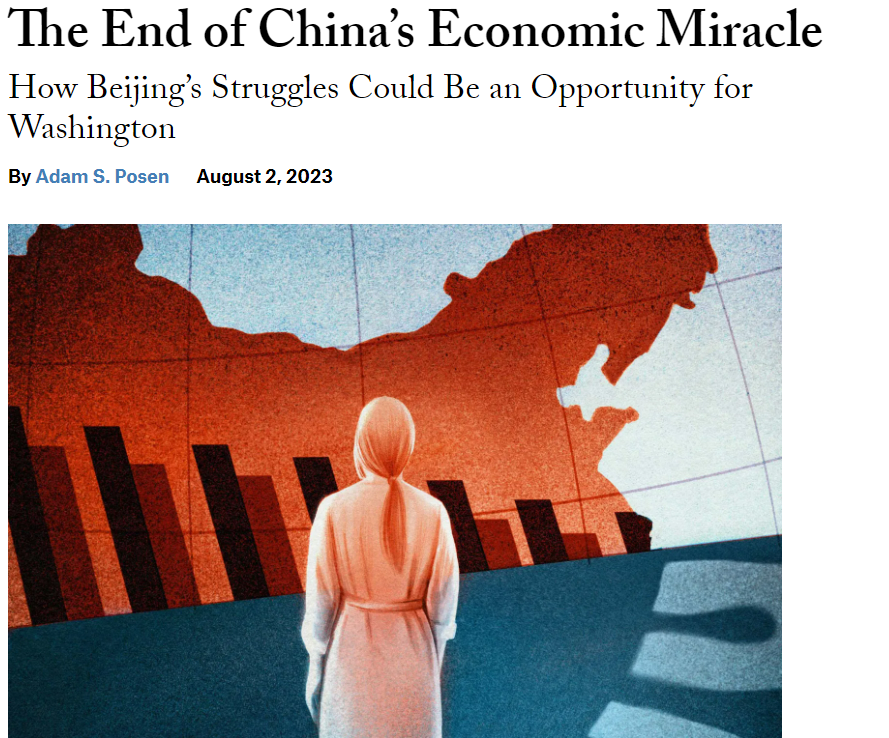
Foreign Affairs (August 2, 2023) – As 2022 came to an end, hopes were rising that China’s economy—and, consequently, the global economy—was poised for a surge. After three years of stringent restrictions on movement, mandatory mass testing, and interminable lockdowns, the Chinese government had suddenly decided to abandon its “zero COVID” policy, which had suppressed demand, hampered manufacturing, roiled supply lines, and produced the most significant slowdown that the country’s economy had seen since pro-market reforms began in the late 1970s.
Economic long COVID will likely plague the Chinese economy for years.
In the weeks following the policy change, global prices of oil, copper, and other commodities rose on expectations that Chinese demand would surge. In March, then Chinese Premier Li Keqiang announced a target for real GDP growth of around five percent, and many external analysts predicted it would go far higher.
There is good reason to be pessimistic about the prospects of Russia’s changing course under Putin. He has taken his country in a darker, more authoritarian direction, a turn intensified by the invasion of Ukraine.
In March, at the end of Chinese President Xi Jinping’s visit to Moscow, Russian President Vladimir Putin stood at the door of the Kremlin to bid his friend farewell. Xi told his Russian counterpart, “Right now, there are changes—the likes of which we haven’t seen for 100 years—and we are the ones driving these changes together.” Putin, smiling, responded, “I agree.”
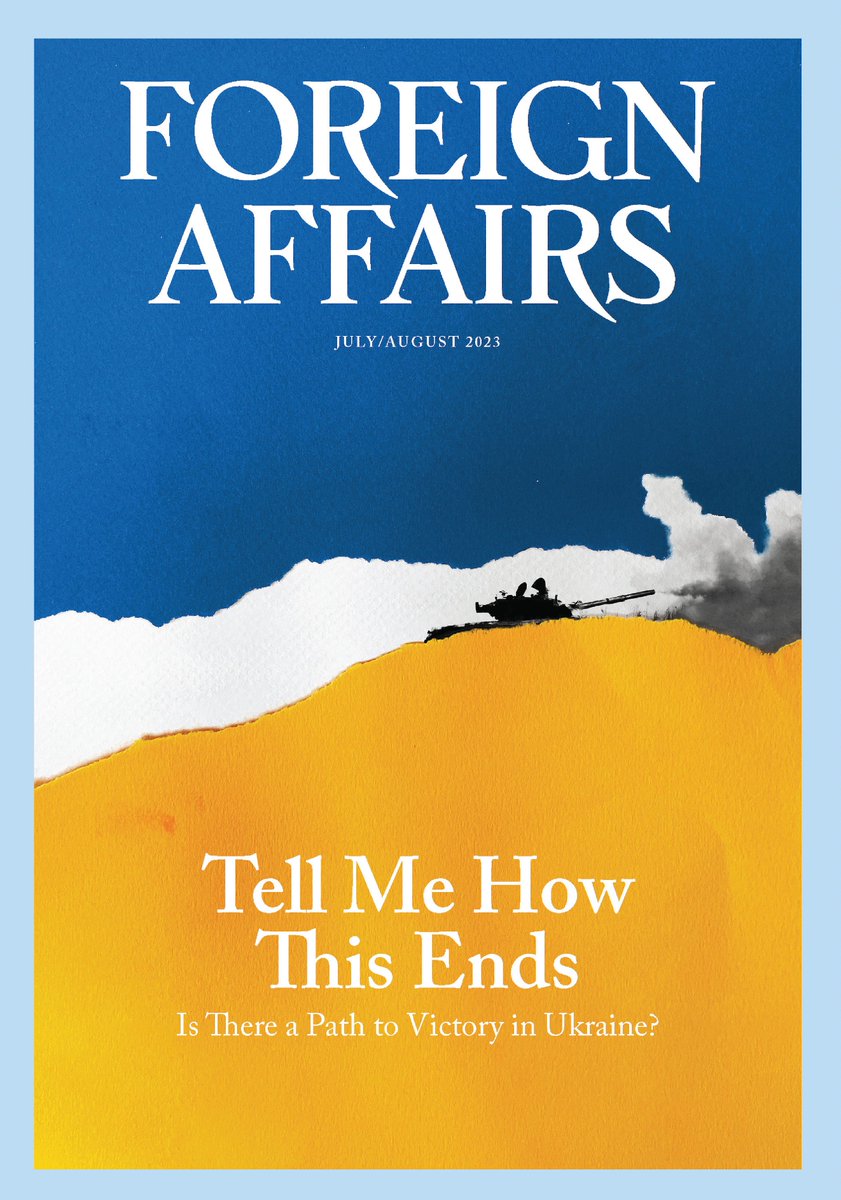
Russia’s invasion of Ukraine in February 2022 was a moment of clarity for the United States and its allies. An urgent mission was before them: to assist Ukraine as it countered Russian aggression and to punish Moscow for its transgressions. While the Western response was clear from the start, the objective—the endgame of this war—has been nebulous.
Why an Armistice Offers the Best Hope for Peace in Ukraine
In the middle of August 1952, Chinese Premier Zhou Enlai traveled nearly 4,000 miles to Moscow to meet with the Soviet dictator Joseph Stalin… The two Communist powers were allies at the time, but it was not a partnership of equals: the Soviet Union was a superpower, and China depended on it for economic assistance and military equipment.
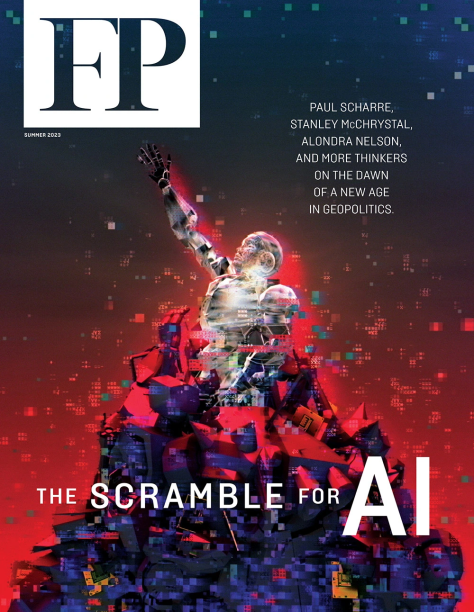
Foreign Policy Magazine – Summer 2023: Artificial intelligence is suddenly everywhere. It seems as though no conversation about jobs, education, health care, technology, or politics happens without an inevitable question about how AI could disrupt it all.
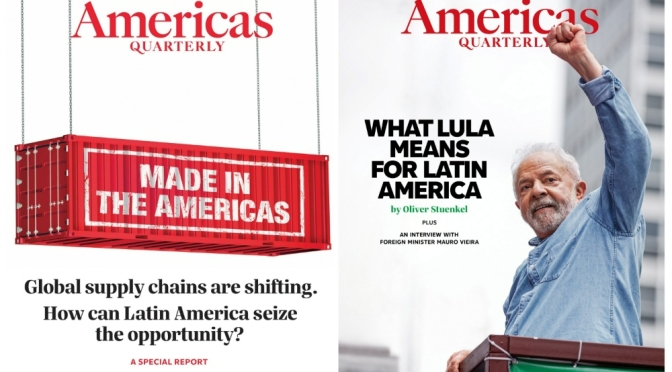
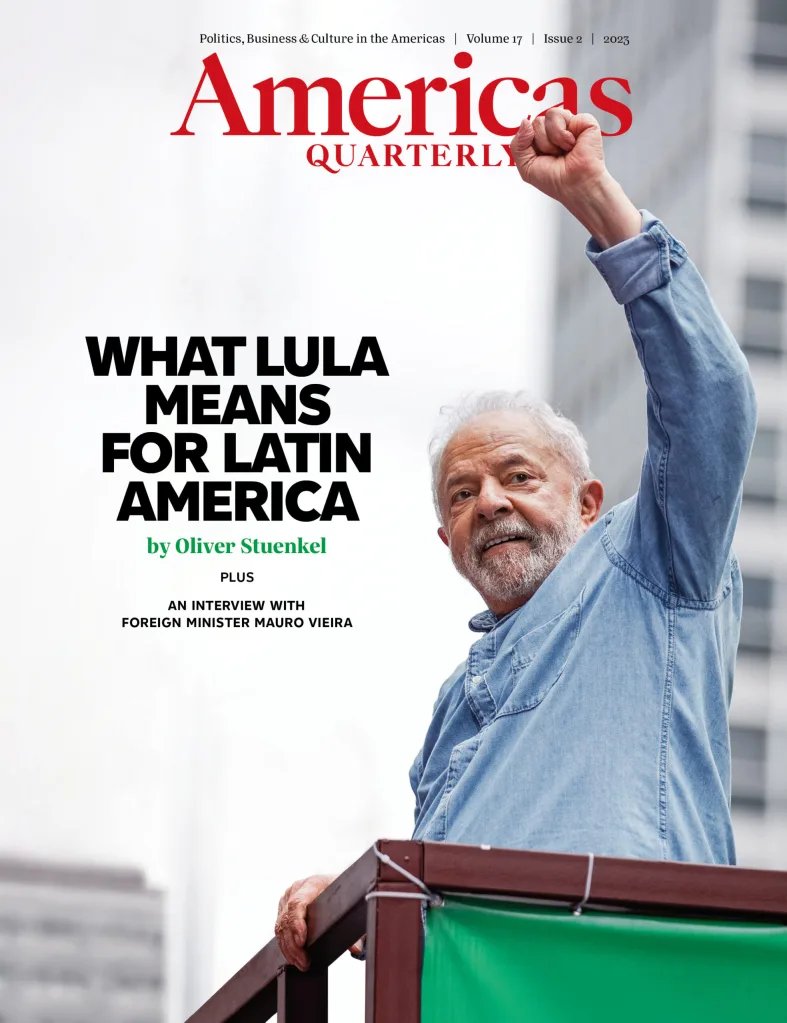
Americas Quarterly (Spring 2023) – Love him or not, the return of Luiz Inácio Lula da Silva is a watershed moment not just for Brazil, but Latin America as a whole. The 77-year-old is “the region’s only diplomatic heavy hitter and the most globally visible Latin American leader of his generation,” writes Oliver Stuenkel in this issue’s cover story.
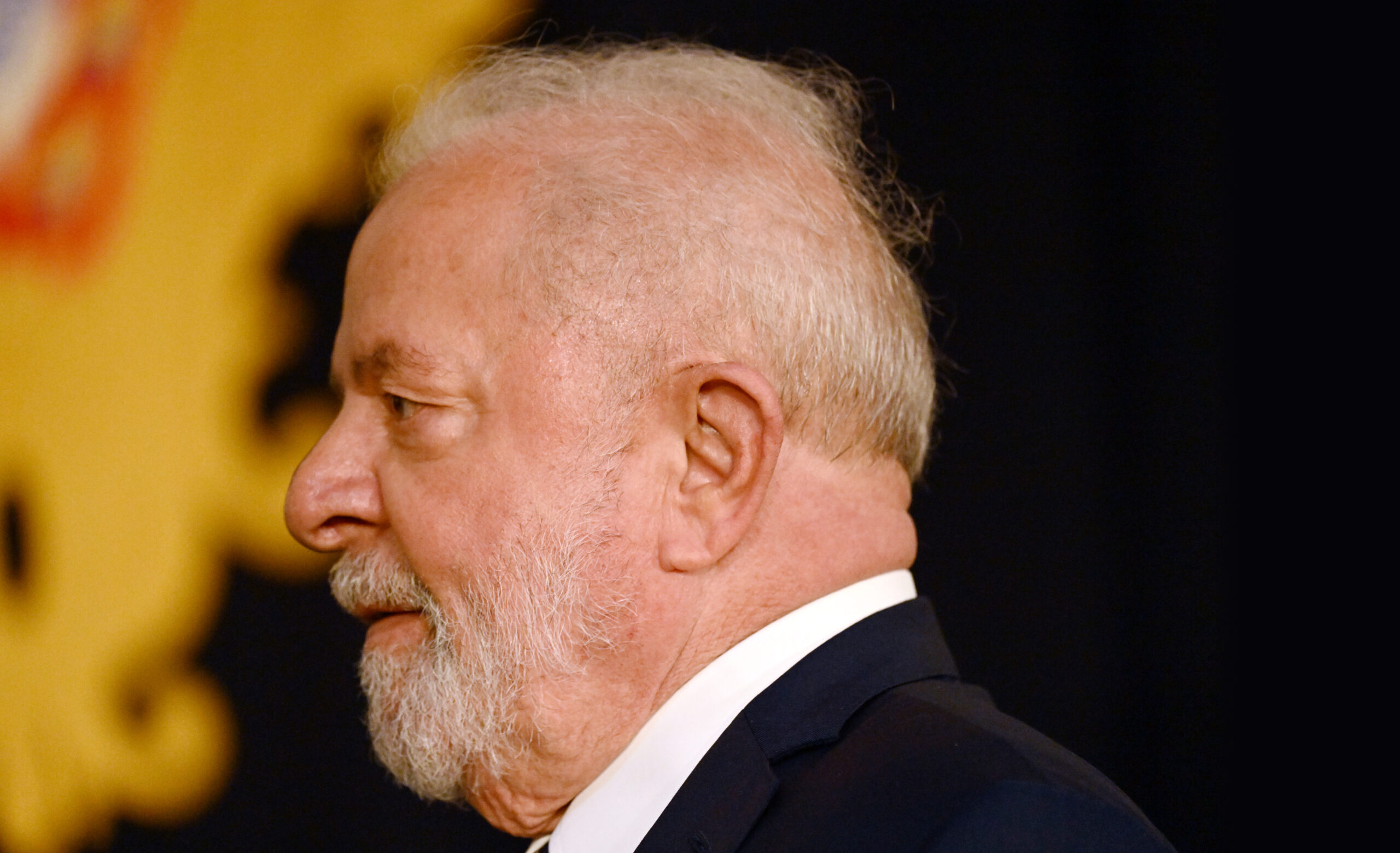
Brazil’s President Luiz Inácio Lula da Silva during a visit to Portugal in April.
A diplomatic heavy hitter is back at the helm of Latin America’s largest country—but the path to an influential international role is full of obstacles.
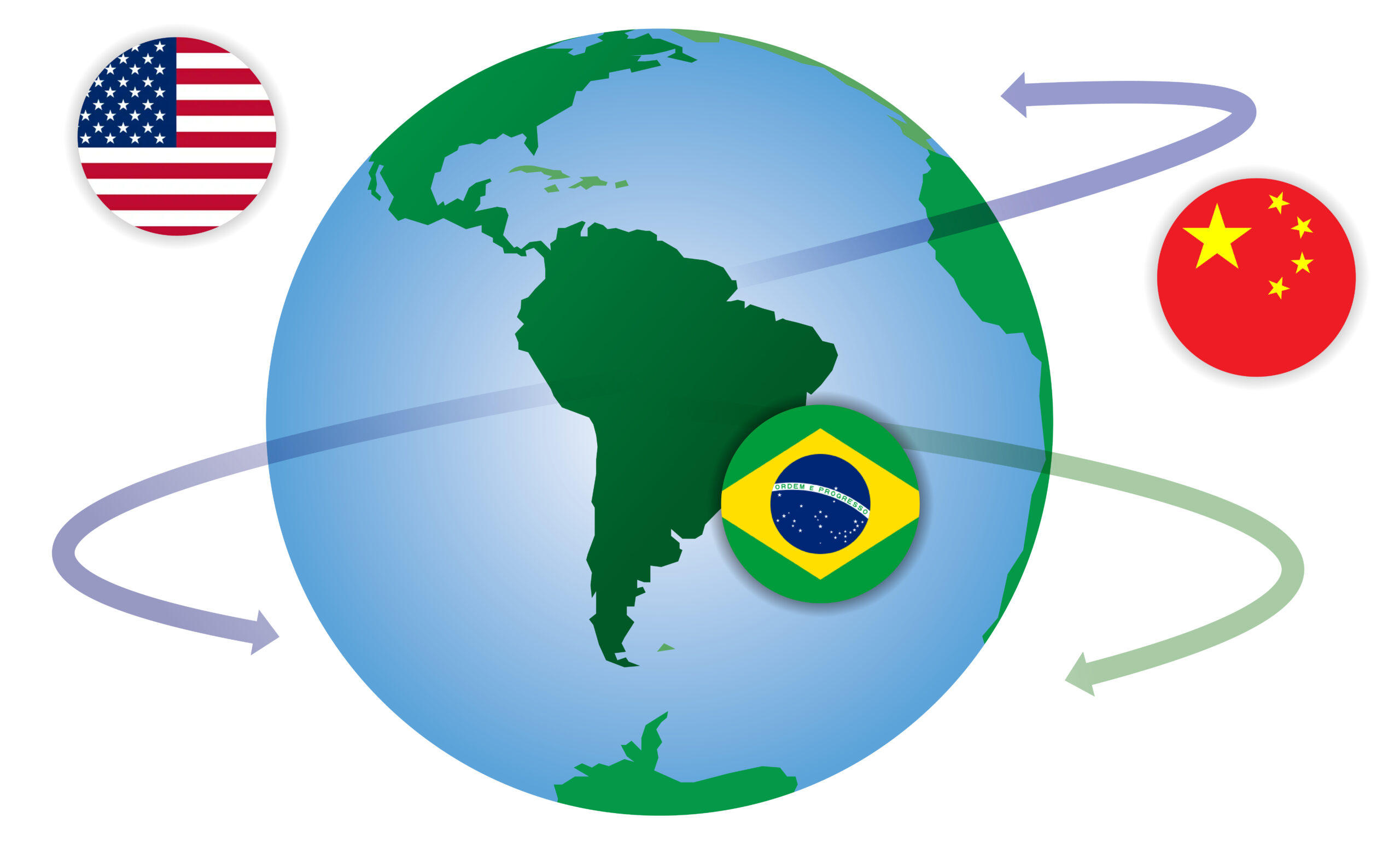
AQ tracks priorities in external relations, including positions on Venezuela and China, in eight countries.
Amid growing tensions between the world’s largest superpowers, much of Latin America has taken an independent approach to foreign relations. Countries are increasingly following a path that Chilean scholars Carlos Fortin, Jorge Heine and Carlos Ominami titled the “active non-alignment option.” Regional integration is a top concern for some leaders, while others are seeking engagement far beyond the Western Hemisphere. Meanwhile, policy choices have to contend with domestic infrastructure challenges and a global concern with the impacts of climate change.
The Economist (April 18, 2023) – The outbreak of violence in Sudan isn’t an anomaly; the world’s civil wars are growing longer and deadlier. Robert Guest, The Economist’s deputy editor, explains why.
Video timeline:00:00 – Civil wars are getting longer 00:58 – Complexity 02:14 – Criminality 03:12 – Climate change 04:52 – The road to peace?
As countries in the global South refuse to take a side in the war in Ukraine, many in the West are struggling to understand why. Some speculate that these countries have opted for neutrality out of economic interest. Others see ideological alignments with Moscow and Beijing behind their unwillingness to take a stand—or even a lack of morals. But the behavior of large developing countries can be explained by something much simpler: the desire to avoid being trampled in a brawl among China, Russia, and the United States.
For China, Russia, and the West, the last year has been one of fear and conflict. Russia’s invasion of Ukraine has killed tens of thousands, perhaps even hundreds of thousands, of people. It has prompted the United States and Europe to rearm and has pushed Moscow and Washington back into Cold War–style competition.
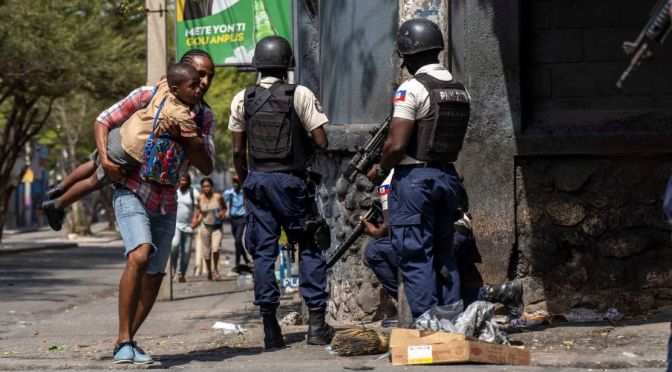
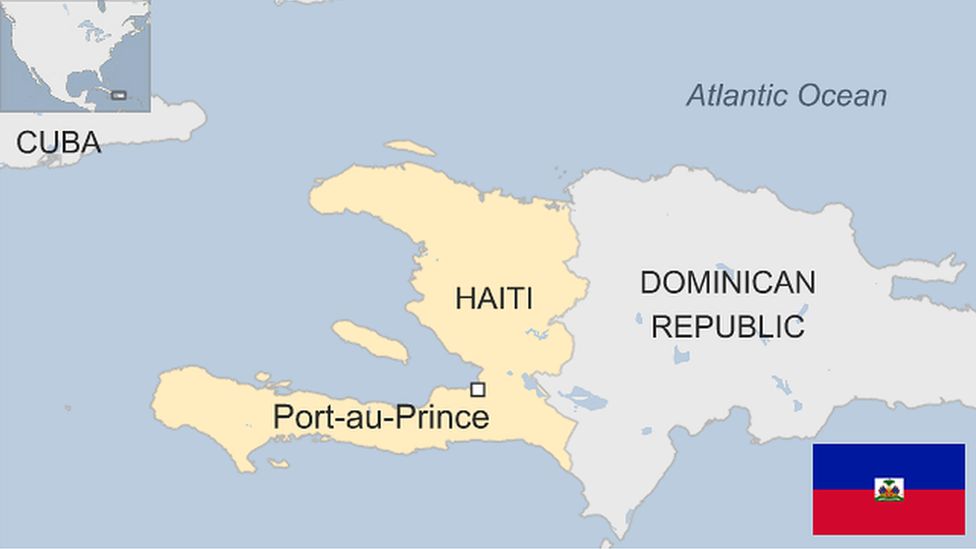
FRANCE 24 (April 5, 2023) – The security situation in Haiti has spiralled out of control since the shock assassination of President Jovenel Moise in July 2021, with the country increasingly beset by violence. Today, unrest has reached such levels that the United Nations is being urged to intervene and there has been a total breakdown of governance.
The country is increasingly at the mercy of criminal gangs and half of the population struggles to find food. FRANCE 24’s team travelled to Port-au-Prince, the Haitian capital, before gangs took full control of the city. They met a writer, a street vendor and a food importer, as well as residents trying to flee abroad.
Haiti is a Caribbean country that shares the island of Hispaniola with the Dominican Republic to its east. Though it’s still recovering from a 2010 earthquake, many of Haiti’s landmarks dating to the early 19th century remain intact. These include Citadelle la Ferrière, a mountaintop fortress, and the nearby ruins of Sans-Souci Palace, the baroque former royal home of King Henry I.






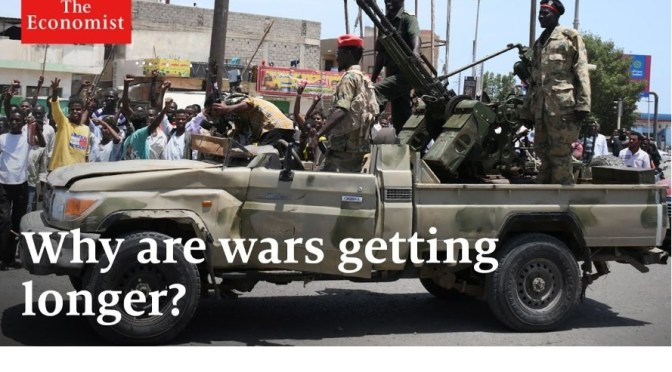
 The Economist (April 18, 2023) – The outbreak of violence in Sudan isn’t an anomaly; the world’s civil wars are growing longer and deadlier. Robert Guest, The Economist’s deputy editor, explains why.








 Boomers Daily