
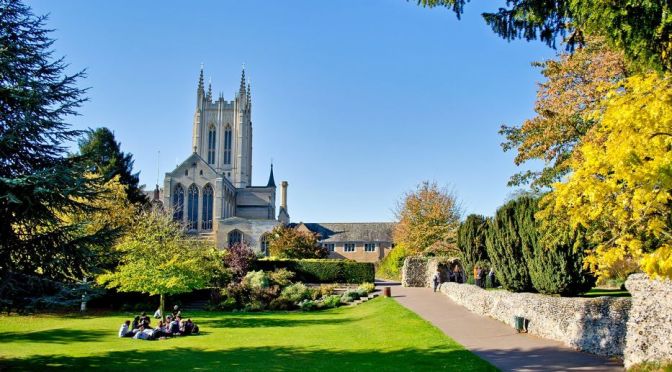
Bury St Edmunds, commonly referred to locally as Bury, is a historic market, cathedral town and civil parish in Suffolk, England. Bury St Edmunds Abbey is near the town centre. Bury is the seat of the Diocese of St Edmundsbury and Ipswich of the Church of England, with the episcopal see at St Edmundsbury Cathedral.
Tag Archives: England
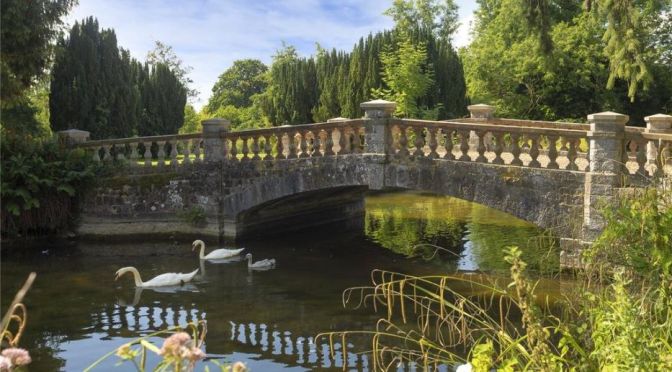
English Country Houses: Ancient ‘Hunton Court’ Near Maidstone In Kent
Hunton Court is an ancient house hiding behind a breathtaking Georgian facade, and all set in a truly beautiful corner of Kent.
Take a quick look at Hunton Court — near Maidstone, in Kent — and you’d immediately mark it down as an 18th century country house. Yet its true origins lie many centuries earlier: it’s a building that hides its timbered origins behind a Georgian look.
The house, once known as Court Lodge, had a turbulent history: first built in the 13th century and part of an estate that had belonged to the Canterbury’s Christ Church Priory, it was handed to Sir Thomas Wyatt, Henry VIII’s High Sheriff for Kent, after the Dissolution of Monasteries.

North Sea Coast Views: Scarborough, England
Scarborough is a resort town on England’s North Sea coast. Its 2 bays with sandy beaches are split by a headland bearing the 12th-century Scarborough Castle. The Victorian Central Tramway funicular train links the town centre with South Bay and its harbour. The Rotunda Museum explores local coastal geology. Scarborough SEA LIFE Sanctuary’s marine displays and the Peasholm Park Japanese gardens are behind North Bay.
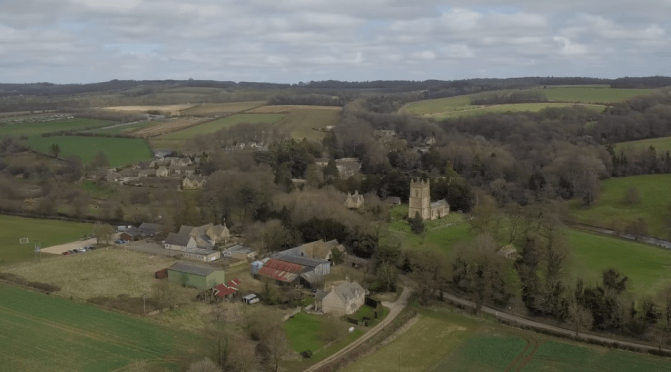
Cotswolds View: History Of Temple Guiting (4K)
Temple Guiting is a few miles away from Guiting Power, and has a wonderfully grand church with historical connections to the Knights Templar. The Knights Templar were a Holy Order that many associate with the Crusades. The village is another spectacular hidden gem, a classic English village.
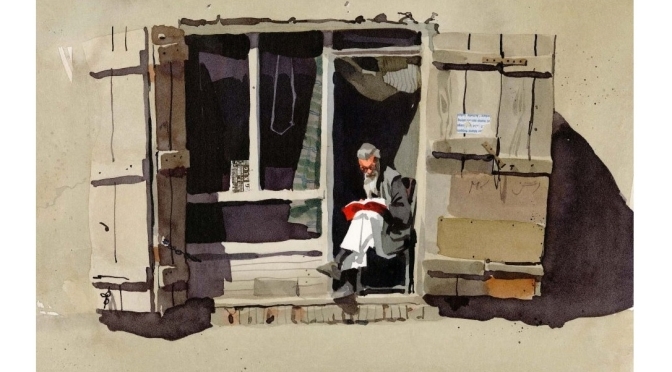
Views: British Illustrator Matt Cook’s ‘Storefronts’
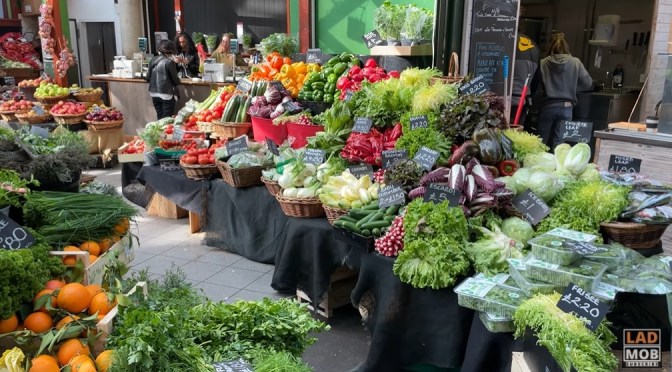
Walking Tours: Borough Market In London (4K)
Borough Market is a wholesale and retail market hall in Southwark, London, England. It is one of the largest and oldest food markets in London, with a market on the site dating back to at least the 12th century.

Tudor Architecture: A History Of 16th Century English Great Houses
Country Life’s architecture editor John Goodall looks at the architecture of the Tudor home.
In April 1521, Edward Stafford, 3rd Duke of Buckingham, was urgently summoned from his seat at Thornbury, Gloucestershire, to appear before Henry VIII. The Duke could reasonably claim by birth to be the outstanding nobleman of his generation, boasting descent from Edward III and—arguably—possessed of a better claim to the throne than the Tudors.
He played the role of a great nobleman with proud perfection, both at home and in such public events as Henry VIII’s meeting with Francis I of France on the Field of Cloth of Gold, where he jousted and appeared in costume of fabulous expense. His birth and magnificence, however, also made him vulnerable to Court intrigue.

Previews: Cheshire Life Magazine – April 2022

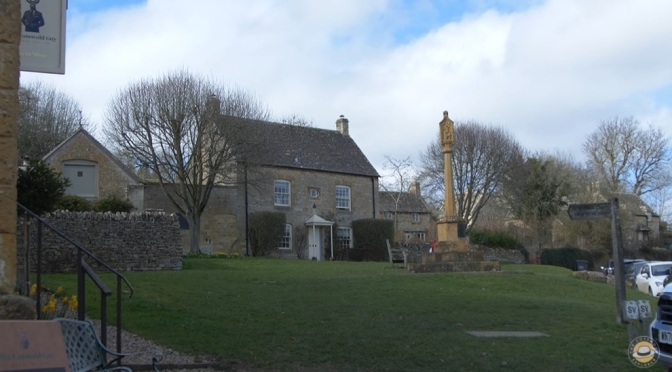
Exploring The Cotswolds: History Of Guiting Power
Guiting Power is one of the more famous hidden gems in the Cotswolds, nestling quietly in the English countryside.
The typical Cotswolds village of Guiting Power lies on a tributory of the river Windrush, its russet-coloured houses clustered round a sloping green. The buildings are restored by a self-help housing trust, initially set up for twelve cottages in 1934.
This delightful village is a fascinating example of the unconscious harmony created by Cotswold masons over the centuries. The cottages, shops and inns are all beautifully cared for. The Farmers Arms in the village and the Hollow Bottom Inn on the road leading to Winchcombe form welcome breaks on a number of glorious walks that can be taken in this area – north-westwards to Guiting Woods, south-eastwards down the Windrush Valley to Naunton, or south-westwards to Hawling.

Walks: Torquay In Devon, Southwest England (4K)
Torquay is a seaside resort town on the English Channel in Devon, south west England. Known for beaches such as Babbacombe and cliffside Oddicombe, its coastline is nicknamed the English Riviera. Torquay Harbour near the town centre offers shops, cafes and a marina. Torre Abbey, a monastery founded in 1196, has art galleries and extensive gardens featuring plants from local writer Agatha Christie’s novels.
 Boomers Daily