The FDA has approved the emergency use of Pfizer’s antiviral COVID pill. The House Select Committee investigating the January 6 insurrection at the Capitol wants to question Representative Jim Jordan.
And, the world is watching President Vladimir Putin’s annual year-end press conference a little closer this year as tensions rise on the border with Ukraine.
A selection of three essential articles read aloud from the Christmas double issue of The Economist. This week: has the new normal already arrived? Plus, meet the lords of the metaverse (10:10) and, a century apart, two men with very different dreams contend for Europe’s future (17:50).
A selection of three essential articles read aloud from the latest issue of The Economist. This week: what the Omicron variant means for the world economy, what experiments with “free banking” in the 18th and 19th centuries reveal about the future of stablecoins (10:53) and how the legacy of Stalin’s gulag continues to shape Russian fortunes (18:16).
We discuss whether Omicron will exacerbate global vaccine inequality and the controversy surrounding a presidential contender in the Philippines. Plus: why are Japanese workers dreading the office Christmas party?
The B.1.1.529 variant was first reported to WHO from South Africa on 24 November 2021. The epidemiological situation in South Africa has been characterized by three distinct peaks in reported cases, the latest of which was predominantly the Delta variant. In recent weeks, infections have increased steeply, coinciding with the detection of B.1.1.529 variant. The first known confirmed B.1.1.529 infection was from a specimen collected on 9 November 2021.
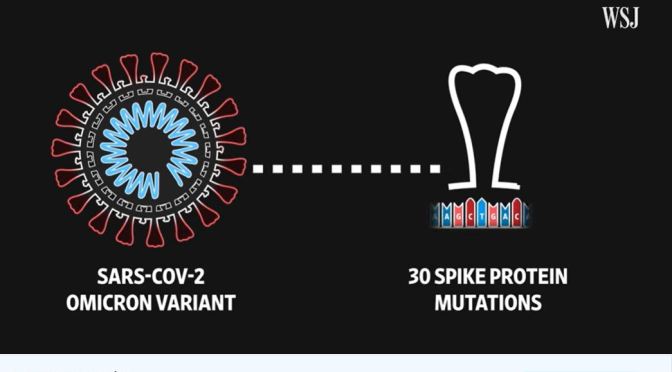
This variant has a large number of mutations, some of which are concerning. Preliminary evidence suggests an increased risk of reinfection with this variant, as compared to other VOCs. The number of cases of this variant appears to be increasing in almost all provinces in South Africa. Current SARS-CoV-2 PCR diagnostics continue to detect this variant. Several labs have indicated that for one widely used PCR test, one of the three target genes is not detected (called S gene dropout or S gene target failure) and this test can therefore be used as marker for this variant, pending sequencing confirmation. Using this approach, this variant has been detected at faster rates than previous surges in infection, suggesting that this variant may have a growth advantage.
The World Health Organization evaluates a new COVID-19 variant, while the delta strain surges in other countries. Diplomats trying to revive a nuclear deal with Iran face new demands and a harder line from Tehran.







 Boomers Daily