
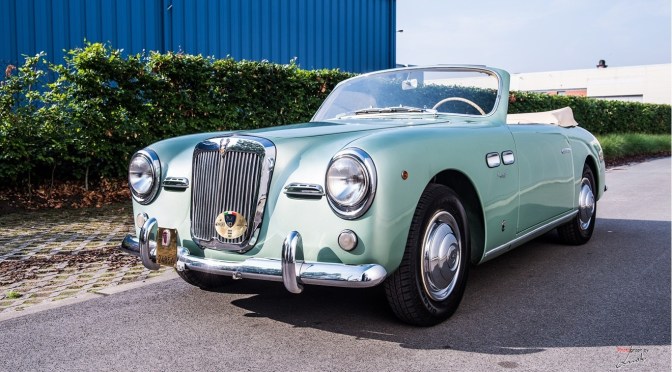
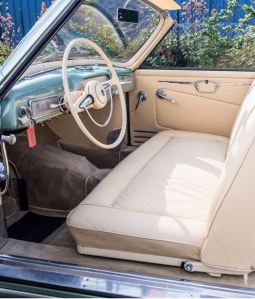
 The Siata Daina is an Italian car produced by Siata from 1950-1958. The Daina was available as a coupé or a convertible and had custom bodies by Stabilimenti Farina, Bertone and other coach builders.
From 1950 to 1958 there were approximately 50 Daina Series cars produced. However, only a few of the Series were produced after 1953. About 20 Daina Sport (coupes) are thought to have been built, only six are known to exist today. A cabriolet version called the Gran Sport comprised most of the Daina Series cars. The Gran Sport had a steel body with an aluminum hood designed by Stabilimenti Farina (3 all aluminum bodied Gran Sports 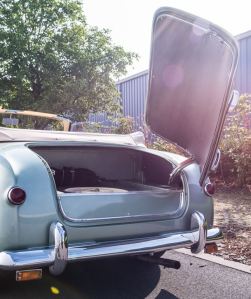 were made as well) but when they closed in 1953, Bertone took over production with a coupe model of their own design called the “Sport”.
The most well known Dainas were the Gran Sport (convertible) versions used in racing, with many calling it the “little Ferrari”. The car was built to take part in the International Grand Prix and the Mille Miglia. The Daina’s most notable finish was at the 12 Hours of Sebring in 1952 when Dick Irish and Bob Fergus piloted a 1,500 cc Daina Gran Sport to first in class and third overall.
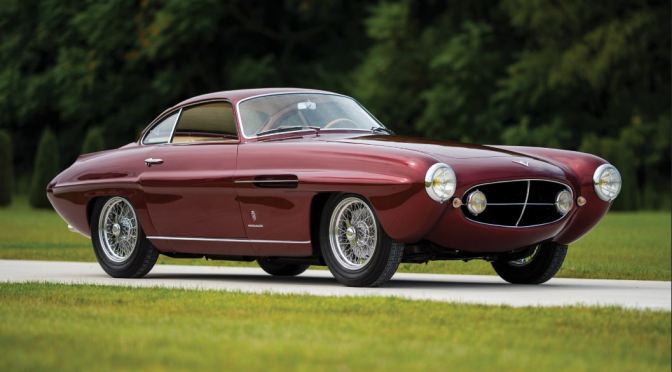
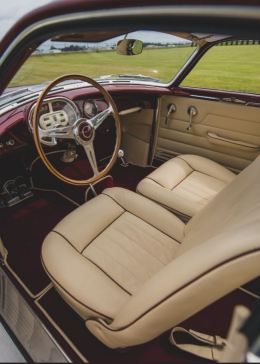 The Fiat 8V (or “Otto Vu”) is a V8-engined sports car produced by the Italian car manufacturer Fiat from 1952 to 1954. The car was introduced at the 1952 Geneva Motor Show. The Fiat 8V got its name because at the time of its making, Fiat believed Ford had a copyright on “V8”. With 114 made, the 8V wasn’t a commercial success, but did well in racing. Apart from the differential the car did not share any parts with the other Fiats (but many parts were made by Siata and they used them for their cars). The 8V was developed by Dante Giacosa and the stylist Luigi Rapi. The engine was a V8 originally designed for a luxury sedan, but that project was stopped.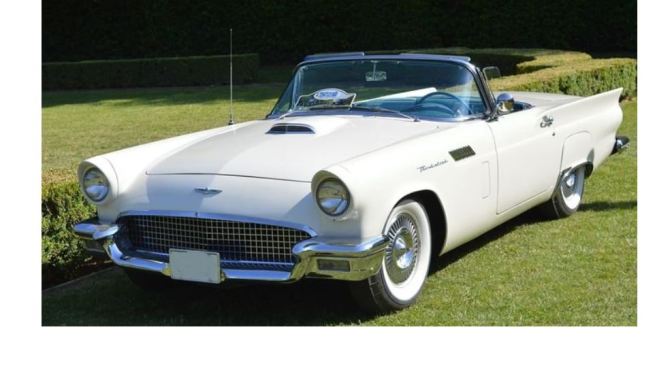
 Ford Thunderbird (colloquially called the T-Bird) is a nameplate that was used by Ford from model years 1955 to 1997 and 2002 to 2005 over eleven model generations. Introduced as a two-seat convertible, the Thunderbird was produced in a number of body configurations through its production life, including four-seat hardtop coupe, four-seat convertible, five-seat convertible and hardtop, four-door pillared hardtop sedan, six-passenger hardtop coupe, and five passenger pillared coupe, with the final generation produced as a two-seat convertible.
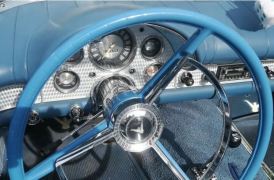
 The Thunderbird was revised for 1957 with a reshaped front bumper, a larger grille and tailfins, and larger tail lamps. The instrument panel was heavily re-styled with round gauges in a single pod, and the rear of the car was lengthened, allowing the spare tire to be positioned back in the trunk. The 312 cu in (5.1 L) V8 became the Thunderbird’s standard engine, and now produced 245 horsepower (183 kW). Other, even more powerful versions of the 312 cu in (5.1 L) V8 were available including one with two four-barrel Holley carburetors and another with a Paxton supercharger delivering 300 horsepower (220 kW). Though Ford was pleased to see sales of the Thunderbird rise to a record-breaking 21,380 units for 1957, company executives felt the car could do even better, leading to a substantial redesign of the car for 1958.


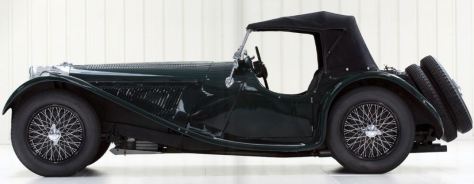
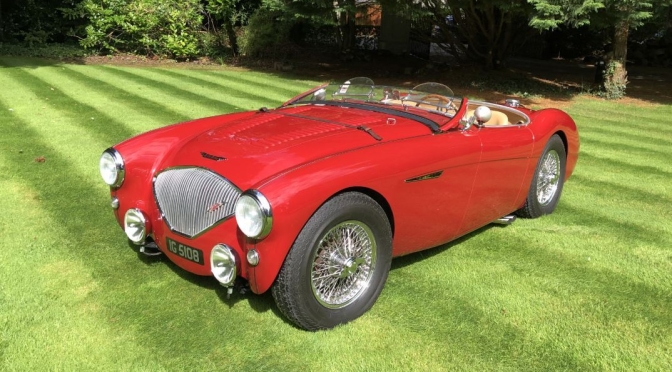
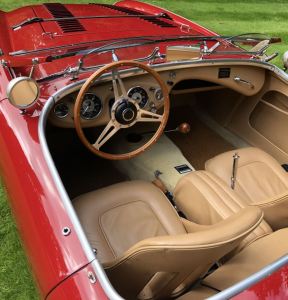 The Austin-Healey 100 is a sports car that was built by
  Lord struck a deal with Healey to build it in quantity; bodies made by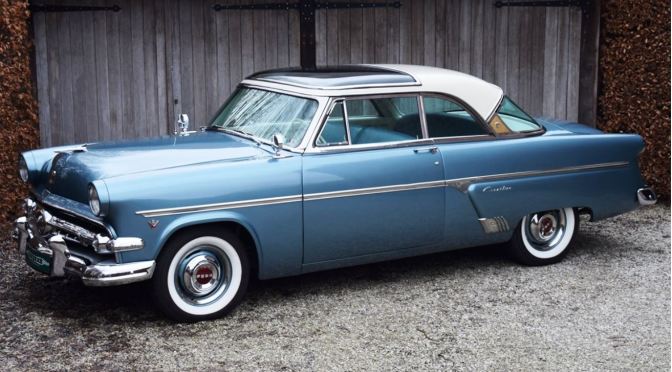
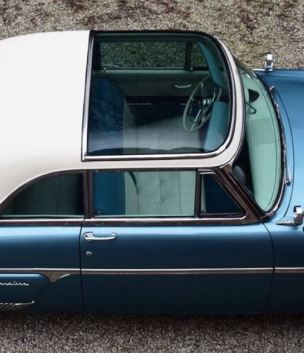 In 1954, Ford added a new niche model to the top-of-the-line Crestline series : the Skyliner. The car had a glass roof section over the front seats, made of blue-green tinted acrylic and letting a diffused yet filtered light through. Ford claimed that 60% of the sunrays were filtered out.
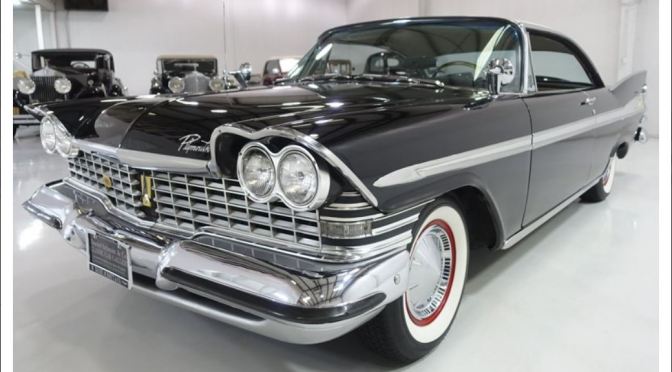
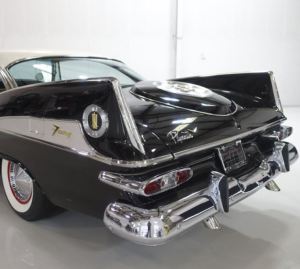 In 1959, Plymouth introduced the Sport Fury as its top model, and the Fury as its second from the top model to replace the Plymouth Belvedere at the top of the Plymouth line-up. The Fury range was now available as a four-door sedan and station wagon, as well as a two-door hardtop and sedan. The Sport Fury series had only a two-door hardtop and convertible. The Sport Fury was dropped at the end of 1959, but was reintroduced in mid-1962 and discontinued in 1971.
 The Plymouth Fury is a model of automobile which was produced by Plymouth from 1955 to 1989. It was introduced for the 1956 model year as a sub-series of the Plymouth Belvedere, becoming a separate series one level above the contemporary Belvedere for 1959. The Fury was a full-size car from 1959 to 1961, then a mid-size car from 1962 to 1964, again a full-size car from 1965 to 1974, and again a mid-size car from 1975 to 1978. From 1975 to 1977 the Fury was sold alongside the full-size Plymouth Gran Fury.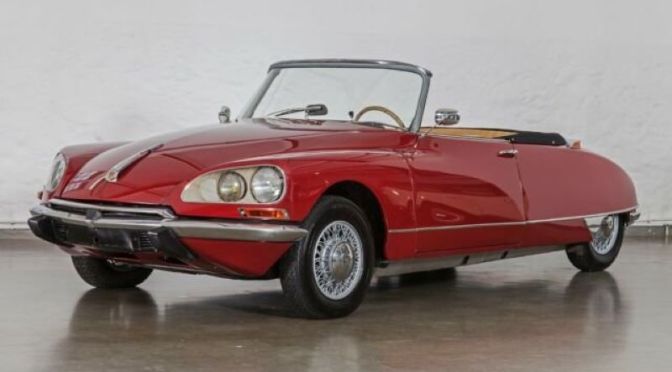
 The Citroën DS is a front-engine, front-wheel-drive executive car that was manufactured and marketed by the French company Citroën from 1955 to 1975 in sedan, wagon/estate and convertible body configurations across three series/generations.
 the hydropneumatic self-levelling suspension. Citroën sold 1,455,746 examples, including 1,330,755 manufactured at the manufacturer’s Paris Quai André-Citroën production plant.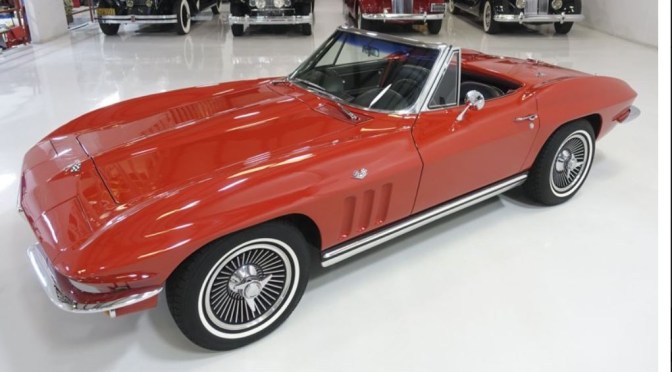
 For its third season, the 1965 Corvette Sting Ray further cleaned up style-wise and was muscled up with the addition of an all-new braking system and larger powerplants. 1965 styling alterations were subtle, confined to a smoothed-out hood now devoid of scoop indentations, a trio of working vertical exhaust vents in the front fenders that replaced the previous nonfunctional horizontal “speedlines,” restyled wheel covers and rocker-panel moldings, and minor interior trim revisions. The 1965 Corvette Sting Ray became ferocious with the mid-year debut of the
  1965 also added another 350 hp small block engine (Option L79) which used hydraulic rather than solid lifters, a milder camshaft and a modestly redesigned smaller oil pan.
 Boomers Daily