Monocle on Saturday, February 10, 2024: Will China’s economy recover during the Year of the Dragon? What is the UK’s new tech that could control the weather?
And how is the ‘Bayeux Tapestry’ being updated? Join Georgina Godwin and David Bodanis for a round-up of the week’s news and culture. Plus: the owner of The Steam Room, Tony Chung, joins us to talk about his collaboration with Ai Weiwei and Avant Arte for the Lunar New Year.
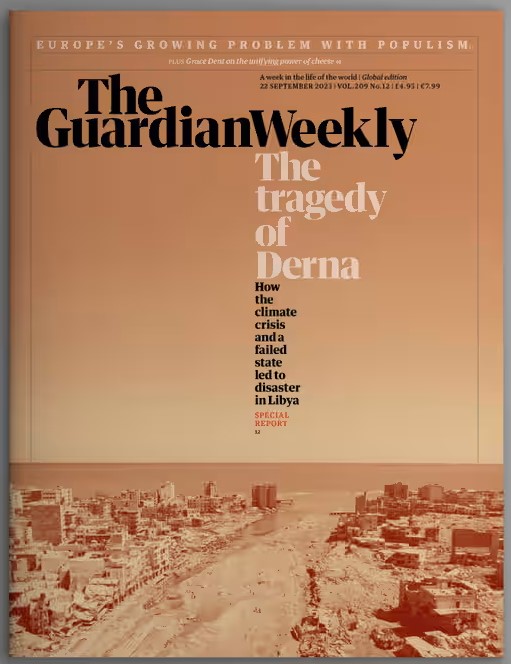
Two separate natural disasters in north Africa have dominated the news recently. But Moroccan emergency responses to an earthquake that killed about 3,000 people seemed rapid and efficient in contrast to the chaos at the deluged Libyan port of Derna, where many thousands more lost their lives after the town was deluged following a double dam burst caused by Storm Daniel.
While logistical and administrative challenges have made access to Derna incredibly difficult, Observer reporter Kaamil Ahmed has gathered the testimonies of several local Libyan journalists who witnessed scenes they are still struggling to process. Diplomatic editor Patrick Wintour explains why the disaster can be seen as a culmination of the climate crisis descending upon a failed state, while Rupert Neate and Peter Beaumont discuss the differing responses to the two situations.
From Europe, Jon Henley previews three upcoming electionsthat could have profound consequences for the region’s political future. Indeed, as the Guardian launches a new Europe-focused digital edition, editor-in-chief Katharine Viner outlines why now is the right time for us to expand our reporting across the continent.
Desperate searches for survivors continued in Morocco’s Atlas mountains after last Friday’s 6.8-magnitude earthquake, which killed thousands of people. Peter Beaumont reports from remote villages devastated by the country’s deadliest quake in six decades.
A worse disaster still appeared to be unfolding further along the north African coast in Libya, where up to 10,000 people were feared missing after flooding caused by the collapse of two dams. Details were only just emerging at the time of the Weekly going to press on Tuesday, but you can find the latest updates here.
First there were the bewildering DNA test results, then the long-forgotten fertility blog. Jenny Kleeman tells the remarkable tale of a discovery that would change the lives of two American families for ever.
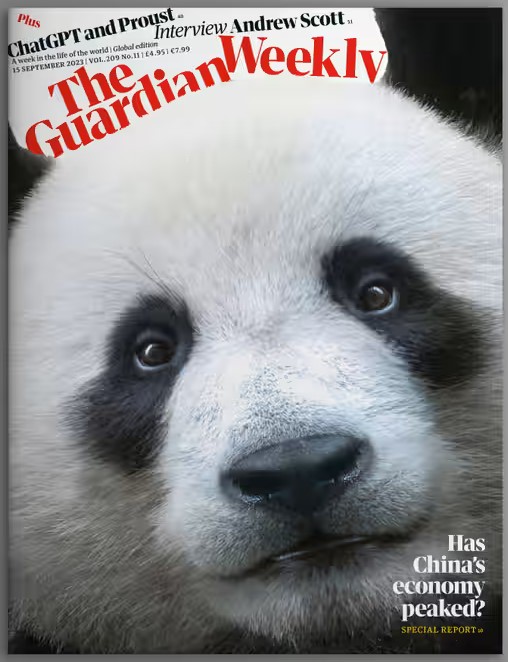
Also in Features is American author Elif Batuman’s entertaining account of what happened when she asked the AI chatbot ChatGPT for assistance with a quote from Proust, leading her down a digital rabbit hole she never could have foreseen.
The Globalist Podcast (September 5, 2023) – Who is Ukraine’s new defence minister, Rustem Umerov? Monocle’s Kyiv correspondent, Olga Tokariuk, profiles the Crimean Tatar with experience in Russian negotiations.
Plus: US officials visit Saudi Arabia to discuss Palestine, Olaf Scholz’s government slumps in the polls and we review the latest Indian newspapers.
The Globalist Podcast (September 4, 2023) –Turkey’s president, Recep Tayyip Erdogan, meets with Vladimir Putin in Sochi to discuss grain deals, we get the lowdown on the Chinese economy with Patricia Thornton and Mexico’s opposition selects a female candidate with Indigenous roots to run for office.
Plus: France debates the height of ceilings, we get a roundup of news from the Nordics with Helsinki correspondent Petri Burtsoff and we check in with Seattle’s Bumbershoot festival.
‘Editor’s Picks’ Podcast (August 28, 2023) – Three essential articles read aloud from the The Economist. This week, why China’s economy won’t be fixed, America’s corporate giants are fighting back against disrupters (10:15) and the challenge of making wine in Palestine (21:50).
The Globalist Podcast, Thursday, August 17: How will Hawaii get back on its feet following treacherous wildfires?
Plus: the significance of South Africa’s meeting on the ‘moonshot pact’, why China’s economy is struggling and swimmers plunge into the Seine for the first time since 1923.
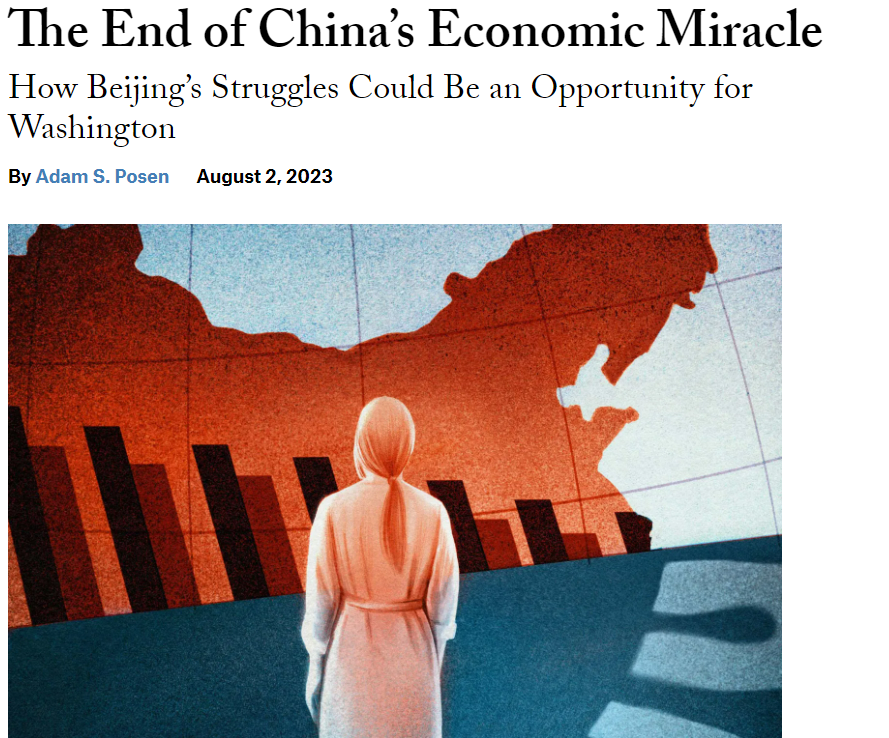
Foreign Affairs (August 2, 2023) – As 2022 came to an end, hopes were rising that China’s economy—and, consequently, the global economy—was poised for a surge. After three years of stringent restrictions on movement, mandatory mass testing, and interminable lockdowns, the Chinese government had suddenly decided to abandon its “zero COVID” policy, which had suppressed demand, hampered manufacturing, roiled supply lines, and produced the most significant slowdown that the country’s economy had seen since pro-market reforms began in the late 1970s.
Economic long COVID will likely plague the Chinese economy for years.
In the weeks following the policy change, global prices of oil, copper, and other commodities rose on expectations that Chinese demand would surge. In March, then Chinese Premier Li Keqiang announced a target for real GDP growth of around five percent, and many external analysts predicted it would go far higher.
The latest on China’s economic agenda as loosening coronavirus rules are leading to rising infection rates. Plus: the Biden administration looks to reassert US influence in Africa, first-ever summit between the leaders of EU and Asean member states, and Andrew Mueller with What We Learned.
A.M. Edition for Aug. 15. Ukraine’s battlefield defense against Russia may be gradually strengthening, but the country is facing a widening financial shortfall.
WSJ reporter Marcus Walker says Kyiv has been forced to print money to cover the cost of fighting Russia’s invasion, which has pummeled Ukraine’s economy. Luke Vargas hosts.
News, Views and Reviews For The Intellectually Curious




 Boomers Daily