Tag Archives: Books

Arts/Books: Times Literary Supplement – Dec 22, 2023

Image

Times Literary Supplement (December 20, 2023): The latest issue features ‘A nice little earner’ – On Dicken’s Christmas Carol; Jane Austen’s Truth Universally Acknowledged; Between God and Jingle Bells; and ‘Revoltingly Cute’…

Reviews: Best Books On Foreign Affairs For 2023

Foreign Affairs Magazine (December 17, 2023) – The Best of Books 2023 – This Year’s Top Picks From Foreign Affairs’ Reviewers

Against the World: Anti-Globalism and Mass Politics Between the World War

by Tara Zahra

In a timely and thought-provoking book, Zahra delves into the tumultuous years between World War I and World War II to argue that it was resistance to globalism and globalization that ended up weakening Europe’s then-fragile democracies, eventually contributing to the continent’s slide into dictatorship. READ THE REVIEW

Judgment at Tokyo: World War II on Trial and the Making of Modern Asia

Amazon.com: Judgment at Tokyo: World War II on Trial and the Making of Modern  Asia eBook : Bass, Gary J.: Kindle Store

by Gary Bass

Bass’s magnificent book, an account of the post–World War II Tokyo war-crimes trial, encourages a deeper understanding of the Asian experience of war and occupation. His work also sheds light on an enduring debate about liberalism and international politics, showing how the trial played formative roles both in postwar Asian politics and in the making of the postwar global human rights regime. READ THE REVIEW

The Crisis of Democratic Capitalism

The Crisis of Democratic Capitalism: Martin Wolf: 9780241303412:  Amazon.com: Books

by Martin Wolf

In a sophisticated and expansive account, Wolf, a veteran economics commentator, suggests that the root cause of today’s political and economic malaise lies in the breakdown of the relationship between capitalism and liberal democracy—and the failure of institutions to counter poverty and marginalization. READ THE REVIEW

Human Rights for Pragmatists: Social Power in Modern Times

Human Rights for Pragmatists: Social Power... by Snyder, Jack

by Jack Snyder

In this masterful work, Snyder offers a bold explanation for why, how, and when societies make progress in expanding political rights and freedoms, arguing that breakthroughs occur when human rights serve the interests of a country’s dominant political coalition .READ THE REVIEW

Geopolitics and Democracy: The Western Liberal Order From Foundation to Fracture

by Peter Trubowitz and Brian Burgoon

Trubowitz and Burgoon argue in this groundbreaking study that the current backlash against the Western-led liberal international order can be traced to the 1990s, when the United States and European governments encouraged globalization at the expense of social and economic protections at home. READ THE REVIEW

The Project-State and Its Rivals: A New History of the Twentieth and Twenty-first Centuries

by Charles S. Maier

Moving beyond the standard account of the twentieth century as an epic struggle between democracy and autocracy, Maier examines how a wide range of actors tried to harness industrial modernity in the pursuit of power and material interests, weaving an alternative narrative about the explosive interplay of economic privilege and political grievance. READ THE REVIEW

Nature Magazine: Best Science Books Of 2023

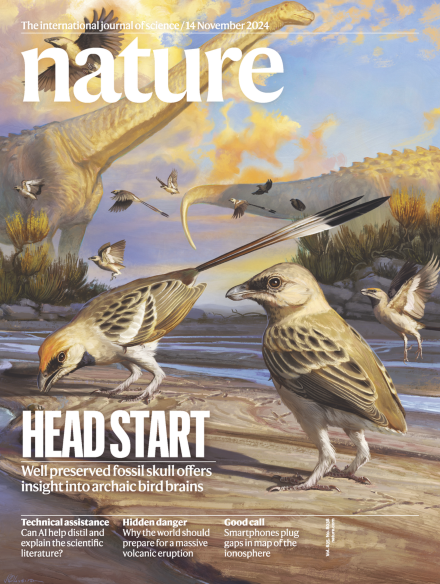
Nature Magazine (December 15, 2023):

The AI Dilemma

Juliette Powell & Art Kleiner Berrett-Koehler (2023)

The benefits and harms of social media are intimately tied to the ongoing debate about artificial intelligence (AI). Will AI systems trained partly on social media benefit or harm humanity? In their excellent, sometimes alarming, analysis of engineering, social justice, commerce and government, entrepreneur and technologist Juliette Powell and writer and educator Art Kleiner compare humans developing AI tools to first-time parents. They recommend guiding AI systems “as we would a child towards full adulthood”.

Consciousness

John Parrington Icon (2023)

“The material basis of human consciousness is one of the biggest unsolved issues in science,” admits cellular and molecular pharmacologist John Parrington in his pithy addition to a vast literature dating from the time of ancient Greek philosopher Aristotle. He considers many theories and proposes his own. Humans, he argues, are distinguished by conceptual thought and language, along with skills in designing tools and technologies. The evolution of these powers transformed our brains, creating meaning and consciousness.

Democracy in a Hotter Time

Ed. David W. Orr MIT Press (2023)

Environmentalist David Orr writes in the introduction to this timely collection that the planet faces two interlinked crises: “rapid climate change and potentially lethal threats to democracy”. The US Constitution rigorously protects private property but does not mention ecological systems, he observes. Contributors — almost all US-based — from a wide range of fields examine the need for political reform. The book is in four parts: the nature of democracy; roadblocks to change; policy and law; and education, including academic culture.

Extinctions

Michael J. Benton Thames & Hudson (2023)

When palaeontologist Michael Benton learnt about dinosaurs as a boy, he “loved the fact they were extinct”. They were like real science fiction. Perhaps he also intuited that their extinction permitted his existence. As his deeply informed and readable book reveals, the mass extinction at the end of the Cretaceous period 66 million years ago allowed a new cohort of creatures — including mammals — to “inherit the Earth”, as did four earlier extinction events. Living species represent less than 1% of all the species that have existed.

A Guess at the Riddle

David Z. Albert Harvard Univ. Press (2023)

The physical interpretation of quantum mechanics has been a controversial riddle since the 1920s, when Niels Bohr argued that the atom’s inner workings could not be described in physical terms. Today, many philosophers and physicists disagree, but there’s no consensus on an alternative. Philosopher David Albert’s provocative book argues, in three essays, that Bohr’s quantum-measurement problem starts to make sense if the wave function is understood as the fundamental physical ‘stuff’ of the Universe.

The New Criterion – January 2024 Preview

Image
The New Criterion – January 2024 issue:

A stately setting  by Myron Magnet
The Loeb Platos  by Mark F. McClay
The peace women  by Peter Baehr
Hopper horrors at the Whitney  by Gail Levin

New poems  by Peter Vertacnik

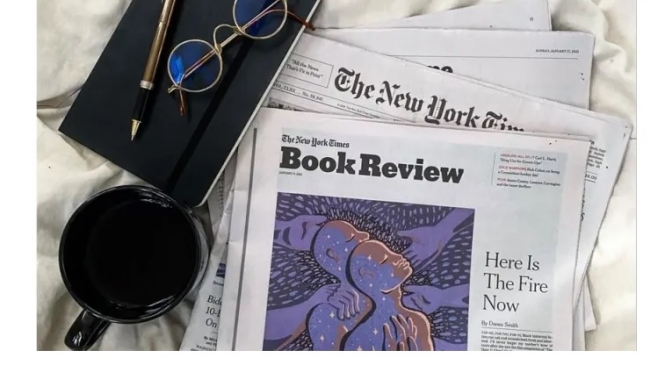
The New York Times Book Review – December 17, 2023

Image

THE NEW YORK TIMES BOOK REVIEW (December 15, 2023): The latest issue features ‘Glorious Memoirs by the Very Rich’ – A look back at a time when the super-wealthy felt they had nothing to lose by letting readers inside their gilded corridors; For Kate Christensen, Bad Prose Can Never Yield a Great Book – “A book is made of language,” says the author, whose new novel is “Welcome Home, Stranger.” “How can a house be great if it’s made of shoddy materials? How can a dinner be great if it’s made with terrible ingredients?”

It’s My Privilege: Glorious Memoirs by the Very Rich

This whimsical illustration, in shades of yellow, green, gray, brown and black, features a lavishly decorated domestic space, at the center of which, beneath an opulent chandelier, sits a smiling bejeweled woman in a plush armchair. Behind her and around her we can see part of the faces and hands of busy serving staff — holding a fan, a serving tray, a dustpan and broom, etc.

A look back at a time when the super-wealthy felt they had nothing to lose by letting readers inside their gilded corridors.

By Molly Young

“Class consciousness takes a vacation while we’re in the thrall of this book,” Barbara Grizzuti Harrison wrote in the Book Review in 1985, in her evaluation of the heiress Gloria Vanderbilt’s memoir “Once Upon a Time.” To be clear, Harrison was referring to the class consciousness of the reader, not the author. Vanderbilt demonstrates perfect awareness throughout her book that most young children don’t play with emerald tiaras and alligator jewel boxes lined in chestnut satin, or rely on the services of multiple butlers, or lose count of their own houses. Harrison’s point was that Vanderbilt’s talent with a pen — and perspective on her own economic altitude — allowed consumers of her tale to suspend their envy and engage with the reality of growing up in opulent neglect.

For Kate Christensen, Bad Prose Can Never Yield a Great Book

This illustration of Kate Christensen shows her with long reddish brown hair parted on one side and falling past her shoulders. Her green eyes match her crew-neck blouse.

“A book is made of language,” says the author, whose new novel is “Welcome Home, Stranger.” “How can a house be great if it’s made of shoddy materials? How can a dinner be great if it’s made with terrible ingredients?”

What books are on your night stand?

I’m living temporarily in a rented house in Iowa City, teaching at the Writers’ Workshop. When I arrived there was not one book in the entire place, so I made an emergency trip to the local used-book store, collecting whatever leaped out at me from the shelves, mostly based on the wonderful titles: “Overhead in a Balloon,” by Mavis Gallant; “Watson’s Apology,” by Beryl Bainbridge; “Anthills of the Savannah,” by Chinua Achebe; “The Brandon Papers,” by Quentin Bell; “The Marquis of Bolibar,” by Leo Perutz; “The Seven Sisters,” by Margaret Drabble; “Bruised Hibiscus,” by Elizabeth Nunez; “A Journal of the Plague Year,” by Daniel Defoe.

Art Books: “David Hockney – Normandy Portraits”

David Hockney: Normandy Portraits

David Hockney Normandy Portraits ARTBOOK | D.A.P. 2023 Catalog Books  Exhibition Catalogues 9781855145870

A compact album presentation of Hockney’s newest explorations in portraiture

Artbook D.A.P.:

This concise volume illustrates around 40 acrylic on canvas works painted by David Hockney (born 1937) at his Normandy studio—depicting his friends and visitors, as well as the artist himself. David Hockney: Normandy Portraits showcases a series of some previously unseen portraits, across 48 pages, uninterrupted by text, to allow readers to engage directly with the artworks.

These new works highlight the ongoing importance of portraiture within the artist’s practice and demonstrate his sentiment that “drawings and paintings … are a lot better than photographs to give you a sense of the person.”

Hockney returned to painting after an intensive period spent depicting the Normandy landscape using an iPad. The portraits were painted quickly and directly onto the canvas without underdrawing. As Hockney has said, “to do a portrait slowly is a bit of a contradiction.”

READ MORE

Arts/Books: Times Literary Supplement – Dec 15, 2023

Image

Times Literary Supplement (December 13, 2023): The latest issue features ‘Innocent bystanders? – Collaboration with the Third Reich; The contaminated blood scandal; Gertrude Stein and Picasso, Hamlet’s play; AI Journalism and Clarice Lispector calls…

Travel & Culture Books: “Mexico City” (Assouline)

Assouline Publishing (December 2023) – With a history dating back to the fourteenth century, Mexico City blends indigenous pre-Hispanic roots with colonial architecture and Spanish-baroque influences.

Mexico City

This unique fusion, crafted from local materials like cantera and tezontle, inspires artists and architects alike. Iconic structures like Diego Rivera’s Anahuacalli Museum and Juan O’Gorman’s Cave House proudly embody the city’s rich history.

Today, Mexico City serves as a vibrant backdrop for renowned filmmakers such as Alejandro González Iñárritu, Alfonso Cuarón, and Michel Franco. Discover a city of wonders, where history and creativity come to life.

ABOUT THE AUTHOR

Born in Mexico City, Aleph Molinari is an editor, writer, art director and photographer. He is the co–editor in chief of Purple magazine, as well as a contributor to Materia Press, Art Observed and other publications. His work focuses on materializing culture through publications, exhibitions and campaigns. Among his projects, he co-curated the Purple Festival at the Palais Galliera in Paris, created a botanical sculpture for Soundwalk Collective and Patti Smith’s exhibition Evidence at the Centre Pompidou, and worked on the programming for Soundwalk Collective’s project The Third Eye at Karl Lagerfeld’s 7L Library. He lives in Paris.

Anfisa Vrubel is an editor, writer and researcher whose work focuses on the intersection of art, culture and politics. Vrubel is an editor-at-large at Art Observed and Purple magazine, where she contributes original features and interviews with artists and top thinkers in the fields of politics, ecology, art and culture. After studying government at Harvard, she pursued an editorial career, working for publications such as The Brooklyn Rail and its offshoot publication, The River Rail, which is devoted to environmental art and criticism. Vrubel grew up in New York City and lives between there and Mexico City.See all books by Aleph Molinari, Anfisa Vrubel.

READ MORE

The New York Times Book Review – December 10, 2023

Image

THE NEW YORK TIMES BOOK REVIEW (December 10, 2023): 

The Critics’ Picks: A Year in Reading

This is a colorful illustration of dozens of brightly colored books, shown as if they were refracted through a kaleidoscope.
Credit…Timo Lenzen

The Book Review’s daily critics — Dwight Garner, Alexandra Jacobs and Jennifer Szalai — reflect on the books that stuck with them in 2023.

By Jennifer SzalaiAlexandra Jacobs and Dwight Garner

24 Things That Stuck With Us in 2023

Margot Robbie, dressed in head-to-toe pink, drives a pink convertible with Ryan Gosling, also in pink, in the back seat. They’re driving through the desert, with a sign reading Barbie Land behind them.
Ryan Gosling and Margot Robbie in “Barbie.”Credit…Warner Bros. Pictures

Films, TV shows, albums, books, art and A.I.-generated SpongeBob performances that reporters, editors and visual journalists in Culture couldn’t stop thinking about this year.

Interviews: British Writer Ian McEwan – ‘Life Stories’


Louisiana Channel (December 8, 2023) – “If I didn’t write, I’d go nuts because I wouldn’t have a single reason to exist. The pleasure of bringing something together is so intense,” says British Ian McEwan, who would love to live forever and discover how we’re doing in 10,000 years.

Ian McEwan is considered one of the most important British novelists alive today. When he writes, characters and plot are difficult to separate because “often characters arise out of plots, often plots drive characters into existence”, he says. What is crucial to McEwan when writing is that “circumstances make the character and the characters generate possibilities. That sense of possibility is always so important. So characters can create their own waves.” The novel Lessons (2022) is McEwan’s most personal novel. It was written in lockdown when he was entering his 70s and beginning to take a look back at his existence. People who know him well can always connect what he is writing with things in his own life, he says.

In Lessons, McEwan wanted to create “the emotional truth of certain rather sad, tragic, disturbing things that happened in my family”, he says. “And the reflective element was also the movement towards trying to understand the circumstances, not only of my life but my generation’s life.” Ian McEwan enjoys reading biographies, but “if you want to know everything it’s possible to know about a great poet, you’ll need to read three or four biographies written over maybe a century or two centuries”, he says. He admits that fiction does not influence him like it did when he was younger.

“We have very little sense of how to generate on the page an open-ended character until the writing of Jane Austen” and he adds that it was the great Russian writers who taught us how to write characters as if they were real people. By the turn of the 19th to the 20th century, there was a great artistic revolution; McEwan points out and emphasizes that it was especially James Joyce who taught us “to understand characters from the flow of consciousness, right from the very inside”.