
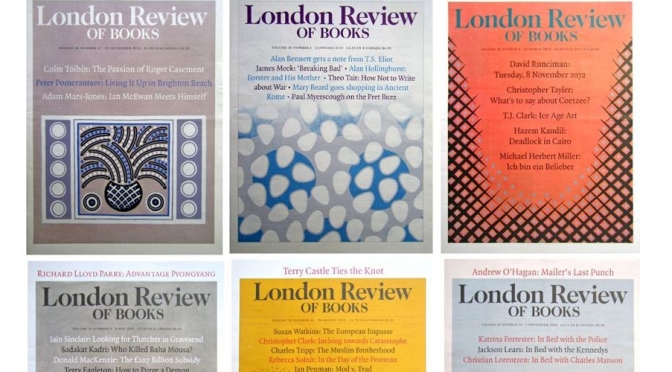
Our new issue is now online, featuring John Lanchester on cheating in sport, Adam Mars-Jones on ACT UP, @clarebucknell on Rivka Galchen’s witches, @garyyounge in Baltimore, an unpublished piece by Patrick Leigh Fermor, and a cover by Anne Rothenstein: https://t.co/xaTOjXVswR pic.twitter.com/BADbLzy0jX
— London Review of Books (@LRB) July 21, 2021
Tag Archives: Book Reviews
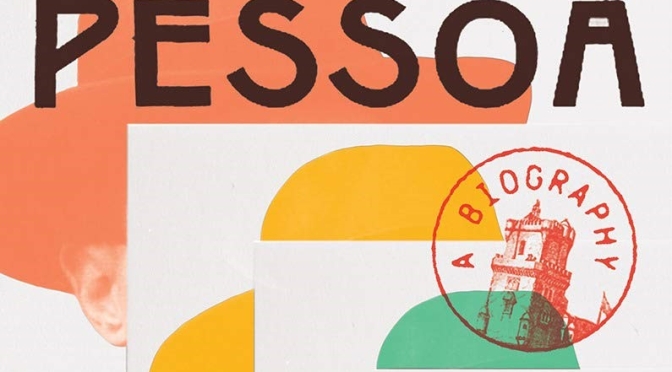
Book Review: ‘Pessoa – A Biography’ (NY Times)
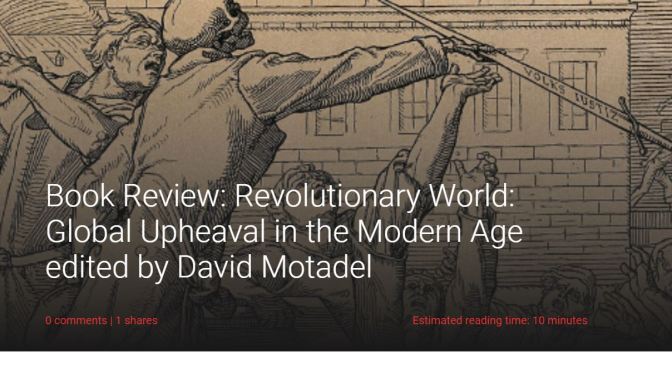
Books: ‘Revolutionary World – Global Upheaval In The Modern Age’ (LSE)
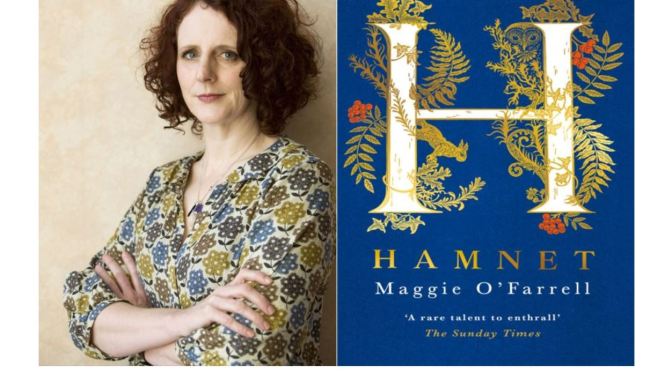
Shakespeare: ‘Hamnet’ Author Maggie O’Farrell
Maggie O’Farrell’s “Hamnet,” one of last year’s most widely acclaimed novels, imagines the life of William Shakespeare, his wife, Anne (or Agnes) Hathaway, and the couple’s son Hamnet, who died at 11 years old in 1596.
On this week’s podcast, O’Farrell says she always planned for the novel to have the ensemble cast it does, but that her deepest inspiration was to capture a sense of the young boy at its center.
“The engine behind the book for me was always the fact that I think Hamnet has been overlooked and underwritten by history,” she says. “I think he’s been consigned to a literary footnote. And I believe, quite strongly, that without him — without his tragically short life — we wouldn’t have the play ‘Hamlet.’ We probably wouldn’t have ‘Twelfth Night.’ As an audience, we are enormously in debt to him.”
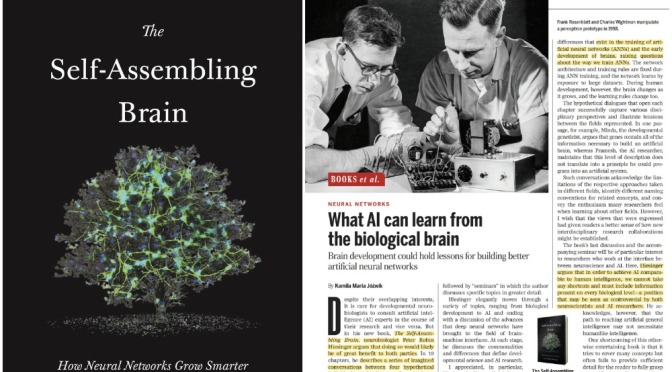
Book Reviews: ‘The Self-Assembling Brain’ – The Future Benefits For AI


As Peter Robin Hiesinger argues, “the information problem” underlies both fields, motivating the questions driving forward the frontiers of research. How does genetic information unfold during the years-long process of human brain development―and is there a quicker path to creating human-level artificial intelligence? Is the biological brain just messy hardware, which scientists can improve upon by running learning algorithms on computers? Can AI bypass the evolutionary programming of “grown” networks? Through a series of fictional discussions between researchers across disciplines, complemented by in-depth seminars, Hiesinger explores these tightly linked questions, highlighting the challenges facing scientists, their different disciplinary perspectives and approaches, as well as the common ground shared by those interested in the development of biological brains and AI systems. In the end, Hiesinger contends that the information content of biological and artificial neural networks must unfold in an algorithmic process requiring time and energy. There is no genome and no blueprint that depicts the final product. The self-assembling brain knows no shortcuts.
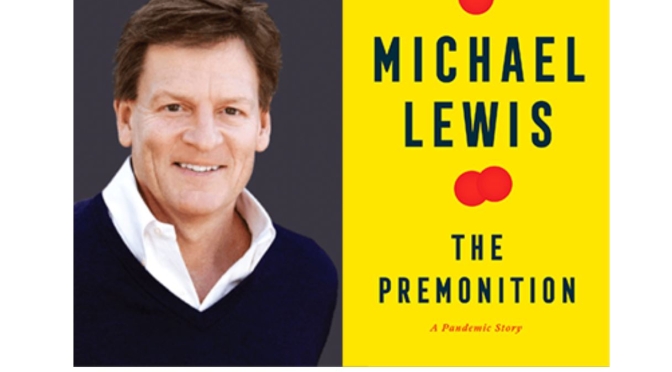
Reviews: Author Michael Lewis, ‘The Premonition – A Pandemic Story’ (Podcast)
In 2018, Michael Lewis published “The Fifth Risk,” which argued, in short, that the federal government was underprepared for a variety of disaster scenarios. Guess what his new book is about? Lewis visits the podcast this week to discuss “The Premonition,” which recounts the initial response to the coronavirus pandemic.
“It wasn’t just Trump,” Lewis says. “Trump made everything worse. But there had ben changes in the American government, and changes in particular at the C.D.C., that made them less and less capable of actually controlling disease and more and more like a fine academic institution that came in after the battle and tried to assess what had happened; but not equipped for actual battlefield command. The book doesn’t get to the pandemic until Page 160. The back story tells you how the story is going to play out.”
The historian Annette Gordon-Reed visits the podcast to talk about her new book, “On Juneteenth,” which combines history about slavery in Texas and Juneteenth with more personal, essayistic writing about her own family and childhood.
“This is a departure for me, but it is actually the kind of writing that I always thought that I would be doing when I was growing up, dreaming about being a writer,” Gordon-Reed says. “I’ve always been a great admirer of James Baldwin, and Gore Vidal’s essays I thought were wonderful, better than the novels, and that’s the kind of thing that I wanted to do. So it was sort of a dream come true for me to be able to take this form and talk about some things that were very important to me.”
Also on this week’s episode, Tina Jordan looks back at Book Review history during this year of its 125th anniversary; Alexandra Alter has news from the publishing world; and Parul Sehgal and John Williams talk about the latest in literary criticism. Pamela Paul is the host.
Here are the books discussed by the critics this week:
“The Secret to Superhuman Strength” by Alison Bechdel
“Jackpot” by Michael Mechanic
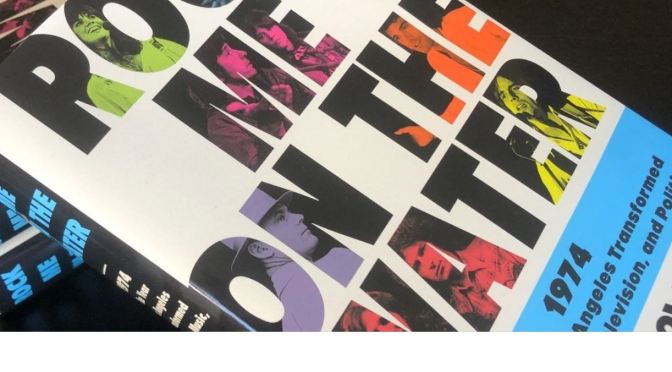
1970’s Books: ‘Rock Me On The Water’- How Movies, TV & Music Changed Culture
A new book argues the 1970’s was a moment when TV, movies, and music all shifted into a new gear, changing the cultural landscape in ways that continue to today. Jeffrey Brown has a conversation with author Ron Brownstein about his book “Rock Me on the Water: 1974-The Year Los Angeles Transformed Movies, Music, Television, and Politics.” This segment is part of our arts and culture series, CANVAS.
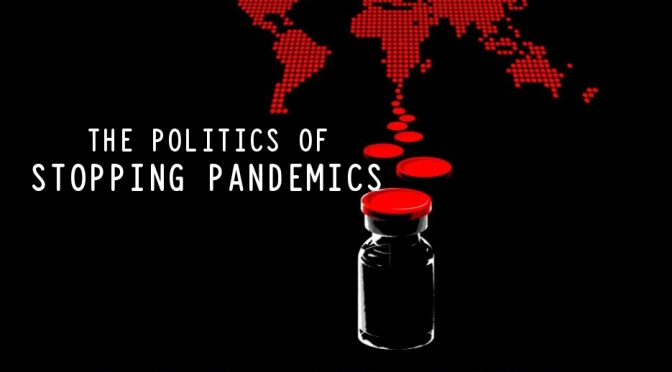
Global Health Essays: ‘The Politics Of Stopping Pandemics’ (New Yorker)
He identifies a cluster of non-medical drivers of deadly outbreaks—war, political instability, human migration, poverty, urbanization, anti-science and nationalist sentiment, and climate change—and maintains that advances in biomedicine must be accompanied by concerted action on these geopolitical matters.
War and Pestilence ride together as two of the Four Horsemen of the Apocalypse, and there is no shortage of historical precedent to demonstrate the aptness of the allegory. The great influenza pandemic that began in 1918 was propelled, in part, by troop movements and population shifts at the end of the First World War. Both the First and the Second World Wars produced typhus epidemics. Armed conflicts cause malnutrition, poor pest control, and sanitation problems; even the soil often becomes contaminated. Medical facilities are destroyed; doctors and nurses, diverted to combat duty, are unable to provide care, and vaccination and other mass-treatment programs usually falter.
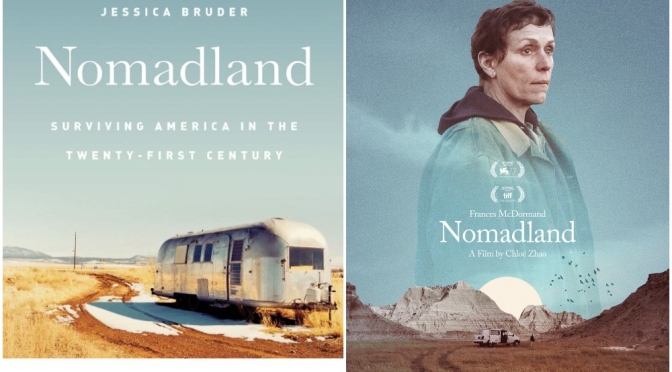
Reviews: ‘Nomadland’ – Jessica Bruder Book Now An Award-Winning Movie
The latest selection for our “Now Read This” book club, Jessica Bruder’s “Nomadland,” documents a growing phenomenon in the country — a “wandering tribe” of seasonal workers. It has inspired a new movie of the same name. The film was the big winner at the British Academy Film Awards, and has multiple Oscar nominations. Jeffrey Brown has the latest for our ongoing arts and culture series, CANVAS.

Interview: Writer Paul Theroux – ‘Under The Wave At Waimea’ (Podcast)
What can a travel writer learn from staying at home? Anne McElvoy asks the prolific travel author Paul Theroux about the virtues of being homebound during the pandemic.
The author of “Under the Wave at Waimea” reveals that his friend and one-time foe V.S. Naipaul inspired a character in his new book about big-wave surfing in Hawaii. Also, verbal fencing with his sons Louis and Marcel and his ultimate travel destination.
 Boomers Daily