
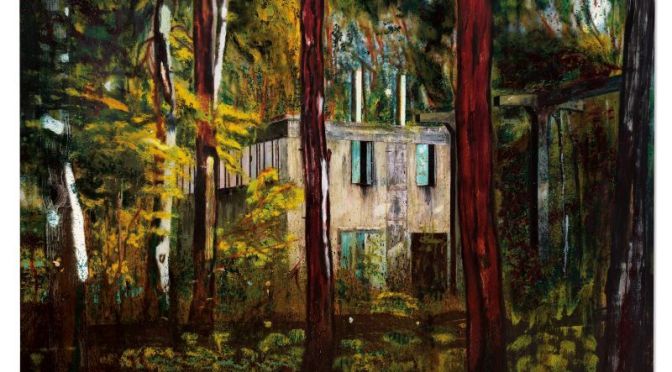
In 1991, the Scottish artist Peter Doig (b. 1959) visited Le Corbusier’s Unité d’Habitation in northeast France, a utopian housing project that had opened in 1961 in Briey-en-Fôret, then been abandoned.
To Doig, the project was a temple of hope laid to ruin, and the nine large-scale canvases it inspired — Doig’s seminal ‘Concrete Cabins’ series, the largest and most distinctive cycle in Doig’s oeuvre — became a meditation on the decay of Le Corbusier’s modernist vision of social cohesion.
Boiler House was first exhibited in Salzburg after Doig had won the Eliette von Karajan prize in 1994, and was included in Doig’s 2008 retrospective at Tate Britain. It stands alone within the cycle, an isolated building in the forest.
Depicting the building designed to house the estate’s coal boiler, it is rendered in fluid trails of impasto, and carries a stark anthropomorphic charge, the angular geometries looming large through a screen of trees, shifting in and out of focus like a memory or fragments from a movie reel.
Learn More: https://www.christies.com/features/Bo…




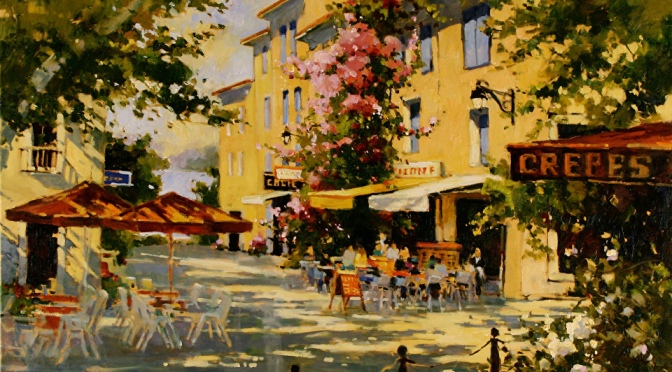


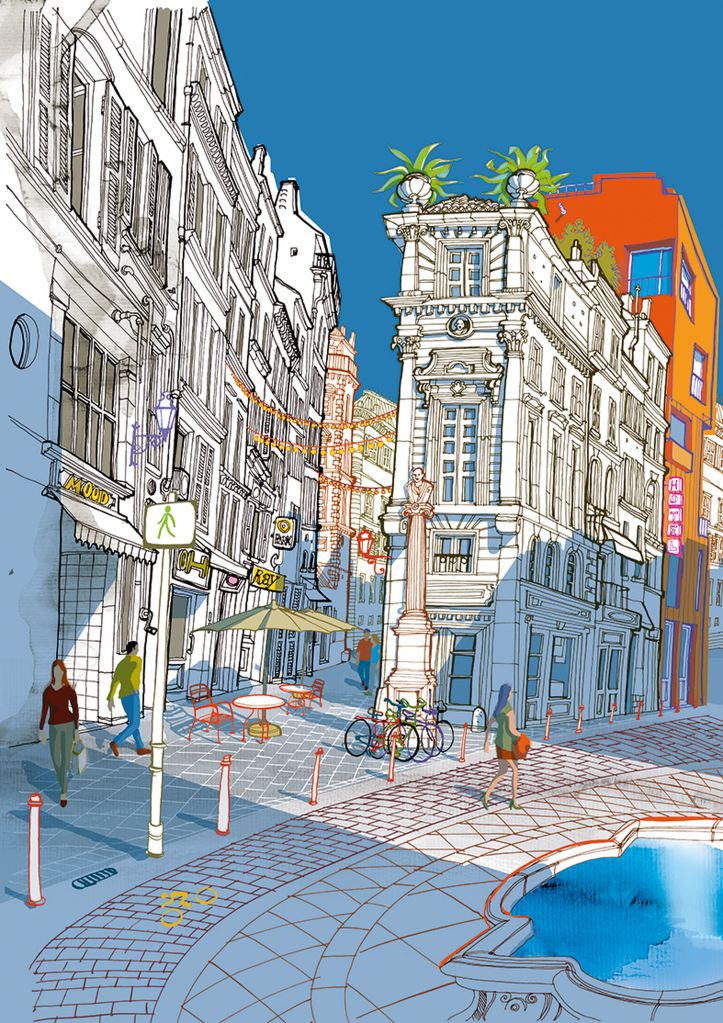
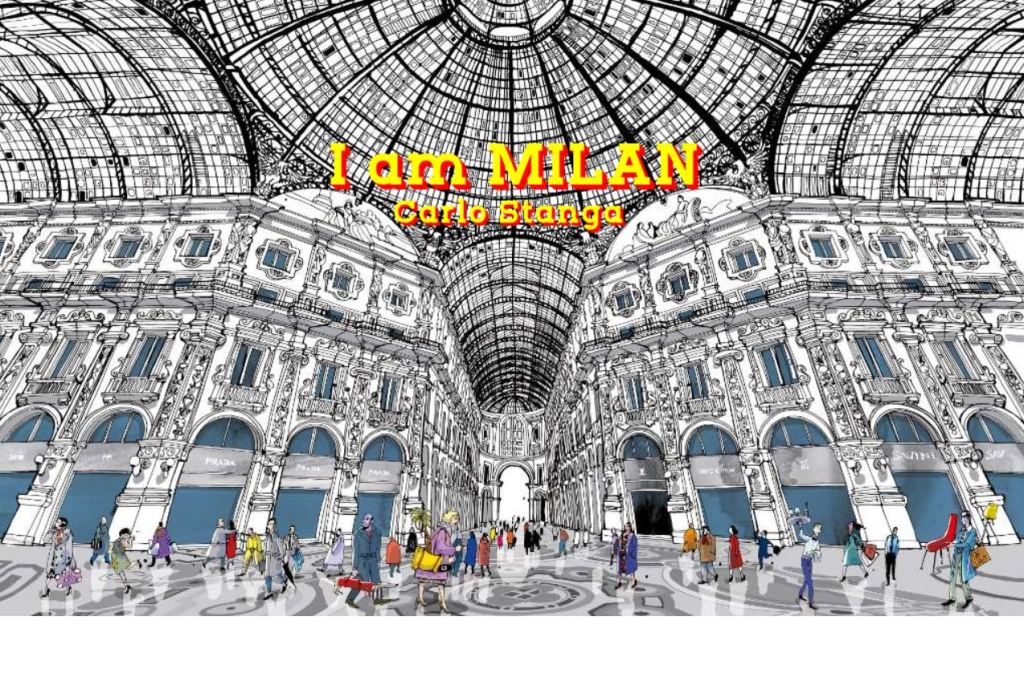
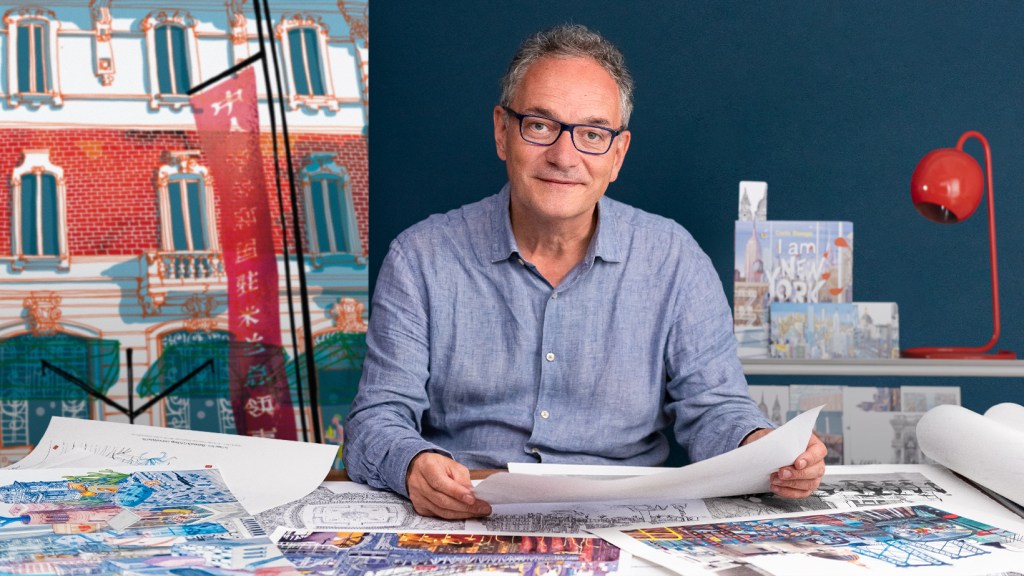
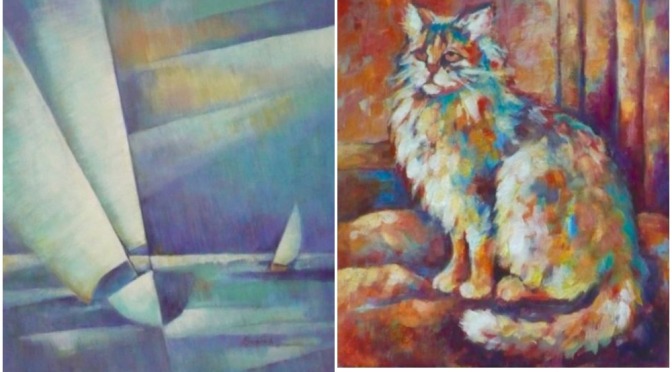
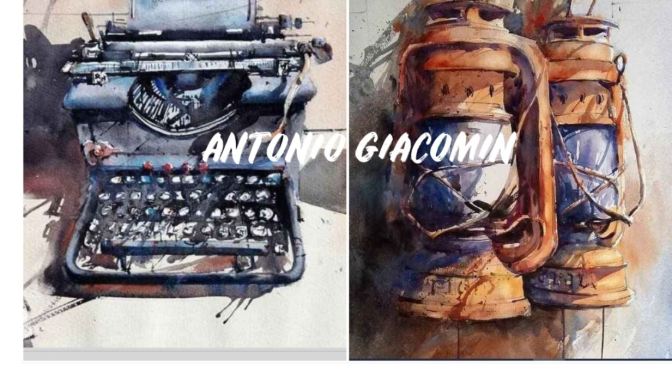
 was born in Serra Gaúcha, where, in 1980, he started in the universe of painting. It was to improve in the United States, Mexico and Europe. In 2007, he launched the book “Poesias em Aquarela”, an inventory of thematic images resulting from trips undertaken in various regions of Rio Grande do Sul.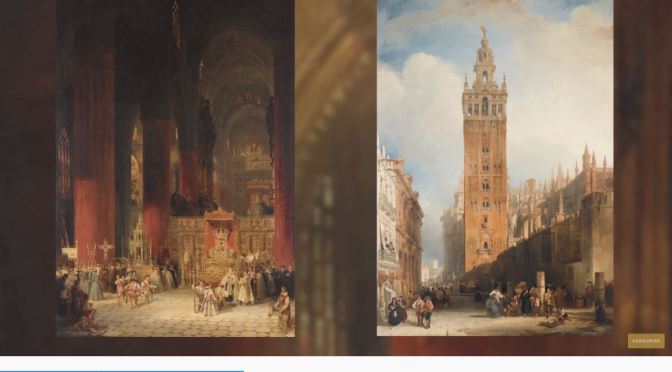
 These two magnificent paintings by Scottish artist David Roberts exquisitely capture the essence of life in Seville in the 1800s. Hear how Roberts, one of the most widely travelled artist explorers of the 19th century, executed these resplendent views of the Cathedral – one capturing the ceremony of the Corpus Christi festival, the other displaying the bustle of life outside. ‘Interior of the Cathedral of Seville’ and ‘The Moorish Tower at Seville’.
 Boomers Daily