Tag Archives: Art History

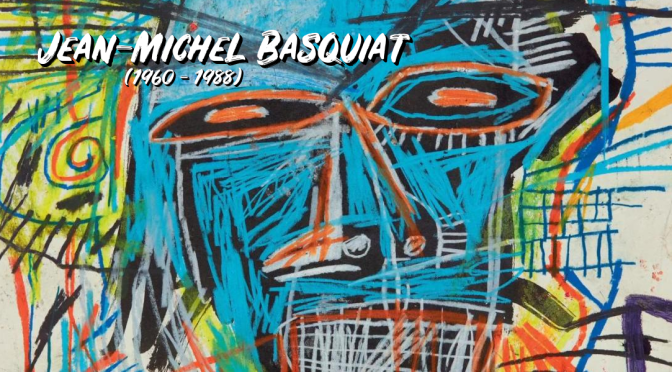
Art Profiles: Haitian-American Artist Jean-Michel Basquiat (Video)

Sothebys LogoFrom the anatomical features of Da Vinci to the fractured features of modernist portraiture, the human head has reigned supreme in Art History. Enter Jean Michel Basquiat – the consummate draftsman for a new age. Discover how Basquiat revolutionized the genre and captured the manic core of the human condition through his masterwork Untitled (Head), 1982, to be offered as a highlight of Sotheby’s Contemporary Art Evening Auction in New York. Encapsulating the incredible dexterity that defines the very best of the artist’s works, and extraordinary for its use of India ink under the oilstick to lend depth and contrast to the composition, Untitled (Head) is a heroic depiction that reflects the explosive talent and brilliance of its author.

Jean-Michel Basquiat (December 22, 1960 – August 12, 1988) was an American artist of Haitian and Puerto Rican descent. Basquiat first achieved fame as part of SAMO, an informal graffiti duo who wrote enigmatic epigrams in the cultural hotbed of the Lower East Side of Manhattan during the late 1970s, where rap, punk, and street art coalesced into early hip-hop music culture. By the 1980s, his neo-expressionist paintings were being exhibited in galleries and museums internationally. The Whitney Museum of American Art held a retrospective of his art in 1992.
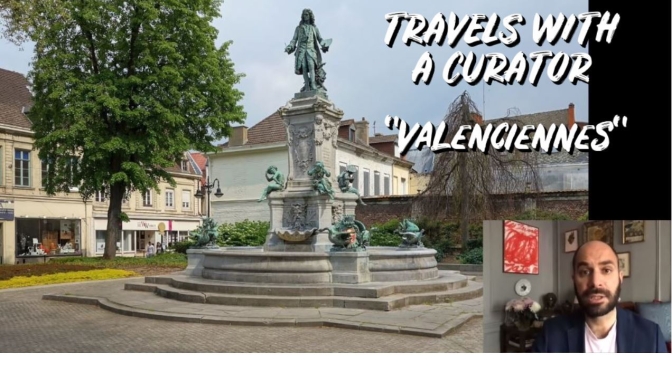
Travels With A Curator: “Valenciennes”, Northern France (The Frick Videos)

In this week’s episode of “Travels with a Curator,” travel with Xavier F. Salomon, Peter Jay Sharp Chief Curator, to Valenciennes, the birthplace of the Rococo painter Jean-Antoine Watteau. Delve into the historical events surrounding Watteau’s “Portal at Valenciennes” (ca. 1710–11), a scene of soldiers at rest near the ramparts of the town. Known for his depictions of garden frolics, Watteau seldom portrayed military life—“The Portal” is one of only three such paintings that survive today.

See more

Valenciennes is a commune in the Nord department in northern France. It lies on the Scheldt river. Although the city and region experienced a steady population decline between 1975 and 1990, it has since rebounded.

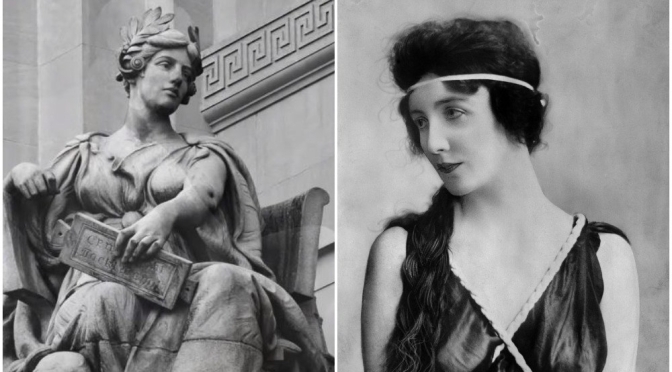
Art: “Audrey Munson” – The First “Supermodel” In American History (Video)

The year 2020 marks the one-hundredth anniversary of the ratification of the 19th Amendment, which granted millions of women in the U.S. the right to vote. The Frick is celebrating with a series of videos honoring the stories of women who made, appeared in, collected, and took care of art in this collection.

Frick Curator Aimee Ng continues the series with a look at the model, actress, dancer, writer, and artist known as “Miss Manhattan”—Audrey Munson. 

Audrey Marie Munson was an American artist’s model and film actress, today considered “America’s First Supermodel.” In her time, she was variously known as “Miss Manhattan”, the “Panama–Pacific Girl”, the “Exposition Girl” and “American Venus.”

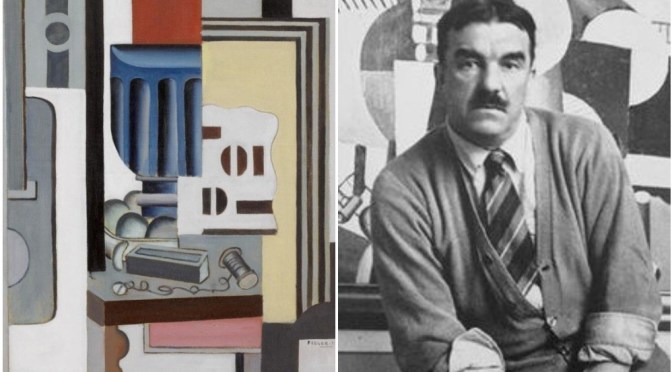
Art History: French Cubist Painter Fernand Léger (1881 – 1955) – Sotheby’s

Vice Chairman Lucian Simmons sits down to describe one of his favorite works – Fernand Léger’s Nature Morte. After surviving World War I, Léger joined an influx of artists searching for “purity” or a so-called “return to order.” Executed in 1925, Léger’s still life is an outstanding example of the artist’s classical period, where the artist found a new stride. Nature Morte will be offered as a highlight of the Sotheby’s Impressionist and Modern Evening auction in New York.

Read more

20th Century Art: Claude Monet’s “Weeping Willow” Paintings (1918 – 1919)

From the Wall Street Journal (June 19, 2020):

Claude_Monet,_Water-Lily_Pond_and_Weeping_Willow…what perhaps absorbed him most was a suite of 10 paintings of one of the weeping willows he had planted on the shores of his pond in 1893, when he had purchased the property to construct his aquatic paradise. The tree had grown in girth and grandeur over the intervening years, its leafy arms now extending out over the dappled waters like an impassioned conductor energizing an orchestra.

The trees in Monet’s water garden are much less known than the flowers, but they were central to his vision of what that ideal space should include and thus dear to his heart. In 1912, when severe winds and rains wreaked havoc on his horticultural handiwork, what Monet mourned most was the damage to his willows.

Weeping willows, of course, evoke mourning by their very appearance no less than by their appellation, their drooping tendrils the very symbol of sorrow. It’s therefore not surprising, given Monet’s sensitivity to his nation’s plight, that he turned to this tree to express the trauma of the moment.

Read full article

Cocktails With A Curator: “Gainsborough’s ‘Grace Dalrymple Elliott'” (Video)

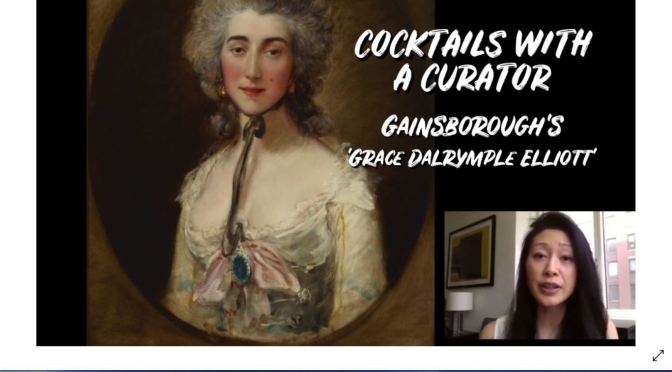
The Frick Collection logoIn this week’s episode of “Cocktails with a Curator,” Curator Aimee Ng studies Thomas Gainsborough’s scandalous portrait of Grace Dalrymple Elliott. Discover why this painting met with a negative reception when it was shown at the Royal Academy in 1782. Mrs. Elliott later moved to France, where she lived through the Reign of Terror and died in 1823 in the outskirts of Paris. This week’s complementary cocktail is the Pimm’s Cup, a traditional summer drink in Britain.
Thomas Gainsborough RA FRSA was an English portrait and landscape painter, draughtsman, and printmaker. Along with his rival Sir Joshua Reynolds, he is considered one of the most important British artists of the second half of the 18th century.

Travel & Arts Video: “The Getty Villa”, Malibu (2020)

The Getty Villa is devoted to the study and display of art from the ancient world. Housed in a spectacular recreation of an ancient Roman villa, its collection celebrates the culture and artistry of ancient peoples and draws connections to our world today.

Located near the Pacific shore in Malibu, California, the Getty Villa serves a varied audience through exhibitions, conservation, scholarship, research, and public programs. The Villa houses approximately 44,000 works of art from the Museum’s extensive collection of Greek, Roman, and Etruscan antiquities, of which over 1,200 are on view.

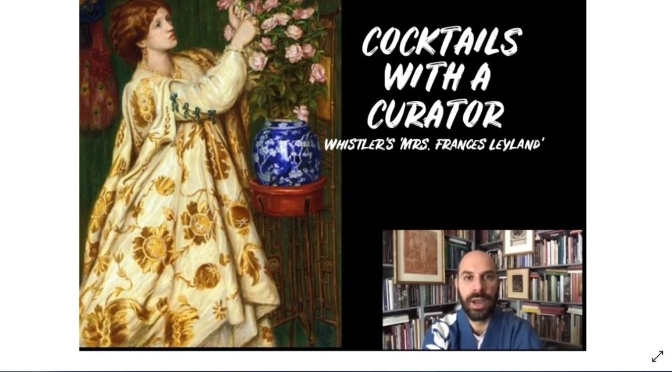
Cocktails With A Curator: Whistler’s ‘Mrs. Frances Leyland'” (The Frick Video)


In this week’s episode of “Cocktails with a Curator,” join Xavier F. Salomon, Peter Jay Sharp Chief Curator, as he explores “Symphony in Flesh Color and Pink: Portrait of Mrs. Frances Leyland” by James McNeill Whistler. Delve into the tumultuous history of Whistler’s relationship with Frederick Richards Leyland, the shipping magnate who commissioned the painting, as well as the painter’s affinity for Japanese culture. This week’s complementary cocktail is a Sake Highball on the rocks.

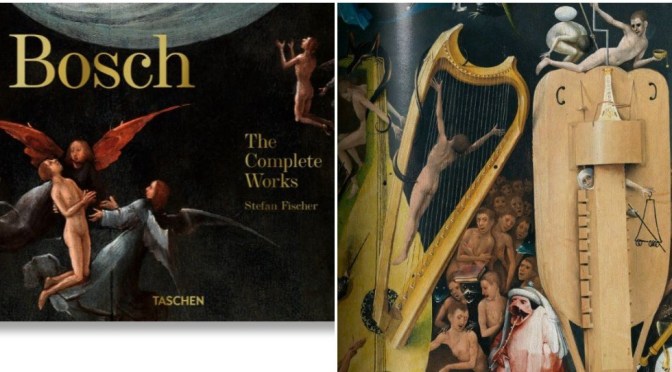
New Art Books: “Bosch – The Complete Works”

Bosch - The Complete Works - Stefan Fischer - TaschenA bird-monster devouring sinners, naked bodies in tantric contortions, a pair of ears brandishing a sharpened blade: with just 20 paintings and nine drawings to his name, Netherlandish visionary Hieronymus Bosch (c. 1450–1516) secured his place as a pillar of art history. To this day, the painter par excellence of hell and its demons continues to puzzle and enthrall scholars, artists, designers, and musicians alike.
.

Based on the best-selling XXL edition, which saw TASCHEN commission new and exclusive photography of details and recently restored works, this large-scale monograph presents Bosch’s complete oeuvre. Texts from art historian and Bosch expert Stefan Fischer dissect the many compelling elements that populate each scene, from hybrid creatures of man and beast to Bosch’s pictorial use of proverbs and idioms. By tying together the elusive threads of his oeuvre into one exhaustive overview, this book reveals just what it was about Bosch and his painting that proved so immensely influential.

Bosch - The Complete Works

Features:

  • Impeccable full-page reproductions celebrating the artist’s staggering compositional scope
  • Enlarged details unveiling the most intricate and bizarre scenes as much as the unsuspected technical minutiae, from subtle brush-strokes to the grain of the canvas
  • fold-out spread drawn from the legendary Last Judgement
  • special chapter focusing on Bosch’s most famous work, the mesmerizing and terrifying triptych The Garden of Earthly Delights

The author

Stefan Fischer studied art history, history, and classical archaeology in Münster, Amsterdam, and Bonn. In 2009 he completed his doctoral thesis “Hieronymus Bosch: Malerei als Vision, Lehrbild und Kunstwerk.” His specialist fields are Netherlandish painting of the 15th to the 17th centuries and museology.

.

Website

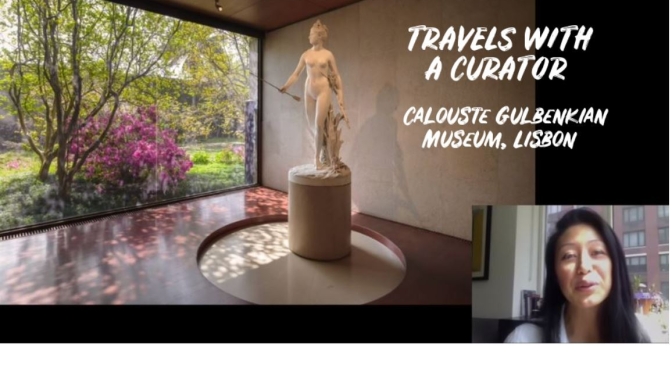
Travels With A Curator: “Calouste Gulbenkian Museum, Lisbon” (Video)

In this episode of “Travels with a Curator,” Curator Aimee Ng takes viewers on a journey to Lisbon’s Calouste Gulbenkian Museum, the home of an extraordinary private collection that, like the Frick, was made available for the enjoyment of the public after the collector’s death. This is a museum about discovery and movement, a place of marvelous encounters between the Old Masters and modernist architecture. Peek inside this spectacular museum—you may recognize a certain marble sculpture whose terracotta sister resides at the Frick.