
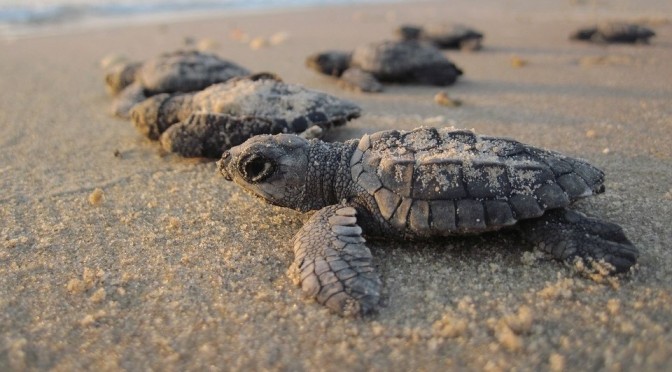
On the beaches of the Great Barrier Reef, the first turtle hatchlings emerge from their shells and make a run for the ocean. Almost immediately, aerial and aquatic predators appear, hoping for an easy meal.
— Smithsonian Channel (@SmithsonianChan) August 20, 2022
🎥David Attenborough's Great Barrier Reef pic.twitter.com/jciI1E3wsa
Tag Archives: Animals

Evolution: How Nature Is Adapting To Urban Sprawl
It’s a new and surprising chapter in the theory of evolution. According to recent studies, it’s in our cities, of all places, that animals and plants adapt particularly quickly to changing living conditions.
Nature’s response to the spread of cities is astonishing: Why do catfish in the river of a French city systematically prey on urban pigeons on the banks? Why do female birds on a university campus in California suddenly change their mating behavior? How do mice in New York’s Central Park cope with an altered diet of human food waste? How have killifish in the Atlantic built up resistance to deadly chemical waste?
And, is it possible for moths to adapt to nighttime light pollution? New research provides surprising new insights into Darwin’s theory of evolution. Nowhere else do animals and plants adapt so quickly to new living conditions as in cities. Biologists have long known that animals and plants occupy new habitats in the vicinity of humans.
But now, new genetic analyses show that these adaptations are accompanied by significant changes in DNA. Even more surprising: these evolutionary changes have not occurred over periods of millennia, but within just a few decades. The process has amazed scientists, who watch as nature transforms even our most hostile man-made interventions — pollution, light pollution, noise, garbage and dense development — into creative energy for new adaptations. Some researchers believe that our cities may soon develop their own, brand-new life forms. What are the implications of these developments for the balance between humans and nature on our planet?
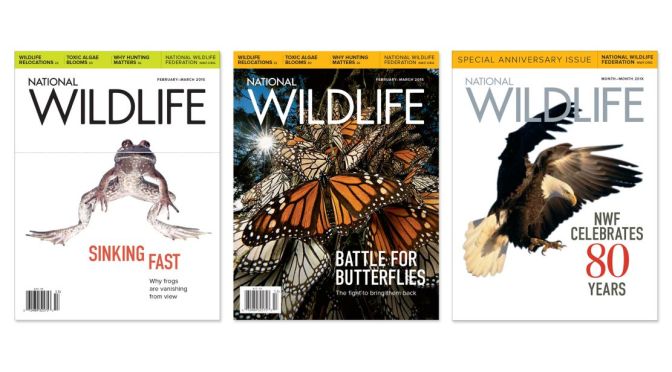
Cover: National Wildlife Magazine – Aug/Sep 2022

National Wildlife Magazine – August/September 2022
Burning Up
Heat, drought and wildfires are ravaging western wildlife while conservationists try to help ecosystems adapt
By Brianna Randall – Conservation, Aug 02, 2022

Dead mussels lie along the Pacific shore of Vancouver, British Columbia, during 2021’s summer heat wave. Scientists estimate that the record-breaking heat killed more than 1 billion marine animals off the coasts of British Columbia and Washington state.
(Photo by Christopher Harley/University of British Columbia)
GASPING SALMON WITH INFECTED LESIONS. Emaciated deer searching sagebrush flats for water. Clams and mussels boiled to death in their shells. Last summer, temperatures in the Northwest soared to record highs in the triple digits, killing more than 1 billion marine animals in the Salish Sea and stressing wildlife from the Pacific to the Rocky Mountains. Simultaneously, ongoing drought in the Southwest—which began in 2000 and is the region’s driest 22-year period in 1,200 years—is causing plants to wither, springs to dry up and wildfires to engulf entire landscapes.

Book Reviews: ‘Anthill’ By E.O. Wilson & ‘An Immense World’ By Ed Yong (NPR)
Today’s episode features two books that reach deep into the animal world. First, E.O. Wilson sits down with Robert Seigel to discuss how the narrative of war is used in his story featuring ants, called Anthill.

Then writer Ed Yong talks with Ayesha Roscoe about trying to show the experience of life through a different perspective – animals – in An Immense World.

Previews: The Atlantic Magazine – July/Aug 2022
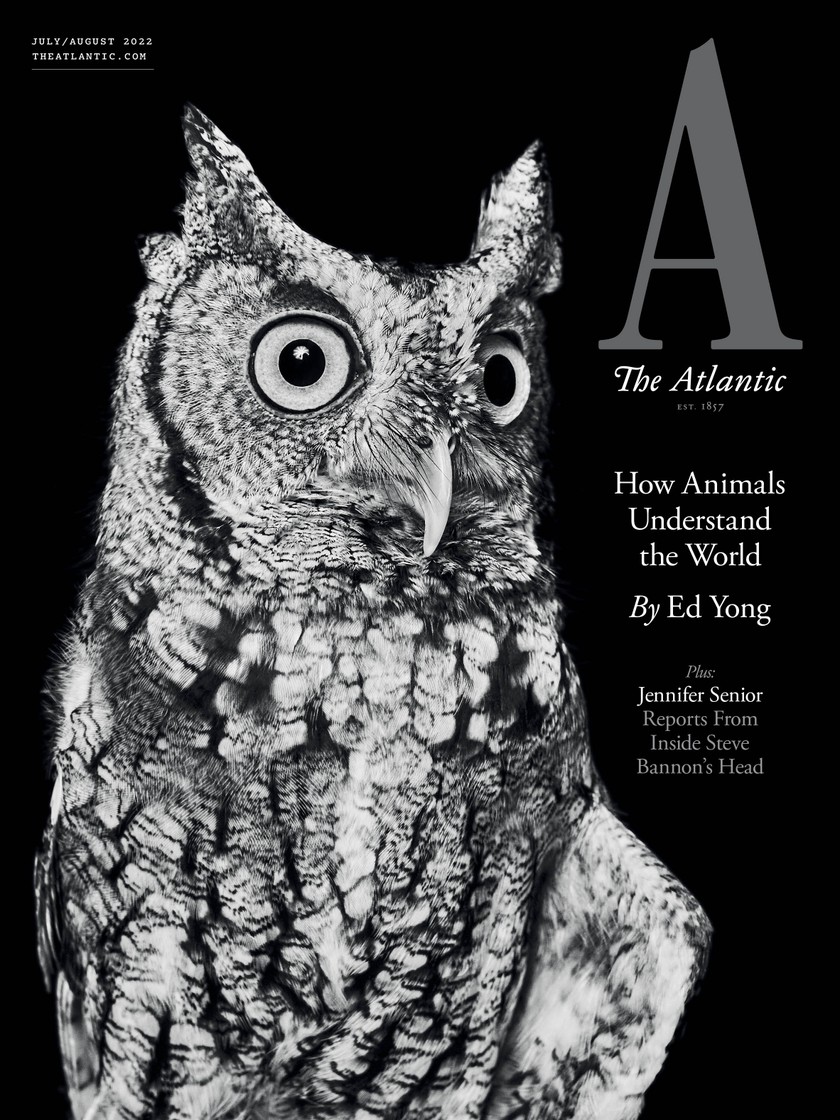
How animals perceive the world, a return to Chagos, Steve Bannon, and a mad hunt for Civil War gold. Plus Jack White, how the U.S. has no nuclear strategy, dad rage, Ulysses at 100, one family’s doll test, downsides of beach resorts, and more.
COVER STORY
- How Animals Perceive the World – Every creature lives within its own sensory bubble, but only humans have the capacity to appreciate the experiences of other species. What we’ve learned is astounding.
FEATURES
- American Rasputin – Steve Bannon is still scheming. And he’s still a threat to democracy.
- They Bent to Their Knees and Kissed the Sand – Half a century ago, the British government forcibly removed 2,000 people from a remote string of islands in the middle of the Indian Ocean. They’ve never stopped struggling to return.
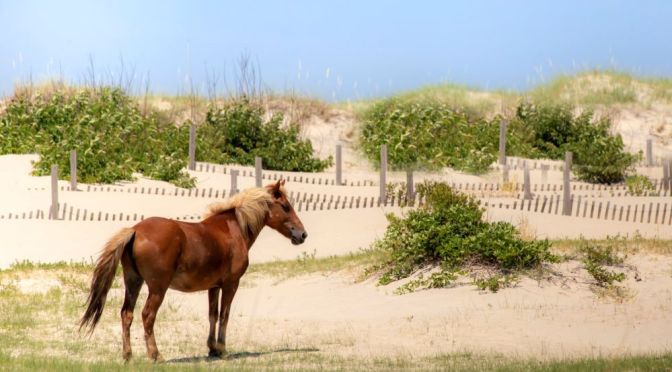
North Carolina: The Wild Ponies Of The Outer Banks
“Sunday Morning” leaves us with wild horses along the Outer Banks near Corolla, North Carolina. Videographer: Carl Mrozek.
The Corolla Wild Horses are located in the northernmost beaches of the Outer Banks, in the 4WD area that’s just north of Corolla. Wild horses, also known as Wild Ponies, are also found on Ocracoke Island, and can be viewed at the Ocracoke Pony Pen just south of the Hatteras / Ocracoke ferry docks.

Wildlife Views: Evolution Of Marine Iquanas (Video)
Marine iguanas are the only modern lizards that hunt for food above and below water. Due to natural selection, they have adapted to survive in deep underwater meadows. With the ability to hold their breath for half an hour and sharpen their claws to grip slippery rocks, they are able to thrive in the chilly underwater temperatures that many cold-blooded reptiles could not survive.
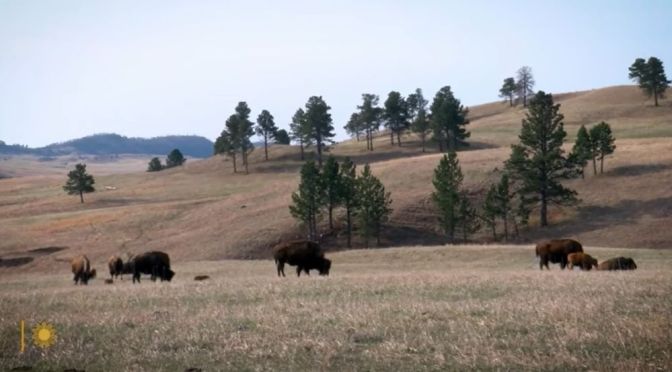
South Dakota Black Hills: Bison At Custer State Park
“Sunday Morning” takes us to Custer State Park in South Dakota, where bison and their young calves are roaming. Videographer: Kevin Kjergaard.
Custer State Park is a South Dakota State Park and wildlife reserve in the Black Hills, United States. The park is South Dakota’s largest and first state park, named after Lt. Colonel George Armstrong Custer.
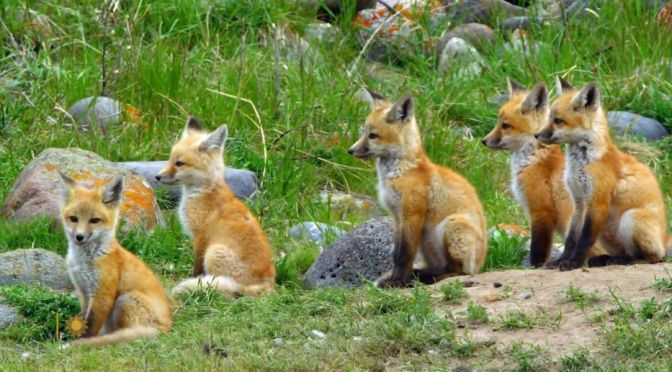
Montana Views: Red Fox Kits In Paradise Valley
“Sunday Morning” shows us a vixen with her paws full, in Paradise Valley, Montana. Videographer: Judith Lehmberg.
Red fox are found throughout Montana. They can make their home while following their food source. Foxes use their nose to find prey, and then quickly pounce, much like a house cat. Spotting a red fox in Montana is never difficult if you look carefully?just keep a close watch for the bushy tail.
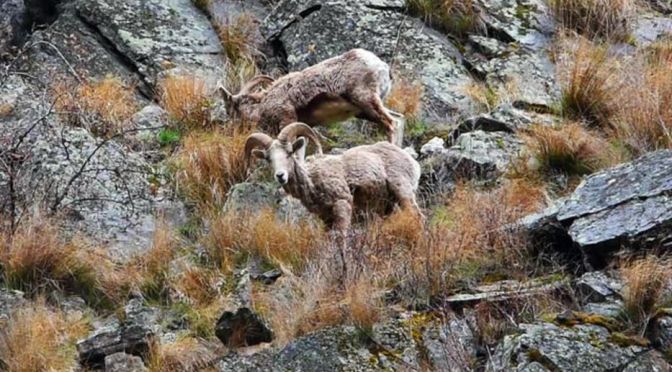
Views: Bighorn Sheep On The Salmon River In Idaho
“Sunday Morning” takes us among Bighorn sheep along the Salmon River near Riggins, Idaho. Videographer: Hank Heusinkveld.
The bighorn sheep is a species of sheep native to North America. It is named for its large horns. A pair of horns might weigh up to 14 kg; the sheep typically weigh up to 143 kg. Recent genetic testing indicates three distinct subspecies of Ovis canadensis, one of which is endangered: O. c. sierrae.
 Boomers Daily