Hong Kong will develop a new metropolis in its northern part to accommodate 2.5 million people and better integrate itself into the overall development of the country, according to the annual policy address delivered Wednesday by Chief Executive of China’s Hong Kong Special Administrative Region Carrie Lam.
Hong Kong, officially the Hong Kong Special Administrative Region of the People’s Republic of China, is a city and special administrative region of China on the eastern Pearl River Delta in South China.
Sports betting in the U.S. is booming. During the 2021 NFL season an estimated 45 million Americans are expected to wager at least $12 billion. Since a 2018 Supreme Court ruling, sports betting is now legal in more than 30 states.
A flood of new customers eager for risk and excitement has made DraftKings one of the nation’s biggest sportsbooks. In the third quarter of 2021 DraftKings revenue rose 60% from the year prior to $213 million. During that same period with mobile betting launching in several states the number of its monthly unique paying customers rose 31% to 1.3 million.
And the online sports betting and gaming industry in the U.S. is just starting to grow. As of 2021 only 4% of gross gaming revenue in the U.S. was generated online compared with 45% in a more mature market like the UK. The online sports betting market in the U.S. is expected to be worth nearly $40 billion by 2033. So what does the future look like for legal sports betting in America and what challenges lie ahead for sports betting providers like BetMGM, FanDuel and DraftKings?
A selection of three essential articles read aloud from the latest issue of The Economist. This week: the venture-capital industry is being turbocharged, what the fate of star tennis-player Peng Shuai reveals about one-party rule in China (10’52) and, when a museum is on fire, how do you decide what to save? (19’09).
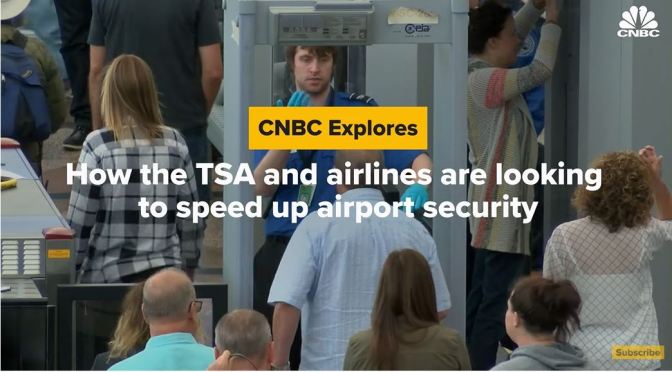
There once was a time when getting through airport security was quick and easy. But after the attacks on 9/11, the TSA, or Transportation Security Administration, was created and security screenings became much more thorough. With millions of people passing through TSA checkpoints everyday, this can create excruciating long lines, especially during holiday travel. Despite enhancements in technology like millimeter wave imaging and CT scanners, the airport security process has been slow to evolve. But that may soon be changing.
Delta, JetBlue, and American Airlines are just a few of the U.S. airlines starting to test facial recognition for boarding and TSA checkpoints. The TSA is also working with companies on designing better screeners so passengers don’t have to remove anything from bags and can leave their shoes on. CNBC explores how far we’ve come in airport security and the ways the TSA and airlines are looking to speed up and make airport security even safer.
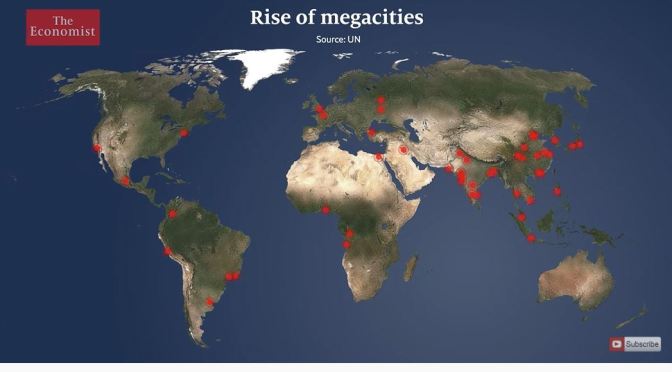
By 2050, 6 billion people could be living in megacities. How should the challenges caused by rapid urbanization be handled in the world ahead? Film supported by @Mission Winnow
Video timeline: 00:00: What are megacities? 01:01: The problem with megacities 03:07: How is Ahmedabad tackling rapid urbanisation? 04:45: How can cities manage traffic? 07:04: The problem with waste 08:00: How is Recycle Central revolutionizing trash? 10:58: What are the most urgent issues to resolve?
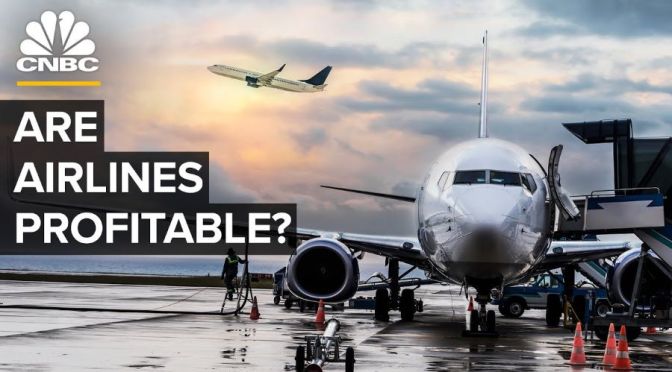
Passenger airlines are a crucial industry in the global economy, but the sector is also extremely volatile. Running a passenger airline is an asset-intensive industry with narrow profit margins.
Despite the risks, the industry has experienced some periods of consistent growth, which can lull investors into a false sense of security. Watch the video above to learn whether investors should steer clear of the sector and why passenger airlines struggle to stay profitable.
Video timeline: 0:00 – Introduction 1:35 – Industry shocks 6:16 – Business models 8:28 – Deregulation and consolidation 12:55 – Industry outlook
Billionaire investor Warren Buffett once called himself an “air-o-holic” because of how tempted he is to invest in commercial airlines. But he learned the hard way, twice, that the industry can be a risky bet. Airline stocks have been on a wild ride since the beginning of the pandemic, which shows just how volatile the sector can be. “It seems that airlines once or twice a decade are hit with these really hard-to-process exogenous shocks, whether it’s something like 9/11 or the Great Recession,” said Adam Gordon, managing director and partner at Boston Consulting Group’s Airline Practice. The passenger airline industry is already asset-intensive, with narrow profit margins. Despite the risks, the industry has experienced some periods of consistent growth. Airlines saw big growth in profits for about a decade prior to Covid, which analysts attribute to the airlines restructuring post-9/11. These periods can lull investors into a false sense of security. In 2017, the CEO of American Airlines said he was confident the business was never going to lose money again. Airline stocks may be appealing to investors because the industry is crucial to the global economy. “If you just step back and you think about what service airlines are offering, they’re putting you in a metal tube, taking you up to 40,000 feet, and transporting you in relative or absolute comfort at hundreds of miles an hour to get from point A to point B. And if you think about the substitutes for that service, like, there really aren’t any,” said Gordon. “So it’s kind of surprising to me that an industry that delivers that kind of a service and does it with an absolutely impeccable operational and safety record is able to come under such pressure,” he added.
A selection of three essential articles read aloud from the latest issue of The Economist. This week, the consequences of Russia’s new era of repression, why too many are still denied the right to die assisted dying (09:19) and why Turkey is deporting refugees for eating bananas (17:09).
Everyone is blabbing about the metaverse. But what does this future digital world look like? WSJ’s Joanna Stern checked into a hotel and strapped on a virtual-reality headset for the day. She went to work meetings, hung out with new avatar friends and attended virtual shows. Photo illustration: Tammy Lian / The Wall Street Journal
As lawmakers prepare for another hike in the U.S. debt ceiling, WSJ’s Greg Ip explains why it’s economically feasible for the U.S. to keep borrowing, as long as interest rates stay low.
Americans have a tendency to avoid the dentist. More than 40% of Americans said they don’t see a dentist as often as they would like, according to a 2018 survey by the American Dental Association.
Their number one reason for skipping visits is cost, even among those with dental insurance. Dental insurance policies can be confusing and difficult to use, making some Americans wonder whether dental insurance is worth investing in at all. Watch the video to find out to learn what it actually costs to go to the dentist, whether dental insurance is worth investing in and what patients and policymakers can do about it.
Chapters 0:00 – Introduction 1:42 – How dental insurance works 4:15 – Dental care costs 6:17 – Is dental insurance worth it? 9:49 – Solutions Americans have a tendency to avoid the dentist. More than 40% of Americans said they don’t see a dentist as often as they would like, according to a 2018 survey by the American Dental Association. People have lots of reasons for not going, including fear, inconvenience and trouble finding a dentist who take their insurance. But the top reason Americans cite for avoiding the dentist is cost, with nearly 60% of Americans saying cost was the main reason they haven’t visited the dentist in the past 12 months. Cost remained the number one reason regardless of age, income level or type of insurance. Dental insurance can be confusing since it’s considered a separate service from medical insurance, which means it has different policies and procedures that many patients are not familiar with. From a lack of transparency about benefits to rules like annual maximums — which means plans stop paying for treatment after hitting a certain amount for the year — some patients question whether dental insurance is worth investing in at all. “There’s this misnomer that you need dental insurance to go to the dentist, you really don’t,” said Dr. Mark Vitale, a general dentist and owner of Edison Dental Arts in Edison, New Jersey. “Dental insurance is not the panacea that most people think it is.” But the industry landscape is shifting as more traditional health insurance companies are supplementing their medical plans with dental benefits. “Dental insurance is extremely profitable to the insurance companies, which is why many of the insured many of the major carriers offer dental insurance,” Vitale said.
News, Views and Reviews For The Intellectually Curious




 Boomers Daily