Tag Archives: Analysis

Reviews: Can California Finish Its High-Speed Rail?

CNBC (May 16, 2023) – In 2008, California voted yes on a $9 billion bond authorization to build the nation’s first high-speed railway. The plan is to build an electric train that will connect Los Angeles with the Central Valley and then San Francisco in two hours and forty minutes.

Chapters: 1:35 Intro 1:41 The Vision 4:48 Progress 8:17 Setbacks and challenges

At the time, it was estimated the project would be complete by 2020 and cost $33 billion. But 15 years later, there is not a single mile of track laid, and there isn’t enough money to finish the project. The latest estimates show it will cost $88 billion to $128 billion to complete the entire system from LA to San Francisco. Inflation and higher construction costs have contributed to the high price tag. Despite the funding challenges, progress has been made on the project.

119 miles are under construction in California’s Central Valley. The project recently celebrated its 10,000th worker on the job. The infrastructure design work is complete, and 422 out of 500 miles have been environmentally cleared. CNBC visited California’s Central Valley, where construction is underway, to find out what it will take to complete what would be the nation’s largest infrastructure project.

TV: Inside The Hollywood Film And TV Writer’s Strike

Wall Street Journal (May 15, 2023) – The Hollywood writers’ strike has more than 11,000 movie and television writers in the Writers Guild of America on strike for the first time in 15 years.

Video timeline: 0:00 Writers’ strike has brought productions to a halt 0:50 How streaming has transformed the industry 4:20 The 2007-2008 writers’ strike 4:59 The writers’ demands 7:13 The strike’s impact on the entertainment industry

WSJ sat down for exclusive interviews with the showrunners of “Abbott Elementary” and “The Handmaid’s Tale” to understand the key sticking points that led to the writers’ strike and what’s next for the entertainment industry.

Business: Inside LVMH Moët Hennessy Louis Vuitton

CNBC (May 15, 2023) – The luxury conglomerate LVMH Moët Hennessy Louis Vuitton controls 75 Maisons, or brands, including Tiffany & Co., Sephora, Dior, Givenchy and TAG Heuer. At the helm of the luxury empire is the richest person in the world,

Chapters: 0:00 – Introduction 2:20 The Rise Of Louis Vuitton 8:45 A Culture Company, Not Just Luxury 16:46 The Future Of Luxury

Bernard Arnault, whose five children all hold senior executive roles within the company. With a keen eye for luxury, ruthless negotiation skills and an effective business acumen, Arnault has acquired some of the biggest names in the world. Most recently, in 2021, the company bought Tiffany & Co. for $15.8 billion after a bitter dispute about price due to the Covid-19 pandemic, and to salvage the luxury sector’s biggest-ever deal.

Though most companies struggled during the pandemic, LVMH’s stock steadily rose while it continued to report record revenue year after year as wealthy consumers participated in what McKinsey & Co. called “revenge spending.” For the first quarter of 2023, LVMH reported a 17% increase in revenue from the same period a year earlier. The Asia market, which had seen the most significant drop due to Covid-19 closures, had a 14% rise in revenue after an 8% decrease in the fourth quarter of 2022. In April 2023, LVMH became the first European company to surpass $500 billion in market value.

Opinion: China’s Power Is Peaking, Jobs Safe From A.I., Mexico Criminal Gangs

The Economist ‘Editor’s Picks’ Podcast (May 15 , 2023) Is Chinese power about to peak? Why your job is (probably) safe from artificial intelligence (11:00) and how Mexico’s gangs are becoming criminal conglomerates (35:00).

Public Transit: NYC’s $16 Billion Subway Line Costs

CNBC (May 13, 2023) – Public transit can be extremely valuable for a city’s economy – in New York City 85% of the people who travel into the business district below 61st Street take some form of public transportation.

Chapters: 00:00 — Introduction 01:39 — Second Avenue Subway 06:45 — A national problem 08:37 — Subway costs 15:31 — Solutions

In several major cities – New York, Boston, Washington, D.C., and San Francisco – the subway and other rapid rail systems are key contributors to the prosperity of the city. In NYC for example, more than $37 billion of the Metropolitan Transportation Authority’s $54 billion budget goes to subways. But building subways in the U.S. is very expensive.

In fact, it’s the sixth most expensive country to build rail transit in the world. And even that is likely an understatement. High labor costs, overbuilt tracks and stations, and onerous regulations all jack up costs. NYC’s sheer population density makes it rather worth it – so many people ride the subway that the cost per rider is comparable to many European cities where total expenditures are substantially lower.

However, the high costs hurt the case for public transit in less dense areas of the country. Lowering those costs could go a long way toward building affordable and accessible public transit for smaller cities around the country and reducing traffic congestion, pollution and traffic accidents.

Opinion: A World In Fiscal Fantasy, Can Turkey Sack Erdogan, King Charles III

The Economist ‘Editor’s Picks’ Podcast (May8 , 2023) Three essential articles read aloud from the latest issue of The Economist. This week, governments are living in a fiscal fantasyland, why Turkey is holding the most important election this year (11:02) and the coronation of King Charles III (17:30). 

Africa: The Potentials Of Nigeria Cassava Farming

Insider Business (May 7, 2023) – Nigeria grows 63 million metric tons of cassava (also known as yucca) every year, but most of the country’s supply is eaten locally as fufu or garri. Experts say Nigeria could be missing out on billions in exports of lucrative cassava products like bubble tea pearls, starch, or ethanol.

Video timeline: 0:00 Intro 1:48 History of cassava 2:58 Growing issues 5:42: How garri and fufu are made 6:54 Transportation issues 7:36 How cassava is processed 10:06 Global demand is so high for cassava

Challenges along the country’s entire supply chain have caused hundreds of millions of dollars in cassava spoilage. But one entrepreneur, Yemisi Iranloye, thinks she has the solution. She’s introduced higher-yielding seed varieties and moved processing plants closer to farms.

Now, her farmers earn four times more for their product, and her cassava starch and sorbitol have landed her clients like Nestle and Unilever. Could Yemisi’s model be the way for Nigeria to feed itself and cash in on exports?

Airline Travel: Legacy Vs Low-Cost Carriers (WSJ)

Wall Street Journal (May 3, 2023) – United Airlines flies 988 routes globally with around 30,000 departures every week. How do airlines choose where to fly when they have so many flights every week?

Video timeline: 0:00 Meet Patrick Quayle, a global network planning executive 0:27 The hub-and-spoke network structure 2:50 The linear route system, point-to-point 4:45 When to update route networks

It turns out legacy airlines like American and Delta and low-cost airlines like Southwest and Spirit use different models when planning their route networks. WSJ asked United’s global network planning expert to explain how airlines plan and manage their routes.

Opinion: Israel At 75, Is Keir Starmer Ready To Lead UK?, ChatGPT ‘Language’ Issues

The Economist ‘Editor’s Picks’ Podcast (May 1, 2023) A selection of three essential articles read aloud from the latest issue of The Economist. This week, Israel: the survivor nation at 75, is Sir Keir Starmer ready to govern Britain? (10:25) And why ChatGPT raises questions about how humans acquire language (19:05). 

Business: How ‘Junk Fees’ Invaded The U.S. Economy

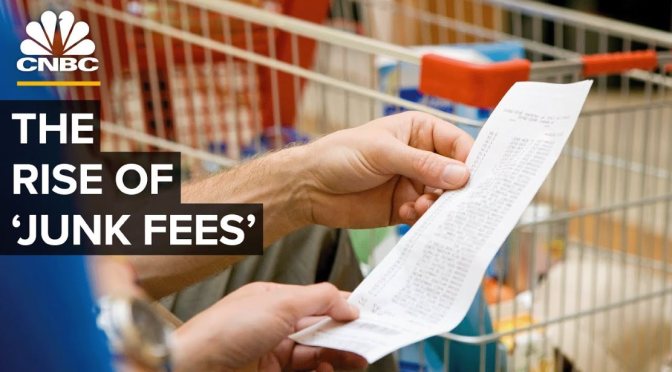
CNBC (April 25, 2023) – Americans are collectively spending nearly $65 billion on sneaky fees, according to the White House. “It really seems like companies have become addicted to junk fees,” Lina Khan, chair of the Federal Trade Commission, told CNBC.

Junk fees are making companies billions of dollars richer. Watch the video above to learn more about where junk fees hide, details of proposed changes, where policy may fall short and whether increased regulatory oversight may be enough to squash junk fees once and for all. Chapters: 0:00 Introduction 1:26 Defining ‘junk’ fees 5:34 Squashing fees 7:52 Policy problems 10:02 The future of fees