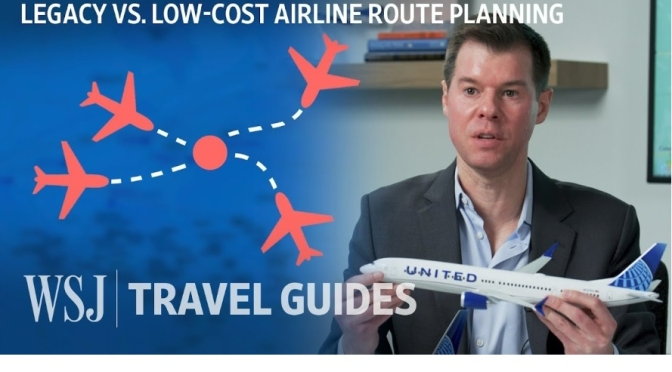
Wall Street Journal (May 3, 2023) – United Airlines flies 988 routes globally with around 30,000 departures every week. How do airlines choose where to fly when they have so many flights every week?
Video timeline:0:00 Meet Patrick Quayle, a global network planning executive 0:27 The hub-and-spoke network structure 2:50 The linear route system, point-to-point 4:45 When to update route networks
It turns out legacy airlines like American and Delta and low-cost airlines like Southwest and Spirit use different models when planning their route networks. WSJ asked United’s global network planning expert to explain how airlines plan and manage their routes.
Exotic destinations, or staycations? As we make choices like these, we ask ourselves: Will we ever be able to fly without feeling guilty again? This film examines the tourism business today, and asks how the industry envisages the future.
The pandemic brought the tourist industry to a standstill. But it also highlighted something we have long suspected: Namely, too much travel is bad for the environment.
Not only that, but tourism transforms entire regions – not always for the better. It profoundly impacts communities and often brings benefits for only a very few. But our wanderlust remains. So, do travelers have to decide between the two extremes: exotic destinations (and high carbon footprints) or holidays at home? Given the climate emergency, can we fly without feeling guilty? How environmentally damaging are cruises? And what does it mean to have a sustainable holiday?
This documentary examines an industry that had gotten ahead of itself, even before it was hit by the pandemic. We hear from mayors, tourism managers, a climate expert, an internet activist and a sociologist. The film travels to the European tourist hotspots of Barcelona, Venice and Dubrovnik. The tiny island of Palau in the Pacific Ocean demonstrates how sustainable travel can be sensibly organized, and a Parisian start-up develops a concept for virtual travel experiences.
Available space, weather and air traffic volume are key factors that go into airfield design. Robert Hoxie, who helped redesign Chicago O’Hare’s airfield, explains how runways are mapped out. Photo Illustration: Adele Morgan/The Wall Street Journal
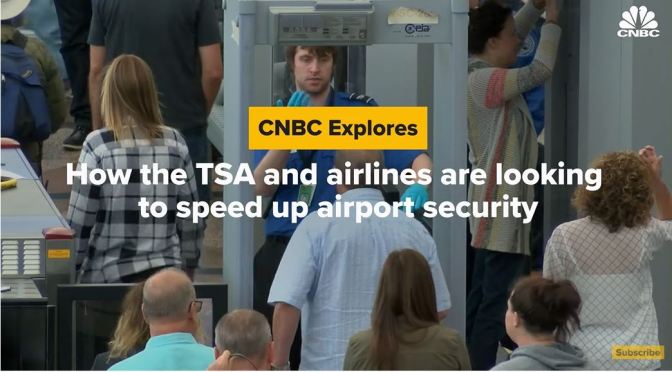
There once was a time when getting through airport security was quick and easy. But after the attacks on 9/11, the TSA, or Transportation Security Administration, was created and security screenings became much more thorough. With millions of people passing through TSA checkpoints everyday, this can create excruciating long lines, especially during holiday travel. Despite enhancements in technology like millimeter wave imaging and CT scanners, the airport security process has been slow to evolve. But that may soon be changing.
Delta, JetBlue, and American Airlines are just a few of the U.S. airlines starting to test facial recognition for boarding and TSA checkpoints. The TSA is also working with companies on designing better screeners so passengers don’t have to remove anything from bags and can leave their shoes on. CNBC explores how far we’ve come in airport security and the ways the TSA and airlines are looking to speed up and make airport security even safer.
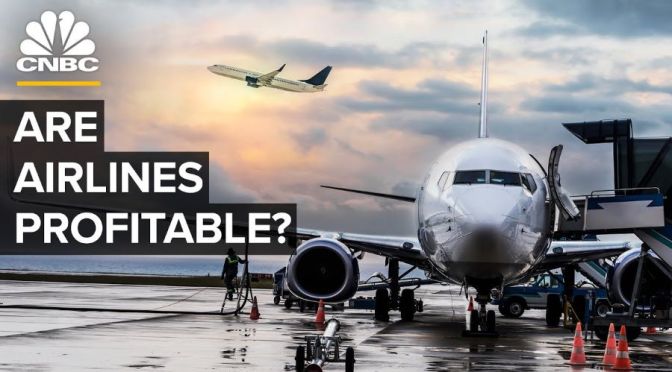
Passenger airlines are a crucial industry in the global economy, but the sector is also extremely volatile. Running a passenger airline is an asset-intensive industry with narrow profit margins.
Despite the risks, the industry has experienced some periods of consistent growth, which can lull investors into a false sense of security. Watch the video above to learn whether investors should steer clear of the sector and why passenger airlines struggle to stay profitable.
Video timeline: 0:00 – Introduction 1:35 – Industry shocks 6:16 – Business models 8:28 – Deregulation and consolidation 12:55 – Industry outlook
Billionaire investor Warren Buffett once called himself an “air-o-holic” because of how tempted he is to invest in commercial airlines. But he learned the hard way, twice, that the industry can be a risky bet. Airline stocks have been on a wild ride since the beginning of the pandemic, which shows just how volatile the sector can be. “It seems that airlines once or twice a decade are hit with these really hard-to-process exogenous shocks, whether it’s something like 9/11 or the Great Recession,” said Adam Gordon, managing director and partner at Boston Consulting Group’s Airline Practice. The passenger airline industry is already asset-intensive, with narrow profit margins. Despite the risks, the industry has experienced some periods of consistent growth. Airlines saw big growth in profits for about a decade prior to Covid, which analysts attribute to the airlines restructuring post-9/11. These periods can lull investors into a false sense of security. In 2017, the CEO of American Airlines said he was confident the business was never going to lose money again. Airline stocks may be appealing to investors because the industry is crucial to the global economy. “If you just step back and you think about what service airlines are offering, they’re putting you in a metal tube, taking you up to 40,000 feet, and transporting you in relative or absolute comfort at hundreds of miles an hour to get from point A to point B. And if you think about the substitutes for that service, like, there really aren’t any,” said Gordon. “So it’s kind of surprising to me that an industry that delivers that kind of a service and does it with an absolutely impeccable operational and safety record is able to come under such pressure,” he added.
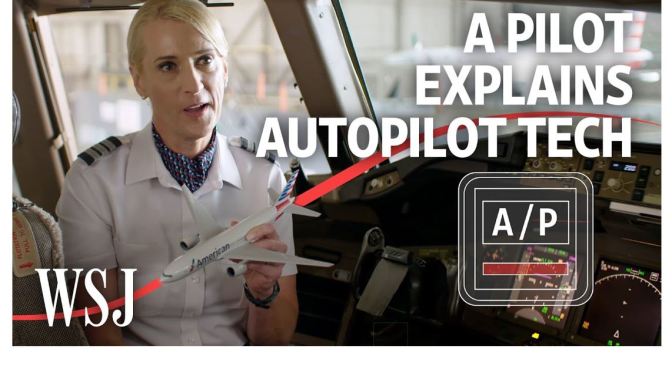
Think of autopilot like cruise control on a car. Autopilot is used on nearly every flight, but it’s not obvious just what it does. American Airlines Capt. Sonya Laxo explains the tech behind autopilot, how it’s used and why it isn’t really “auto.” Photo Illustration: Laura Kammermann
A.M. Edition for Sept. 30. WSJ’s Sune Engel Rasmussen describes life under Taliban rule and the worries about Afghanistan’s economy. Britney Spears’s father is suspended as conservator of her $60 million estate.
Facebook is scheduled to testify at a Senate hearing about its products’ effects on young people’s mental health. And, the science behind Covid-19 transmission on planes.
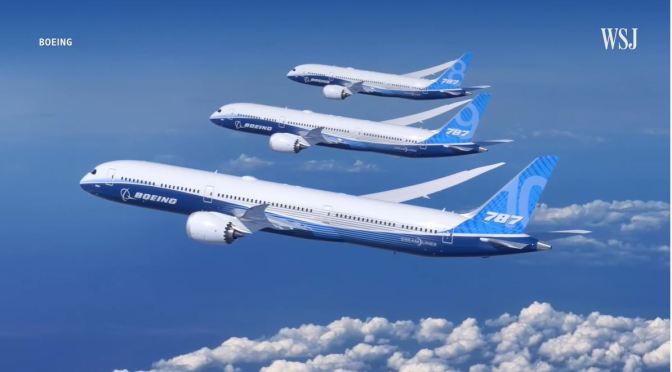
Inventories of the wide-body planes are piling up, as deliveries remain halted A new defect on Boeing’s Dreamliner aircraft surfaced in July, the latest in a series of issues that arose late last summer. Deliveries of the popular plane are now halted, pressuring Boeing’s profits. WSJ’s Andrew Tangel explains how Boeing got here. Photo: Bloomberg News
Boeing and Airbus dominate global aviation, but China’s Comac wants to challenge the duopoly with new planes. WSJ’s Jon Sindreu explains how supply chains, technology and geopolitics could help the Western aircraft makers to protect key markets. Photo Composite: George Downs
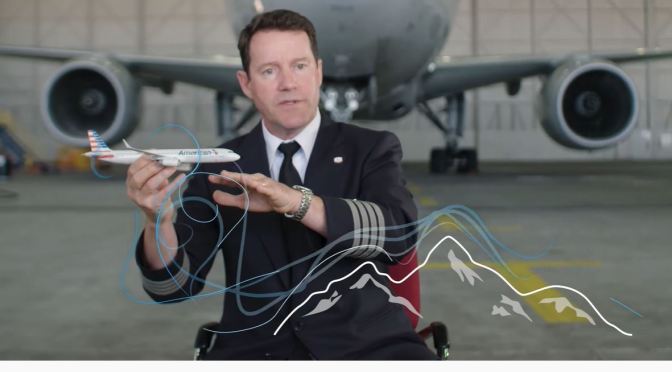
After decades of flying, pilot Stuart Walker says turbulence isn’t entirely predictable. But there are different types of turbulence pilots watch for. Walker explains each one and what pilots do to avoid a bumpy ride. Illustration: Alex Kuzoian for The Wall Street Journal
News, Views and Reviews For The Intellectually Curious





 Boomers Daily