Science: Avoiding Sudden Food Scarcity, Lattice Strength, Time Neurons

Addressing the problem of sudden food scarcity in US cities, and the up-and-coming field of computational social science.

In this episode:

00:45 Food shocks

Climate change, the COVID-19 pandemic, and geopolitical crises can cause food shortages. To tackle this issue, Alfonso Mejia and colleagues have modelled how to best mitigate these food shocks in US cities. Alfonso tells us about the new analyses and what steps cities could take in the future.

Research Article: Gomez et al.

News and Views: How to buffer against an urban food shortage

06:07 Research Highlights

A tiny lattice can withstand the impacts of projectiles at twice the speed of sound, and the neurons that allow humans to perceive time.

Research Highlight: Supersonic strikes leave just a dent in this super-light material

Research Highlight: The ‘time neurons’ that help the brain keep track

08:25 Computational Social Science

Big data is transforming research, and social science is no exception. This week, Nature is running a special issue on ‘computational social science’. We catch up with some of the editors involved to find out more about this up-and-coming field.

Collections: Computational Social Science

19:27 Briefing Chat

We discuss some highlights from the Nature Briefing. This time, discovering the dazzling diversity of viruses, and how China eradicated malaria.

Nature News Feature: Beyond coronavirus: the virus discoveries transforming biology

Science: It’s official: China has eliminated malaria

Travel: The Rental Car Shortage Explained (WSJ)

This summer it’s harder than ever to rent a car in the U.S., especially at popular vacation destinations. To learn what’s behind the spike in rental car prices, WSJ speaks with an industry analyst and WSJ’s Nora Naughton. Photo: Luke Sharrett/Bloomberg

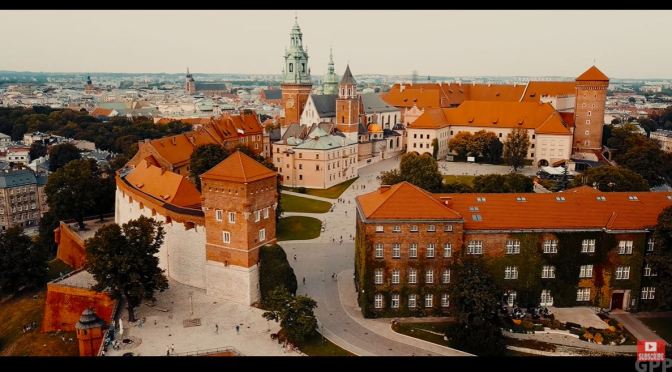
Aerial Views: Kraków – Southern Poland (4K)

Kraków, a southern Poland city near the border of the Czech Republic, is known for its well-preserved medieval core and Jewish quarter. Its old town – ringed by Planty Park and remnants of the city’s medieval walls – is centered on the stately, expansive Rynek Glówny (market square). This plaza is the site of the Cloth Hall, a Renaissance-era trading outpost, and St. Mary’s Basilica, a 14th-century Gothic church.

Environments: Blue Oak Woodlands Of Sequoia National Park (Podcast)

Morning News: Syria & UN Aid, Hong Kong & Airbnb Restrictions In France

The latest on the UN Security Council showdown over humanitarian aid for Syria. Plus: we find out about Hong Kong’s chief executive Carrie Lam’s call for parents to monitor their children’s political beliefs and the French cities that are imposing restrictions on Airbnb.

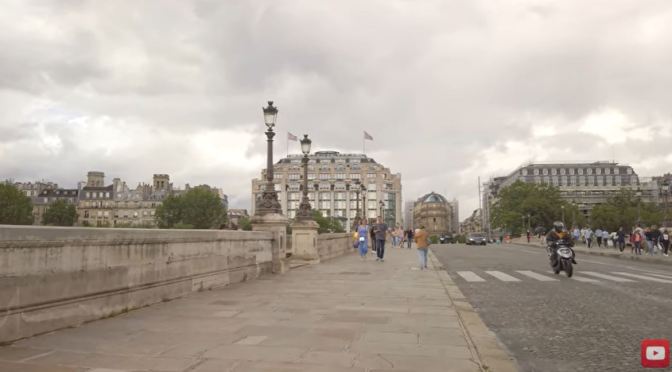
Paris Walks: Pont Neuf Bridge And Samaritaine

The Pont Neuf is the oldest standing bridge across the river Seine in Paris, France. It stands by the western point of the Île de la Cité, the island in the middle of the river that was, between 250 and 225 BC, the birthplace of Paris, then known as Lutetia and, during the medieval period, the heart of the city. 

La Samaritaine is a large department store in Paris, France, located in the first arrondissement. The nearest métro station is Pont-Neuf, directly in front at the quai du Louvre and the rue de la Monnaie.

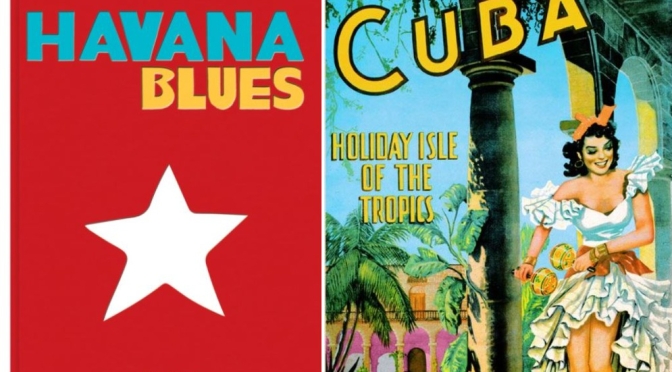
Travel & Culture Books: ‘Havana Blues’ (July 2021)

Crumbling pastel-colored facades line its streets, parked vintage cars evoke times past, live music permeates the air. Welcome to Havana, home to an overwhelming energy. Situated along the Straits of Florida, the capital of Cuba has been through several identities: Spanish colonial settlement, mobster rule in the 1930s, glamour of the 1950s, Cuban revolution and, most recently, a cultural renaissance. 

Havana’s bold, provocative approach to art, cuisine and entertainment—as well as the eclectic blend of African, French, Spanish and North American influences—including its range of architecture styles from the sixteenth century to the modern day, confer this epic city with a legendary status on par with the world’s greatest cities. While some of the building are in disrepair, the beauty of the baroque, neoclassical and art deco features triumphs.

The iconic Copa Room cabaret that hosted Ginger Rogers and Abbott and Costello still stands. The Gran Teatro de la Habana, built in the early twentieth century, is now home to the Cuban National Ballet. Habana Vieja is undergoing a massive restoration to its former glory. Havana could be seen as a work-in-progress, but it is more a testament to its never-ending determination to improve and progress, which might be the allure that attracts so many visitors. So take a seat at an authentic paladar (family-run restaurant) and enjoy the vibrant evolution of Havana.

Pamela Ruiz came to Cuba in the 1990s and fell in love, both with the country and her husband, Cuban artist Damian Aquiles. Formerly a location scout for photography shoots, she soon began to turn her attention to art, specifically bridging the international art world and Cuba.

Read more at Assouline

Drought: Desalination Plant Opens In California

San Diego is set to soon start supplying itself with millions of gallons a day of fresh, drinkable water, using saltwater from the Pacific Ocean, converted by a brand new desalination plant. As California’s historic drought continues, the plant will likely intensify the debate over the role of desalination may play in the state’s water supply. Special Correspondent Mike Taibbi reports.

View the Full Story/Transcript: http://www.pbs.org/newshour/bb/desali…

News, Views and Reviews For The Intellectually Curious