Category Archives: Travel

Architecture: Wallaroo Residence Tour, Canberra

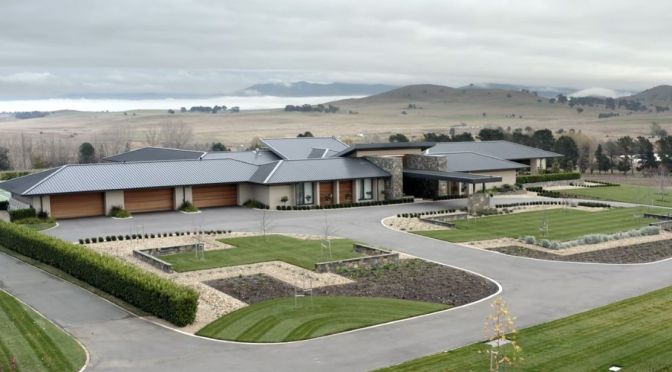
In touch with a vast rural landscape, Wallaroo Residence rises from atop one of Canberra’s many slopes. Crafted by DNA Architects, the modern farmhouse gently weaves natural elements into its modern expression, emerging as a place of retreat.

Video timeline: 00:00 – Introduction to theModern Farmhouse 00:35 – Hitting The Brief 01:10 – A Walkthrough of the House 01:47 – The Key Architectural Features 02:23 – Navigating The Weather Elements 02:44 – Separation Between The Family and The Entertaining Areas 02:55 – The Contemporary Kitchen 03:41 – A Focus On Sustainability 04:24 – The Modern Farmhouse Aesthetic 04:52 – The Architects Favourite Part of The Home

Settled on the edge of Canberra, Wallaroo Residence follows a design brief readily assigned to DNA Architects. The luxury home presents as a modern farmhouse, a concept first proposed by its traditional pitched roof and then explored within an interior of considered materials maturely applied. Aggrandising the entrance of the modern farmhouse, a floating porte-cochère leads on to an impressive set of glass doors. Internally, a timber-clad kitchen sits to the east of the arrival space, beyond which lies the family living room.

From there, the residence separates into the laundry room and master suite which offers unobstructed southern views. Along the back wall of the kitchen, Fisher & Paykel DishDrawers are effortlessly integrated into both the wall itself and the adorning joinery. On the kitchen island, a Full Surface Fisher & Paykel Induction Hob satisfies the desire for sustainable living and enables multiple pans to be warmed at once.

In the laundry room, large capacity Fisher & Paykel Washer Dryers inject a sense of efficiency into the modern farmhouse. Embracing its unique perspective, Wallaroo Residence testifies to the ongoing appeal of a city escape. With inhered functionality and a contemporary aesthetic, the modern farmhouse represents a distinguished interpretation of rural luxury.
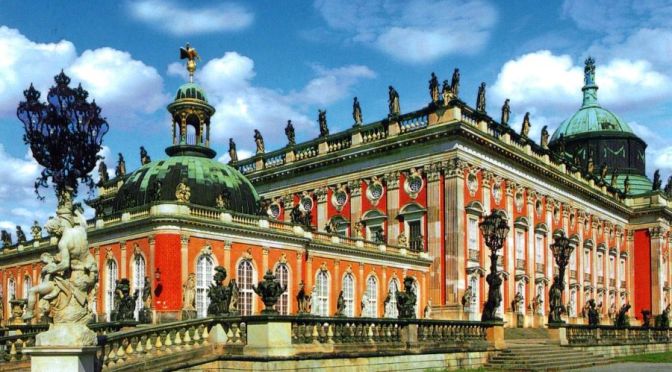
Views: Sanssouci Palace Tour In Potsdam, Germany

How does this sound: A picturesque little castle palace surrounded by wine terraces and a romantic park – and you right in the middle of it all! Join DW reporter Hannah Hummel for a relaxing day in Potsdam. She visits Sanssouci, the pleasure palace of King Frederick the Great. Hannah immerses herself in the atmosphere of the place, very much in the spirit of the Prussian king, who indulged in the good life here, far away from his court. Here he could indulge in nature, music and philosophy without worry – sans souci.

Potsdam, city, capital of Brandenburg Land (state), eastern Germany. Lying on the southwest border of Berlin, it is sited where the Nuthe River flows into the Havel River, the confluence becoming a series of lakes.

First mentioned in 993 as a Slavic settlement known as Poztupimi, it received its charter in 1317. It became Brandenburg’s electoral residence in 1640 under Frederick William (the Great Elector) and the Prussian royal residence under Frederick II (the Great), during whose reign (1740–86) it was an intellectual and military centre and virtual capital of Prussia. In the 18th century a colony of Dutch immigrants gave their quarter of the city, and some other parts as well, a distinctly Dutch flavour. Potsdam suffered severe damage in World War II, but many monuments survived and others have been restored. The Cecilienhof Palace was the scene (July 17–August 2, 1945) of the Potsdam Conference of the Allied leaders; it now houses a museum and a memorial, as well as a hotel. From 1952 to 1990 the city was capital of the Potsdam Bezirk (district) of East Germany.

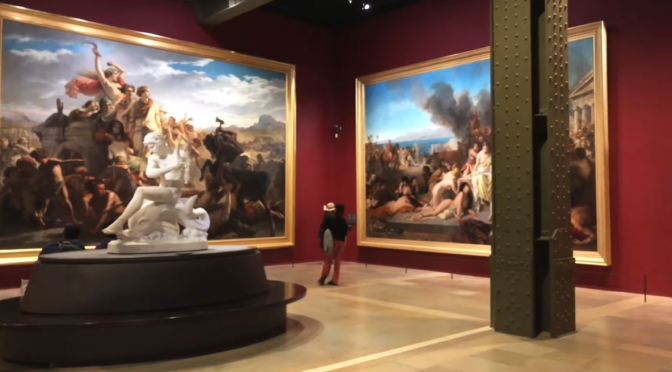
2022 Museum Tours: Musée d’Orsay In Paris, France

Musée d’Orsay, (French: “Orsay Museum”) national museum of fine and applied arts in Paris that features work mainly from France between 1848 and 1914. Its collection includes painting, sculpture, photography, and decorative arts and boasts such iconic works as Gustave Courbet’s The Artist’s Studio (1854–55), Édouard Manet’s Le Déjeuner sur l’herbe (1863; Luncheon on the Grass), and Pierre-Auguste Renoir’s Dance at Le Moulin de la Galette (1876; Bal du moulin de la Galette).

The Musée d’Orsay is housed in the former Gare d’Orsay, a railway station and hotel that was designed by Victor Laloux and located on the Left Bank of the Seine River opposite the Tuileries Gardens. At the time of its completion in 1900, the building featured an ornate Beaux Arts façade, while its interior boasted metal construction, passenger elevators, and electric rails.

Because of changes in railway technology, however, the station soon became outdated and was largely vacant by the 1970s. Talks to transform the builing into an art museum began early in the decade and were finalized in 1977 through the initiative of Pres. Valéry Giscard d’Estaing. With government funds, the building was restored and remodeled in the early 1980s by ACT architecture group.

The interior was designed by Gaetana Aulenti, who created a complex layout of galleries that occupied three main levels surrounding the atrium beneath the building’s iconic iron-and-glass barrel vault. On the ground floor, formerly the building’s train platforms, extensive stone structures broke up the cavernous space and created a central nave for the sculpture collection and gallery spaces for painting and decorative arts.

Timelapse Travel Views: ‘Magnificent Japan’ (4K)

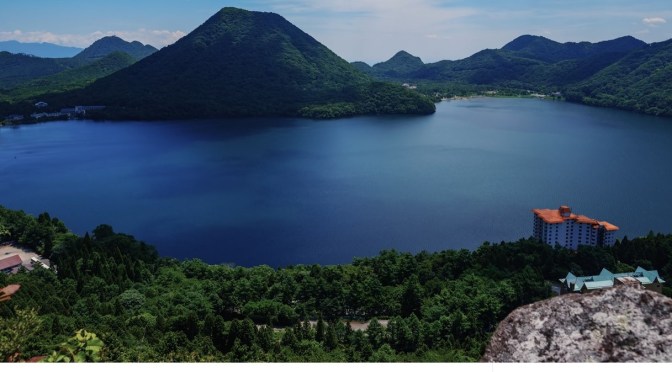
“雄大 (YUDAI)” means magnificent in Japanese. The film is a Timelapse and Hyperlapse depiction of magnificent Japan.

Japan, island country lying off the east coast of Asia. It consists of a great string of islands in a northeast-southwest arc that stretches for approximately 1,500 miles (2,400 km) through the western North Pacific Ocean. Nearly the entire land area is taken up by the country’s four main islands; from north to south these are  Hokkaido  (Hokkaidō),  Honshu  (Honshū),  Shikoku, and Kyushu (Kyūshū). Honshu is the largest of the four, followed in size by Hokkaido, Kyushu, and Shikoku. In addition, there are numerous smaller islands, the major groups of which are the Ryukyu (Nansei) Islands (including the island of Okinawa) to the south and west of Kyushu and the IzuBonin (Ogasawara), and  Volcano  (Kazan) islands to the south and east of central Honshu. The national capital, Tokyo (Tōkyō), in east-central Honshu, is one of the world’s most populous cities.

Filmed and Edited by: Daisuke Shimizu

Walking Tours: Side In Southern Turkey (4K)

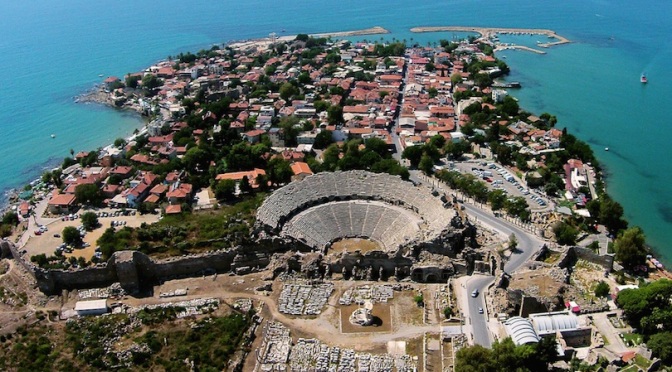
Side is a resort town on Turkey’s southern Mediterranean coast. An ancient port city, it’s known for long beaches and Greco-Roman ruins. In the center are the remains of the 2nd-century Antique Theater, which seated up to 15,000. The white marble columns of the Hellenistic Temple of Athena stand near the harbor. Other sites are sprinkled throughout, with finds housed at the Side Museum, a restored Roman bath complex. 

Wildlife: A Chameleon Birthing On Mount Kenya

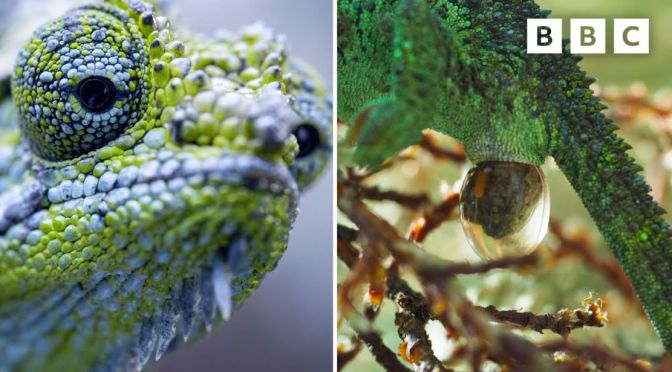
In these frozen peaks, a chameleon gives birth to live young as it is too cold to lay eggs out in the open.

 In East Africa, during the day, on the high slopes of Mount Kenya the tropical sun keeps the cold at bay – but at night the frost descends. During this cycle of freeze and thaw, a pregnant high casqued chameleon must choose the right time to give birth, if her new-borns are to escape the deadly night freeze.

Island Views: A Walking Tour In Mykonos, Greece

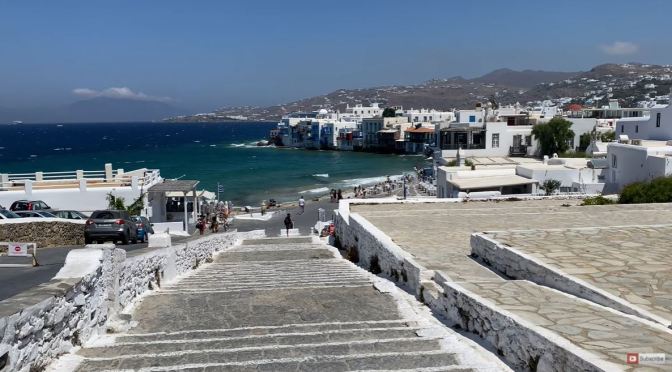
Mýkonos, also spelled Míkonos, island, dímos (municipality), and perifereiakí enótita (regional unit), South Aegean (Modern Greek: Nótio Aigaío) periféreia (region), southeastern Greece. Mýkonos is one of the smaller of the eastern Cyclades (Kykládes) group of Greek islands in the Aegean Sea.

According to legend, it is the piece of rock thrown by Heracles to destroy the Giants. It is a rugged granite mass, about 33 square miles (85 square km) in area, lying next to Delos (Dílos) and between Tínos to the northwest and Náxos (Náchos) and Páros to the south. Mýkonos has several beaches, and on the north coast the Gulf of Pánormos forms a deep indentation. Located on the west side of the island is its capital, Mýkonos town; the town is the centre of a thriving tourism industry and is renowned for its nightlife.

Filmed in September 2022.

Tours: 25 Most Beautiful Small Towns In Europe

When planning a vacation to Europe, some of the first destinations that come to mind will be the teeming cities of Paris, London or Rome. Each of these metropolises is incredible, but they are far from all that Europe has to offer.

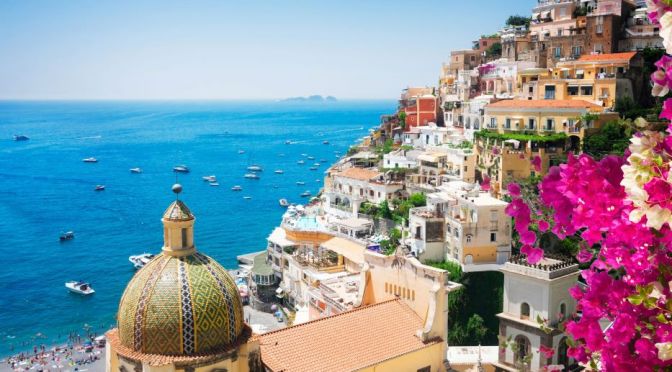
By exploring some of the smaller towns across the continent, it is possible to see a more authentic, traditional side to Europe. If you’re planning an upcoming getaway to the continent, here are just a few of the most beautiful small towns in Europe.

Views: The Sunflower Fields Of South Dakota

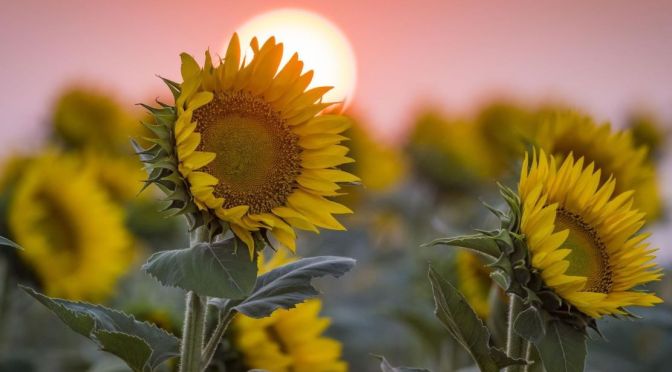
“Sunday Morning” takes us to field aglow in central South Dakota. Videographer: Kevin Kjergaard.

South Dakota consistently ranks as one of the world’s top sunflower producers. This makes late summer an amazing time to experience gorgeous yellow fields that seem to stretch forever. 

Depending on the growing season, sunflowers begin to bloom sometime in late July or early August and stay brilliant for approximately 30 days. Young pre-bloom plants track the sun throughout the day and turn back to the east overnight, putting them in position to catch the morning sunlight. As they bloom and the heads become heavier, the flowers stay facing the east. 

City Views: A Walking Tour Of Old Havana In Cuba (4K)

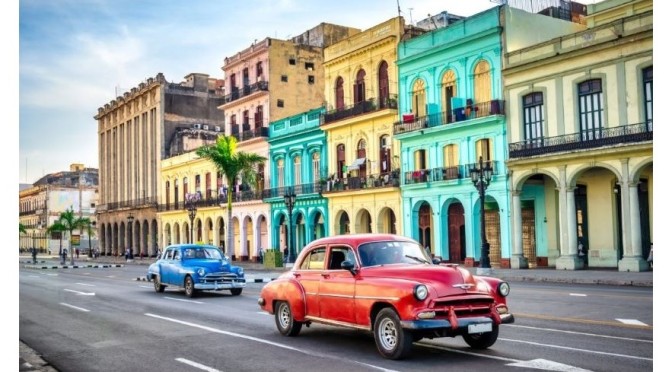
La Habana Vieja (Old Havana), declared a World Heritage Site by UNESCO in 1982, is the historic center of the city of Havana. It is formed by a harbor and the official center, the Plaza de Armas. There you will find all kinds of picturesque monuments, fortresses, churches, palaces, etc. It is full of authentic architectural treasures from different periods and offers one of the most comprehensive collections of urban buildings in all America. This area of the city alone is home to more than a thousand buildings of historical importance with various examples of distinguished architecture ranging from Baroque to Art Deco.

Unlike typical colonial cities, Havana was developed on not one, but four main plazas: the Plaza de Armas, which was the military and defensive center as it had a fortress and a large courtyard used for military parades; the Plaza de la Catedral, which with its cathedral was used as the religious center; the Plaza Vieja, which was the commercial hub as it housed important markets; and the Plaza de San Francisco de Asís, which was the main point of exportation and importation as it had a port where Spanish ships docked.