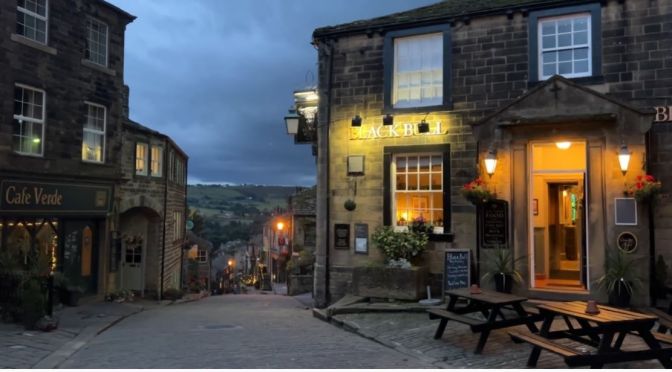
Emily Bronte, Anne Bronte, and Charlotte Bronte lived 180 years ago. We visit Bronte Country and walk in the footsteps of the Bronte Sisters, piecing together their tragic short lives as we visit places they lived or frequented. The Brontes wrote some of the most dramatic fiction right here in West Yorkshire and many of the places still exist.
On our walk, we will head to where it all started at the Bronte’s birthplace in Thornton. Visit the school that Charlotte Bronte immortalised as Lowood School in Jane Eyre. See Oakwell Hall which she based Fieldhead on in Shirley. Walk the wild Haworth Moors to Top Withens where Emily Bronte found inspiration for Wuthering Heights, and a whole lot more. All the time telling the story of how the 3 Bronte Sisters came to be the famous writers we all know today.
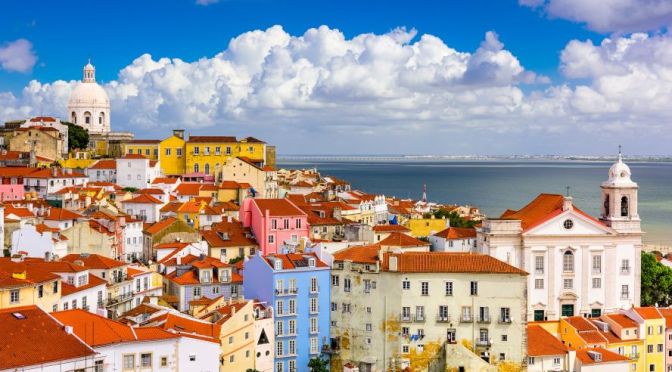
The bike tour is 12 miles (19km) long and takes you along the Lisbon waterfront past the Ponte 25 de Abril, Belem Tower, Padrão dos Descobrimentos and much more.
Video timeline: 0:00 Praca do Comercio 01:42 Avenida Ribeira das Naus 04:24 Jardim de Roque Gameiro 06:25 Cais Gás 16:13 Santo Amaro Dock 19:54 Ponte 25 de Abril 20:40 Tejo Promenade 25:02 MAAT 29:03 Doca de Belém 31:09 Padrão dos Descobrimentos 34:18 Belem Lighthouse 35:03 Bom Sucesso Marina 38:50 Belém Tower 42:28 Monument to the Overseas Combatants 43:33 Doca Pesca 49:05 Belém Tower 50:43 Bom Sucesso Marina 54:29 Padrão dos Descobrimentos 55:08 Doca de Belém 58:27 Tejo Promenade 59:08 MAAT 1:02:24 Ponte 25 de Abril 1:03:53 Doca de Santo Amaro 1:08:40 Doca de Alcântara 1:12:30 Doca de Santos 1:14:16 Doca de Santos 1:16:00 Cais das Pombas 1:16:46 Avenida Ribeira das Naus 1:18:02 Praça do Comércio
This biking tour of Lisbon, Portugal was filmed on Sunday July 17th, 2022 starting at 1:13 pm at the Commerce Square.
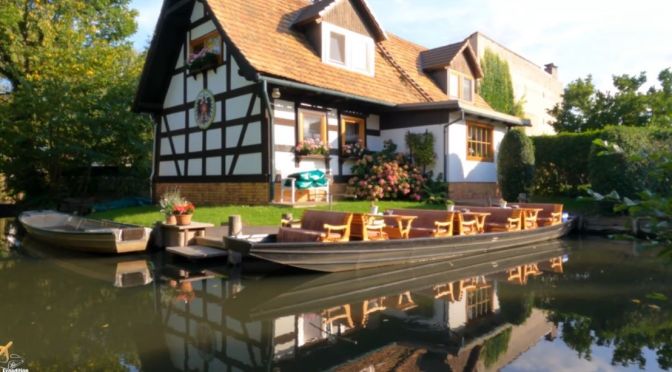
Lübbenau lies nestling in the UNESCO Spreewald Biosphere Reserve and it makes an immediate impression with its charming Old Town and a bustling port quarter for boat trips into the Spreewald.
Lübbenau is part of the Upper Spreewald-Lausitz district in southern Brandenburg, about one hour’s drive from Berlin. The town was first mentioned in records in 1315 and in 2015 it celebrates its 700th anniversary. Traces of its medieval beginnings can still be found in the historical town centre. The lively port quarter of Lübbenau is a popular starting point for boat trips into the Spreewald.
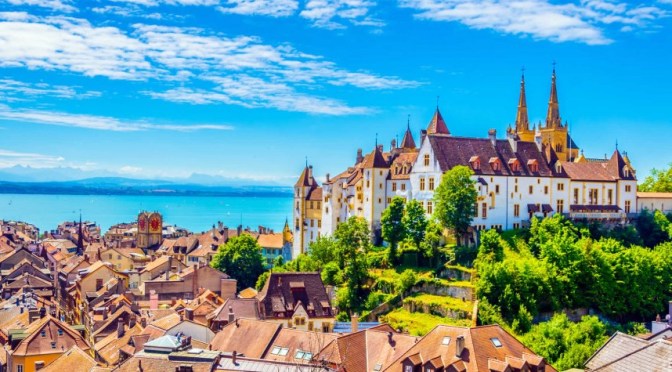
Neuchâtel (Neuenburg) is considered to be one of Switzerland most beautiful cities. It lays in the French speaking part of Switzerland and enchants with its visitors with its happy vibes. The city is very vibrant, many people love to stroll through the various streets and alleys, do shopping or go for sightseeing.
The city is full of limestone houses, which are very characteristic for Neuchâtel, rendering this city very distinct from the others of Switzerland. A must-see are the castle and the church on the hill in the middle of the city. They are considered historic landmarks from the days when Neuchâtel still followed a royal system being under French or Prussian rule. The church’s interior is very beautiful, especially with the ceiling. Neuchâtel has a beautiful lake promenade. Point of interest are Beau Rivage and the docks with the many boats.
During Summer you even can go for swimming. Neuchâtel is best to be reached by train, although arrival by car is possible. The train station is about 15 minutes from the city centre by walk, but you may take a shortcut by bus. Neuchâtel and the entire canton are great for cheap vacations as they have some attractive budget travelers offers. If you stay in any hotel in the canton, you get a booklet full of vouchers that provide you free public transportation and entry to the museums during the date of validity. It is valid for 1 day if you stay for 1 night, otherwise as many days as nights that you booked. All in all, Neuchâtel is a wonderful Swiss city, underrated but among the most beautiful ones!
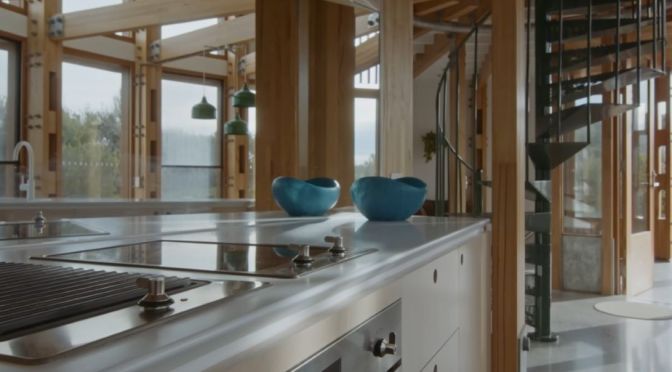
St Andrews Beach House is a holiday cabin by Austin Maynard Architects informed by a passion for sustainability. The circular cabin captures sunlight and breezes while allowing nature to regrow healthily around it. The flat roof captures water for the gardens and bathrooms. Sustainable materials include timber, double glazed windows and a concrete slab contributing thermal mass to the cabin.
Video timeline: 00:00 – Introduction to St Andrews Beach House 00:37 – The Beachside Location 01:04 – The Vision Behind The House 01:24 – Taking Inspiration From New Zealand Bach’s 01:57 – A Bach Type Layout 02:16 – Sustainably Small But Mighty 02:55 – A Carbon Storage Home 03:08 – Conditional Timber Selections 03:45 – The Importance of Sunlight 04:15 – The Positives of A Circular Home 04:38 – A Demountable Home 05:16 – Proud Moments In Designing and Creating The Home
Additionally, a heat pump system heats the water and the slab, keeping the house warm during the winter. Locally sourced eucalypt timber ensures the cabin can stand against time and the coastal elements. It also contributes to the cabin’s sustainability, capturing of carbon instead of producing it. The material is used inside as well, continuing both the warm, raw aesthetic and the sustainability benefits throughout.
Designed as one structural module repeated 26 times around, the efficiency of the cabin’s construction was optimised. It is also made to be demountable, so that clients are able to either dismantle or salvage the materials for another build in future, if needed. With the importance of sunlight stressed in the brief, large louvre doors were installed to allow light to flood through, and on days when the weather is blossoming, the doors can be opened to connect the deck with the living and dining areas of the cabin.
Due to its circular structure, the beach side cabin can capture or exclude the breeze whenever there is a need, and, as the spiral staircase in the centre leads up the private bedroom spaces, circulation of air and sun can continue around the entire cabin. With a playful and sustainable rationale, St Andrews Beach House is a home away from home that gives back to the surrounding land.
With a rich history in agriculture and shipbuilding, Kennebunk today retains her connection to the land and sea. With easy access to the ocean, river, and wooded trails, the town is one of those special communities that seems to have it all, even the prestige of name (there is only one Kennebunk in the country).
Kennebunk balances a rural feel with true convenience – Portland is only 25 miles away and catching the Downeaster train in Wells makes the commute to Boston a snap. Featured on the town seal is the Lafayette Elm, which was planted to commemorate General Lafayette’s 1825 visit to Kennebunk. The handsome tree is one of the only survivors of the Dutch Elm that destroyed hundreds of trees that once lined Kennebunk’s streets.
The residents are a bit like the mighty tree: able to withstand the changing of seasons and passing of time with a sense of quiet nobility. In this tight-knit, laid-back community, it’s easy to be a good and helpful neighbor.
This is a walk in Iguazu Falls, in the province of Misiones in Northern Argentina. This video was recorded in the Devil’s throat.
The Iguazu National Park consists of two national parks, one in Foz de Iguazu (Brazil) and the other one in Puerto Iguazu (Argentina). The curious thing is that although one only sees the falls as the main attraction, the park has a size of 252,982 hectares (67,720 on the Argentine side and 185,262 on the Brazilian side).
These falls in Argentina and Brazil managed to attract so much attention that almost at the same time they were declared National Parks (1934 in Argentina and 1939 in Brazil). And after some years and millions of visitors fascinated by the landscape and the sound of this natural attraction, UNESCO declared them as World Heritage Site in 1984, and reaffirmed as Exceptional Universal Value (their cultural and nature it’s so important that it’s conservation should be of worldwide interest) in 2013.
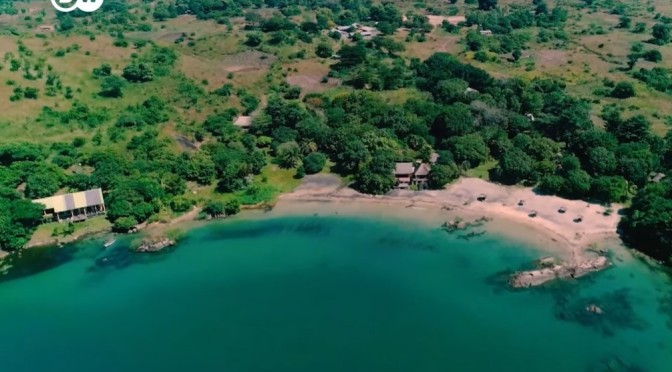
Located on the shores of Lake Malawi, Africa’s third largest lake, Makuzi Beach Lodge is secluded, isolated and offers fantastic views of the water. Guests’ meals are cooked with ingredients from the lodge’s huge garden — or from the lake on the doorstep. With concepts like this, eco-friendly and sustainable tourism is being promoted in Africa.
Malawi, a landlocked country in southeastern Africa, is defined by its topography of highlands split by the Great Rift Valley and enormous Lake Malawi. The lake’s southern end falls within Lake Malawi National Park – sheltering diverse wildlife from colorful fish to baboons – and its clear waters are popular for diving and boating. Peninsular Cape Maclear is known for its beach resorts.
Channelling the sense of warmth that has long-defined the family concept, Wimbledon House befits its purpose as a modern family home. Crafted by Taylor Pressly Architects in collaboration with the clients, Dave and Katie Penfold of Penfold Property Group, the functional home provides a timeless environment for communal living.
Video timeline: 00:00 – Introduction to the Modern Family Home 00:24 – The Site of the Home 00:47 – A Two Level Space 01:27 – The Featuring of a Curved Staircase 01:48 – Bringing Warmth to The Home Through Materials 02:25 – Transparency Through The View Lines 02:50 – Creating a Central Heart to The Home 03:04 – The Key Feature Areas: Kitchen and Staircase 03:25 – Creating the Staircase 04:32 – Building a Functional Family Home
Situated at the junction between Elwood, St Kilda, Balaclava and Elsternwick, Wimbledon House reflects thorough consideration of local design heritage. Recycled red brickwork references the previous iteration of the house as well as the influential art deco movement, wrapping the lower half of the exterior and tracking its fluid curves with a stack bond format.
Occupying a central position in the spatial plan is a landscaped courtyard which opens onto a staircase, executed by S&A Stairs. The spiral staircase connects the levels of the modern family home with a smooth three-dimensional curve, painted white. The handrail, neatly attached to the primary architecture of the modern family home, represents a particular achievement of S&A Stairs. While the company of the past would have taken days or weeks to build the rail, the modern-day S&A Stairs draws upon its 102 years of experience in order to complete the work within hours, using 5-Axis CNC technology.
By accommodating a family with ease, Wimbledon House succeeds in what is considered its core function. Offering a modern family home, Taylor Pressly Architects associates the communal domestic experience with elevated living, during which occupants can enjoy pieces of luxury craftmanship.
News, Views and Reviews For The Intellectually Curious





 Boomers Daily