Category Archives: Technology

World Economic Forum: Top Stories – March 4, 2023

World Economic Forum (March 4, 2023) – This week’s top stories of the week include:

0:15 Columbia holds a court case in the metaverse – This tech makes it easier and faster to access the justice system according to the magistrate in charge, Judge María Victoria Quiñones. The metaverse is a fully immersive digital reality, generally accessed through XR (Extended Reality). The judge said the metaverse meets the needs of a fair justice system. It provides a neutral space for all parties and allows for a free exchange of information while removing the need for everyone to gather in the same physical space. The judge also made use of the AI chatbot ChatGPT. She asked it to explain terms such as ‘metaverse’ and ‘avatar’ to the participants and she consulted ChatGPT on the best way to verify their identities. The metaverse is still in its infancy but it’s growing fast. 54% of experts believe it will have half a billion users by 2040

1:36 5 lifesaving technologies bringing relief to Turkey – Here are five life-saving technologies that are helping relief efforts in the aftermath of the Türkiye earthquake. One of them is an online open-source hub that was set up within hours of the earthquake. This simple website hosts links on everything from blood donations to temporary accommodation and emergency food supplies in the areas impacted by the Syria and Türkiye earthquake. It has handled more than 14 million requests for information already from more than 1 million unique visitors. Watch the video to learn more about how these technologies are aiding the Türkiye earthquake relief work.

3:05 3 completely new jobs you can get hired in – Skills-based hiring is the smart, ethical way to fill these vacancies. Hiring for skills is 5 times more predictive of job performance than hiring for education and 2.5 times more predictive than hiring for work experience.

5:08 Third HIV patient cured with bone marrow transplant – He received bone marrow stem cells to treat his leukemia from a donor with natural HIV resistance. Slowly, the healthy immune cells replaced HIV-infected ones. Now, a decade after the transplant and 44 months after stopping HIV medication the patient is in good health, with no signs of infection. Around 1% of the population is naturally immune to HIV, the virus that causes AIDS. The ‘Düsseldorf patient’ is the third to be cured of HIV with stem cells from bone marrow.

_____________________________________________

The World Economic Forum is the International Organization for Public-Private Cooperation. The Forum engages the foremost political, business, cultural and other leaders of society to shape global, regional and industry agendas. We believe that progress happens by bringing together people from all walks of life who have the drive and the influence to make positive change.


Drought: Las Vegas’ Model For Water Conservation

Bloomberg Originals (March 1, 2023) – In Nevada, Kal Penn investigates the lasting impacts of the Colorado River Compact, the 1922 agreement that doles out water rights to seven states. The system, over-optimistic from the start, is on the verge of collapse as water levels in key reservoirs approach dead pool-status. But in nearby Las Vegas, Kal explores strategies that have led that city to become one of the most successful in the US when it comes to water conservation.

World Economic Forum: Top Stories – Feb 25, 2023

World Economic Forum (February 25, 2023) – This week’s top stories of the week include:

0:15 This zero-emission truck drives itself – The truck is made by Swedish firm Einride. It says autonomous trucks could succeed where self-driving cars, so far, haven’t because freight trucks follow specific routes. Unlike car drivers, who often want freedom and spontaneity and specific, predictable routes require less complex autonomous technology. “But for a lot of transport, it’s actually the exact opposite. You don’t want it to be spontaneous. You don’t want it to suddenly be in another part of the country than it’s expected to be. [Trucks] need predictability. And they need to make sure that it actually arrives on time.”

2:48 Plastic-eating enzymes help recycle clothing – Scientists at the University of Portsmouth have identified more than 70 plastic-eating enzymes. This could divert millions of tonnes of textiles from landfill.

3:59 Why the ‘nowhere office’ is the future of work – This author thinks work will no longer be defined by a fixed time and place and that the culture of office presenteeism is over. The pandemic has changed people’s work habits forever. Many workers now see flexibility as a right, not a privilege. 40% of workers say they wouldn’t take a job without remote or hybrid options. Hobsbawm says we should be campaigning for new ways to value and pay for work, based around set outcomes rather than fixed hours as part of a momentous culture shift she calls ‘the great re-evaluation’.

7:04 Spain approves menstrual leave – It’s the first ‘menstrual leave’ law in Europe. People can take up to 3 days of leave a month paid for by the state if they suffer from cramps, nausea, dizziness or vomiting. In extreme cases, it can even be extended to 5 days. The sick leave will require a doctor’s note and will not cover those in mild discomfort. Similar laws exist in South Korea, Japan, Zambia and Indonesia

_____________________________________________

The World Economic Forum is the International Organization for Public-Private Cooperation. The Forum engages the foremost political, business, cultural and other leaders of society to shape global, regional and industry agendas. We believe that progress happens by bringing together people from all walks of life who have the drive and the influence to make positive change.
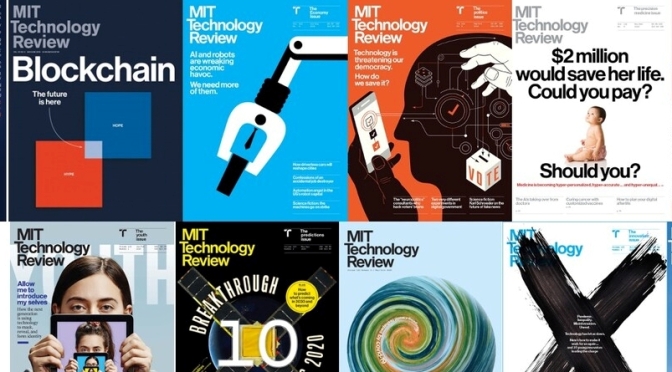
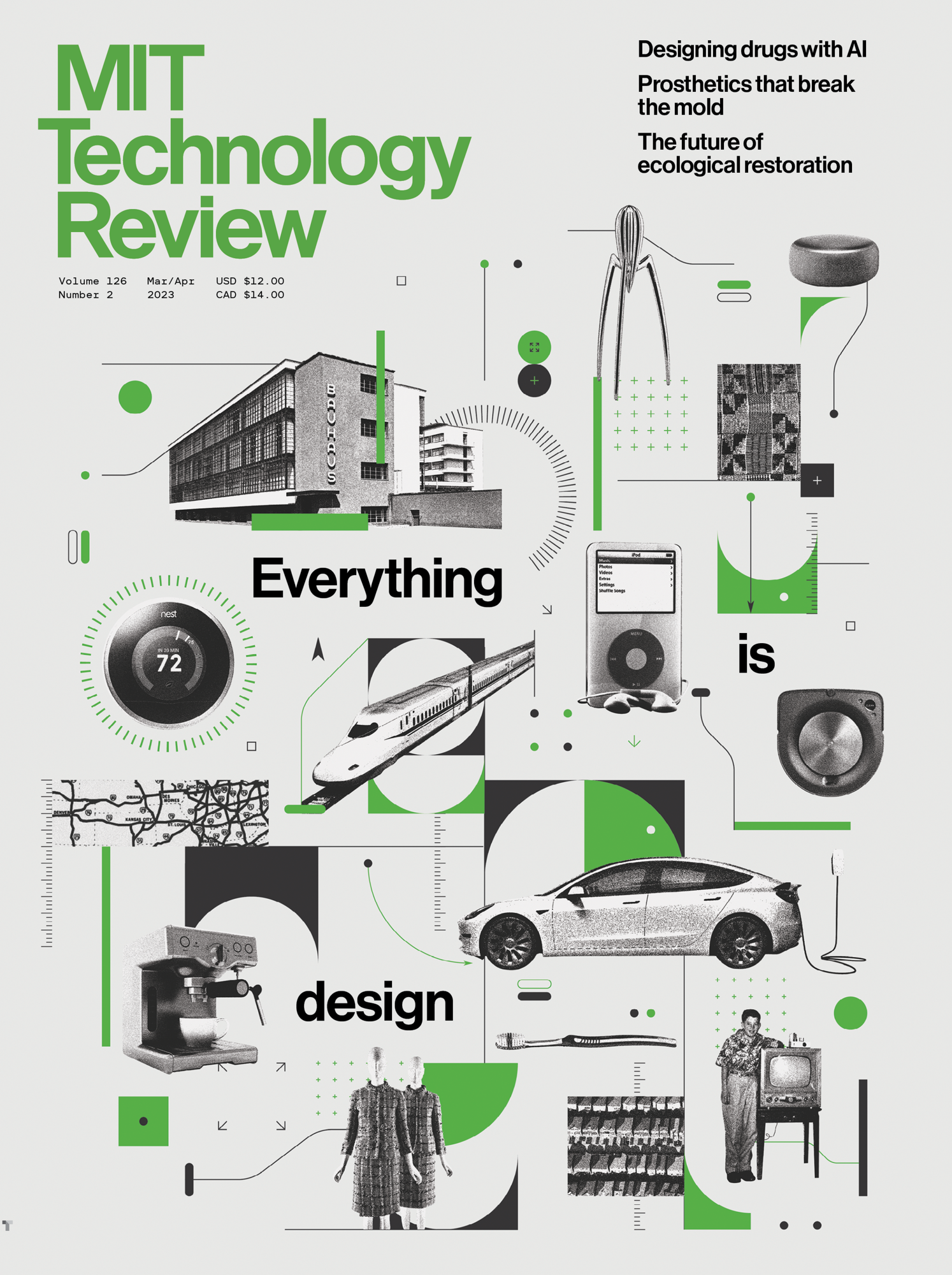
Design: MIT Technology Review – March/April 2023

MA23 cover

MIT Technology Review – March/April 2023:

Why the definition of design might need a change

When we unpack its current meaning, we may find that we want—and need—to retool the word yet again.

Design thinking was supposed to fix the world. Where did it go wrong?

An approach that promised to democratize design may have done the opposite.

AI is dreaming up drugs that no one has ever seen. Now we’ve got to see if they work.

AI automation throughout the drug development pipeline is opening up the possibility of faster, cheaper pharmaceuticals.

AI/Design 2023: ‘Architect-Style Cars’ By Moss & Fog

Moss & Fog (February 2023) – What if they designed cars, as well as buildings? Would they look like the architect’s famous creations? Would the car embody their trademark style?

We’ve enlisted AI to help us explore the ‘what if?‘. We used the program MidJourney to help visualize what an architect-derived car might look like. It was a fun visual journey, creating images that fit the time period and overall style of the famous architect in question.

Frank Lloyd Wright  (1867-1959)

Zaha Hadid  (1950-2016)

Eero Saarinen  (1910-1961)

Antoni Gaudí  (1852-1926)

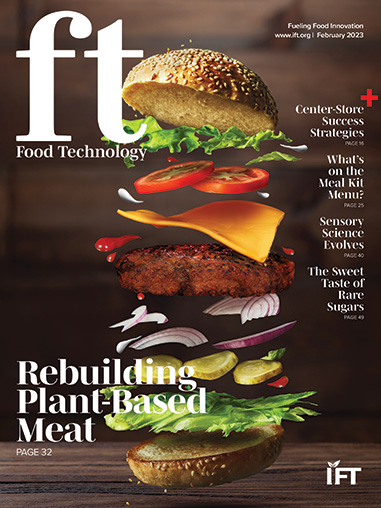
Cover: Food Technology Magazine – February 2023

February 2023 - IFT.org

Food Technology Magazine – February 2023:

Rebuilding Plant-Based Meat

Much-publicized market stumbles are triggering doubts about the potential of this onetime darling of investors, activists, and curious consumers. What’s it going to take to get it back on track?

Next-Generation Sensory Science

Sensory science is evolving thanks to a host of advanced methods and technologies that are helping food companies create successful products.

World Economic Forum: Top Stories – Feb 3, 2023

World Economic Forum (February 3, 2023) – This week’s top stories include:

  • 0:15 This AI robot is revolutionizing farming – The robot can identify weeds and crops at rate of 20 plants a second. The robot then delivers either weedkiller or fertilizer directly to individual plants to an accuracy of within 1mm. It can treat up to 500,000 plants per hour. The robot was invented by US firm Verdant Robotics.
  • 1:24 This company cancelled all internal meetings – In January, e-commerce platform Shopify cancelled all regular meetings with 3 people or more and imposed a 2-week window before staff could schedule anything new. It also permanently banned meetings on Wednesdays and limited large meetings to a strict window on Thursdays. More organizations are trying a ‘meeting reset’, from Dropbox to Asana and Zapier. But why – and could your organization try it too?
  • 3:00 How to build a thriving workplace – Businesses often ask staff why they resign. So why not ask why they’re joining or staying? “Why would you wait until people have already committed to walk out the door to say, ‘If only I had a time machine, I would go back to the past and convince you to stay’? What I would much rather see employers do are entry interviews and stay interviews. Entry interview is just asking the same questions you would normally pose at exit at the beginning of the employment relationship: Why are you here? What are you hoping to learn? Right. What are some of the best projects you’ve worked on? Tell me about the worst boss you’ve ever had so we can try to emulate the good and avoid the bad.”
  • 5:22 ChatGPT is already being used for scientific research – ChatGPT launched to the public in November 2022. It gives in-depth, natural language answers to prompts, based on what it has learned from a huge database of books and articles. People have been using ChatGPT to perform an impressive range of tasks, from writing university-level essays to debugging code and filling in job applications. It has written fake scientific reports that have fooled scientists and has even been used to write a children’s book.

The World Economic Forum is the International Organization for Public-Private Cooperation. The Forum engages the foremost political, business, cultural and other leaders of society to shape global, regional and industry agendas. We believe that progress happens by bringing together people from all walks of life who have the drive and the influence to make positive change.
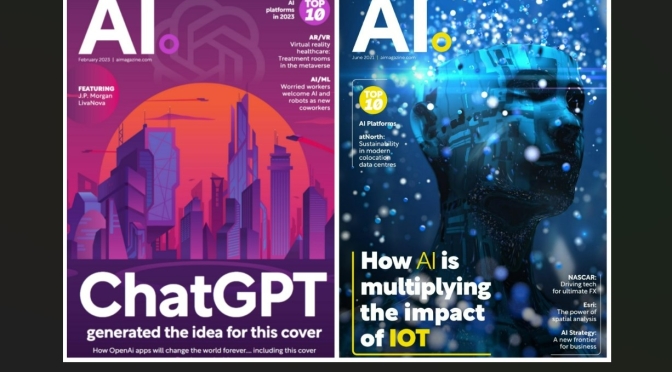
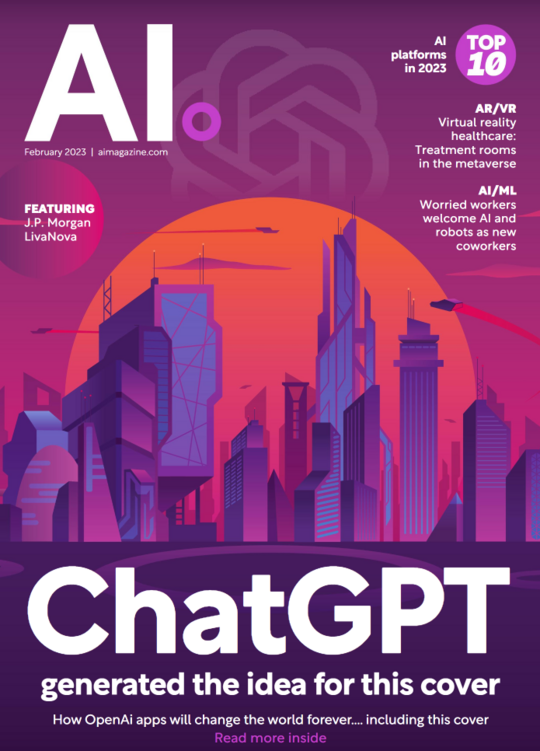
Technology Preview: AI Magazine February 2023

Image

AI Magazine – February 2023 Issue:

OpenAI helps spot AI text before it gets used for cheating

OpenAI’s AI Text Classifier aims to spot content generated by AI platforms before it can be used by bad actors, but the company admits it’s not perfect

ICYMI: Microsoft’s plans for quantum and Open AI investment

A week is a long time in artificial intelligence, so here’s a round-up of the AI Magazine articles that have been starting conversations around the world

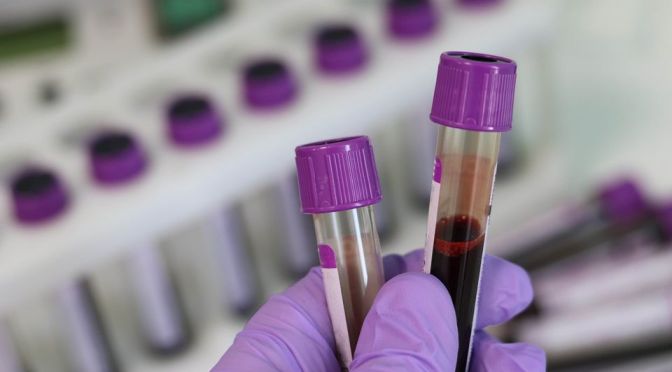
Medicine: ‘Single Drop’ Blood Testing Advances

“Even more importantly, we’ve shown you can collect the blood drop at home and mail it into the lab,” said Michael Snyder, PhD, director of the Center for Genomics and Personalized Medicine and senior author on the research, which was published in Nature Biomedical Engineering on Jan. 19.

Stanford Medicine (January 19, 2023) – Researchers at Stanford Medicine have shown they can measure thousands of molecules — some of which are signals of health — from a single drop of blood.

Unlike finger-prick testing for diabetes, which measures a single type of molecule (glucose), multi-omics microsampling gives data about thousands of different molecules at once.

finger prick
A single drop of blood can yield measurements for thousands of proteins, fats and other biomarkers, researchers at Stanford Medicine found.

The new approach combines a microsampling device — a tool used to self-administer a finger prick — with “multi-omics” technologies, which simultaneously analyze a vast array of proteins, fats, by-products of metabolism and inflammatory markers.

Energy / Technology: How Close Is Fusion Power?

For the first time, US scientists have achieved a fusion reaction with net energy gain. But the dream of limitless zero-carbon energy is still a long way from reality.

Video timeline: 00:00 – What powers the universe 01:04 – ITER: the biggest experiment in human history 04:28 – What is fusion? 06:38 – Replicating the sun 08:38 – The US breakthrough 13:46 – The investors 20:40 – A new class of magnet 24:30 – Dream or reality?

The FT’s Simon Mundy meets scientists and investors in the UK, France and US, to see how close we really are to commercial fusion power.

Read more at https://on.ft.com/3GJl1JF