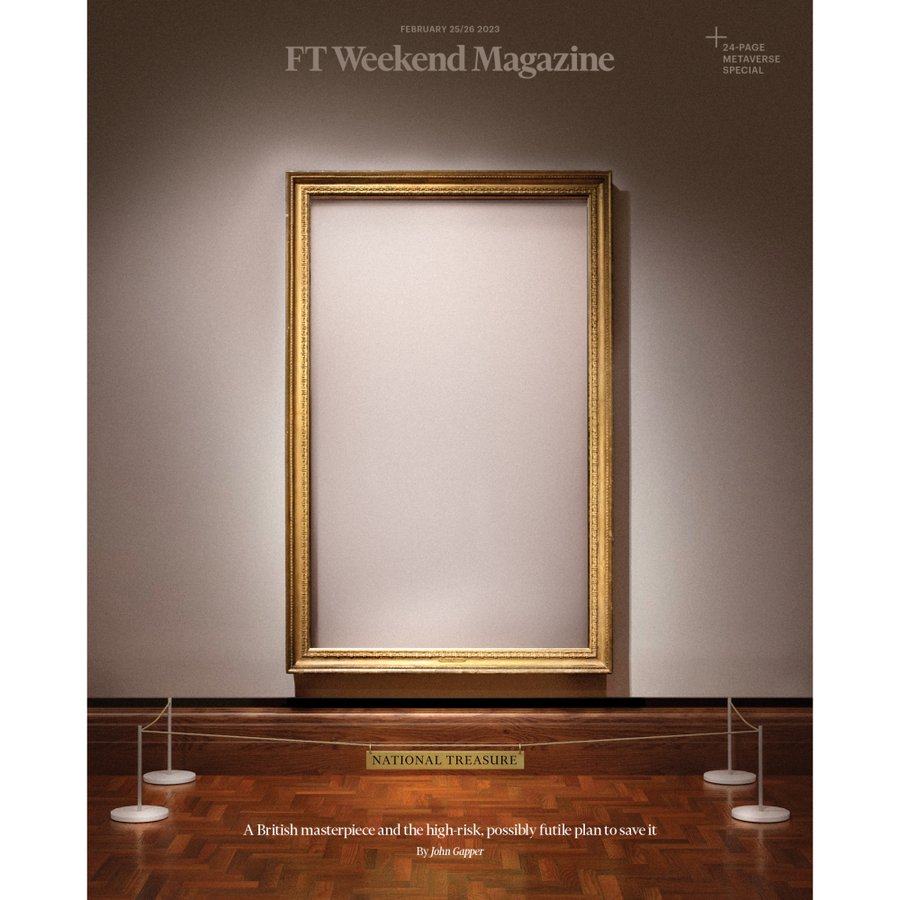

FT Weekend Magazine – February 25, 2023 issue:
Joshua Reynolds’ ‘Portrait of Omai’ is a national treasure. Why is Britain struggling to keep it?
The fight to save the iconic work reflects a painful truth about the UK’s financial state

FT Weekend Magazine – February 25, 2023 issue:
The fight to save the iconic work reflects a painful truth about the UK’s financial state
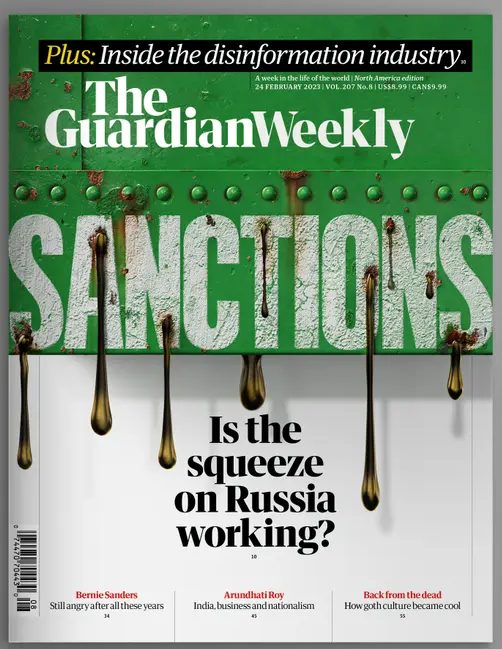

The Guardian Weekly 24 February 2022 – exactly a year since the date of this week’s Guardian Weekly magazine – Vladimir Putin unleashed his brutal offensive on Ukraine. As our senior international affairs correspondent, Emma Graham-Harrison, wrote in the following day’s Guardian newspaper: “The continent awoke to the shock of scenes it once believed it had left in the 20th century: helicopters strafing homes outside the capital, long lines of tanks ploughing ever deeper towards Ukraine’s heartland, roads choked with refugees, and civilians huddled in underground stations to escape bombardment.”
Much has been written since then about the state of the war and how it might end, but this week we focus on a key plank of the west’s response: the wide-ranging economic sanctions against Moscow that it was hoped would throttle Putin’s war effort.

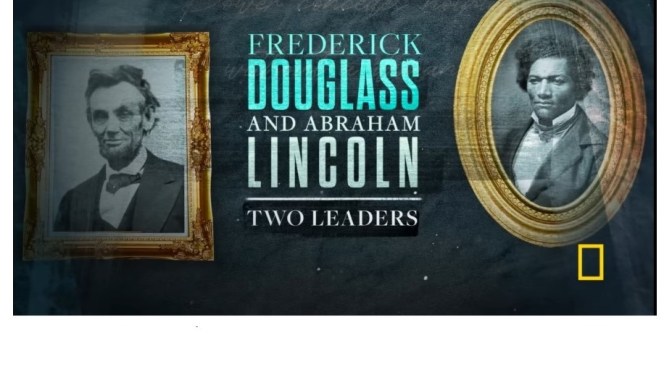
Frederick Douglass (born Frederick Augustus Washington Bailey, c. February 1817 or 1818– February 20, 1895) was an American social reformer, abolitionist, orator, writer, and statesman. After escaping from slavery in Maryland, he became a national leader of the abolitionist movement in Massachusetts and New York, becoming famous for his orator and incisive antislavery writings. Accordingly, he was described by abolitionists in his time as a living counterexample to slaveholders’ arguments that slaves lacked the intellectual capacity to function as independent American citizens. Northerners at the time found it hard to believe that such a great orator had once been a slave. It was in response to this disbelief that Douglass wrote his first autobiography.
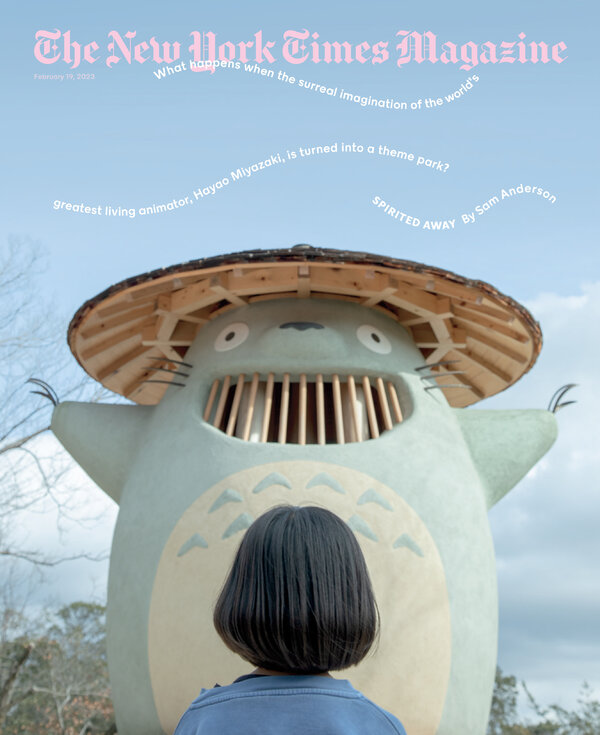

The New York Times Magazine – February 19, 2023:
What happens when the surreal imagination of the world’s greatest living animator, Hayao Miyazaki, is turned into a theme park?
The Nashville songwriter Shane McAnally is behind many of country music’s No. 1 hits, which aren’t as straight as they seem.
How the landmark 1978 Supreme Court decision that upheld the practice may ultimately have set it on a path to being outlawed.
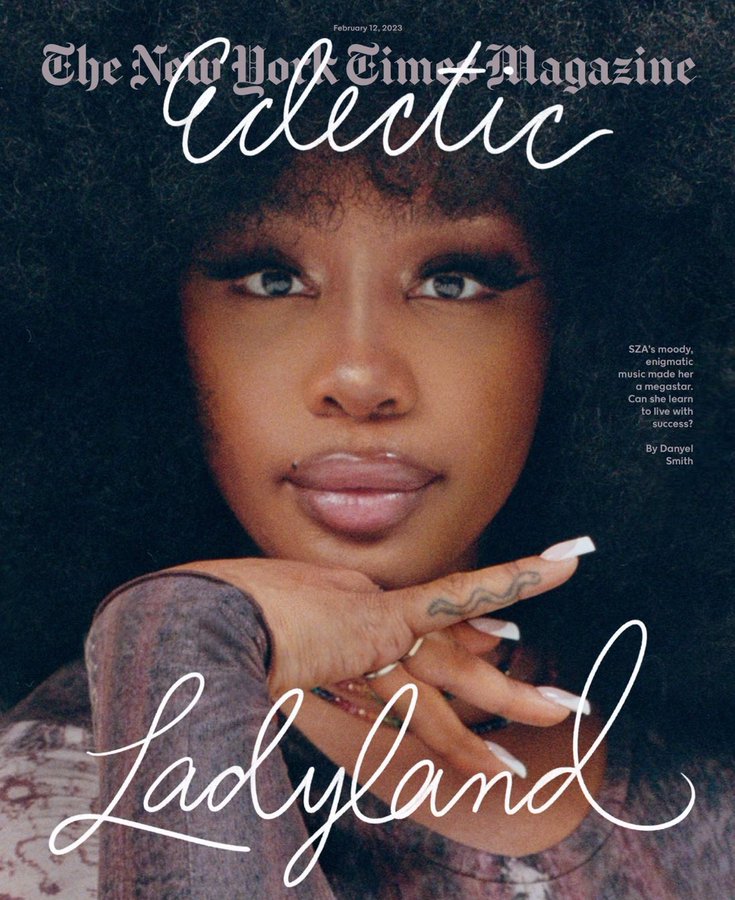
The New York Times Magazine – February 12, 2023:
The U.S. prosecuted Brian Lemley for threats, not violence. Is that what it takes to fight extremism?
“There are people who don’t know how to spell, they don’t know how to think,” says the bestselling novelist.
A poem that shakes us awake, enacting and preserving the fugitive possibilities of “healing from the law.”
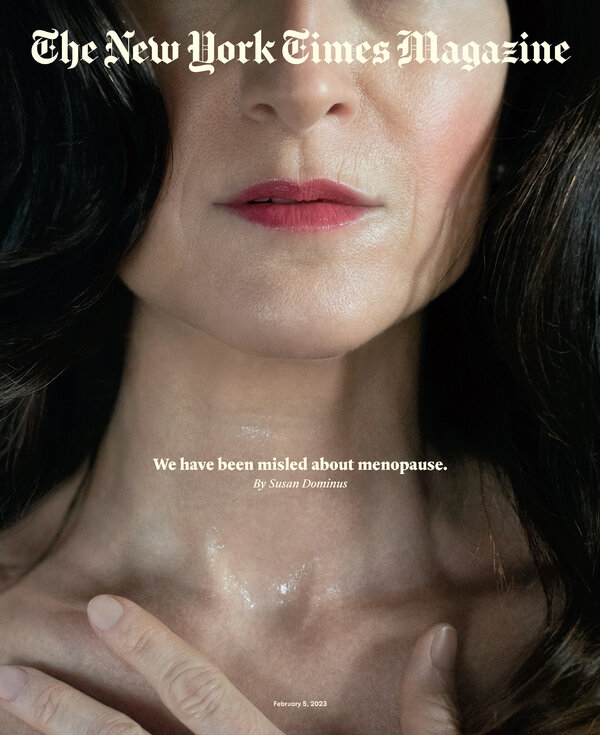
The New York Times Magazine – February 5, 2023:
Hot flashes, sleeplessness, pain during sex: For some of menopause’s worst symptoms, there’s an established treatment. Why aren’t more women offered it?
Fani Willis’s aggressive tactics have sparked criticism — and won over voters. What do they tell us about how she might prosecute the former president?
Sturgeon are disappearing from North American rivers where they thrived for millions of years. And the quest to save them is exposing the limits of the Endangered Species Act.
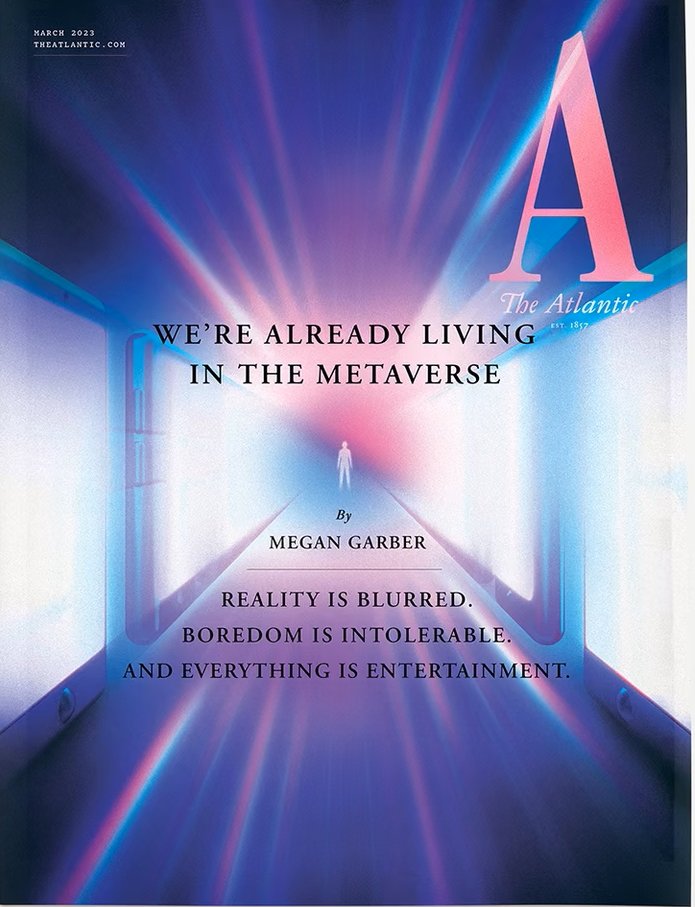


Our constant need for entertainment has blurred the line between fiction and reality—on television, in American politics, and in our everyday lives.
What FTX customers lost may not impoverish them, but they were still cheated.
What to do about the deadly misfits among us? First, recognize the problem.

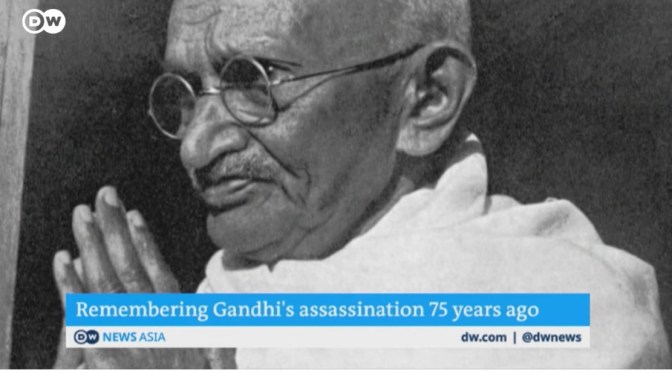
Gandhi wanted an independent, peaceful India that protected religious freedom. But that was challenged by growing Muslim and Hindu nationalism. In 1947, India gained independence from the British, but at the cost of Partition – Muslim majority Pakistan and Hindu majority but secular India, came into being. Religous riots followed and Gandhi went on hunger strike to oppose the violence.
On January 30th, 1948, he was assassinated by a Hindu nationalist who believed Gandhi had been too accommodating to Muslims during the Partition. Around a million people turned out for his funeral. That was in 1948. But the India of 2023 is rather different. Hindu nationalism has been emboldened by Prime Minister Narendra Modi – leaving Gandhi’s legacy in tatters, as DW Correspondent Manira Chaudhary finds out.

The New York Times Magazine – January 29, 2023 issue:
Now that college players are allowed to cut sponsorship deals, some of them are raking in the money — but at what cost to the rest?
In a time of strained capacity, the “hospital at home” movement is figuring out how to create an inpatient level of care anywhere.
Leery of Russian aggression, Europe’s economic giant is making a historic attempt to revitalize its armed forces. It has a long way to go.



 Boomers Daily