Category Archives: Sleep

Study: “Dysfunctional And Variable Sleep” Increases Risks Of Cardiovascular Disease

From a MedPageToday.com online article (March 2, 2020):

Journal of the American College of CardiologyDysfunctional sleep likely is by far the most prevalent comorbidity in CVD. This makes it essential to explore the nature of sleep, but this is reliant on the enthusiasm of clinician scientists,” according to the editorialists.

“In modern society, both the quantity and quality of sleep are negatively influenced by factors such as longer hours of work, more shift work, artificial light and cell phones, all leading to self-reported daytime symptoms such as fatigue, tiredness, and sleepiness,”

A larger range in individual sleep duration and sleep timing across 7 days of wrist actigraphy was associated with significantly more CVD events over a median 4.9 years of follow-up (P=0.002 for both trends).

Read abstract of Study

Read full article

“2020 Philips Sleep Survey”: 50% Of People Sleep Poorly, With Decrease In Those Trying To Improve It

From a Philips “2020 Sleep Survey” online release (Mar 2, 2020):

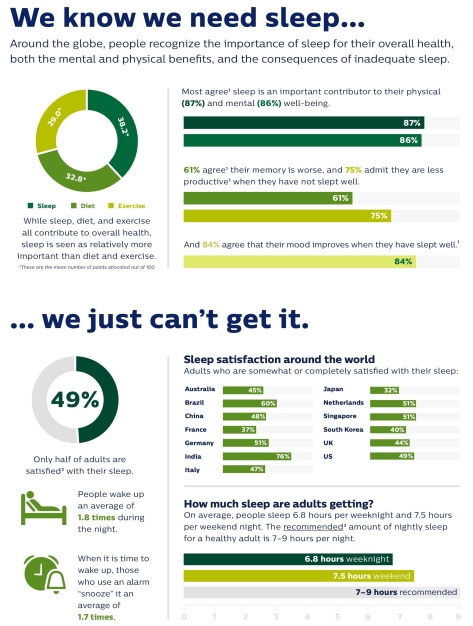
Philips Global Sleep Survey 2020“The decrease in people taking action to improve sleep is alarming, especially when it is clear people around the world deeply value sleep. Sleep deficit impacts people both mentally and physically, so we need to educate people on available sleep resources and empower them with the confidence that their efforts will pay off,” said Mark Aloia, PhD, Global Lead for Behavior Change, Sleep & Respiratory Care at Philips.

2020-Philips-WSD-Report-page-3

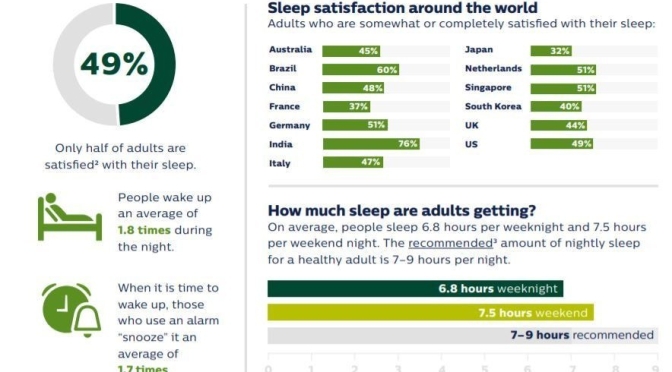
Only 49% of people are satisfied with their sleep, with worry/stress reported as the most limiting factor to a good night’s sleep (33%). Interestingly, fewer people in 2020 are taking action to improve sleep compared to 2019, with nearly all listed strategies to improve sleep lower or consistent in 2020 when compared to 2019 results. For example, reading before bed was the most popular strategy used to improve sleep in 2019 (39%), but only 28% of people report reading to improve sleep in 2020. Other notable distinctions in sleep-related behavior appeared across age and gender differences.
.

Sleep Studies: Even Low-Levels Of Light At Night Causes Diabetes In Elderly

From a Sleep Medicine online release (January 2020):

Sleep Medicine January 2020Our findings suggest that LAN (low-level light at night) exposure increases the incidence of diabetes in a general elderly population. Further research involving a large cohort with new-onset diabetes is warranted to elucidate these findings.

Highlights

  • Humans are commonly exposed to light at night.
  • Higher light exposure at night was significantly associated with higher incidence rate of diabetes.
  • The association was consistent in the analysis using the cut-off values of LAN as 3 and 5 lux.
  • Strengths include large samples adjusting a number of confounders.

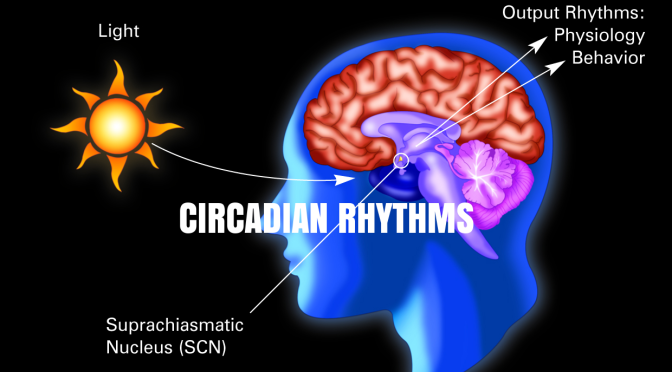
The circadian timing system, located within the suprachiasmatic nucleus of the hypothalamus, controls fundamental energy homeostasis. Clock gene mutations induce obesity in mice, and the disruption of internal circadian rhythms decreases daily energy expenditures and leptin levels in humans. Light information received by the brain influences human circadian timing and metabolism; low-level light at night (LAN) significantly increased body mass and led to prediabetes in mice. In humans, bedroom LAN affected obesity parameters; however, the association between LAN and the incidence of diabetes in humans has not been studied.

Read more

Studies: Irregular Sleep Disrupts Pancreatic “Circadian Rhythms”, Leading To Type 2 Diabetes

From a Technology Networks online article:

Technology NetworksBy comparing the pancreatic cells of type 2 diabetic human donors with those of healthy people, researchers at the University of Geneva (UNIGE) and at the University Hospitals of Geneva (HUG), Switzerland, were able to demonstrate, for the first time, that the pancreatic islet cells derived from the Type 2 Diabetic human donors bear compromised circadian oscillators.

The disruption of the circadian clocks was concomitant with the perturbation of hormone secretion. Moreover, using clock modulator molecule dubbed Nobiletin, extracted from lemon peel, the researchers succeeded in “repairing” the disrupted cellular clocks and in partial restoring of the islet cell function. These results, published in the Proceedings of the National Academy of Sciences of the United States, provide a first insight into innovative approach for diabetes care.
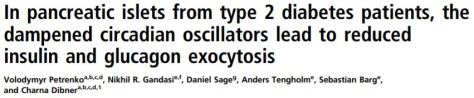
PNAS Pancreatic Islets from type 2 diabetes

Read full study

The circadian clock system (from Latin “circa diem”, about a day) allows the organisms to anticipate periodical changes of geophysical time, and to adjust to these changes. Nearly all the cells in our body comprise molecular clocks that regulate and synchronize metabolic functions to a 24-hour cycle of day-night changes.

Today, increasing evidence show that disturbances in our internal clocks stemming from frequent time zone changes, irregular working schedules or ageing, have a significant impact on the development of metabolic diseases in human beings, including type-2 diabetes. Such disturbances seem to prevent the proper functioning of the cells in the pancreatic islet that secrete insulin and glucagon, the hormones that regulate blood sugar levels.

To read more

Sleep Health: “The Neurology And Psychology Of Insomnia”

From a Psychology Today online article:

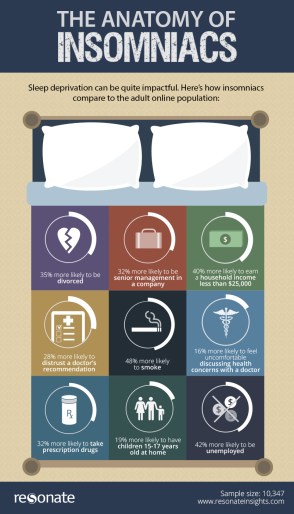
For those with insomnia, however, the stressor appears to be the lack of sleep, and the desire for sleep becomes a stressor in itself. In other words, the fixation on getting sleep leads to feelings of stress over not falling asleep, which begins a vicious loop. According to a model first proposed by Kales et al. in 1976, patients The Anatomy of Insomniacs infograpiccan develop a conditioned fear of not being able to sleep, which puts them in a state of hyperarousal when they attempt to fall asleep. This makes their inability to sleep a self-fulfilling prophecy.
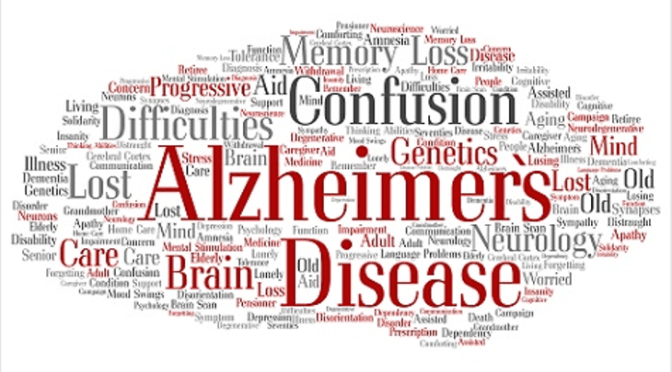

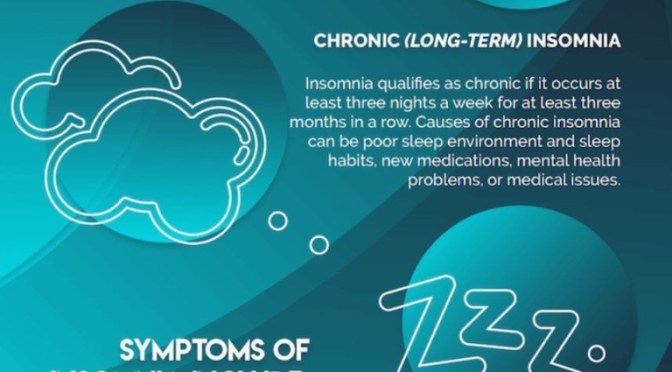
Insomnia is the most common sleep condition in the world, with half of adults globally reporting occasional episodes. Chronic insomnia, though far less prevalent, affects as many as 10 to 15 percent of the adult population.

Though these sleep problems are extremely common, the neurobiological mechanisms behind insomnia are not entirely understood. Research suggests that emotional stressors do play an outsized role in contributing to sleep problems, and it is well documented that mood and anxiety disorders are common comorbidities with insomnia. This seems like common sense. Emotional arousal, whether due to a state of anxiety or because of intrusive thoughts, makes it difficult to relax, thereby inhibiting one’s ability to either initiate sleep or get back to sleep after waking.

To read more

Studies: Alzheimer’s Disease Linked To Poor Sleep In Older Adults

From a MedPageToday online article:

Science Translational Medicine“Amyloid is important in initiating disease, but the actual damage in the brain is probably due to the accumulation of tau,” Holtzman told MedPage Today. “Normally, tau protein is inside cells, but there is more and more evidence suggesting that its spread to different parts of the brain is responsible for the progression of Alzheimer’s disease.”


Two studies in January explored how sleep might be associated with Alzheimer’s tau pathology. The first, led by Brendan Lucey, MD, and David Holtzman, MD, both of Washington University in St. Louis, found that older adults who had less slow-wave sleep had higher levels of brain tau.

The findings, published in Science Translational Medicine, suggested that poor quality sleep in late life may signal deteriorating brain health.

Sleep patterns predicted amyloid and tau burden, reported Matthew Walker, PhD, of the University of California Berkeley, and co-authors, in June.

To read more

New Books: “The Shapeless Unease – A Year Of Not Sleeping” By Samantha Harvey (January 2020)

The Shapeless Unease A Year of Not Sleeping Samantha Harvey book January 2020In 2016, Samantha Harvey began to lose sleep. She tried everything to appease her wakefulness: from medication to therapy, changes in her diet to changes in her living arrangements. Nothing seemed to help.
The Shapeless Unease is Harvey’s darkly funny and deeply intelligent anatomy of her insomnia, an immersive interior monologue of a year without one of the most basic human needs. Original and profound, and narrated with a lucid breathlessness, this is a startlingly insightful exploration of memory, writing and influence, death and the will to survive, from “this generation’s Virginia Woolf” (Telegraph).

Read more or purchase

Studies: Disrupted Sleep Cycles & Dopamine Linked; Craving “High-Calorie Food” & Obesity Are Result

From a NeuroscienceNews.com online release article (01/02/20):

During the years 1976 through 1980, 15% of U.S. adults were obese. Today, about 40%of adults are obese. Another 33% are overweight.

“But, of course, food is now abundant, and our next meal is as close as the kitchen, or the nearest fast-food drive-through, or right here on our desk. Often, these foods are high in fats, sugars, and therefore calories, and that’s why they taste good. It’s easy to overconsume, and, over time, this takes a toll on our health.”

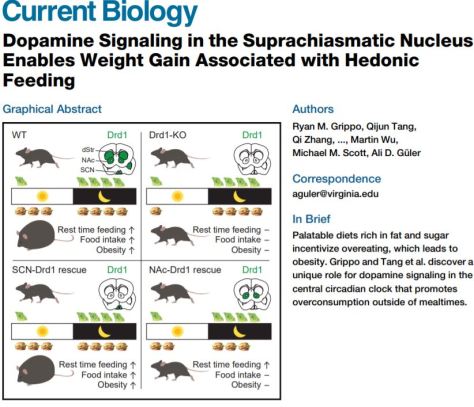
Current Biology Journal Dopamine Signaling and Weight Gain January 2 2020
Dopamine Signaling in the Suprachiasmatic Nucleus Enables Weight Gain Associated with Hedonic Feeding – Current Biology January 2, 2020

Read full study

In a study published Thursday in the journal Current Biology, Güler and his colleagues demonstrate that the pleasure center of the brain that produces the chemical dopamine, and the brain’s separate biological clock that regulates daily physiological rhythms, are linked, and that high-calorie foods – which bring pleasure – disrupt normal feeding schedules, resulting in overconsumption. Using mice as study models, the researchers mimicked the 24/7 availability of a high-fat diet, and showed that anytime snacking eventually results in obesity and related health problems.

Read more

Health: 60-Year Old “B-D” Editor Launches “18-Hour Intermittent Fasting” Diet Study For 2020’s Decade

Following the important publishing of “The Benefits Of Intermittent Fasting” study by Johns Hopkins in the New England Journal of Medicine on December 26, 2019, the 60-year old editor of Boomers-Daily.com (“B-D”) will launch, participate in, and document a decade-long, 18-Hour Intermittent Fasting Diet on December 30, 2019. The following protocol will be followed:

  • All daily food consumption will be between 10 am and 4 pm
  • Diet will be followed 7 days a week
  • High fiber, nutrition-dense foods will be favored
  • Gluten-free and Lactose-free foods will be favored
  • Eating will NOT be calorie-restricted
  • Bedtime target of 7:30 to 8:30 pm (or earlier) every night
  • 7-8+ hours of sleep per night a PRIORITY
  • Early morning vigorous exercise daily of 1 – 1 1/2 hours targeted

All readers of Boomers-Daily.com are encouraged to communicate with B-D and launch their own 18-hour Intermittent Fasting Diet (the 6-hour eating period can be varied 1-2 hours later or earlier). Please email boomersdaily@gmail.com to join the study, comment or inquire about this or your own 18-Hour Intermittent Fasting Diet. We will be looking to start an online chat room and other online platforms to increase the size, scope, visibility and transparency of the study over the next decade.

12-26-19  Intermittent Fasting: Live ‘Fast,’ Live longer? (infographic).png.png

Healthiest Adults: Early Risers With 7-8 Hours Of Sleep, No Insomnia Or Daytime Drowsiness

From a European Heart Journal study:

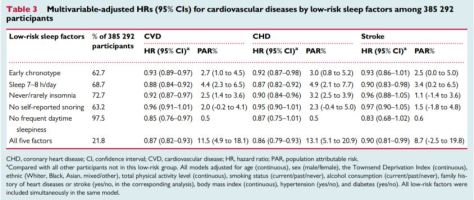
European Society of Cardiology logoWhen the five sleep factors were collapsed into binary categories of low risk vs. high risk (reference group), early chronotype, adequate sleep duration, free of insomnia, and no frequent daytime sleepiness were each independently associated with incident CVD, with a 7%, 12%, 8%, and 15% lower risk, respectively (Table 3). Early chronotype, adequate sleep duration, and free of insomnia were independently associated with a significantly reduced risk of CHD; while only adequate sleep duration was associated with stroke.European Society of Cardiology Sleep patterns, genetic susceptibity and incident cardiovascular disease a prospective study of 385,292 participants lowest risk factorsCardiovascular disease (CVD), including coronary heart disease (CHD) and stroke, is among the leading causes of mortality globally.1 In addition to traditional lifestyle behaviours, emerging evidence has implicated several unhealthy sleep behaviours were important risk factors for CVD.2,3 For example, short or long sleep duration,4–9 late chronotype,10,11 insomnia,12–17 snoring,18,19 and excessive daytime sleepiness20,21 were associated with a 10–40% increased CVD risk. European Society of Cardiology Sleep patterns, genetic susceptibity and incident cardiovascular disease a prospective study of 385,292 participants
 

To read more: https://academic.oup.com/eurheartj/advance-article/doi/10.1093/eurheartj/ehz849/5678714