Visionary biochemist Jennifer Doudna shared the Nobel Prize last year for the gene-editing technology known as CRISPR (Clustered Regularly Interspaced Short Palindromic Repeats), which has the potential to cure diseases caused by genetic mutations. Correspondent David Pogue talks with Doudna about the promises and perils of CRISPR; and with Walter Isaacson, author of the new book “The Code Breaker,” about why the biotech revolution will dwarf the digital revolution in importance.
Category Archives: Science
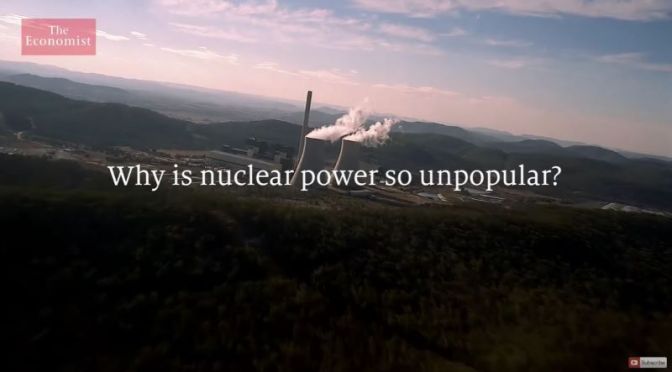
Nuclear Power: ‘Why Is It So Unpopular?’ (Video)
The meltdown at a nuclear power station in Fukushima, Japan, ten years ago stoked anxieties about nuclear energy. But nuclear is one of the safest, most reliable and sustainable forms of energy, and decarbonising will be much more difficult without it.
Alzheimer’s Disease: ‘How It Starts & Progresses’
The first event in our Lab Notes online series features two researchers from our South Coast Network Centre talking about early brain changes in Alzheimer’s. Dr Karen Marshall shares her work studying how waste disposal and recycling systems in nerve cells cause damage in Alzheimer’s disease, and whether there could be ways to rescue cells from this. Dr Mariana Vargas-Caballero speaks about her research into brain cell connections and how they are affected in Alzheimer’s. The event is chaired by Dr Katy Stubbs from Alzheimer’s Research UK, and also features a Q&A session.
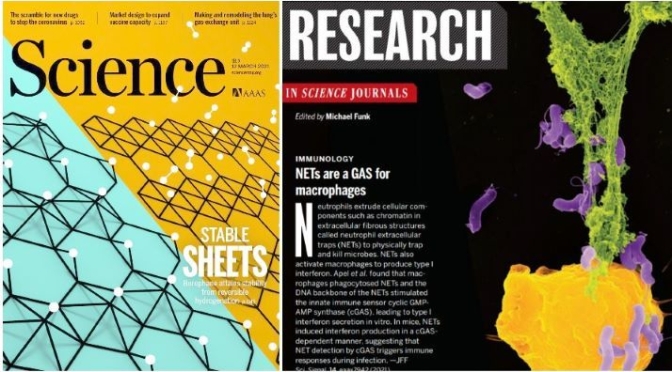
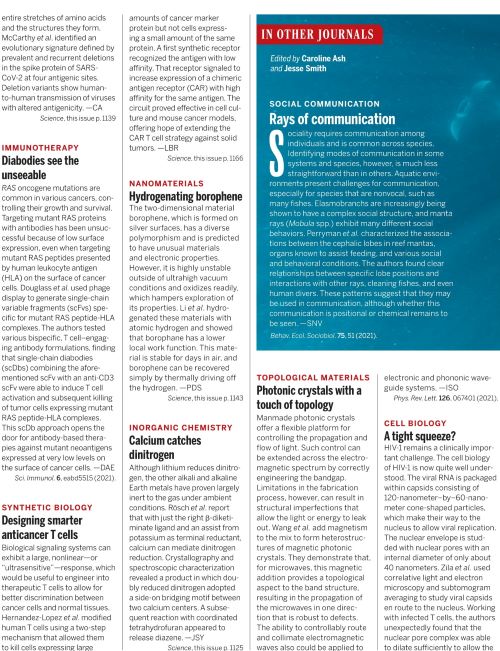
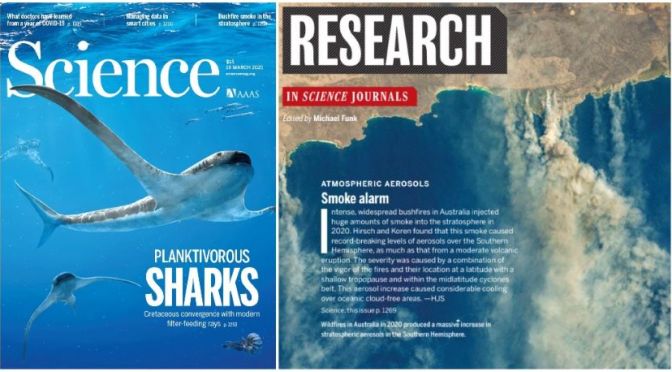
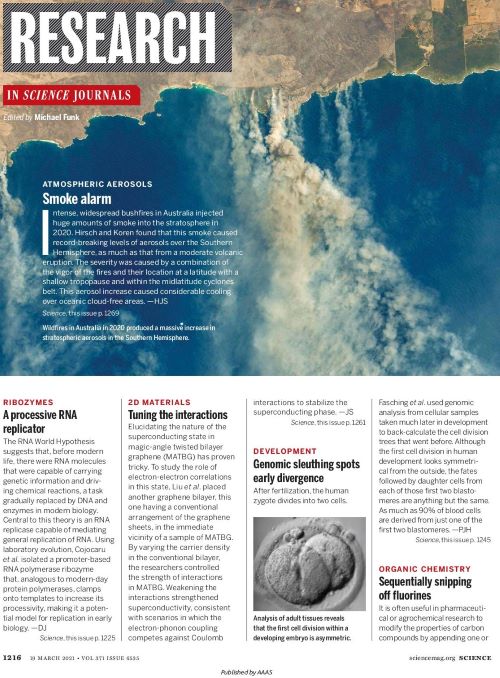
TOP JOURNALS: RESEARCH HIGHLIGHTS FROM SCIENCE MAGAZINE (Mar 5, 2021)
Science Podcast: 2000-Year-Old Pet Cemetary, Eyeless Worms See Color
Science’s Online News Editor David Grimm joins host Sarah Crespi to talk about a 2000-year-old pet cemetery found in the Egyptian city of Berenice and what it can tell us about the history of human-animal relationships.
Also this week, Dipon Ghosh, a postdoctoral fellow at the Massachusetts Institute of Technology, talks about how scientists missed that the tiny eyeless roundworm Caenorhabditis elegans, which has been intensively studied from top to bottom for decades, somehow has the ability to detect colors.
Infographic: ‘Vaccines Without Needles’ (WSJ)
Technologies in development for delivering vaccines include Enesi’s dissolving implants, microneedle patches, electrical-pulse systems, nasal sprays and even pills.

Some firms are developing their own vaccines against Covid-19, while others are aiming to reformulate some of the dozens already in development or being rolled out world-wide. Some are sitting this pandemic out in the hope of being ready for the next one.
All are in the early to mid-stages of development and clinical testing, suggesting it might be months if not years before they come to market. Big pharmaceutical companies have so far shown limited interest.
Science Podcast: Unequal Surge In Research Papers, Energy Without Oxygen
The pandemic’s unequal toll on the research community, and a newly discovered mitochondria-like symbiosis.
In this episode:
00:48 The pandemic’s unequal toll on researchers
Although 2020 saw a huge uptick in the numbers of research papers submitted, these increases were not evenly distributed among male and female scientists. We look at how this could widen existing disparities in science, and damage future career prospects.
Editorial: COVID is amplifying the inadequacy of research-evaluation processes
09:18 Research Highlights
How a parasite can make viral infections more deadly, and the first known space hurricane.
Research Highlight: Intestinal worms throw open the door to dangerous viruses
Research Highlight: The first known space hurricane pours electron ‘rain’
11:36 Energy without oxygen
Millions of years ago, a microscopic protist swallowed a bacterium and gained the ability to breathe nitrate. This relationship partially replaced the cell’s mitochondria and allowed it to produce abundant energy without oxygen. This week, researchers describe how this newly discovered symbiosis works.
Research Article: Graf et al.
News and Views: A microbial marriage reminiscent of mitochondrial evolution
19:22 Briefing Chat
We discuss some highlights from the Nature Briefing. This time, the weakening of the Gulf Stream, and a new satellite to monitor deforestation in the Amazon.
The Guardian: Atlantic Ocean circulation at weakest in a millennium, say scientists
Science: Brazil’s first homemade satellite will put an extra eye on dwindling Amazon forests
Science & Exploration: ‘Deep-Sea Soft Robots’
Is the future of deep-sea exploration soft? Researchers have developed a new type of soft robot designed to cope with the crushing pressures at the bottom the ocean. Inspired by the skull of the Mariana Snailfish, the deepest living fish, the researchers distributed their robot’s electronics, creating a machine that can withstand extreme pressure.
Covid-19: ‘Intranasal Vaccines’ Might Be More Effective Than Needles

From Scientific American (March 1, 2021):
Enter the intranasal vaccine, which abandons the needle and syringe for a spray container that looks more like a nasal decongestant. With a quick spritz up the nose, intranasal vaccines are designed to bolster immune defenses in the mucosa, triggering production of an antibody known as immunoglobulin A, which can block infection. This overwhelming response, called sterilizing immunity, reduces the chance that people will pass on the virus.

The development of highly effective COVID vaccines in less than a year is an extraordinary triumph of science. But several coronavirus variants have emerged that could at least partly evade the immune response induced by the vaccines. These variants should serve as a warning against complacency—and encourage us to explore a different type of vaccination, delivered as a spray in the nose. Intranasal vaccines could provide an additional degree of protection, and help reduce the spread of the virus.
Covid-19: ‘The Evolving Science Of Masks’ (Video)
How can you tell if the mask you’re wearing is protective enough against the coronavirus? Correspondent David Pogue volunteers as a test subject to see how N95s work and learns about the science of face coverings.