A proofreader in #SARSCoV2, what keeps plants from flowering when it’s too cold, and a likely driver of extreme winter weather events in the U.S.
— Science Magazine (@ScienceMagazine) September 2, 2021
📕 Read the latest in Science: https://t.co/GfUzwJhZCz pic.twitter.com/I2F87gCwtj
Category Archives: Science
Health: Dementia Set To Increase 40% By 2030 (WHO)
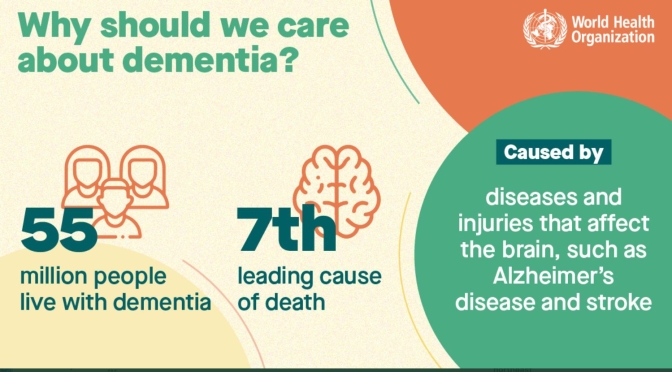
More than 55 million people worldwide are living with dementia, a neurological disorder that robs them of their memory and costs the world $1.3 trillion a year, the World Health Organization (WHO) said on Thursday.
Previews: New Scientist Magazine – September 4
Science: Dead Trees Giving Off CO2, Massive Stars, Melting Ice & Biodiversity
How insects help release carbon stored in forests, and the upcoming biodiversity summit COP 15.
In this episode:
00:44 Fungi, insects, dead trees and the carbon cycle
Across the world forests play a huge role in the carbon cycle, removing huge amounts of carbon dioxide from the atmosphere. But when those trees die, some of that carbon goes back into the air. A new project studies how fast dead wood breaks down in different conditions, and the important role played by insects.
Research Article: Seibold et al.
09:37 Research Highlights
Massive stars make bigger planets, and melting ice moves continents.
Research Highlight: Why gassy planets are bigger around more-massive stars
Research Highlight: So much ice is melting that Earth’s crust is moving
12:04 The UN’s Convention on Biological Diversity
After several delays, the fifteenth Conference of the Parties (COP 15) to the United Nations Convention on Biological Diversity, is now slated to take place next year. Even communicating the issues surrounding biodiversity loss has been a challenge, and reaching the targets due to be set at the upcoming meeting will be an even bigger one.
Editorial: The scientific panel on biodiversity needs a bigger role
19:32 Briefing Chat
We discuss some highlights from the Nature Briefing. This time, cannibal cane toads and a pterosaur fossil rescued from smugglers.
Nature News: Australia’s cane toads evolved as cannibals with frightening speed
Research Highlight: A plundered pterosaur reveals the extinct flyer’s extreme headgear
National Geographic: Stunning fossil seized in police raid reveals prehistoric flying reptile’s secrets
Views: The Scientist Magazine – Sep 2021
Diabetes: Understanding Insulin And Islets (Video)
Type 1 and type 2 diabetes are characterized by increased blood glucose levels. They affect almost half a billion people around the globe, and this number is projected to rise as we reach the middle of the century. In most individuals, blood glucose levels are kept within a healthy range by a hormone called insulin, which is secreted by the pancreas, but this fine-tuned regulation can go wrong in type 1 and type 2 diabetes. In this animation, we lay out our current understanding of these diseases and explore active areas of research that aim to restore the body’s blood glucose control.
Read more in https://www.nature.com/articles/d4285…
VIEWS: TUFTS ‘HEALTH & NUTRITION LETTER’ (SEP ’21)
Front Covers: Science News – August 28, 2021

Science News website
Analysis: How Moderna & Pfizer-BioNTech Created Vaccines In Record Time
The decision to pivot an entire business to focus on the coronavirus is an obvious one in hindsight, at least for Moderna, BioNTech and Pfizer, which succeeded beyond anyone’s expectations — and will reap billions of dollars in sales of their vaccines this year alone.
It wasn’t such a clear decision in the early months of 2020, though that’s when Moderna’s chief executive, Stephane Bancel, and BioNTech’s chief, Ugur Sahin, starting turning their ships, they told CNBC in interviews for this documentary about the vaccine race, produced by CNBC senior health and science reporter Meg Tirrell and senior digital producer Sam Rega.
“The night that China locked down Wuhan, I’m like: ‘When was the last time I know a city has been locked down because of an infectious disease?’” Bancel recalled. “And what goes through my mind is: what do the Chinese know that we don’t know?“ Bancel said he awoke sweating at 4 a.m., realizing, “Jeez, there’s going to be a pandemic like 1918.” For Sahin, it was reading a paper in the Lancet in late January describing the outbreak in China.
“I did a number of calculations, fast calculations, and realized it had already spread,” Sahin said. “And it was clear that it was already too late to stop the disease.” But he was convinced BioNTech, then focused mainly on personalized cancer therapies, may be able to do something. His company reached out to Pfizer, he said, proposing to work on a vaccine for the novel coronavirus using the same technology, messenger RNA, on which they’d already partnered to try to tackle the flu.
“We had the first contact a few days after starting the project,” Sahin said. “At that time, Pfizer was not yet interested.” Albert Bourla, Pfizer’s CEO, confirmed Sahin’s account, saying in the earliest months of 2020, he was focused on maintaining the company’s operations in China. But by late February, he said, he’d determined Pfizer needed to work on a treatment and a vaccine.
“What is the best approach?” Bourla said he asked his team. Kathrin Jansen, head of Pfizer’s vaccine research and development, said they assessed all existing technologies, including protein-based vaccines and vaccines using viral vectors. “They all have too few pros and too many cons,” she said.
But messenger RNA was a risk; it had never been used before as an approved vaccine or drug. “I wrestled a little bit with the decision,” Bourla said. But after another meeting with the team, “they convinced me.” That’s when Sahin called a second time. The outbreak, by that point, was already in New York, he said. Reaching Jansen, he described the work that BioNTech already had underway, and asked if Pfizer would like to work together. “And I said: absolutely,” Jansen remembered. “Let’s talk about this.”
At Moderna, it was never a question that messenger RNA would be the way forward; that was the technology around which the company was founded in 2010. But that didn’t mean questions didn’t exist. “Even going into March, there were voices that said vaccines were false hope,” recalled Dr. Stephen Hoge, Moderna’s president.
“It did feel for a period of time that we needed to defend even the idea of trying.” “When we were thinking about how do we get into Phase 1, what does it look like to prepare for a pandemic, the eyes of the world felt as though they were looking at Moderna as this biotech … ‘what are they trying to do?’” said Hamilton Bennett, Moderna’s senior director of vaccine access and partnerships.
“It was only when we transitioned in that March notification from the WHO that this was a global pandemic, it’s an emergency, that I think people started to realize that what we’re doing isn’t playing in a sandbox trying to demonstrate our technology,” Bennett said. “We’re developing a vaccine that’s going to stop the pandemic.” The companies succeeded, in what became one of the greatest medical races in history. Here, they recall how it happened.
Covid-19: Can Vaccines Keep Up With Variants?
The race between covid-19 vaccines and variants is on. Alok Jha, The Economist’s science correspondent, and Natasha Loder, health policy editor, discuss what this means for the future Read more of our coverage on coronavirus: https://econ.st/3t1L6wx