

From a Wall Street Journal online review:
 In “Unto This Last and Other Essays on Art and Political Economy” (1860), which gives the exhibition its title, Ruskin “sees” interconnected social injustices. He attacks economic inequality. Later, he sets out to establish a utopian community in working-class Sheffield, England. In one gallery we see his influence on “progressive thinkers worldwide.” Gandhi said that reading “Unto This Last” in 1904 transformed his life and ideas.
The novelist Charlotte Brontë exclaimed after reading that first volume, “I feel now as if I had been walking blindfold[ed]—this book seems to give me eyes.”
 ‘If you can paint one leaf,” John Ruskin once declared, “you can paint the world.” And in “Unto This Last: Two Hundred Years of John Ruskin”—the hypnotically potent (though flawed) exhibition at the Yale Center for British Art marking the bicentennial of his birth—we see how wonderfully he kept trying.
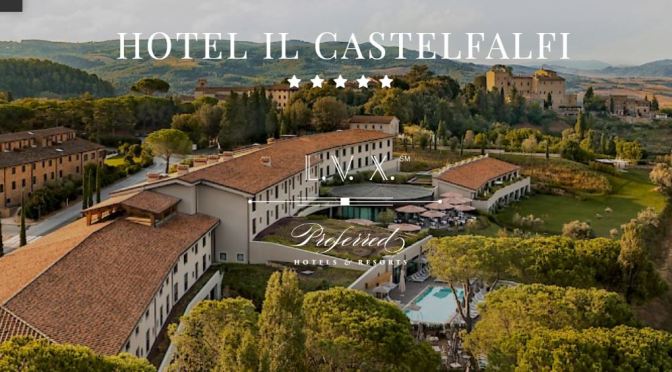
 Once owned by the Medici family, this 2,700-acre, 800-year-old medieval village in Montaione fell away from the public eye—that is, until lifestyle hotel brand TUI Blue saw its potential. With the help of the surrounding village’s government, the town has been resurrected into a sprawling five-star resort. Il Castelfalfi, the region’s first new-build hotel in years, offers suites with both sunrise and sunset patio views. Across the street, a disused tobacco factory is now an adjacent boutique hotel, ruinous farmhouses have become holiday homes, and acres of surrounding lands now make up Tuscany’s largest golf course.
 Chief among these delicacies is Cuban lard bread, which is what inspired the opening of Pilar Cuban Bakery: Ricardo Barreras, the owner of Pilar Cuban Eatery, next door, decided to start baking it himself, using dough, shipped frozen, from a trusted supplier in Florida. When he realized that his kitchen wasn’t big enough for the operation, he figured he might as well open a second place.
 Being with people at the end of life is very intense work. You are regularly seeing a part of life that a lot of people don’t see, or see very rarely. How do you feel that affects your relationships generally and your friendship specifically?
 The acclaimed biographer Edmund Morris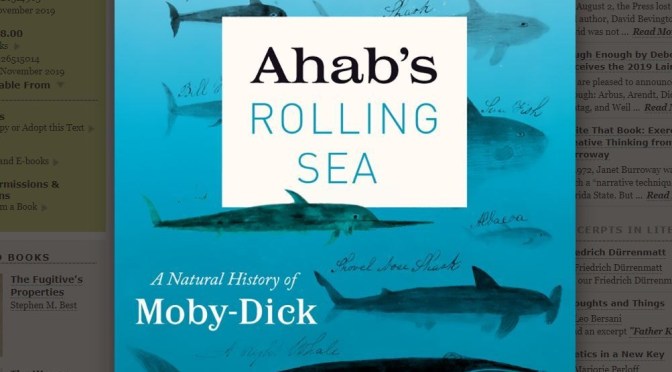
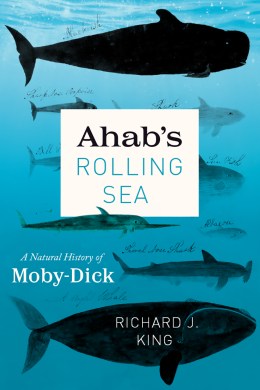 A revelation for Moby-Dick devotees and neophytes alike, Ahab’s Rolling Sea is a chronological journey through the natural history of Melville’s novel. From white whales to whale intelligence, giant squids, barnacles, albatross, and sharks, Richard J. King examines what Melville knew from his own experiences and the sources available to a reader in the mid-1800s, exploring how and why Melville might have twisted what was known to serve his fiction. King then climbs to the crow’s nest, setting Melville in the context of the American perception of the ocean in 1851—at the very start of the Industrial Revolution and just before the publication of On the Origin of Species.
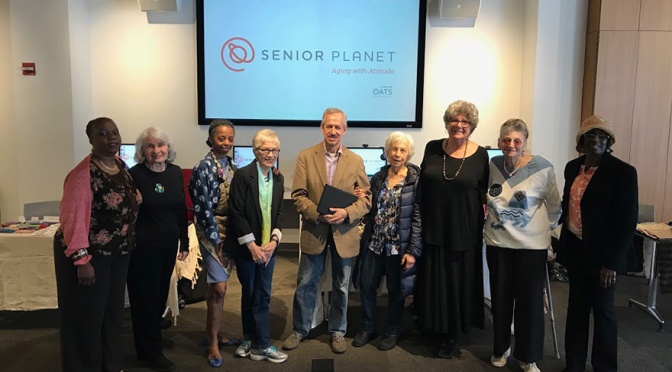
 Entrepreneurs are often imagined as twenty-something recent college dropouts. But in fact, people ages 45 to 64 start businesses at higher rates than do their younger peers — and plenty of seniors are in startup mode, too. Economics correspondent Paul Solman visits a New York City center that helps older adults upgrade their technology skills and realize their entrepreneurial dreams.
 Hear the latest science news, with Benjamin Thompson and Shamini Bundell. This week, a computer beats the best human players in StarCraft II, and a huge study of insects and other arthropods.
 Scientists believe they have located the ancestral home of one of humanity’s early ancestors—in northern Botswana. Tom Siebel, a Silicon Valley veteran and the founder of C3.ai, explains how digital transformation stops companies from going extinct. And, host Kenneth Cukier takes a trip to the Natural History Museum in London to learn about
  Boomers Daily