

From a New Atlas online review:
An important step towards autonomous aviation was taken today, as Cirrus Aviation announced “Safe Return” functionality for its G2 Vision jet, which will find the nearest airstrip, alert authorities and land itself in an emergency.
The Vision is a small private jet capable of seating seven people, cruising at over 300 knots at 31,000 feet. Small, quick and user-friendly, it’s good for those that wish to fly themselves, as well as being flown. It’s been a successful product for Cirrus, but its new functionality could represent something bigger. CEO Zean Nielsen calls it “a product that we believe is going to change personal aviation forever.”
Safe Return Autonomous Autoland, developed in conjunction with Garmin, manifests as a button on the roof of the Vision jet that is accessible to passengers. If something happens to the pilot, a passenger can hit the button and request an autoland.
To read more: https://newatlas.com/aircraft/cirrus-vision-g2-automatic-emergency-landing/



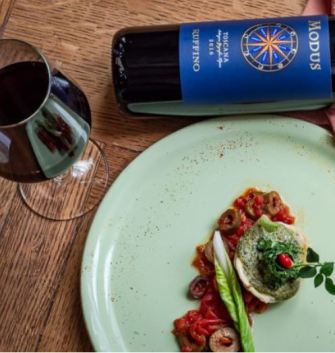 Legend has it that Le Tre Rane was the name of an inn that a young Leonardo da Vinci opened on Florence’s Ponte Vecchio, with a vision of a pioneering cooking style that would embody fine dining and healthy eating, while heightening the taste of being together.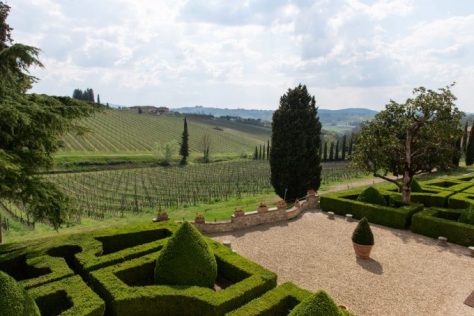
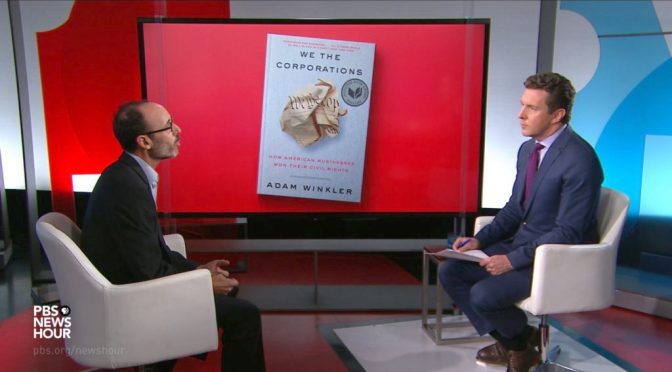
 Adam Winkler, author of our October pick for the NewsHour-New York Times book club, Now Read This, joins William Brangham to discuss “We the Corporations,” and William announces the November book selection.
 We headed west and hugged the shallow shoreline, casting at shadows of fish as the sun mixed with clouds making it more difficult to sight fish. We curled around a point of land I instantly recognized as Cambridge Beaches, where I stayed with my parents on my first visit to the island and where my sister celebrated her honeymoon.
 Mr. Chambers, a 48-year-old physical therapist in Jersey City, N.J., modified his sleep, diet and exercise routines. Eighteen months later, his performance on a battery of cognitive tests improved, particularly in areas like processing speed and executive function, such as decision-making and planning.
 In 2015, the Laser Interferometer Gravitational Wave Observatory (LIGO) facilities in the US directly detected ripples in space-time known as gravitational waves. These waves were produced by the final spiral of two oribiting black holes that smashed into each other, sending ripples across the universe.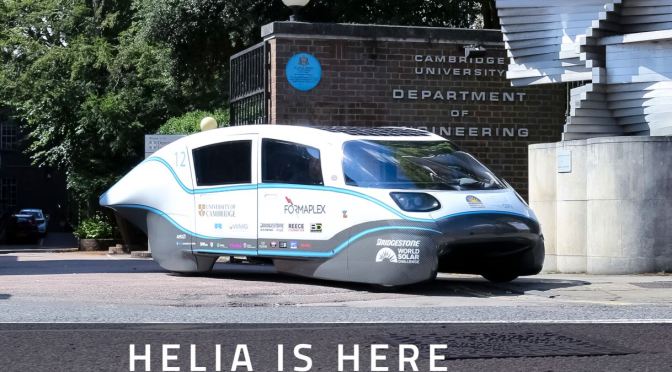
 The ability to cover this distance is aided by Helia’s chassis and body panels made from carbon fibre, which grant it a kerb weight of 550 kilograms.
 The plot line of The Farewell is familiar to me. Like Billi’s Nai Nai, my aunt was diagnosed with metatastic lung cancer. Nobody in the family told her – nor did the doctors when she later underwent surgery to remove a tumour. The last time I saw her was in north-eastern China a few years ago. Her once-plump figure had shrunk to a wiry frame. She was in her early 70s, in good spirits, but a far cry from the feisty matriarch who used to dominate conversations.
 Since I work as a fine artist now, there are fewer commercial entities to please, so I’ve discovered something that should have been very obvious. If you want to engage the viewer, don’t tell them everything, encourage them to ask their own questions. An artist should not describe—he or she should interpret. If you design into your work a bit of mystery—areas where the viewer must “fill in the blanks”—you set up an unspoken dialog with your viewers and an emotional weight will begin to develop organically. This is just one example of course, but an important one.
 Boomers Daily